
Bitzer Semi-Hermetic Compressor Guide for Cold Room Systems
A Bitzer semi-hermetic reciprocating compressor is usually chosen because the cold room has to hold temperature through years of loading, defrosting and dirty condensers, and the machine has to be repairable when it finally wears. The selection question that matters is not horsepower. It is whether the compressor's published envelope covers your evaporating temperature, your condensing temperature on the hottest week of the year, and the refrigerant you can still buy and service five years from now.
What a Semi-Hermetic Reciprocating Compressor Does in a Cold Room
A semi-hermetic compressor houses the motor and the compression element in one bolted housing. Suction gas passes over the motor windings before it reaches the cylinders, which keeps the motor cool without a shaft seal. That bolted construction is the part that matters in a cold room: cylinder heads, valve plates and piston assemblies can be opened on site, so a worn valve plate is a repair rather than a new machine.
Reciprocating machines are positive displacement with discrete cylinders and fixed clearance volume. Two consequences follow for refrigeration work. They tolerate high compression ratios better than a scroll at low evaporating temperature, and their capacity can be trimmed in steps by unloading cylinders. An open-drive machine needs a shaft seal that eventually leaks; a welded hermetic machine is cheaper but cannot be serviced at all. The semi-hermetic layout sits between those two compromises.
Nominal horsepower does not travel with capacity, though. In our own catalogue the Bitzer 4GE-23Y appears both in a 25HP medium-temperature unit and in a 23HP freezer unit, because the same frame serves two different duty points. Capacity is a function of evaporating temperature, condensing temperature and refrigerant. At -30°C evaporating a compressor moves a fraction of the mass flow it moves at -5°C, and a motor that looked generous at medium temperature becomes marginal in a blast freezer.
What the compressor has to do, then, is hold the room at setpoint on the worst day of the year while keeping discharge temperature and oil condition inside their limits. Every other number in the selection follows from that.
Matching Bitzer Model Families to Cold Room Temperature Zones
Bitzer's semi-hermetic range is broad enough that the practical question is which cylinder count and swept volume you need, not whether the brand is suitable. The table below maps the familiar frames to the rooms they usually serve.
| Compressor model | Nominal HP | Typical cold room role | Selection note |
|---|---|---|---|
| 2DES-3Y | 3 | Small chiller rooms, counter service, walk-in coolers | Smallest swept volume in the range |
| 4EES-4Y | 4 | Small freezer rooms and small blast cells | Appears in both medium and low temperature builds |
| 4VES-7Y to 4VES-10Y | 7 to 9 | Commercial cold rooms and distribution chillers | Four cylinders with stepped capacity control options |
| 4PE-12Y to 4PE-15Y | 12 to 15 | Medium cold stores and processing rooms | Larger displacement per cylinder |
| 4NE-20Y and 4GE-23Y | 20 to 25 | Large cold rooms, freezer rooms, multi-zone projects | Frame used across two very different duty points |
| 6HE-28Y to 6HE-44Y | 30 to 50 | Warehouses and high-throughput industrial stores | Six cylinders; highest reciprocating displacement |
Reading the model code
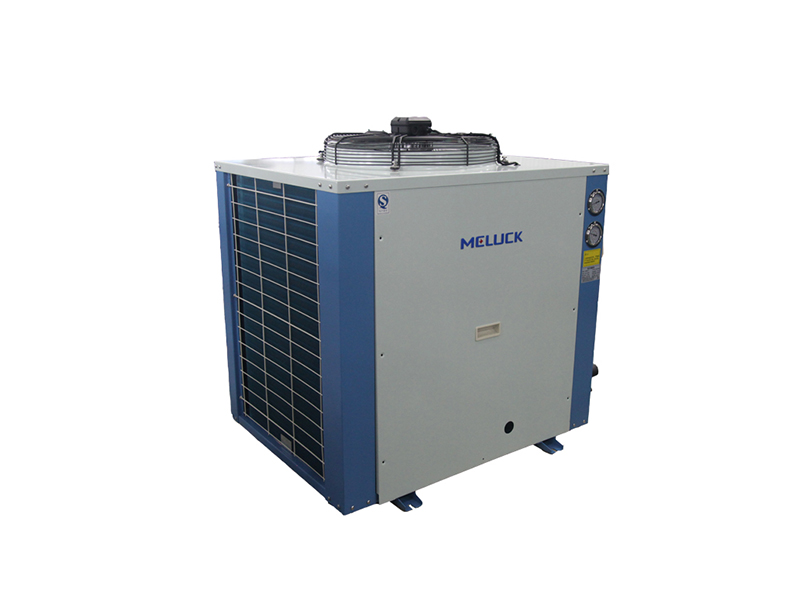
The leading digit is the cylinder count and the trailing number tracks swept volume, so a 4GE-23Y has four cylinders and a 6HE-44Y has six with a larger displacement. The letters between them identify the series and the application variant, and those letters are the part that requires the datasheet rather than a rule of thumb.
Where the model code stops helping
Two units carrying the same nominal horsepower can sit at different points on the application envelope, and a model approved for one refrigerant is not automatically approved for another. The catalogue entry tells you the frame. The compressor documentation tells you the permitted duty, the approved refrigerants and the motor version. Only the second document answers a specification question.
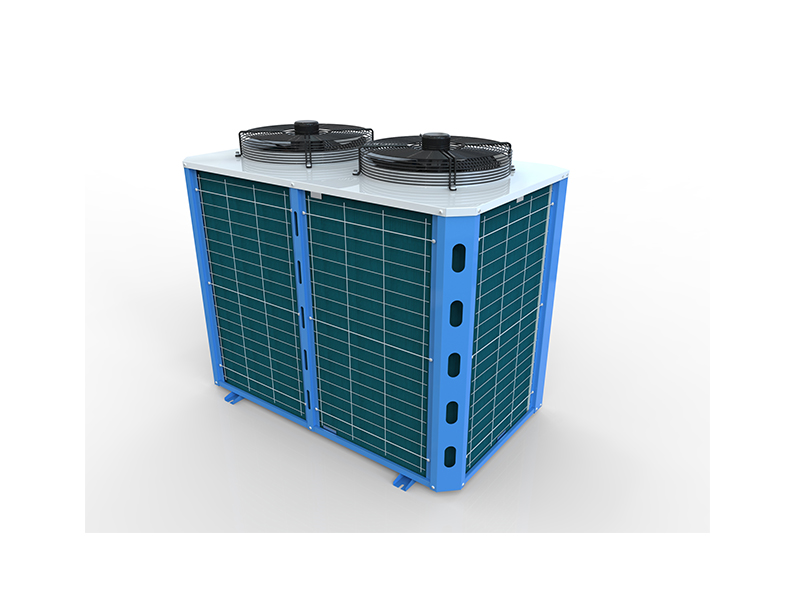
Large stores concentrate capacity in fewer, bigger machines, and choosing one large frame against several smaller ones changes how the room behaves at part load.
Large stores concentrate capacity in fewer, bigger machines, and the choice between one large frame and several smaller ones changes how the room behaves at part load. <High-Capacity Condensing Unit Selection for Cold Storage> covers how high-capacity condensing units are selected for cold storage warehouses.
The two-stage 16HP and 20HP units sit outside this table. They are built for evaporating temperatures down to about -50°C, and they answer a different question from the one a chiller room asks.
Why Horsepower Alone Misstates Capacity at Low Temperature
Capacity is mass flow multiplied by the enthalpy difference across the evaporator. As evaporating temperature falls, suction pressure and suction gas density fall with it, so each stroke traps less refrigerant. The compressor keeps turning at the same speed and moves less mass, while the compression ratio rises, which reduces volumetric efficiency and lifts discharge temperature. Between -5°C and -35°C evaporating, the same frame can lose the majority of its rated capacity.
That is why a blast freezer specified by matching horsepower to room volume usually ends up with a long pull-down, soft product and a compressor running near its limits. The records below show how far the required capacity moves for similar room sizes.
| Record | Method context | Responsible use | Do not infer |
|---|---|---|---|
| Manta, Ecuador: three 7 x 5 x 4 m blast rooms at -35°C, each on a 40HP Bitzer system | Project record; coastal humidity; seafood | A 40HP build can hold -35°C in about 140 m³ of blast room in that climate | That 40HP suits any 140 m³ blast room |
| Cairo, Egypt: 7 x 9 x 4 m blast freezer at -35°C on a 125HP Bitzer system | Project record; 24/7 French fries line | Blast capacity tracks throughput and product load | That room volume alone predicts compressor size |
| Peru: 17 x 12 x 3.1 m avocado room at +10°C on two 20HP Bitzer units | Project record; post-harvest pre-cooling | Medium-temperature rooms are sized on pull-down load | That the same capacity per cubic metre fits other produce |
| EN 378-1:2016 classification and system requirements [1] | Published standard; system level | Refrigerant group and machinery room rules apply to the whole installation | That a compliant compressor makes the room compliant |
These records come from our own project files. They are build examples, not a sizing formula, and the differences between them are the point.
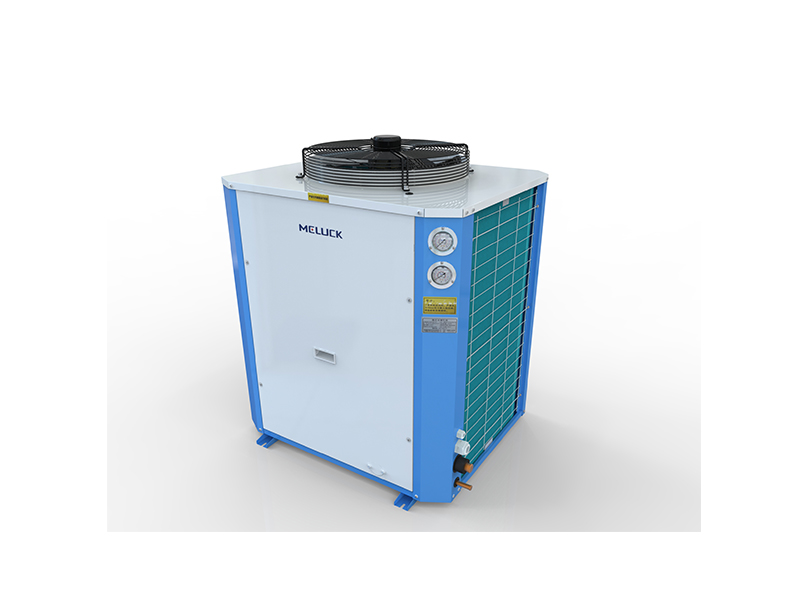
The reverse error costs money too. A compressor oversized for the holding load short-cycles, and each start brings a current spike, an oil surge and a small thermal cycle on the motor. A room selected on its pull-down peak alone will run a large machine at a small fraction of capacity for most of the day; that is exactly the case where a two-stage arrangement or several smaller compressors in parallel separate the pull-down duty from the holding duty.
Compression Ratio and When Two-Stage Compression Pays
Compression ratio is absolute discharge pressure divided by absolute suction pressure. As a working rule, single-stage reciprocating compressors become uncomfortable above a ratio of roughly eight to ten. Discharge temperature climbs toward the limit of the oil, volumetric efficiency falls, and the discharge valves work harder for less mass flow.
Two-stage compression splits that ratio across two machines with intercooling between them. The gas leaving the first stage is cooled before the second stage, so discharge temperature stays inside oil limits and the second stage starts from a denser gas. The two-stage semi-hermetic units in our range are applied down to about -50°C evaporating.
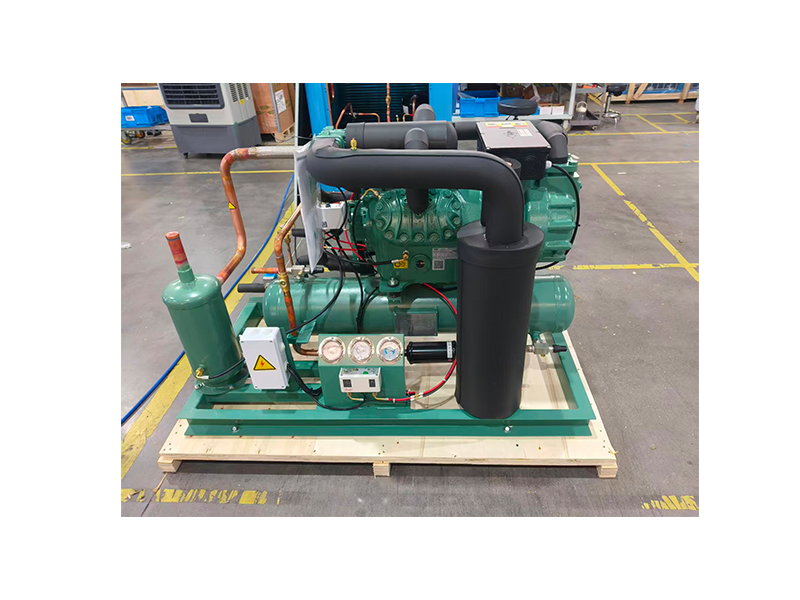
Two-stage earns its cost where the duty is genuinely low temperature and continuous: blast freezing at -35°C and below, IQF tunnels, and ultra-low storage. It does not earn its cost in a chiller room between 0°C and +8°C, or in a freezer room at -18°C to -25°C where a single stage stays inside its envelope with a condenser sized for the local climate. The extra machine brings an intercooler, more piping, more controls and one more set of valves to maintain, and part-load behaviour has to be designed rather than assumed.
A useful discipline is to compute the ratio at the design condensing temperature rather than a nominal one. A ratio that looks comfortable at 40°C condensing can cross the limit at 55°C on a hot afternoon, and the compressor pays for that difference every summer.
High Ambient Conditions and Condensing Temperature
Condensing temperature is not air temperature. It sits above ambient by the condenser's approach, which is a few kelvin on a clean coil at design airflow and considerably more when the coil is fouled or the fans are starved. A 45°C afternoon therefore pushes condensing temperature past 50°C, and every kelvin there costs capacity and power while raising discharge temperature.
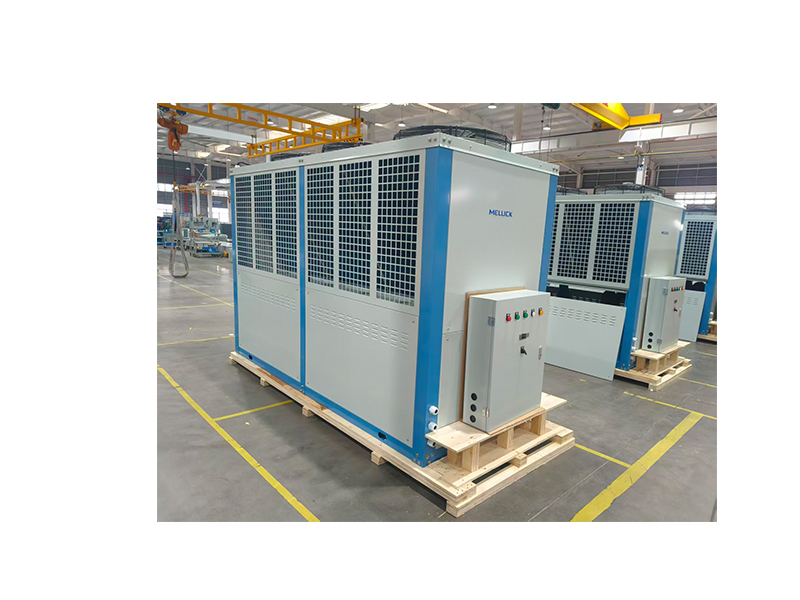
The combination that hurts is high ambient with low evaporating temperature, because the ratio rises from both ends at once. Symptoms appear in a predictable order: capacity falls short on hot days, discharge temperature approaches the oil limit, the high pressure switch trips, and eventually the motor overload trips on a unit that ran perfectly in the cool season.
Mitigations are mostly about heat rejection. Give the condenser free air rather than a recessed plant area, size the coil for the local design ambient rather than a temperate default, use EC fans so head pressure stays stable at part load, and consider a remote air-cooled or water-cooled condenser where the space cannot be ventilated. Machinery rooms also carry ventilation requirements under EN 378-1 [1], and those apply to the whole installation rather than to the compressor alone.
Ambient conditions decide whether a standard condenser selection survives July. <Selecting a Condensing Unit for Tropical Climates> covers how tropical ambient design changes condensing unit selection.
Refrigerant and Oil Choices That Affect Compressor Life
Refrigerant choice sets the pressures, the glide and the oil, and it has become as much a supply question as a performance question.
R404A carried low-temperature cold rooms for two decades and is being displaced because of its global warming potential. Lower-GWP HFC blends such as R448A and R449A now serve most new medium- and low-temperature rooms, with roughly one third of the GWP of R404A. They are A1 classified and non-flammable, and they carry a temperature glide of several kelvin, which is why they are charged as a liquid and why evaporator selection has to account for glide rather than a single saturation temperature.
The wider direction is set by the global HFC phase-down agreed under the Kigali Amendment [2], and the practical consequence for a buyer is availability. A refrigerant that is inexpensive and well supported in one market may be costly and thinly supported in another. Confirm what your local service network can supply and reclaim before the refrigerant is fixed, then confirm the compressor is approved for it, because the approved list in the compressor documentation governs.
Oil is the quieter risk. HFC systems use polyolester oil, which absorbs moisture quickly. Keep containers sealed until the moment of use, do not leave a system open overnight, and change vacuum pump oil more often than feels necessary. At low evaporating temperature the harder problem is oil return: keep gas velocities up in suction risers, fit an oil separator or suction accumulator where the layout demands it, slope suction lines back toward the compressor, and avoid traps that hold oil in the evaporator.
Crankcase heaters, oil pressure switches and sight glasses are not accessories in the optional sense. They keep oil where it belongs during the off cycle, and they give an operator the first warning when it does not stay there.
Specifying and Verifying the Unit Before You Order
An RFQ that reads "20HP Bitzer condensing unit for a freezer room" will produce offers that cannot be compared, because each supplier fills the gaps with its own assumptions. Six fields close most of that space.
| RFQ field | What to request | Why it changes the offer |
|---|---|---|
| Duty point | Capacity in kW at stated evaporating and condensing temperature | Nominal HP does not define capacity, and the same frame differs across the envelope |
| Refrigerant | One named refrigerant, not "R404A or equivalent" | Motor version, oil and expansion valve selection follow the refrigerant |
| Heat rejection | Maximum summer ambient and condenser type: air-cooled, remote or water-cooled | Sets condensing temperature, which sets the operating point |
| Power supply | Voltage, phase, frequency and control circuit voltage | A 50Hz build run at 60Hz changes speed, load and motor protection |
| Capacity control | Required steps or variable speed, plus control voltage and panel scope | Determines the unloading arrangement and the starter scope |
| Traceability | Compressor serial number, model and motor version, test certificate, declaration of conformity, spare parts list | Proves the unit is the model quoted and gives you a service path |
- Reject: "Bitzer 20HP freezer unit, R404A, complete."
- Replace with: "Bitzer semi-hermetic condensing unit, model and motor version stated and approved for the selected refrigerant, capacity in kW at -30°C evaporating and 45°C condensing, 380-415V/3/50Hz, capacity control steps stated, oil management accessories listed, compressor serial number and test certificate supplied."
Verify the compressor's own identity. The nameplate carries model, motor version and serial number, and the test certificate should match. Ask for compressor documentation separately from unit documentation, because a unit is assembled around the compressor and the assembly can be correct while the condenser, receiver or controls are undersized. Check spare parts support for valve plates, gaskets, filters and contactors in your market before the order rather than after the first failure.
A nameplate only proves identity when the paperwork matches the machine that arrived. <Bitzer CRAA Certified Condensing Units: China Market Guide> covers CRAA certification for Bitzer condensing units in the China market.
Six Checks That Catch Compressor Trouble Early
Most compressor failures announce themselves months ahead in readings that nobody compared. Six checks cover most of the ground.
- Suction superheat at the evaporator outlet. A commissioning target in the region of 5 K to 8 K is common. Rising superheat at constant load points to refrigerant loss or a starving expansion valve.
- Discharge temperature against the design value. A discharge temperature climbing while evaporating pressure holds usually means a fouled condenser or non-condensable gas in the system.
- Condenser approach. Compare condensing temperature with ambient temperature. A widening gap is a cleaning job, not a refrigerant problem.
- Oil level and oil pressure trips. Low oil indicates poor oil return or refrigerant migration, and adding oil treats the symptom rather than the cause.
- Starting behaviour. Foaming or a noisy start after a long off cycle points to refrigerant sitting in the crankcase, which the crankcase heater and pump-down control are meant to prevent.
- Pull-down time from a warm start, compared with commissioning records. A slowly lengthening pull-down at normal superheat points at worn valve plates.
None of these checks needs more than a manifold gauge set, a clamp meter and a thermometer, and each one tells you more than a quarterly visual inspection.
Send the Duty Point Before You Choose a Model
Send us the evaporating temperature, the condensing temperature or summer ambient, the refrigerant, the required capacity in kW, the power supply, the room volume and product load, and the control voltage you use. With those details we can match a Bitzer semi-hermetic condensing unit to the room, tell you where a single stage stops being sensible, and list the accessories that keep oil and discharge temperature inside their limits, without treating one horsepower figure as the whole specification.
MELUCK, meluck@meluckcooling.com, +8617369893087.
FAQ
What is the difference between a Bitzer semi-hermetic and a scroll compressor?
A semi-hermetic reciprocating compressor has a bolted housing that opens for service and a motor cooled by suction gas; a scroll is normally a welded, hermetic package with no field repair of the compression element. For chiller rooms and small freezer rooms the scroll is often cheaper and quieter. At low evaporating temperature and high compression ratio, the reciprocating machine holds capacity and efficiency better and can be rebuilt. The trade is maintenance attention against serviceability.
How do I choose the right Bitzer model for my cold room?
Start from the duty point rather than the horsepower: evaporating temperature, condensing temperature at design ambient, refrigerant, and capacity in kW. Read the capacity table for candidate models at exactly that point, then confirm discharge temperature, motor version and approved refrigerant. Cylinder count and swept volume follow from the capacity you need, and the model code tells you both.
Can a semi-hermetic compressor reach -40°C or lower?
Single-stage builds normally stop around -30°C to -35°C evaporating, where the compression ratio, discharge temperature and volumetric efficiency become the limiting factors. Below that, two-stage compression with intercooling is the usual route, and two-stage semi-hermetic units in our range are applied down to about -50°C evaporating for blast freezers and IQF lines. Confirm the published envelope of the specific model instead of assuming a larger frame covers the duty.
How long does a Bitzer semi-hermetic compressor last?
Service life is set by how far outside its envelope the unit runs, not by a calendar figure. Discharge temperature, oil quality, condenser cleanliness and correct superheat decide how fast valves and bearings wear. A unit held inside its envelope with a clean condenser and disciplined oil changes accumulates far less thermal stress than one run at high condensing temperature on a fouled coil. Monthly discharge temperature and condenser approach readings give you the trend that predicts failure.
Does a 60Hz market need a different compressor?
Yes. Frequency changes shaft speed, and with it mass flow, motor load and protection settings. A 50Hz compressor run at 60Hz overspeeds the motor, while a genuine 60Hz build carries the matching winding and is rated for that speed. Specify voltage, phase, frequency and control circuit voltage together, and read the compressor nameplate rather than the unit label.
References
[1] EN 378-1:2016, "Refrigerating systems and heat pumps - Safety and environmental requirements - Part 1: Basic requirements, definitions, classification and selection criteria," CEN, 2016.
[2] UNEP, "Amendment to the Montreal Protocol on Substances that Deplete the Ozone Layer (Kigali Amendment)," United Nations Environment Programme, 2016.
If you're interested, check out these related articles:
Bitzer 2-Stage Compressor for Ultra-Low Temp Cold Rooms
High-Capacity Condensing Unit Selection for Cold Storage
Cold Room for Food Service: Compact Energy Efficient Options
Cold Room Project Morocco: Citrus and Seafood Cold Chain
Cold Room Projects Ethiopia: Flowers and Food Cold Chain
With over 15 years of experience as a MELUCK refrigeration engineer, I specialize in the design of cold storage, chillers, ice makers, and cold chain energy-saving systems, providing technical support to distributors and engineering companies worldwide.

meluck