
Bitzer CRAA Certified Condensing Units: China Market Guide
Sourcing a Bitzer condensing unit for a China-based cold storage project or from a Chinese manufacturer carries a specific compliance risk that doesn't exist in many other markets: without CRAA certification, the equipment may not be accepted by local engineering authorities, grid compatibility checks, or insurance requirements. CRAA certification, issued by the China Refrigeration and Air-Conditioning Industry Association, verifies that the condensing unit meets Chinese performance and safety standards. For international buyers and domestic Chinese contractors alike, this is not a paperwork detail. It is the difference between a unit that clears project inspection and one that gets rejected. This guide explains what CRAA certification covers, how it affects Bitzer condensing unit reliability, and what to check when ordering.
What CRAA Certification Means for Bitzer Condensing Units
CRAA certification is a product conformity assessment specific to the Chinese refrigeration industry. It confirms that a condensing unit has passed tests under Chinese standard conditions, including tests for cooling capacity, power input, sound level, and safety protection. For Bitzer condensing units, which are engineered in Germany but often assembled or integrated by Chinese manufacturers like Meluck, the CRAA mark bridges the gap between international compressor quality and local market requirements.
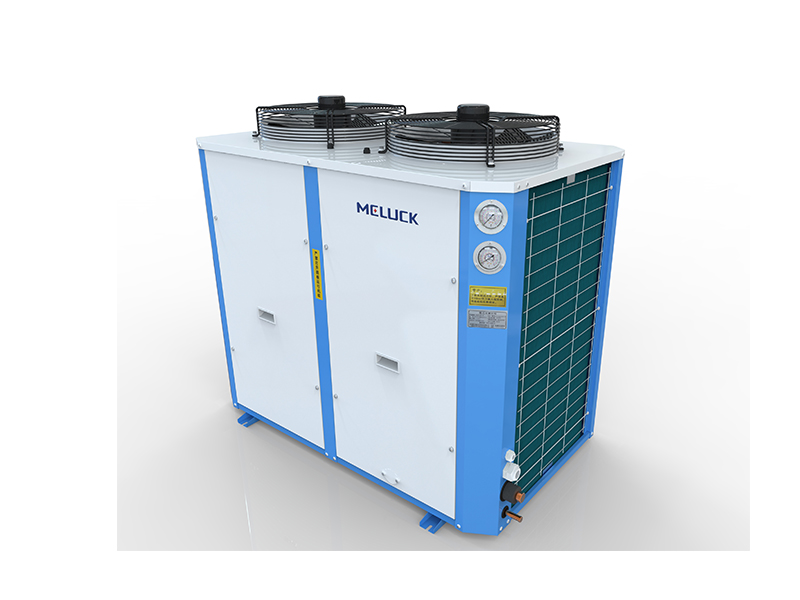
The certification process checks that electrical components, pressure vessels, and controls are compatible with China's 380V/50Hz grid, and that the unit can operate reliably under the high condensing temperatures common in southern Chinese provinces like Guangdong and Fujian. In my experience reviewing cold room projects across Asia, I have seen importers bring in European-built units without CRAA approval, only to face delays when the local inspection bureau demanded proof of Chinese standards compliance before granting operation permits.
This is not a reflection on Bitzer's quality; the compressor itself is globally recognized. The issue is that a condensing unit is a system, and the assembly must satisfy Chinese regulatory expectations.
How CRAA Certification Influences Equipment Selection
When you are comparing multiple Bitzer condensing unit configurations, the presence of CRAA certification should narrow the field quickly. Units that carry the certification have already been evaluated under conditions that matter for China: sustained high-ambient operation, dusty environments, and the specific harmonic requirements of China's electrical grid.
From a technical perspective, three factors stand out:
| Factor | Without CRAA | With CRAA |
|---|---|---|
| Grid compliance | May require on-site adjustments | Pre-evaluated for 380V/50Hz grid |
| Cooling capacity rating | Tested under European/factory conditions | Tested under Chinese standard conditions (GB/T 21363) |
| Acceptance by Chinese authorities | Risk of rejection or additional testing | Recognized by local inspection bureaus |
For large cold rooms or food processing plants that must pass government food safety inspections, the cooling capacity rating done under GB/T 21363 (the Chinese standard derived from CRAA testing) directly underwrites the project's compliance documentation. If your program involves multiple units with cumulative cooling load calculations, it is worth confirming the CRAA rating for each model before finalizing your equipment list.
If you are sourcing specifically for a project in Henan or Sichuan where summer ambient temperatures frequently exceed 38°C, a CRAA certified unit's performance data under high-ambient conditions is far more relevant than European nominal data. I recommend requesting the CRAA test report directly from the manufacturer and comparing the rated capacity at 35°C ambient and 45°C ambient against your site's design day.
Verifying CRAA Certification Before Ordering
Real CRAA certification is not a self-declared mark. Each certified model receives a unique certificate number, and the manufacturer's name on the certificate must match the unit's nameplate. I have seen instances where a distributor claimed a unit was "CRAA compliant" but could not produce the actual certificate.
When you request documentation, look for three things:
- Certificate number that can be cross-checked on the CRAA website
- Exact model match between certificate and unit nameplate
- Validity date within the certificate's active period (typically three years)
A reputable supplier will provide these without hesitation. If the response is vague or focuses only on Bitzer's global reputation without addressing the CRAA document, treat it as a red flag.
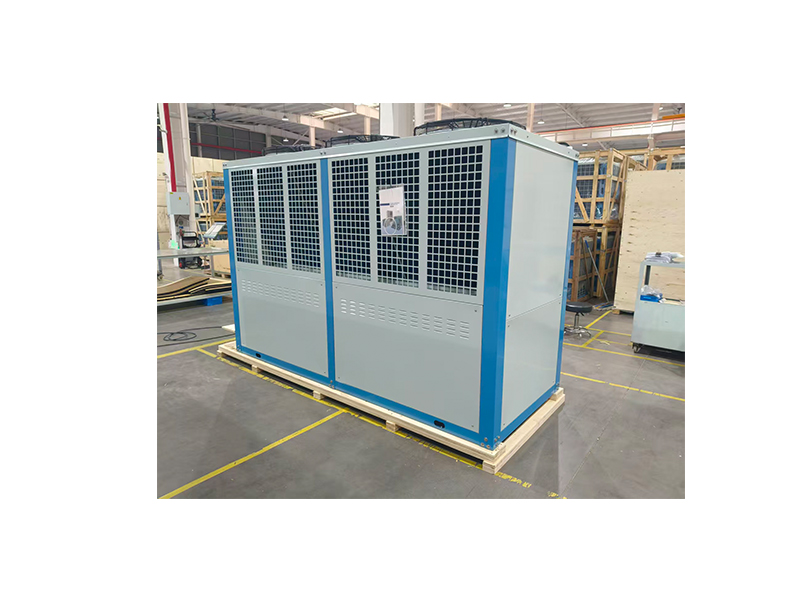
Our team at Meluck holds multiple CRAA certifications for Bitzer condensing unit series ranging from 3HP to 50HP, and we include the certificate copy in every project documentation package as standard practice. This is not a marketing gesture; it is a direct response to the questions we repeatedly received from Southeast Asian and Middle Eastern buyers whose projects had China-facing compliance requirements.
How CRAA Certification Lowers Long-Term Operational Risk
The operational benefit of a CRAA certified Bitzer condensing unit goes beyond initial project approval. Units certified under the CRAA program have undergone endurance testing and safety protection verification that anticipate real Chinese grid conditions, including voltage fluctuation and momentary phase loss scenarios that are less common in European infrastructure.
In a cold storage project for a French fries processing plant in Cairo, we specified Bitzer 75HP units that also hold CRAA certification. The Egyptian client's primary concern was cooling reliability during summer peaks, but the CRAA certification gave them additional confidence because the units had been tested for continuous operation under fluctuating voltage conditions similar to those in parts of Africa and the Middle East. That cross-benefit is worth recognizing: the rigorous Chinese testing protocol often produces equipment that handles unstable grids better in any region.
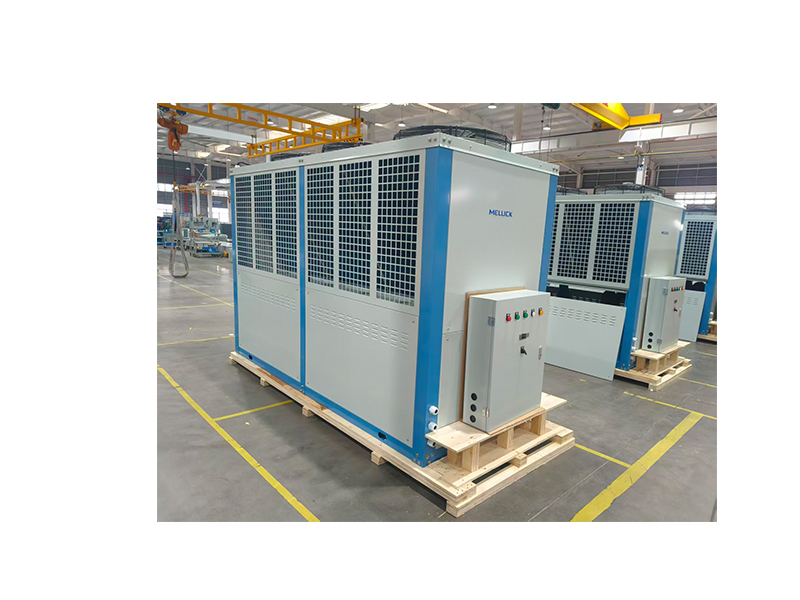
For buyers investing in cold chain infrastructure with a five-to-ten-year operational horizon, the certification is a proxy for design robustness that less rigorous testing schemes may not capture. When you calculate total cost of ownership, the avoidance of a single compressor failure due to electrical incompatibility often justifies the difference in unit price between a certified and a non-certified assembly.
Common Questions About Bitzer CRAA Certified Condensing Units
Is CRAA certification mandatory to sell or use condensing units in China?
Not always for private installations, but for any facility that requires government inspection—food processing plants, large cold storage warehouses, public procurement projects—it is effectively mandatory. The local fire bureau and market supervision bureau can require proof of CRAA compliance during facility acceptance. Without it, the project may be refused operation.
How does CRAA differ from CE or UL certification?
CE is European, UL is North American. CRAA is China-specific and tests under Chinese standard conditions, including GB/T 21363. CRAA includes evaluation of Chinese grid compatibility and safety standards that CE and UL do not address. A unit with CE marking but no CRAA certification may still fail Chinese inspection.
Can I get a CRAA certificate for a Bitzer unit assembled outside China?
The manufacturer applying for CRAA certification must have a legal entity in China and the unit must be produced under a quality management system audited by CRAA. In practice, CRAA certification is held by Chinese manufacturers that integrate genuine Bitzer compressors into their condensing unit assemblies. If you are importing a fully assembled unit from outside China and no Chinese entity holds the certificate, CRAA certification is unlikely.
How can I confirm that the Bitzer compressor inside the unit is genuine?
Original Bitzer compressors have a unique serial number that can be verified through Bitzer's online verification system. Additionally, a CRAA certified unit will list the compressor model and serial range in the certification documentation. I recommend always cross-checking the compressor serial number independently with Bitzer, even when the overall unit has CRAA certification.
What should I do if my project requires CRAA certification but my existing units do not have it?
If the units are already on site and the project is facing compliance rejection, the most practical path is to work with the original supplier to arrange a field evaluation by a CRAA-authorized testing body. This is expensive and time-consuming, which is why pre-purchase verification is always preferred. For new orders, specifying CRAA certification at the RFQ stage avoids this situation entirely. If your supply chain involves multiple vendors with varying certification status, share your project documents with a qualified manufacturer at meluck@meluckcooling.com or call +8617369893087 to confirm which models in your configuration carry the necessary approvals before finalizing the order.
If you're interested, check out these related articles:
Processing Room Solutions for Food Plants - Meluck
Blast Freezer Room Solutions -40C~-60C - Meluck
Peru Avocado Pre-Cooling Cold Storage - Meluck
Ecuador Multi-Temperature Cold Storage Project - Meluck
With over 15 years of experience as a MELUCK refrigeration engineer, I specialize in the design of cold storage, chillers, ice makers, and cold chain energy-saving systems, providing technical support to distributors and engineering companies worldwide.

meluck