
Bitzer 2-Stage Compressor for Ultra-Low Temp Cold Rooms
When a cold storage project requires reliably holding temperatures below -40°C, single-stage compressors struggle with high discharge temperatures and rapid oil degradation. The Bitzer 2-stage compressor solves this by splitting compression across two stages with intermediate cooling, enabling stable operation down to -50°C. This article, grounded in years of cold chain engineering and turnkey project experience, walks through practical selection, integration, and sourcing — not just catalog specs, but what actually drives reliability and total cost of ownership in demanding ultra-low temperature applications.
Two-Stage Compression Technology in Ultra-Low Temperature Cold Rooms
In a single-stage compressor, the entire pressure lift from suction to discharge is handled in one pass. As the evaporation temperature drops deeper into the negative range — -35°C, -40°C, -50°C — the compression ratio climbs sharply. That drives up discharge temperature, degrades oil viscosity, and shortens valve life. A two-stage compressor sidesteps this by compressing in two steps. Refrigerant vapor first enters a low-pressure cylinder, is discharged at intermediate pressure, passes through an intercooler that reduces its temperature, then enters the high-pressure cylinder for final compression. The result is a discharge temperature often 30 to 40 K lower than an equivalent single-stage unit operating at the same suction conditions.
Bitzer’s semi-hermetic two-stage reciprocating compressors, such as the 16HP and 20HP models, are purpose-built for evaporation temperatures down to -50°C. They incorporate high-efficiency valve plates, integrated oil pumps, and generously sized motor cooling channels. The intermediate cooling not only protects the compressor but also improves volumetric efficiency and reduces the energy penalty of deep-freeze operation. In applications like blast freezers, IQF tunnels, and seafood freezing rooms where evaporator temperatures routinely sit at -45°C to -50°C, this design keeps oil within its viscosity window and dramatically extends maintenance intervals.

Selection Criteria for Bitzer 2-Stage Compressors in Cold Storage Projects
Choosing a two-stage compressor over a single-stage or screw compressor is not just about the temperature setpoint. The decision turns on four factors that I’ve seen trip up procurement teams repeatedly.
First, sustained evaporation temperature. If your cold room is designed for -18°C storage, a standard single-stage Bitzer reciprocating compressor with proper refrigerant is perfectly adequate. But when the evaporator must operate at -38°C or colder — common for blast freezers and IQF lines — discharge temperatures on a single-stage machine can exceed safe limits, especially on pull-down. A two-stage compressor handles that margin without hot gas injection or liquid injection, which add complexity.
Second, ambient conditions. In tropical climates where the condensing temperature runs high, the total compression ratio becomes even more severe. We’ve replaced single-stage units in Southeast Asian and Middle Eastern projects precisely because they tripped on high discharge temperature during summer afternoons. The two-stage design absorbs that ambient stress more gracefully.
Third, load profile. Screw compressors are excellent for steady-state high-capacity, but many cold rooms cycle between heavy pull-down and light holding loads. Reciprocating two-stage compressors handle part-load operation efficiently with simple cylinder unloading, whereas a screw compressor at low load can consume more power per unit of cooling.
Fourth, total cost of ownership. A two-stage compressor costs more up front than a single-stage, but if it avoids a refrigerant injection system and reduces oil change frequency and valve replacement, the payback over three to five years is strong. For a mid-sized blast freezer room running 24/7, we often spec the Bitzer 16HP or 20HP two-stage condensing unit as the right balance of capacity, efficiency, and serviceability.
If your project involves a freezer room with a setpoint of -40°C or lower and you’re unsure whether a single-stage or two-stage compressor is the right match, share your specifications and location — our engineers can confirm the best option before you commit to equipment.
Bitzer 2-Stage Compressor Specifications and Refrigerant Selection
Bitzer offers a range of two-stage semi-hermetic reciprocating compressors engineered for low-temperature refrigeration. The table below summarizes key specifications for the two models most commonly deployed in cold room projects.
| Model | Displacement (m³/h) | Evaporation Range (°C) | Power (HP) | Suitable Refrigerants |
|---|---|---|---|---|
| Bitzer 2-stage 16HP | 56.4 | -50 to -20 | 16 | R404A, R448A, R449A |
| Bitzer 2-stage 20HP | 71.3 | -50 to -20 | 20 | R404A, R448A, R449A |
Refrigerant choice directly affects capacity, discharge temperature, and GWP compliance. R404A remains the most common refrigerant in ultra-low temperature cold rooms, but its high GWP is driving a shift to alternatives. The Bitzer 2-stage compressors are fully compatible with R448A and R449A, which offer up to 65% lower GWP with similar capacity and lower discharge temperatures. In recent projects, we’ve started transitioning to R449A as the standard fill, which also eases compliance with F-gas regulations in markets like the EU and Middle East.
The compressor’s ability to maintain low discharge temperature with these blends is critical — R448A and R449A exhibit glide, so the condenser and evaporator must be sized accordingly. Bitzer’s published application limits provide detailed envelopes for each refrigerant, and we cross-check those against the specific evaporator temperature and condensing temperature of the project before finalizing the unit selection.
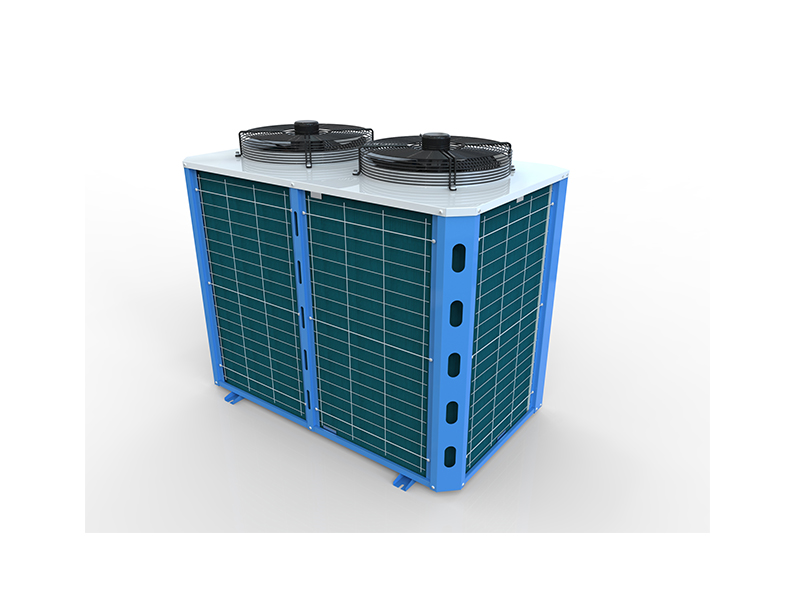
System Integration: Condensing Unit Design and Commissioning
A compressor alone does not make a cold room. The condensing unit that packages the Bitzer 2-stage compressor with the condenser, receiver, controls, and safety devices must be designed to support reliable start-up, oil return, and capacity control across the full operating range.
In our turnkey projects, we pay close attention to three integration points. First, suction line sizing and slope. At ultra-low suction temperatures, refrigerant velocity must be high enough to carry oil back to the compressor, but not so high that pressure drop kills capacity. We run a detailed pipe sizing calculation for each project, factoring in the equivalent length of fittings and the vertical rise.
Second, crankcase heater and oil management. A semi-hermetic compressor sitting idle in a -35°C machine room will accumulate liquid refrigerant in the oil sump. A correctly sized crankcase heater and a pump-down cycle on shutoff prevent liquid slugging on start-up. Bitzer’s specifications include heater wattage recommendations; cutting corners here leads to broken valves.
Third, capacity control for variable loads. Many ultra-low temperature rooms have a sharp pull-down period after loading, followed by a low-load holding phase. On the Bitzer two-stage compressors, capacity can be regulated via cylinder unloading or by fitting a hot gas bypass. The choice depends on the expected load variation. We’ve found that for blast freezer rooms with batch cycles, cylinder unloading plus a digital thermostat with deadband control delivers stable temperature without short-cycling.
Commissioning is the moment where design assumptions meet reality. We always verify subcooling, superheat, oil level, and discharge temperature against the Bitzer application limits during the first 24 hours of loaded operation. A log of these parameters, shared with the operator, becomes the baseline for future maintenance.
Sourcing Genuine Bitzer Compressors and Ensuring Long-Term Support
Bitzer’s market position attracts counterfeit parts. Buying a “Bitzer compressor” from an unverified source carries real risk — we’ve seen units with mismatched valve plates, undersized motors, and no genuine Bitzer oil charge, all of which fail within the first year.
The safest route is to work with a supplier that provides complete Bitzer condensing units with serial-numbered, original compressors, and that can demonstrate CRAA certification where applicable. A genuine Bitzer 2-stage semi-hermetic compressor comes with Bitzer’s factory test report, a nameplate with QR code traceability, and consistent casting and machining quality. When you request a complete condensing unit built around that compressor, the supplier should also provide a wiring diagram, refrigerant charge specification, and a commissioning checklist.
After-sales support separates a project that runs for a decade from one that becomes a headache. Bitzer compressors are serviceable in the field, but that requires a local stock of genuine gaskets, valve plates, and oil filters, and a technician who understands semi-hermetic rebuild procedures. At MELUCK, we package Bitzer 2-stage compressors into fully engineered condensing units and offer pre-shipment testing, on-site commissioning supervision, and a stocked spare parts program. This turnkey approach reduces the coordination burden on the contractor and gives the end user a single point of responsibility for the entire refrigeration system.
For ultra-low temperature cold room projects, compressor selection directly impacts system reliability and energy cost. The Bitzer 2-stage semi-hermetic compressor has proven itself across thousands of cold storage installations globally. Share your cold room temperature requirements and capacity needs with our engineering team at meluck@meluckcooling.com or call +8617369893087, and we’ll recommend the optimal condensing unit and evacuation system to match your application.
Common Questions About Bitzer 2-Stage Compressors
What is the difference between a two-stage compressor and a single-stage compressor in a deep freeze application?
A two-stage compressor compresses refrigerant vapor in two steps with an intermediate cooling stage, while a single-stage compressor does all the work in one pass. In deep freeze applications where the evaporation temperature is below -35°C, the compression ratio in a single-stage machine becomes high enough to push discharge temperatures beyond safe limits for oil and valves. The two-stage design cuts the ratio per stage, lowers discharge temperature, and improves energy efficiency. For a blast freezer running at -45°C suction, a two-stage Bitzer compressor will show discharge temperatures around 90 to 100°C, whereas a single-stage equivalent could exceed 130°C — enough to cause oil coking and rapid wear.
Can I use older refrigerants like R22 with a Bitzer 2-stage compressor?
Technically, some older Bitzer two-stage models were approved for R22, but new units are not supplied for R22 service. R22 is being phased out globally under the Montreal Protocol, and Bitzer’s current production for low-temperature two-stage compressors is validated for R404A, R448A, R449A, and R407F. Attempting to run a modern Bitzer 2-stage compressor on R22 would invalidate the warranty and likely cause oil return issues because the refrigerant’s thermal properties are not matched to the compressor’s internal clearances and oil specification. If you are replacing an old R22 system, the smart move is to upgrade the refrigerant and, if necessary, the compressor to a compatible HFO blend.
How does a two-stage compressor affect energy consumption compared to a single-stage?
At very low suction temperatures, a two-stage compressor uses less energy per unit of cooling than a single-stage machine. The intermediate cooling reduces the power required by the high-pressure stage, and the overall isentropic efficiency is higher. In practice, for a cold room operating at -40°C evaporation temperature, we typically see a 10 to 15 percent reduction in kW per ton of refrigeration compared to a single-stage system of similar capacity. The exact saving depends on the refrigerant, condensing temperature, and part-load profile, but over a few years of continuous running, the energy difference more than offsets the higher initial cost of the two-stage unit.
What maintenance does a semi-hermetic compressor require?
A Bitzer semi-hermetic two-stage compressor needs regular oil changes, crankcase heater function checks, valve plate inspection, and motor winding resistance testing. Oil should be sampled annually and changed when acidity or moisture exceeds Bitzer’s limits. The intercooler and oil cooler (if fitted) must be kept clean to maintain discharge temperature control. Electric connections and contactors should be inspected for tightness and signs of overheating. Because the compressor is serviceable, worn valve plates and gaskets can be replaced in the field, which is a significant advantage over welded hermetic compressors. We recommend keeping a spare gasket set, oil filter, and a set of valve plates on site to minimize downtime. If you are planning a new ultra-low temperature cold room or upgrading an existing system and want to confirm the right compressor selection and condensing unit configuration, send your part numbers and required temperature to meluck@meluckcooling.com or call +8617369893087 — we’ll provide a full technical proposal tailored to your project.
If you're interested, check out these related articles:
Egypt French Fries Cold Storage Project - Meluck
Chiller Room Solutions -10C~10C - Meluck
Freezer Room Solutions -25C~-18C - Meluck
Myanmar Potato Seed Cold Storage Project - Meluck
With over 15 years of experience as a MELUCK refrigeration engineer, I specialize in the design of cold storage, chillers, ice makers, and cold chain energy-saving systems, providing technical support to distributors and engineering companies worldwide.

meluck