
High-Capacity Condensing Unit Selection for Cold Storage
A wrong condensing unit choice for a large cold storage warehouse shows up in two ways: compressors that trip on hot afternoons, or energy bills that grow faster than your storage volume. The projects we support across Africa, the Middle East, and South America repeat a pattern. The refrigeration load on paper never matches the field reality. Ambient temperatures run 5 to 8 degrees hotter than design assumptions. The power supply fluctuates. The daily product throughput is higher than planned. In those conditions, selecting the right high-capacity condensing unit is the single decision that determines whether a cold storage investment pays back or becomes a source of continuous operating problems. My experience commissioning Bitzer-based systems in Egypt, Ecuador, and other hot-climate locations has given me a clear set of priorities for capacity selection and configuration decisions.
How Much Capacity Is Enough for a Cold Storage Warehouse
Most warehouse projects I work on start with a refrigeration load calculation. That number is a starting point, not a final specification. The actual sustained capacity needed in a cold storage warehouse operating in a tropical or desert climate is often 20 to 30 percent higher than the calculated peak load. The gap comes from three sources that are easy to overlook in design software. First, air infiltration through dock doors during loading and unloading cycles can double the fresh air load compared to standard assumptions. Second, product entering the warehouse is rarely fully pre-cooled to storage temperature, so the pull-down load is additive to the steady-state holding load. Third, condenser performance degrades in high ambient temperatures faster than manufacturer catalog data suggests if the coil has even moderate fouling from dust or coastal salt.
In the Egypt French fries project we built near Cairo, the total cold storage volume was over 4,000 cubic meters split across frozen storage at -20°C and a blast freezer at -35°C. The calculated load for the large frozen storage rooms suggested 75HP per room. We specified exactly that. But we also sized the parallel compressor arrangement with one additional compressor bank that could stage in during the hottest summer days. That margin kept the cold rooms within 1°C of setpoint when ambient temperatures exceeded 45°C. Without that buffer, the same system would have cycled on high-pressure safety cutouts repeatedly and the client would have been calling every week. For a cold storage warehouse handling export-grade product, temperature excursions are not an inconvenience. They mean rejected containers and lost payment.
The practical rule I apply is simple. If the warehouse operates in an area where the design ambient temperature is above 38°C and there is no backup cooling system, add at least 25 percent capacity margin to the compressor selection. The upfront cost is a fraction of a lost shipment.
Reciprocating, Scroll, or Screw Compressors for High-Capacity Applications
The compressor type debate is less about technology and more about operating profile. For cold storage warehouses that run 24 hours a day with very steady load, a Bitzer semi-hermetic reciprocating compressor or a screw compressor delivers the best combination of low lifecycle cost and serviceability. Scroll compressors like Copeland are practical for smaller capacity requirements in the 2 to 7 HP range, but once a cold storage warehouse moves into the 20HP to 50HP range, the economics tilt toward reciprocating or screw.
In the Ecuador multi-temperature cold storage facility we built, which included three blast freezers and a frozen storage room, we installed Bitzer 40HP reciprocating units on the blast freezers and a 30HP unit on the frozen storage. The reciprocating design allowed us to standardize on a common compressor platform. Spare parts inventory is simpler. The local service technicians only need to know one compressor family. For the client, that reduced maintenance training time and part costs over the life of the facility.
Screw compressors become justified when a single compressor must deliver more than 50HP of continuous cooling with minimal vibration and noise. In a warehouse where the compressor room is adjacent to office or processing areas, screw compressors reduce structure-borne noise transmission. However, they are more sensitive to refrigerant charge loss and require cleaner power. If the site is in a region with frequent voltage dips, a reciprocating compressor is more forgiving. I have seen screw compressor controllers fault out on under-voltage events that a reciprocating compressor rides through without interruption. In a cold storage warehouse storing thousands of tons of frozen product, any unplanned shutdown carries real financial risk.
High Ambient Temperature Performance and Condenser Sizing
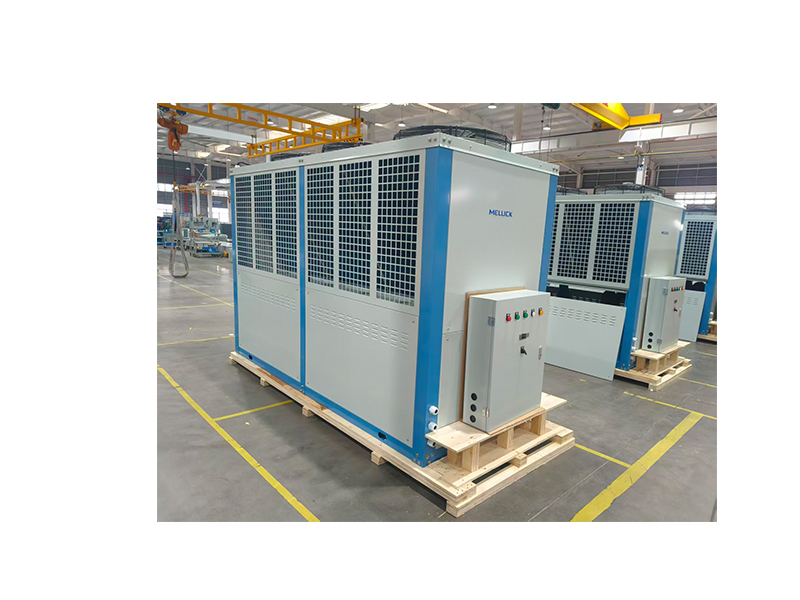
Condenser selection matters as much as compressor selection. An undersized air-cooled condenser in a hot climate will cause the condensing pressure to float up, reducing compressor capacity and increasing power draw. In the avocado cold storage room we installed in Peru, the ambient temperature regularly exceeded 35°C during the harvest season. The cold room was designed at 10°C, a moderate temperature, but the condenser had to reject heat from two Bitzer 20HP units into that hot air. We oversized the condenser coil by approximately 30 percent relative to the standard catalog selection. The result was a condensing temperature that stayed within 5°C of design even on the hottest days, and suction pressure that remained stable. The alternative, a standard-sized condenser, would have pushed condensing temperature 10 to 12 degrees higher, dropping the system COP by roughly 15 percent.
In regions with seasonal dust or sand, condenser coil spacing should be wider than standard. The 8mm tube pitch and 2.5mm fin spacing common in some markets can clog quickly in a warehouse environment near a road or construction zone. We specify fin spacing of at least 3.0mm and coated fins for coastal or desert sites. The additional cost is small. The avoided maintenance downtime is significant.
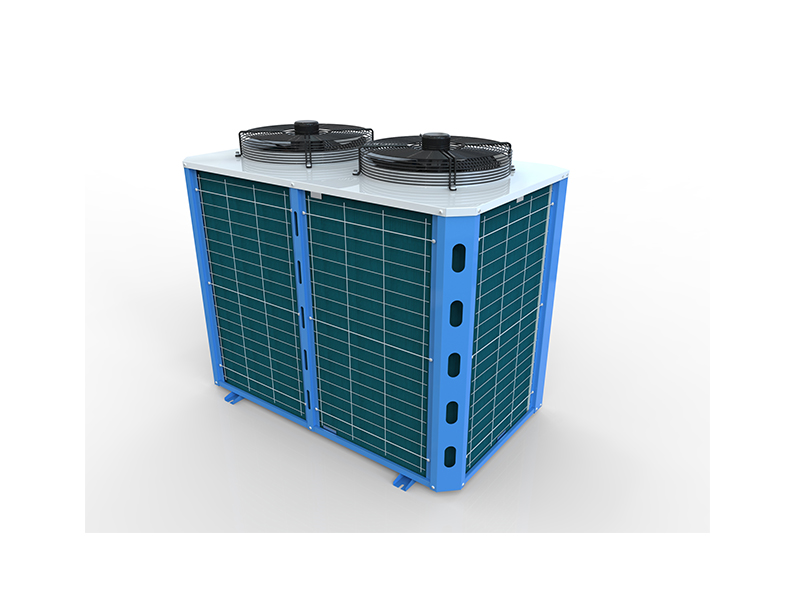
If you are selecting a condensing unit for a cold storage warehouse in a region where summer temperatures exceed 40°C, it is worth confirming the condenser's heat rejection capacity at the actual design ambient, not the nominal rating conditions, before finalizing your BOM. Reach out with your site conditions and we can validate the condenser sizing against the compressor selection.
Single Units, Parallel Configurations, and Redundancy
For large cold storage warehouses, the decision between a single large condensing unit and a parallel arrangement of multiple smaller units changes everything about system resilience. A single 100HP condensing unit is simpler to install and takes less floor space. But if that compressor fails, the entire cold storage warehouse goes offline. In the Egypt project, the frozen storage rooms each used a single Bitzer 75HP system because the warehouse had multiple rooms, so a failure in one room did not affect others. The blast freezer, however, was a single 125HP unit because the freezing process required a very high capacity in a short time window, and splitting that across two compressors would have complicated the defrost sequence and refrigerant distribution.
Where a cold storage warehouse has only one large room, I recommend a parallel configuration with at least two compressors sized so that one can carry the holding load while the other handles the pulldown or spare capacity. A parallel condensing unit with three Bitzer piston compressors and a PLC control system can stage up and down in response to load, balancing runtime and extending compressor life. The control system also provides monitoring data, which reduces the burden on facility operators to manually check temperatures throughout the day.
The parallel approach adds cost to the refrigeration plant, but in a cold storage warehouse holding valuable product with no backup facility, that cost is cheaper than a single point of failure. I worked on one project where a contractor had installed a single large screw compressor for a fish cold storage room, and after a controller failure during the night, the entire batch of export shrimp was lost. The cost of that product loss was roughly three times the cost of upgrading to a parallel system at the time of construction. The math is unforgiving.
What to Check in Condensing Unit Specifications for Cold Storage Warehouses
Beyond capacity and compressor type, several specification details separate a condensing unit that operates reliably for a decade from one that becomes a maintenance burden within two years. The first is the compressor protection package. For cold storage warehouses where the condensing unit runs unattended, the unit must include high and low pressure safeties, oil pressure differential switches, crankcase heaters, and phase failure relays. A condensing unit that lacks these requires the installer to add them in the field, and field-added protections are the first things bypassed when a problem occurs and production is at stake.
The second detail is the control interface. Many cold storage warehouses now expect remote monitoring via a simple web-based dashboard, not a proprietary panel. A condensing unit with a basic pressure switch and contactor without a digital controller cannot integrate into a modern facility monitoring system. In the avocado project in Peru, the client's facility manager monitors temperatures and compressor status from a smartphone. That capability required a condensing unit with a controller that supported Modbus communication to the central PLC. Without that, the manager would have to walk the cold room floor once an hour.
The third detail is the refrigeration piping outlet configuration. In large warehouses where the condensing unit may be located on a mezzanine or roof, the suction and liquid line connections should be designed for long piping runs with appropriate oil return slopes and suction line accumulators. A condensing unit that is supplied without an accumulator in a low-temperature application will flood the compressor with liquid refrigerant on startup, reducing compressor life significantly.
A practical recommendation from our project experience is to always request the full bill of materials for the condensing unit before ordering. An original Bitzer unit from a manufacturer like MELUCK includes the compressor, electricals, oil separator, receiver, accumulator, condenser, and full safeties as a pre-assembled unit. A lower-cost copy often omits the accumulator or uses a non-genuine receiver, and those missing items appear as add-ons that inflate the final invoice and create future leak points.
Questions Cold Storage Warehouse Operators Ask About Condensing Units
Do I need a water-cooled or air-cooled condenser for a high-capacity condensing unit?
In most cold storage warehouse applications, an air-cooled condenser is the right choice because it does not require a cooling tower, chemical treatment, or continuous water supply. Water-cooled condensers serve a purpose in large industrial plants with existing process water loops, but for standalone cold storage warehouses, they add infrastructure complexity and maintenance labor. The exception is when the ambient air temperature exceeds the point where an air-cooled condenser can maintain adequate subcooling, typically above 48°C. In those situations, an evaporative condenser or a water-cooled shell-and-tube condenser with a cooling tower offers more stable condensing pressure. The trade-off is higher water consumption and maintenance burden, which must be weighed against the energy penalty of an air-cooled unit struggling in extreme heat.
How often should the condensing unit coils be cleaned in a dusty warehouse environment?
In a location with regular dust, coil cleaning every 8 to 12 weeks is typical. If the warehouse is near an unpaved road or construction site, the interval may shorten to every 4 weeks during the dry season. The cleaning method matters: high-pressure water directed straight at the coil fins will bend them and reduce heat transfer permanently. We instruct technicians to use a low-pressure spray with a fan-pattern nozzle and a mild detergent, applied from the inside of the coil outward to push debris out the way it entered. A coil cleaning schedule should be part of the overall preventive maintenance plan for the cold storage warehouse, not an afterthought.
Can a condensing unit designed for 50Hz power be adapted to a 60Hz supply?
A 50Hz compressor operated on 60Hz power will run at 20 percent higher speed, increasing current draw and cooling capacity beyond the motor's design limits. The winding temperature will rise, and if the overload protector is not sized for the higher amps, the compressor may fail within weeks. A few manufacturers supply condensing units specifically designed for 60Hz operation with motors wound for the higher frequency and protective devices calibrated accordingly. For projects in 60Hz regions such as Nigeria, Saudi Arabia, or parts of Latin America, specifying a 60Hz-ready condensing unit from the beginning avoids a costly retrofit later.
What is the expected service life of a Bitzer condensing unit in continuous cold storage service?
With correct installation, regular oil changes, and clean condenser coils, a Bitzer semi-hermetic reciprocating compressor in a cold storage warehouse typically operates for 35,000 to 45,000 hours before a major overhaul is needed. That translates to roughly 4 to 5 years of continuous service in a 24/7 facility before the valve plates, pistons, and bearings require inspection. Many units run well beyond that with only routine maintenance. The deciding factor is how well the system is protected from liquid slugging and high discharge temperatures. A condensing unit with a properly sized suction accumulator and a discharge line temperature sensor will outlast one that is simply piped in without those protections by several thousand hours.
If your program involves a cold storage warehouse operating in a hot climate with high product throughput, the condensing unit specification decisions will directly affect your energy cost and product safety for years after installation. Share your design conditions and we will confirm the right configuration for your application. Send your warehouse dimensions, target storage temperature, and site ambient data to meluck@meluckcooling.com or reach us at +8617369893087.
If you're interested, check out these related articles:
Peru Avocado Pre-Cooling Cold Storage - Meluck
Freezer Room Solutions -25C~-18C - Meluck
Myanmar Potato Seed Cold Storage Project - Meluck
Egypt French Fries Cold Storage Project - Meluck
Chiller Room Solutions -10C~10C - Meluck
With over 15 years of experience as a MELUCK refrigeration engineer, I specialize in the design of cold storage, chillers, ice makers, and cold chain energy-saving systems, providing technical support to distributors and engineering companies worldwide.

meluck