
Why Meluck Stocks 60Hz Condensing Units for Global Cold Rooms
Importers and cold room contractors in 60 Hz power grid countries face a persistent sourcing challenge: most condensing units manufactured for the Chinese domestic market or large-volume European supply chains are built for 50 Hz operation. When a 50 Hz compressor motor runs on a 60 Hz supply, the speed increases by about 20 percent, pulling more current and generating more heat. Without proper design margins, the motor can overheat, protection devices may trip prematurely, and the cooling capacity shifts in ways that destabilize the system. We have seen this mismatch cause project delays and unexpected costs in markets across Latin America, Southeast Asia, and the Middle East, which is why Meluck maintains a dedicated stock of 60 Hz-ready condensing units instead of treating frequency conversion as an afterthought.
What Changes When a 50Hz Compressor Runs on 60Hz Power
A compressor motor's rotational speed is directly proportional to the supply frequency. A motor wound for 50 Hz operation at 1450 rpm will run close to 1740 rpm when connected to a 60 Hz supply. This speed increase raises the volumetric flow rate of the compressor, which increases both the cooling capacity and the power draw. The motor's magnetic flux, however, decreases at the higher frequency, which can partially offset the current increase, but the net thermal load typically rises.
In practice, switching a standard 50 Hz Bitzer or Copeland compressor onto 60 Hz without a variable frequency drive (VFD) produces three measurable changes. First, the compressor's cooling capacity increases by roughly 15 to 20 percent. Second, the motor draws more current than its nameplate rating at 50 Hz, which can push winding temperatures beyond the insulation class limit in hot ambient conditions. Third, the compressor's oil pump and suction valve timing are designed around a specific RPM band, and running faster can increase wear, noise, and vibration. If the condensing unit was not factory-configured for 60 Hz, the contactor, overload relay, and fan motors will also be mismatched.
That is the technical baseline. The real-world consequence for a cold room operator is that a mismatched unit may work for a few weeks and then trip its overload, or it may never pull down to the required temperature efficiently. In a 35 °C ambient environment, common in coastal Ecuador or the Philippines, the margin for error is smaller than in a temperate climate. We learned this early in our South American projects: every degree of additional heat in the motor housing matters more when the condensing unit is already rejecting heat into warm air.
Why 60Hz Power Supply Is the Norm in Many High-Growth Cold Chain Markets
Understanding the scale of the issue helps procurement teams plan more effectively. Over 40 percent of the world's countries operate their power grids at 60 Hz, including most of the Americas, parts of Japan, Saudi Arabia, the Philippines, South Korea, and several West African nations where cold chain investment is growing rapidly. Buyers in Nigeria, Ghana, and the Caribbean often inherit 50 Hz equipment recommendations from European consultants, only to discover on site that their local generators or grid supply cannot accommodate the unit without expensive step-down transformers and frequency converters.
Adding a VFD to convert 50 Hz to 60 Hz is technically possible but adds cost, complexity, and a potential point of failure. For a 20 HP condensing unit running 18 hours a day in a cold storage warehouse, the parasitic losses of a VFD can add several percentage points to the total energy consumption. More critically, VFDs are sensitive to dust, humidity, and voltage fluctuations, which are common in emerging-market cold room sites. We have replaced enough failed VFDs in remote installations to know that the simpler solution, starting with a correctly wound 60 Hz compressor motor, is almost always more reliable over a 10-year asset life.
Meluck's Approach to Stocking 60Hz-Ready Condensing Units
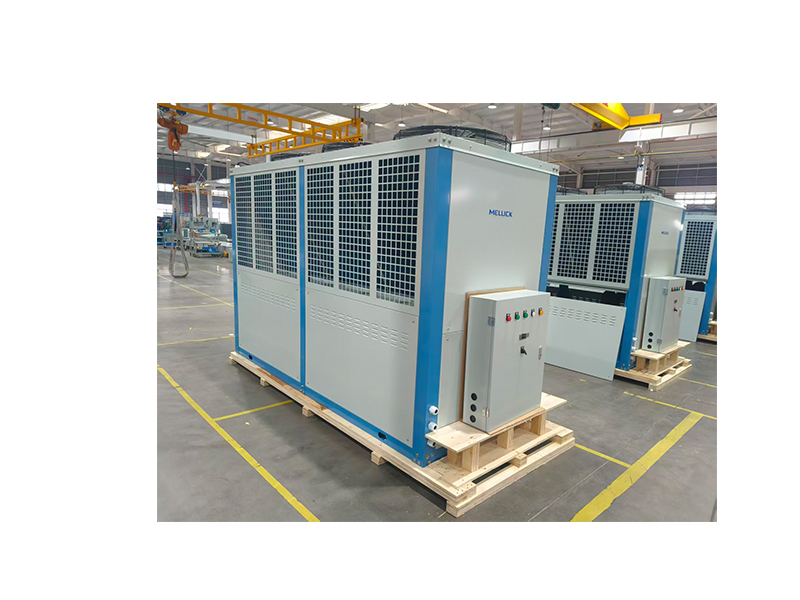
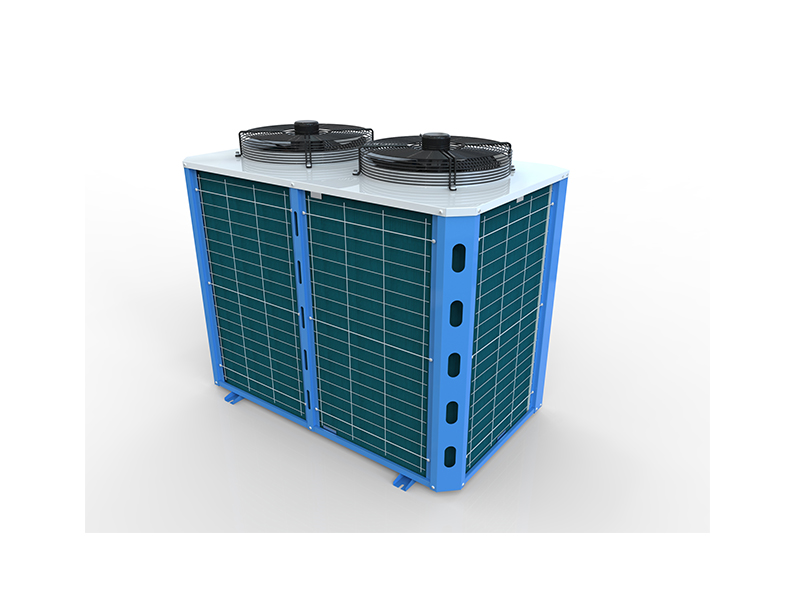
Because we ship to over 70 countries, including many 60 Hz markets, we do not build every condensing unit to a single frequency standard and then modify it later. We stock both 50 Hz and 60 Hz versions of our most commonly specified Bitzer and Copeland condensing units, from 4 HP up to 50 HP, with the motor winding, electrical components, and fan motors factory-matched to the target frequency. For larger parallel compressor racks and screw compressor units used in blast freezers and industrial storage, we configure the full electrical panel for 60 Hz operation at the engineering stage.
The product range includes Bitzer semi-hermetic reciprocating units from 3 HP to 50 HP, Copeland scroll units from 2 HP to 30 HP, and Bitzer two-stage compressors for ultra-low-temperature applications down to minus 50 °C, all available in 60 Hz configurations. The 60 Hz versions are not off-the-shelf adaptations; they use compressors wound for 60 Hz and ship with the appropriate contactors, thermal overload settings, and condenser fan motors rated for the higher speed.
The stocking decision was driven by project experience. In one Ecuador cold storage complex serving seafood export, five distinct temperature zones, from minus 35 °C blast freezing to plus 10 °C processing, required 40 HP, 30 HP, 25 HP, and 7 HP Bitzer condensing units, all operating on a 60 Hz coastal grid. Delaying the project to source frequency converters or rewind motors would have cost the client a fishing season. We completed the installation with 60 Hz units from our stock, and the system has been running continuously without frequency-related faults.
Key Considerations When Specifying a 60Hz Condensing Unit
Specifying a 60 Hz condensing unit requires more than selecting the correct frequency option on an order form. The full electrical system, from the main breaker to the crankcase heater, needs to be reviewed for the target voltage and frequency combination. A 60 Hz motor will draw less starting current at 460 V/60 Hz than at 400 V/50 Hz for the same horsepower, which affects the contactor and overload relay sizing. Conversely, at 230 V/60 Hz single-phase, the running current is higher, and the wire gauge and protection must be adjusted accordingly.
Cooling capacity ratings also differ at 60 Hz. A compressor rated for 15 kW cooling capacity at 50 Hz might deliver 18 kW at 60 Hz. If the evaporator and expansion valve are not sized for that increased capacity, the system will hunt, flood back, or short-cycle. We typically cross-check the compressor's 60 Hz performance curve against the evaporator's rated capacity at the higher compressor frequency to avoid mismatches. This is especially important in freezer rooms and blast freezers, where the compressor already operates near its envelope limit.
| Parameter | 50Hz Operation | 60Hz Operation |
|---|---|---|
| Motor speed (4-pole) | ~1450 RPM | ~1740 RPM |
| Compressor capacity shift | Baseline | +15–20% |
| Motor current draw | Nameplate rating | Usually higher; thermal margin needed |
| Fan speed and airflow | Standard | Higher, may need different blade pitch |
| Oil pump delivery | Baseline speed | Higher delivery, may need adjustment |
If your cold room design already accounts for these factors and the equipment is ordered as a complete matched set from a supplier that provides 60 Hz factory configuration, the risk of commissioning delays drops significantly. We have seen this firsthand in Peru, where an avocado pre-cooling room with two 20 HP Bitzer condensing units was installed on a 60 Hz supply. The units were factory-configured for 60 Hz, and the commissioning phase required only standard refrigerant charging and controller setup, with no electrical rework.
If your project involves mixed frequencies, such as a 50 Hz grid with a 60 Hz generator backup, or if you are replacing an existing 50 Hz unit in a 60 Hz region, the compatibility risk multiplies. In those situations, it is worth confirming the complete electrical specification with us before finalizing the BOM, send your equipment list and site voltage details to meluck@meluckcooling.com and we will verify the correct configuration.
Case Experience in 60Hz Markets
Our larger 60 Hz cold storage installations demonstrate how factory-configured condensing units support the entire cold chain. The Manta, Ecuador multi-temperature cold storage and flake ice project integrated minus 35 °C blast freezers, minus 18 °C frozen storage, minus 10 °C ice storage, and a plus 5 °C to 10 °C processing room. All five temperature zones were served by Bitzer condensing units ranging from 7 HP to 40 HP, running on Ecuador's 60 Hz public grid. The key outcome was a fully closed-loop cold chain that stabilized export product quality and reduced spoilage rates to trace levels, without the need for frequency conversion equipment.
In Peru, a simpler but equally instructive case involved two Bitzer 20 HP condensing units for a 17 by 12 meter avocado pre-cooling room at plus 10 °C. The units were factory-configured for 60 Hz and shipped ready to install. The project reduced avocado post-harvest losses from about 15 percent to under 4 percent by ensuring stable pre-cooling, and the 60 Hz configuration meant that the client did not need to modify the electrical supply or add a transformer during installation.
These projects underscore a practical point: when condensing units arrive configured for the site frequency, the installation timeline shortens, the electrical infrastructure is simpler, and the long-term service and spare parts supply align with standard regional voltages and frequencies.
Common Questions About 60Hz Condensing Unit Selection
Do I need a VFD if my supply is 50Hz and I bought a 60Hz unit?
A 60 Hz motor will run slower and produce less capacity on a 50 Hz supply, which can cause coil icing and poor oil return in low-temperature systems. In most cases it is better to source a unit wound for the actual site frequency rather than using a VFD to artificially raise the frequency, because VFDs introduce harmonic distortion and require additional filtering for compressor motors. If your project cannot avoid a mixed-frequency installation, specify a VFD with a sine-wave output filter and confirm compatibility with the compressor manufacturer, but expect higher upfront cost and maintenance.
Can Meluck supply 60Hz condensing units for small cold rooms?
Yes. The 60 Hz stock covers small scroll condensing units from 2 HP upward, including monoblock refrigeration units for walk-in coolers and small freezer rooms. This range is often used for butcher shops, restaurant cold rooms, and small food processing rooms. The key is to specify the evaporating temperature and room thermal load accurately so the unit's 60 Hz capacity matches the cooler's heat load. We can help with the sizing calculation if you share the room dimensions, product type, and ambient climate data.
What voltage ratings are available for 60Hz condensing units?
Common 60 Hz voltage standards include 208-230 V/1 phase/60 Hz, 460 V/3 phase/60 Hz (common in North America and parts of South America), and 220 V/3 phase/60 Hz (used in the Philippines, Saudi Arabia, and some African countries). Our electrical panels are built to match the specified voltage as long as it is confirmed at order. We always ask for the exact site voltage and frequency during quotation, because a 10 percent voltage variation at the compressor terminals changes motor performance and can void warranty.
How do I verify that a condensing unit is genuinely 60Hz-ready?
Ask for the compressor motor nameplate photo showing the frequency and voltage rating, and request the wiring diagram with component labels for the specific frequency. At Meluck, we provide these as part of the pre-shipment documentation. This is not only a quality check: it ensures that your local electrician can wire the unit correctly without guesswork. If a supplier refuses to share the nameplate or wiring details before shipment, that is a red flag that the unit may be a standard 50 Hz model with a label change.
If you are planning a cold room project in a 60 Hz region and need condensing units that match your local power supply without modification, share your cooling capacity requirements and site voltage. We will confirm the compatible 60 Hz models from our current stock, along with lead times for larger parallel or screw compressor configurations. Reach David Zhang and the MELUCK engineering team at meluck@meluckcooling.com or call +8617369893087.
If you're interested, check out these related articles:
Myanmar Potato Seed Cold Storage Project - Meluck
Egypt French Fries Cold Storage Project - Meluck
With over 15 years of experience as a MELUCK refrigeration engineer, I specialize in the design of cold storage, chillers, ice makers, and cold chain energy-saving systems, providing technical support to distributors and engineering companies worldwide.

meluck