
Cold Room Projects Ethiopia: Flowers and Food Cold Chain
Ethiopian flower exporters lose more money from warm and humid flowers entering the cold store than from compressor failures. Cold room projects in Ethiopia succeed only when the first hours after harvest are treated as part of the refrigeration design. I approach these projects as precision cooling tasks, not insulated boxes, because airflow, pre-cooling speed, and pull-down capacity affect vase life more than the final temperature reading alone. For food processors, the same logic applies with different set points and stricter hygiene requirements.
Cut Flower Cold Room Requirements in Ethiopia
Ethiopian cut flower exports, mainly roses and summer flowers, need a holding temperature between 2°C and 4°C with relative humidity from 85% to 90%. The most common specification mistake is sizing the room for holding temperature and ignoring the field heat load. Flowers arriving from the highlands at 15°C to 25°C still carry enough heat to spike the room temperature. If the return air remains above 6°C for more than a few hours, Botrytis pressure rises and vase life drops before the flowers leave the packhouse.
Pre-Cooling Before the Holding Room
Roses should move from harvest to a pre-cooling area or forced air tunnel within 30 to 60 minutes whenever possible. We used the same control logic in a Peruvian avocado pre-cooling room that held 10°C with a tolerance of plus or minus 0.5°C using two Bitzer 20HP condensing units. For Ethiopian flowers, the target is lower, but the sizing principle stays the same: the load is set by how many buckets enter per hour, not by room volume alone. A holding room rated only for storage will not recover quickly during the morning intake peak.
Airflow and Stacking in a Rose Cold Room
Flower respiration and ethylene release continue after harvest, so still air creates warm pockets and condensation inside the boxes. I specify ceiling mounted air coolers with enough throw to move air through the storage aisles and leave return air paths open on both sides of the room. Boxes stacked tight against the wall or to the ceiling block the air pattern and create a microclimate warmer than the set point. For a rose holding room, the air cooler should use a hygienic drain pan and defrost settings that avoid wet floors during the daily loading cycle.

Temperature and Humidity Set Points for Ethiopian Roses and Summer Flowers
The targets below are the values I use when reviewing Ethiopian flower room specifications. Summer flowers and mixed bouquets tolerate slightly different conditions than single variety roses, but the control window stays narrow at export quality.
| Product | Holding Temperature | Relative Humidity | Main Risk |
|---|---|---|---|
| Roses | 2°C to 4°C | 85% to 90% | Botrytis and premature opening |
| Summer flowers | 4°C to 7°C | 85% to 90% | Wilting and petal damage |
| Cut foliage | 7°C to 10°C | 90% to 95% | Leaf blackening |
| Mixed bouquets | 5°C to 8°C | 85% to 90% | Condensation and mold |
These are holding conditions. They do not replace pre-cooling, because flowers packed at 18°C will not reach the target fast enough by sitting inside a 3°C room. Bucket water and box walls slow heat transfer from the stem to the air. Time to seven-eighths cooling can stretch from two hours to eight hours depending on whether air moves through the package or only around it.
Food Cold Chain Design for Ethiopian Produce and Meat
Food cold chain projects in Ethiopia cover different product categories than flower exports. Vegetables such as green beans and avocados need rapid pre-cooling and cool storage. Beef and poultry operations need clear separation between chilled processing and frozen storage. The zone approach is the same one we applied at a Manta, Ecuador seafood facility with a 10-ton flake ice plant, a 5°C to 10°C processing room, a -18°C frozen storage room, and a -35°C blast freezer. The products were different, but the workflow logic was identical: keep the product moving from one controlled zone to the next without a warm gap.
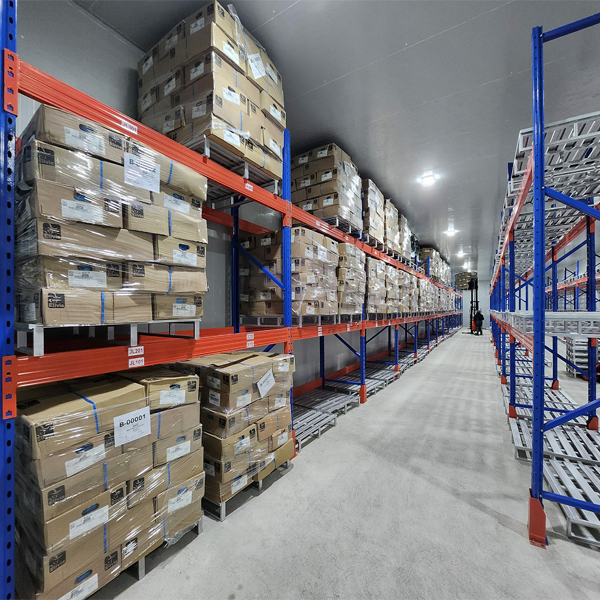
If your Ethiopian food cold chain program includes a morning intake from field heat to holding temperature, the condensing unit will probably need more capacity than the room volume calculation suggests. Confirm the pull-down load against your peak daily tonnage before finalizing the rack. Send the product type, daily tonnage, and intake schedule to meluck@meluckcooling.com and I will check the load assumptions with you.
Electrical Power and Equipment Selection for Cold Room Projects in Ethiopia
Reliable power is a bigger design constraint in some Ethiopian locations than ambient temperature. Diesel backup should be sized for starting current, not only running load. On air-cooled condensing units, compressor start inrush can be several times the rated running current, so a generator that handles the room lights may struggle during pull-down. We specify soft starters or variable speed drives on larger Bitzer units when the site runs on a generator or has voltage swings.
Ethiopia operates on 220/380V 50Hz, so the motors, fan coils, and controls must be specified for 50Hz operation. For medium temperature rooms, a Bitzer 4HP to 15HP reciprocating condensing unit is common. Larger flower holding rooms and food cold stores often need a 20HP to 30HP unit with head pressure control. Air entering the condenser above 32°C reduces capacity, although the milder highland climate is less severe than a lowland food processing site. Dust, elevation, and restricted condenser clearance still affect heat rejection and should be checked during the site survey.
Next Steps for Your Ethiopian Cold Room Project
When a buyer asks for a cold room price without a site survey, the quotation usually misses one of four items: pre-cooling load, door traffic, standby power, or drainage. I ask for the harvest schedule and product mix before recommending equipment. Our Shanghai engineering team can supply the full package from PU or PIR panels and air coolers to Bitzer condensing units and project supervision. For the first step, send your daily throughput, room dimensions, and site voltage to meluck@meluckcooling.com or call +8617369893087. I will confirm the cooling load and the equipment configuration before you commit to site work.
Common Questions About Cold Room Projects in Ethiopia
What Is the Right Cold Room Temperature for Ethiopian Roses?
Roses hold well at 2°C to 4°C with 85% to 90% relative humidity. The bigger risk is not the set point but slow heat removal after packing. If flowers enter at 18°C and the room has only holding capacity, the core temperature can stay above 6°C for hours and vase life falls. The holding room should have enough air cooler face area and airflow to pull field heat down quickly during intake.
Do I Need a Blast Freezer for Ethiopian Food Exports?
It depends on the product and the export timeline. Frozen vegetables, meat, and prepared foods need a blast freezer at -30°C to -40°C before frozen storage at -18°C. Chilled fresh produce only needs a pre-cooler and a holding room at 0°C to 8°C. A green bean or avocado exporter should not add -35°C capacity unless a frozen product line is confirmed. I only size blast freezing capacity when the customer confirms the frozen SKU, because unused capacity adds capital cost and head pressure under low load.
How Long Does a Cold Room Projects Ethiopia Installation Take?
In projects we have completed in South America and North Africa, site construction plus panel installation usually takes two to four weeks after equipment arrives. If the concrete slab is ready and power is available, commissioning adds about another week. The common delays are customs clearance, missing drainage, or generator sizing changes, not the refrigeration installation itself. For an Ethiopian flower packhouse, confirm the slab, door openings, and power supply before the panels ship.
What Power Supply Should I Prepare for a Cold Room in Ethiopia?
A common assumption is that a cold room only needs enough power for the compressor running load. In practice, the starting current and defrost heaters determine the generator size. If the site runs on a limited generator, a soft starter or a smaller staged compressor may be needed. Share your available kVA, voltage, and phase details with meluck@meluckcooling.com and we will confirm whether the selected condensing unit can start safely on your supply.
If you're interested, check out these related articles:
Chiller Room Solutions -10C~10C - Meluck
Egypt French Fries Cold Storage Project - Meluck
Freezer Room Solutions -25C~-18C - Meluck
Processing Room Solutions for Food Plants - Meluck
With over 15 years of experience as a MELUCK refrigeration engineer, I specialize in the design of cold storage, chillers, ice makers, and cold chain energy-saving systems, providing technical support to distributors and engineering companies worldwide.

meluck