
Brazil Cold Room Projects: Meat and Fruit Cold Chain Design
Meat and fruit cold chains in Brazil fail differently. A freezer room that holds beef at the right temperature can still wreck berries if humidity and airflow are wrong, and a fruit chiller floor is a poor fit for poultry processing. For Brazil cold room projects, the sequence is the point: product temperature, daily throughput, ambient design, then equipment. I have seen this mismatch in South American projects where one room was expected to serve both products and loss appeared within months. The specification work before ordering matters more than the brand on the condensing unit.
What Temperature Zones Do Brazilian Meat and Fruit Cold Rooms Need?
Meat processing and fruit handling should not share the same refrigeration sequence. For beef and poultry, the chain moves from slaughter to a chiller at 0°C to 4°C, then to frozen storage at -18°C to -25°C if the product is export frozen. Fruit needs pre-cooling at 5°C to 12°C depending on species, and the pulldown rate does more for shelf life than the final holding temperature. In our South American cold rooms, we separate these zones and match each room to a single duty point rather than averaging the load.
One example is a multi-temperature facility we built in Manta, Ecuador for a seafood and food processor. The scope included a -35°C blast freezer, -18°C frozen storage, and a 5°C to 10°C processing room, each with Bitzer compressors matched to its refrigeration load. The same logic applies to a Brazil cold room project. Meat plants typically add a -30°C to -40°C blast tunnel; fruit packhouses usually add a 10°C pre-cooling room and short-term cold storage. Those two duties should not be forced into one room.
| Product group | Holding temperature | Typical equipment | Main control point |
|---|---|---|---|
| Meat chilling | 0°C to 4°C | Bitzer condensing unit and DL air cooler | Airflow around carcasses |
| Frozen meat storage | -18°C to -25°C | Bitzer low-temperature unit and DD air cooler | Defrost intervals |
| Fruit pre-cooling | 5°C to 12°C | Bitzer condensing unit and DL air cooler | Rapid pulldown and humidity |
| Blast freezing | -30°C to -40°C | Bitzer two-stage or 40HP unit and blast evaporator | Core temperature drop |
Why Does High Ambient Heat and 60 Hz Power Change Brazil Cold Room Equipment Selection?
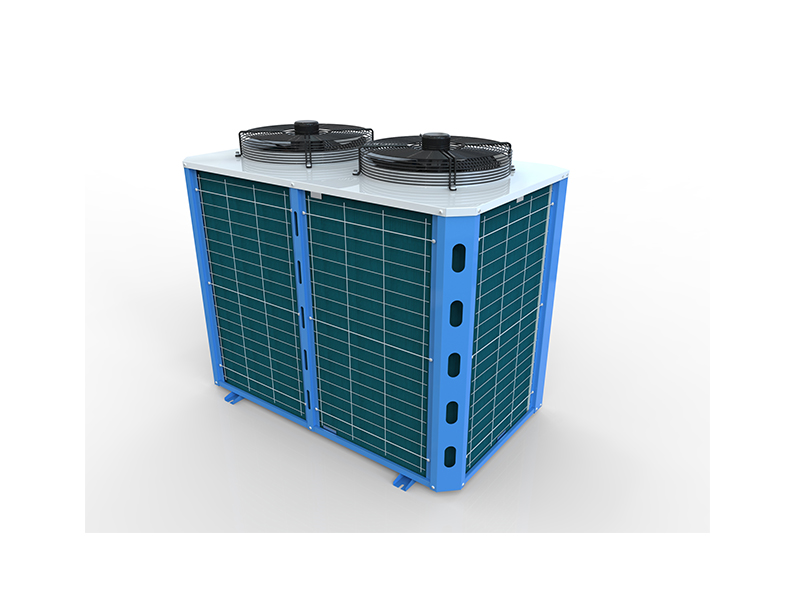
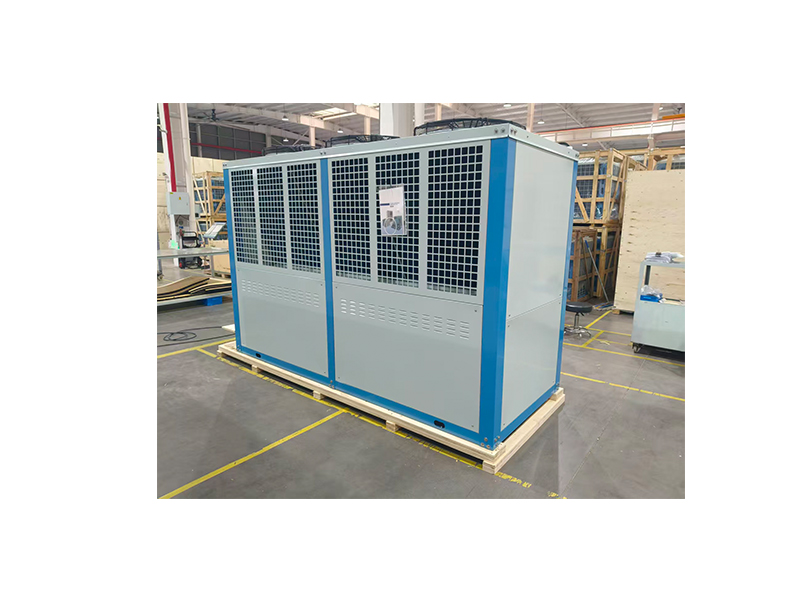
Brazil's grid runs at 60 Hz, and cold rooms designed with imported 50 Hz equipment need a careful startup review. A condensing unit selected for a laboratory rating loses capacity as ambient temperature climbs, and in Brazil's north and center-west this is a regular operating condition. We specify air-cooled condensing units with enough heat rejection for 38°C to 42°C ambient days, not only the nominal 32°C rating.
Compressor selection changes for the same reason. For freezer rooms at -18°C to -25°C, we use Bitzer low-temperature semi-hermetic units designed for continuous operation. For larger projects, parallel compressor arrangements or screw condensing units give more stable capacity control during low load periods. In a Cairo French fries plant we supplied, the -35°C blast freezer used a 125HP Bitzer system because the room had to keep pulling down product while the outdoor ambient stayed high. The same conservative match applies in Brazil. MELUCK keeps 60 Hz ready Bitzer and Copeland condensing units in standard production, so buyers do not need to derate a 50 Hz unit.
How Do Panels and Defrost Settings Affect Cold Rooms in Brazil's Humid Climate?
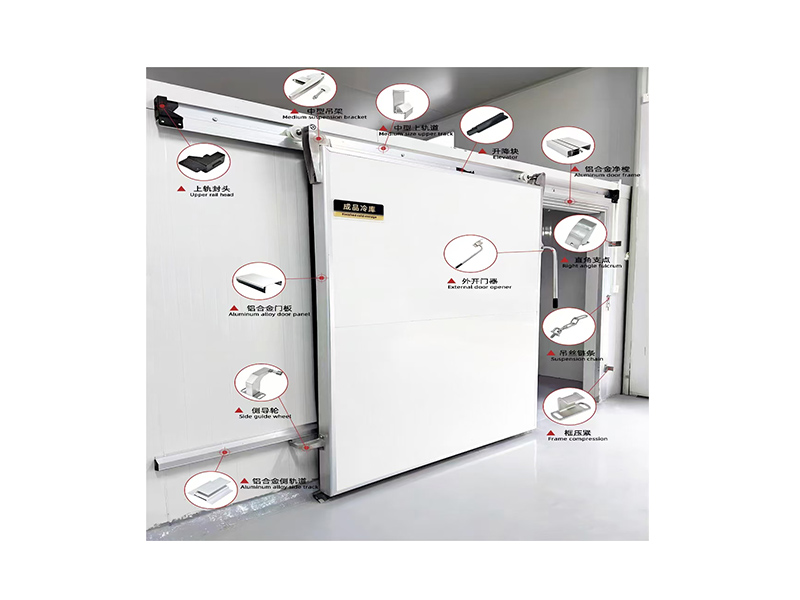
Humidity drives panel and door decisions as much as temperature. In humid coastal zones, an undersized defrost cycle causes ice accumulation on the evaporator, and a poorly sealed door lets moist air enter the freezer. We use PIR panels with a B1 fire rating and high-density foam core for freezer rooms because they hold thermal performance over time. For chiller rooms, PUR panels with camlock connection are quicker to assemble but must be sealed correctly at joints.
Brazil meat plants also carry washdown and food safety requirements. Panels in processing zones must tolerate cleaning agents and frequent temperature swings. We pair the room with a door that seals on all four edges and specify electric defrost or hot gas defrost depending on the product load, not only the room size. A cold room that works in a dry inland site may fail in Santos or Recife if the defrost schedule is copied from a temperate climate project.
If your Brazil cold room project combines meat freezing and fruit pre-cooling in one building, the refrigeration load calculation changes sharply once blast freezing enters the scope. Send your product list and target temperatures to meluck@meluckcooling.com before you lock the equipment schedule.
What Should a Turnkey Brazil Cold Room Project Include?
On our turnkey cold room projects in South America, the contract covers five stages:
- Site survey and heat load calculation based on the buyer's product list and daily throughput.
- Panel and door production matched to the storage temperature and washdown requirements.
- Condensing unit and evaporator installation with refrigeration piping.
- Vacuuming, refrigerant charging, and performance testing.
- Commissioning and operator training.
Buyers sometimes focus on the compressor brand and skip the site survey. The survey catches the exact room dimensions, load-in path, power supply, and floor insulation requirement before production starts. Skipping it is the fastest way to lose time at installation because a room that cannot accept the evaporator or door swing must be reworked on site.
Which Brazil Cold Room Details Should You Confirm Before Ordering?
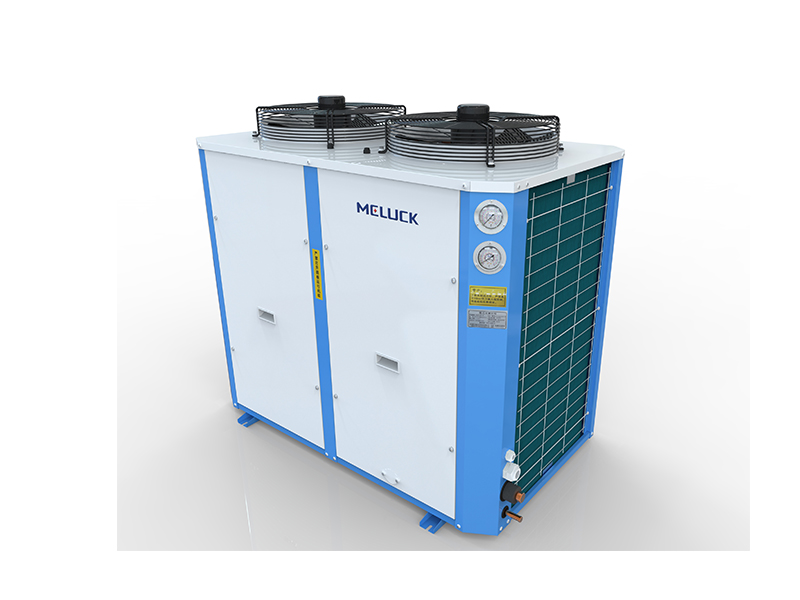
Two details cause most order mistakes. The first is not specifying the product mix: frozen beef, chilled beef, citrus, avocados, and processed fruit each move through a different temperature band. The second is not confirming the power supply and site ambient before the condensing unit is selected. If your Brazil cold room project involves both meat freezing and fruit pre-cooling, send your product list, target temperatures, and daily throughput to meluck@meluckcooling.com or call +8617369893087. We can check the load match and confirm the panel, defrost, and compressor configuration before you finalize the order.
What Do Buyers Ask Before a Brazil Cold Room Project?
How long does a Brazil cold room project take from order to startup?
A standard cold room can ship in 30 to 45 days after the panel and equipment specifications are locked. Large multi-zone projects take longer because the panel set and compressor skid are produced to order. Site installation often takes two to four weeks depending on access and power availability. For Brazil, add extra time for port clearance and inland transport to the site. The planning step to protect the schedule is not factory lead time; it is confirming the 60 Hz power supply and the exact room dimensions before production starts.
Should I buy cold room equipment from a Chinese manufacturer for a Brazil project?
Some buyers assume Chinese refrigeration equipment means lower technical capability. The practical difference is not where the equipment is made; it is whether the manufacturer matches the condenser, evaporator, and panel to the site conditions. We build for 60 Hz grids, tropical ambient temperatures, and international meat and fruit export standards. Equipment from China can be competitive if the supplier has production scale, genuine compressors, and a documented commissioning procedure. The main risk is not origin; it is an incomplete match between the room and the product.
What is the most common reason a Brazil cold room fails inspection or loses product?
It depends on the product. For meat, the failure usually comes from defrost or airflow, not the compressor brand. For fruit, the more common cause is slow pulldown after harvest, which shortens shelf life even when the final temperature looks correct. In both cases, the root issue is that the room was specified as a generic cold room rather than a meat or fruit room. That is why we start with product temperature and daily throughput. If your project has a mixed product list, send it to meluck@meluckcooling.com and we can confirm whether one room or separate zones fit the workload.
If you're interested, check out these related articles:
Chiller Room Solutions -10C~10C - Meluck
Peru Avocado Pre-Cooling Cold Storage - Meluck
Egypt French Fries Cold Storage Project - Meluck
Blast Freezer Room Solutions -40C~-60C - Meluck
Freezer Room Solutions -25C~-18C - Meluck
With over 15 years of experience as a MELUCK refrigeration engineer, I specialize in the design of cold storage, chillers, ice makers, and cold chain energy-saving systems, providing technical support to distributors and engineering companies worldwide.

meluck