
Vietnam Cold Room Projects for Seafood and Agriculture
Vietnam cold room projects usually fail at the loading dock, not the compressor. After fifteen years designing cold storage for tropical food chains, I see the same pattern: cooling capacity gets matched to room volume, but not to the mixed seafood and agricultural loads that move through the room each day. Shrimp, pangasius, dragon fruit, and coffee need different holding temperatures, yet most budgets cover only one or two rooms. That forces hard choices about zone sequencing, defrost, and power supply. The design approach below walks through the decisions that keep product export-grade when ambient heat and humidity climb.
Vietnam Cold Room Temperature Zones for Mixed Product Loads
A useful cold room project in Vietnam starts with the product mix, not the building. Shrimp and pangasius move through a receiving chill, processing hold, quick freeze, and frozen storage. Dragon fruit, rambutan, and green coffee need slower moisture removal and stable but less aggressive cooling. If fresh produce goes into a seafood freezer room, the low humidity pulls moisture from the fruit and damages texture.
| Zone | Product examples | Holding temperature | Typical equipment |
|---|---|---|---|
| Seafood receiving and chill | Fresh shrimp, pangasius | 0°C to 4°C | Chiller room with ceiling evaporators |
| Seafood frozen storage | IQF shrimp, fish fillets | -18°C to -25°C | Freezer room, low-temperature condensing unit |
| Produce pre-cooling | Dragon fruit, rambutan | 8°C to 12°C | Chiller room with rapid pulldown |
| Agricultural holding | Green coffee, cashew | 15°C to 20°C | Low-humidity room with airflow control |
| Processing and packaging | Sorting, trimming, packing | 5°C to 10°C | Medium-temperature condensing unit |

Seafood: from receiving chill to frozen storage
I treat shrimp as a heat load with a deadline. The receiving room should hold 0°C to 4°C, but the real test is how quickly the room returns after a batch of warm product enters. If the evaporator is undersized, the door opening plus the product pull-down time can push the room to 8°C or higher, and bacterial growth accelerates. In the Manta, Ecuador plant, we separated receiving chill at 5°C to 10°C from blast freezing at -35°C and frozen holding at -18°C, which kept the line moving without repeated temperature swings.
Fruit and vegetables: rapid pre-cooling and stable holding
Dragon fruit and rambutan respire long after harvest, so pre-cooling has to be fast but not freezing. I normally size the room for initial pull-down inside four to six hours, then hold at 8°C to 12°C with air circulation that avoids dry spots. For green coffee, I keep the room around 15°C to 20°C and control airflow more than temperature, because moisture absorbed by the bean can trigger mold before the exporter sees it. A Peru avocado project using the same logic cut rejection losses from roughly 15% to below 4%.
Refrigeration Design for Coastal Humidity and High Ambient Heat
In coastal areas from Hai Phong to Ca Mau, ambient air is often above 32°C with relative humidity above 75%. That combination attacks the system in two ways. High ambient temperature reduces condensing capacity; high humidity loads the evaporator with frost and drives up defrost frequency. I have seen rooms hold temperature while the compressor ran almost continuously, simply because the defrost cycle was set for a dry-climate pattern.
Why humidity drives defrost strategy
Moisture moves into the room through door openings and product wrap, but it also enters through panel joints if the vapor seal is weak. With high humidity, evaporator frost builds fast and has to be removed before it blocks airflow. I usually recommend electric defrost with drain heating for freezer rooms, and time-based defrost for chiller rooms after checking the actual frost curve. Automatic defrost is useful, but it must be tuned to local conditions; a generic setting can leave the evaporator blocked by mid-afternoon.
Condensing unit selection for high ambient temperatures
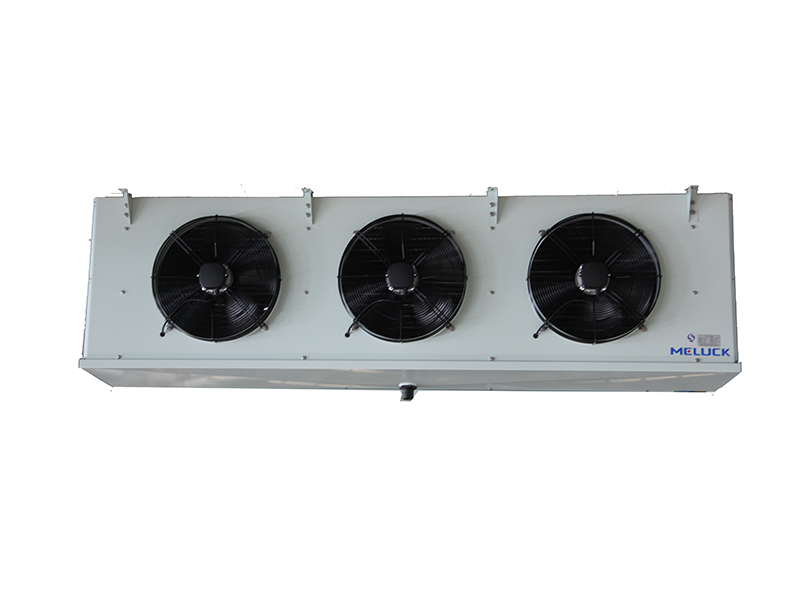
A condensing unit rated for 35°C ambient will lose capacity at 42°C, and that gap is enough to stop a seafood freezer room from reaching -25°C. We select condensing units with higher ambient performance margins for Vietnamese coastal sites, often moving from a standard medium-temperature unit to a larger compressor or a parallel configuration when the load peaks. We also check condenser airflow clearance and shading, because installing a unit against a hot wall is a simple way to waste capacity.
Compressor Sizing for Vietnam Cold Room Loads
Compressor selection is not done by room volume alone. A 5m by 3m chiller room storing vegetables has a different load profile than the same room holding freshly caught shrimp, because product temperature and respiration add a large daytime load. I calculate peak load from product entry temperature, daily throughput, door openings, and lighting, then add a service factor. The result is often one or two sizes larger than the nominal room capacity chart suggests.
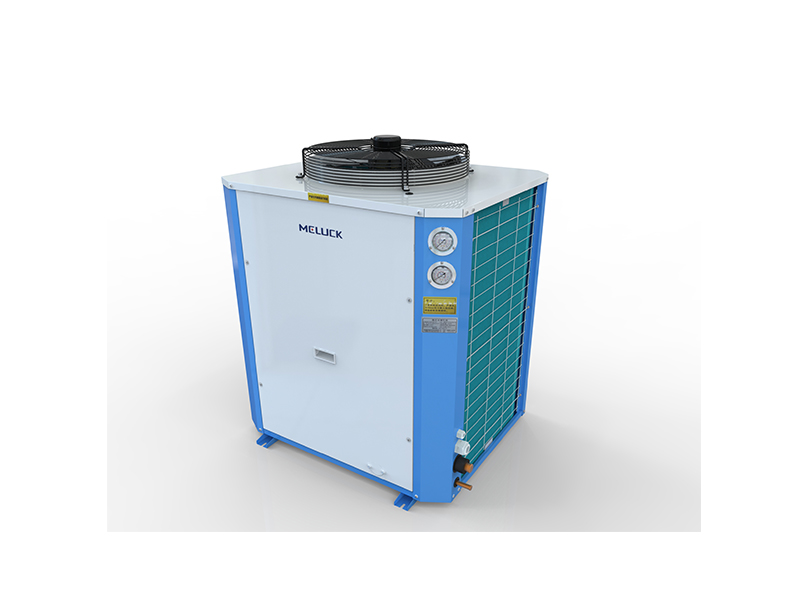
For seafood freezing, we use low-temperature condensing units matched to holding temperature and air cooler duty. A Bitzer 30HP unit may suit a frozen storage room of 14m by 12m by 6m at -18°C, while a blast freezer at -35°C may need 40HP or more per room with dedicated high-capacity evaporators. The Manta project used this approach: 40HP on each blast freezer room, 30HP on frozen storage, and 25HP on the processing hold. That zoning prevented one compressor from trying to do three jobs.
If your program includes shrimp and fruit in the same facility, it is worth confirming compressor turn-down range before finalizing your equipment list. A room that switches from produce to seafood during the year has different peak loads in different months, and the compressor sequencing has to follow the actual harvest calendar. Share your product mix and daily throughput with me at meluck@meluckcooling.com and I will check the load profile.
Site and Power Conditions That Decide Project Success
Before we quote a cold room project, we ask about power stability. In some Vietnamese provinces, grid voltage can swing enough to trip compressors or damage controls. Equipment with 60Hz is not needed, but we specify control protection and phase monitoring when the supply is irregular. If the site relies on generators, the generator must be sized for starting current, not running load. A compressor that draws 30A running may need more than twice that at start. Undersized generators are one of the most common causes of compressor failure I have seen in tropical projects.
Drainage and panel sealing matter as much as the refrigeration package. In high-rain areas, a cold room floor without proper drainage will pool water, and repeated freezing can crack the floor. Panel joints must be sealed with vapor-tight materials, especially at the ceiling-to-wall junction. We also check forklift and door clearances, because a well-designed room with poor access will create warm air gains every time the door opens.

Planning Your Vietnam Cold Room Project
I know the pressure of a harvest season: product is moving, storage is short, and every day without adequate cooling costs money. The fastest way to derail a cold room project is to order equipment before the product mix, peak load, and site power have been checked. We usually resolve this in one working round: you send the room dimensions, daily throughput, product types, and target temperatures, and we return a zoned configuration with compressor sizing and panel specifications.
If you are working on a seafood or agricultural cold storage project in Vietnam, send those details to meluck@meluckcooling.com or call +8617369893087. We will confirm the thermal load and equipment match before you commit to a procurement plan.
Common Questions About Vietnam Cold Room Projects
What temperature should a Vietnam cold room be for shrimp and dragon fruit in the same facility?
It depends on whether you can separate the zones. If shrimp and dragon fruit share one room, you cannot hold shrimp at 0°C to 4°C and dragon fruit at 8°C to 12°C at the same time without compromising one product. We usually split the space into a seafood chiller, a produce room, and a shared freezer if the layout permits. When budget forces one room, I would prioritize the seafood temperature and move fruit to faster turnover rather than long-term holding.
Is a monoblock unit enough for a seafood cold room project in Vietnam?
A common assumption is that a monoblock can handle any small cold room. Monoblock units work for small chiller rooms and short-term storage, but they are not the right choice for seafood freezing or high-humidity coastal use. The refrigeration load from warm product and frequent door openings exceeds what most monoblock units can reject at 35°C ambient. For a seafood project, I usually specify a split condensing unit with a matched evaporator, or a monoblock only for backup holding.
How long does a cold room project in Vietnam take from order to commissioning?
It depends on the scope. A standard prefabricated chiller room with a medium-temperature condensing unit can often be produced in 20 to 30 days, with installation and commissioning taking one to two weeks after the panels arrive. A multi-zone seafood facility with blast freezing, processing rooms, and frozen storage takes longer because the panel layout, piping, and controls have to be coordinated with civil work. We usually confirm a realistic schedule after the site survey.
Do I need a generator if the provincial grid is mostly stable?
In hot coastal projects we have commissioned, I have seen voltage drops during peak demand trip compressors while the grid itself remained online. If your cold room holds export-grade seafood, I would not rely on stability alone. A generator sized for starting current, plus phase and voltage monitoring, costs less than losing a full room of shrimp. For produce rooms with a lower penalty for interruption, a smaller backup or an alarm system may be acceptable. If you are not sure about your power supply, share your location and connected load with us and we will confirm the protection and generator sizing.
If you're interested, check out these related articles:
Myanmar Potato Seed Cold Storage Project - Meluck
Freezer Room Solutions -25C~-18C - Meluck
With over 15 years of experience as a MELUCK refrigeration engineer, I specialize in the design of cold storage, chillers, ice makers, and cold chain energy-saving systems, providing technical support to distributors and engineering companies worldwide.

meluck