
Colombia Cold Room for Coffee: Green Bean Preservation
Green coffee loses export value faster from humidity swings than from warm air alone. In Colombia's mountain and port conditions, a properly designed cold room for coffee holds green beans between 10°C and 18°C while keeping relative humidity steady enough to prevent mold, faded cup scores, and rejected lots. The job is less about deep freezing and more about stable, low-velocity cooling matched to the bean's moisture content. Exporters who treat coffee storage as a temperature-only problem often discover the real damage before the container ever leaves Cartagena or Buenaventura.
Green Coffee Quality Holds Only Within a Narrow Storage Window
Green coffee is not frozen. The goal is to slow respiration and moisture exchange without dropping the bean below its stable moisture range. Long-term export lots hold best at 10°C to 15°C. Beans intended for shipment within 30 to 60 days can sit at 16°C to 18°C without cupping loss if the humidity is controlled. Below 10°C, condensation risk rises when warm, humid port air enters during loading. Above 20°C, the bean's internal moisture migrates faster, which accelerates staling and invites mold on damaged beans. Parchment coffee arriving from Colombia's wet processing regions often carries moisture near 11%, so the cold room has to finish stabilization instead of only holding a setpoint.
| Storage stage | Temperature range | Relative humidity |
| Long-term green bean storage | 10°C to 15°C | 55% to 60% |
| Pre-shipment staging | 16°C to 18°C | 55% to 60% |
| Parchment stabilization | 18°C to 20°C | 60% to 65% |
Humidity Control Separates a Stable Coffee Cold Room from a Simple Cooler
Humidity is the variable that produces visible claims. If the air is too dry, green coffee loses weight and the bean surface cracks, which shows up as faded color and uneven roast development. If the air is too moist, mold develops on beans that already have small mechanical damage from hulling or transport. A cold room for coffee near Cartagena or Buenaventura should hold relative humidity close to 55% to 60%, not simply run cold. Desiccant or reheat-style dehumidification works better than overcooling, because overcooling drops the air temperature too low and then bean surfaces condense when the door opens. In tropical produce stores we have built, condensation often appears when the air cooler's air throw is too direct; slowing the fan and adding a diffuser stops it without changing the setpoint. Low-velocity air movement lets the beans release moisture slowly without drying the outer layer.
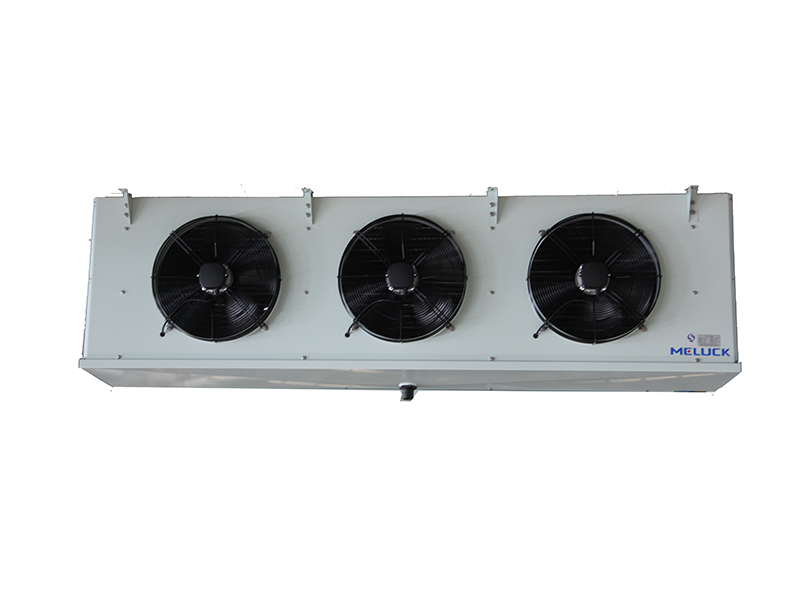
Condensing Unit Selection Starts With Colombia's Plant and Port Conditions
Colombia imposes two separate refrigeration problems. The coffee growing belt is high, with cool nights but strong solar load, and the ports are hot and humid. A condensing unit selected for mountain conditions may struggle at sea level if the room is moved or if the building lacks proper ventilation. We size condensing units for the highest expected ambient condition at the actual site, not for the average. A Bitzer 20HP condensing unit with an air-cooled condenser is a practical match for medium green coffee stores in lowland port areas. Smaller lots in high-altitude warehouses may work with lower horsepower if nighttime ambient temperatures stay stable. The panel and door insulation then determine whether that capacity is enough.

A Simple Coffee Cold Room Layout Prevents Mechanical Damage and Inventory Loss
A cold room that is too deep encourages double handling. We recommend a single-level pallet or rack layout with the air return path along the back wall, the evaporator on the short wall, and the loading door opposite the air cooler rather than adjacent to it. This arrangement shortens the distance the cold air has to travel and stops warm air from hitting one batch of bags while the rest of the room stays cool. Coffee bags should not touch wall panels; a 150 mm gap keeps condensation off the jute or GrainPro liner. PIR panels hold their thermal performance better in high-humidity ports. If the room is split into long-term storage and pre-shipment staging, use two independent temperature zones instead of trying to run one setpoint.

Your Coffee Cold Room Specification Needs Final Verification Before Ordering
Before you finalize a coffee cold room order, confirm five points with your supplier: the highest ambient temperature at the installation city, the peak wet-season moisture content of incoming lots, the longest planned holding time, the available power supply, and the door-use frequency during loading days. These details change the condensing unit capacity, panel thickness, and defrost strategy. If your lot will sit longer than 90 days or your facility sits in the coastal plain below 1,000 m elevation, ask for a cooling load calculation before accepting a quotation. Send your storage volume, target temperature, and local voltage to meluck@meluckcooling.com or call +8617369893087 and we will confirm the cooling load and panel specification against your site conditions.
Common Questions About Coffee Cold Room in Colombia
Does green coffee need a freezer room or a chiller room?
A chiller room is the correct choice. Green coffee should not be frozen, and a freezer room at -18°C would condense moisture onto the beans every time the door opens. A chiller room running 10°C to 15°C with humidity control preserves cup quality and bean weight. The specification looks simple, but the room must be sized for the moisture load from the beans, not just the room volume.
What is the biggest mistake buyers make when specifying a coffee cold room?
Many assume that lower temperature is automatically safer. In green coffee storage, overcooling is as damaging as high temperature because it creates condensation when humid port air enters. The bigger risk is specifying a unit for the room's average temperature instead of the highest coastal ambient temperature. The result is a condensing unit that runs continuously and still cannot hold the setpoint in the afternoon. The specification should start with the worst site condition, not the ideal one.
How long can green coffee stay in cold storage without losing export quality?
It depends on moisture content, temperature, and whether the room holds stable humidity. At 10°C to 15°C with 55% to 60% relative humidity, high-quality green coffee can hold for six to twelve months without notable cupping loss. In a warmer staging room at 18°C, limit holding time to 30 to 60 days. If the lot enters with moisture above 12%, shorten those windows and first stabilize the bean in a dedicated conditioning zone.
Can a standard cold room from a supplier work for coffee without modification?
In cold rooms we have built at tropical ports, standard produce rooms needed airflow and humidity changes before coffee lots could be loaded. Coffee needs lower air velocity and humidity control that many standard units do not include. If the air cooler blows directly across the door opening, condensation forms on bag surfaces. If you are reusing a standard room, verify the evaporator air throw and add a humidity controller before loading export lots. Send the room dimensions, current setpoint, and door opening schedule to meluck@meluckcooling.com and we will confirm whether the existing airflow pattern is safe for coffee.
If you're interested, check out these related articles:
Egypt French Fries Cold Storage Project - Meluck
Blast Freezer Room Solutions -40C~-60C - Meluck
Ecuador Multi-Temperature Cold Storage Project - Meluck
Freezer Room Solutions -25C~-18C - Meluck
With over 15 years of experience as a MELUCK refrigeration engineer, I specialize in the design of cold storage, chillers, ice makers, and cold chain energy-saving systems, providing technical support to distributors and engineering companies worldwide.

meluck