
Cold Room Project in India: Fruit Cold Chain Design Choices
Most failed fruit cold room projects in India do not fail because the compressor is undersized. They fail because the room is treated as a generic refrigerated box, and the fruit's respiration rate, airflow, and defrost logic are matched too late. A cold room project in India has to start with the produce, not the hardware. At MELUCK we follow this sequence on avocado and tomato projects in Peru and Myanmar, and the same discipline carries into mango, pomegranate, and apple storage under Indian conditions.
What Should a Fruit Cold Room Project in India Specify Before Quoting?
Before I quote a fruit cold room, I ask five questions that most suppliers treat as afterthoughts. Daily intake in metric tons and the peak harvest weeks. Whether fruit arrives at night, in ambient trucks, or after field pre-cooling. The longest required storage window and the target market. Site power supply, including grid stability, generator backup, and peak summer voltage. Access for panel delivery, condensing unit placement, and drainage.
These answers fix the pull-down requirement, the heat load, and the control logic. If they are skipped, the buyer pays for either too much refrigeration or too little airflow. I have seen projects where the room itself met the specification and the product still overheated because nobody asked how hot the fruit was when it entered.

How Do You Match Storage Temperature Zones to Indian Fruit Varieties?
Indian fruit storage is not a single setpoint problem. Mango wants a moderate temperature, apple wants a near-freezing hold, and pomegranate wants tight humidity control. A chiller room built for 0°C to 8°C can handle many vegetables and temperate fruit, but it will chill a mature green mango incorrectly if the design ignores respiring mass.
| Fruit | Storage temperature | Relative humidity | Typical storage window |
|---|---|---|---|
| Mango, mature green | 12°C to 13°C | 85% to 90% | 2 to 3 weeks |
| Apple | -1°C to 1°C | 90% to 95% | 3 to 6 months |
| Pomegranate | 5°C to 7°C | 90% to 95% | 4 to 8 weeks |
| Banana, green | 13°C to 14°C | 85% to 90% | 1 to 4 weeks |
| Papaya | 10°C to 12°C | 85% to 90% | 1 to 3 weeks |
The practical answer is usually two smaller rooms rather than one large room. Two smaller rooms make it possible to hold mango at 12°C to 13°C and apple at -1°C to 1°C without resetting the whole system. The avocado room we built in Peru held 10°C ±0.5°C and cut rejection and spoilage from around 15% to below 4%. The tomato room in Myanmar holds 8°C to 12°C. Both outcomes came from matching panel, airflow, and condensing unit to one crop, not from a bigger compressor.

Why Does Panel and Door Selection Decide Long-Term Energy Cost?
India's heat load does not come only from the fruit. It leaks through the insulated envelope and the door opening. For most fruit chiller applications we specify at least 100 mm of polyurethane panel. For rooms held at -18°C and below, we move to 150 mm. In high-humidity coastal zones, PIR panels with a B1 fire rating are worth the extra cost because they add thermal performance and reduce fire risk in a packed processing shed.
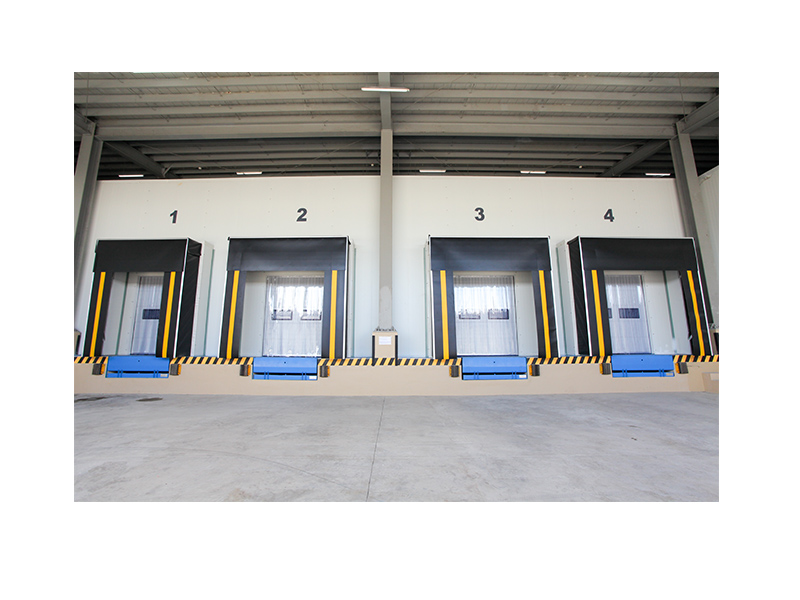
Door choice matters just as much. A sliding door is fast for pallet movement but needs a clean track and good seals. A sectional door suits truck docks and large openings. If your room sits on the west side of a processing shed or faces a hot loading bay, the panel thickness and door type cannot be settled from a stock drawing. Send your site layout and door opening size to meluck@meluckcooling.com and I will confirm the envelope before quoting.
Which Refrigeration System Handles India's Ambient Heat Without Oversizing?
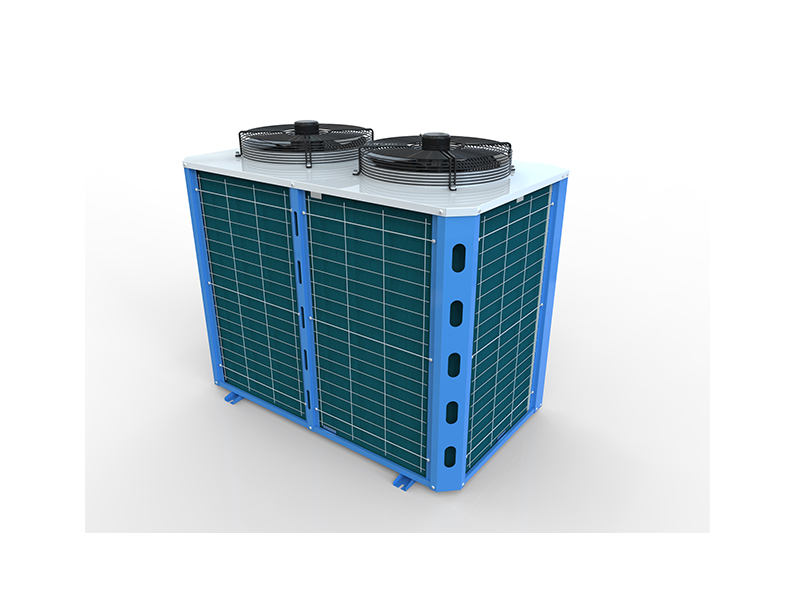
An Indian fruit cold room does not need the biggest condensing unit. It needs a condensing unit selected for the hottest hour, not the monthly average. In many Indian growing regions the ambient dry-bulb temperature crosses 40°C before the monsoon, and the unit is expected to start and stop all day at that condition.
We keep Bitzer reciprocating condensing units from 6HP to 50HP in the range because they tolerate high condensing temperatures without the compressor eating itself. For a mango room, a medium-temperature unit matched to the room heat load is enough. For apple at 0°C, the same unit may need a different evaporator and a lower refrigerant charge. India runs on 50Hz power, so I always confirm voltage tolerance and starting current, especially when the site operates on generator backup for more than two hours a day.
If the unit is placed in a sun-blasted yard, I add a ventilated canopy and keep the condenser coil clear of dust. That is not an optional upgrade in Punjab or Andhra Pradesh in May.
What Should You Send Us to Start a Cold Room Project in India?
Most quoting delays happen because the room is priced before power, drainage, and product mix are clear. That sequence produces a low looking number and a much higher site correction later. We would rather fix the specification first and price it once.
Send three details to meluck@meluckcooling.com. First, your daily fruit volume and product types. Second, the available room footprint and ceiling height. Third, your site power details, including grid voltage, phase, and whether generator backup will run the system. We will come back with a matched room configuration, panel thickness, and condensing unit selection. If the site is already under construction and you need a fast answer, call or WhatsApp +8617369893087.
Common Questions About Fruit Cold Room Projects in India
Can I store mango and apple in the same cold room?
No, not without product loss. Mango holds best at 12°C to 13°C with moderate humidity, while apple needs -1°C to 1°C with high humidity. If you put both at the same setpoint, the mango may chill and darken, or the apple may soften. For mixed fruit programs, the better answer is two smaller rooms or one room with a movable divider and two evaporator zones. We design this split before panel assembly because retrofitting a single-temperature room later costs more than the extra panel work upfront.
How long will the room hold temperature if Indian grid power fails?
This depends on product load, door openings, and ambient temperature. A fully loaded apple room with a well-sealed door holds safe product temperature for several hours after a power cut. A near-empty mango room in summer loses temperature faster because less thermal mass covers the same envelope. For high-loss months, I usually recommend a generator-ready condensing unit and a temperature alarm with battery backup. That way the operator knows the moment the pull-down curve breaks, not after the product has paid for the outage.
Do I need a separate pre-cooling room before the main cold room?
In fruit projects we have supported in Peru and Myanmar, field-heat crops caused most of the early quality loss. A pre-cooling room removes a large share of that heat before the storage room has to hold setpoint. For mango or papaya arriving at 30°C, you want rapid pull-down and high airflow first, then stable holding. If your operation harvests in the morning and stores the same day, a combined room can work with a properly sized evaporator. If trucks bring warm fruit through the afternoon, a separate pre-cooling room is the safer layout.
What is the most common mistake after installation?
The most common mistake is setting the thermostat and walking away before verifying pull-down under full load. Operators assume the room works because the display reads the right number, but the fruit at the center of a tightly stacked pallet may be 5°C warmer than the air sensor. I have seen this in multiple tropical fruits. Before sign-off, run a loaded pull-down test and log product core temperature, not just air temperature. If you are unsure how to interpret the data, send the log to meluck@meluckcooling.com and we will confirm whether the system is matched properly.
If you're interested, check out these related articles:
Chiller Room Solutions -10C~10C - Meluck
Blast Freezer Room Solutions -40C~-60C - Meluck
Freezer Room Solutions -25C~-18C - Meluck
With over 15 years of experience as a MELUCK refrigeration engineer, I specialize in the design of cold storage, chillers, ice makers, and cold chain energy-saving systems, providing technical support to distributors and engineering companies worldwide.

meluck