
Cold Room Project Morocco: Citrus and Seafood Cold Chain
Cold room project Morocco decisions turn on zone design, not compressor brand. Morocco's citrus and seafood export cold chain fails most often at the handoff between pre-cooling and long-term storage. For citrus exporters, a 4°C to 8°C holding room keeps rind and juice quality through grading and container loading. For seafood, blast freezing to -35°C before entry into a -20°C to -25°C storage room preserves texture and export compliance. Our team sizes each zone from daily throughput rather than from a catalog list. The result holds product quality through the hottest week of the export season.
What temperature zones does a cold room project Morocco export site need?
A single setpoint cannot serve citrus and seafood under one roof. Moroccan citrus exports move through three stages: field heat removal, graded holding, and container staging. Fresh seafood moves through receiving, iced processing, blast freezing, and frozen storage. Each stage needs its own temperature band and air pattern, or the cold chain breaks before the product leaves the packinghouse.
| Zone | Product | Setpoint | Key equipment | Main failure risk |
|---|---|---|---|---|
| Citrus pre-cooling and holding | Oranges, clementines, lemons | 4°C to 8°C, 90 to 95% RH | Medium-temperature unit, DL air cooler | Slow pull-down, rind damage |
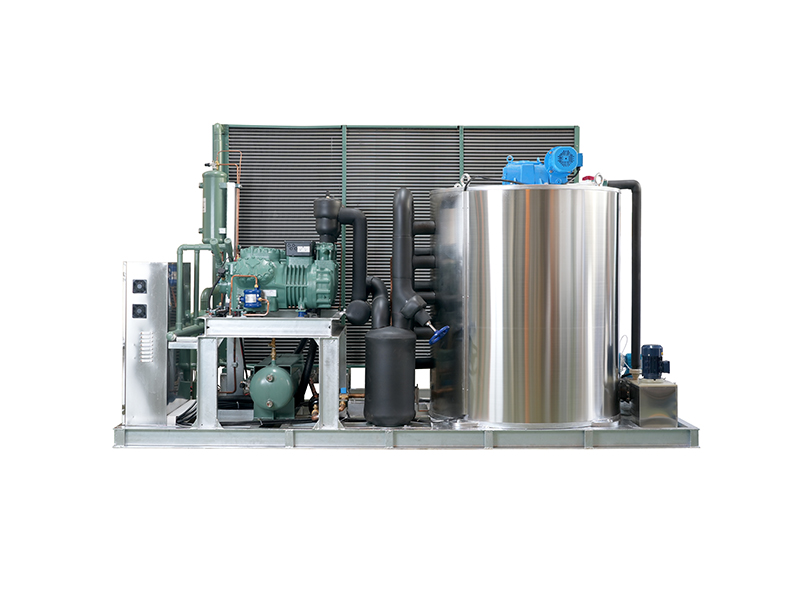
| Fresh seafood processing | Fish, cephalopods, shrimp | 0°C to 2°C | Flake ice, medium-temperature chiller | Ice melt before packing |
| Blast freezing | Shrimp, sardines, octopus | -30°C to -40°C | Bitzer two-stage or screw condensing unit, blast freezer evaporator | Slow freeze, large ice crystals |
| Frozen storage | Frozen seafood | -18°C to -25°C | Low-temperature condensing unit, DD air cooler | Defrost drift, surface desiccation |
Morocco's coastal sites around Agadir and Dakhla carry high humidity and salt air. That changes corrosion protection and coil selection, but the temperature setpoints stay the same as any export-grade facility. In Manta, Ecuador, we built a multi-temperature seafood facility with the same zone logic: three blast freezer rooms at -35°C, frozen storage at -18°C, processing at 5°C to 10°C, and a 10-ton daily flake ice plant. The plant had previously failed inspection because manual processing let product temperatures rise before freezing. The zoned design closed that gap and stabilized export product quality.
How do citrus and seafood throughput shape cold room sizing?
Cold room sizing starts with daily tonnage, not square meters. A citrus packhouse handling 15 tons per day at a 28°C field temperature needs a much larger compressor capacity for a six-hour pull-down to 6°C than a static holding room of the same size. The same rule applies to seafood: a 5-ton batch of sardines entering a blast freezer at -35°C carries a peak load that a low-temperature storage unit cannot absorb.
We calculate heat load from product mass, entry temperature, target temperature, pull-down time, respiration rate for citrus, and door openings. The door openings matter more than most buyers expect. Every pallet movement into a pre-cooling room during harvest peaks can add several hours of pull-down time if the air cooler and condensing unit were sized only for holding load.
Two project examples show the difference. In Peru, an avocado pre-cooling room at 10°C with two Bitzer 20HP condensing units reduced rejection and spoilage from roughly 15% to below 4%. In Egypt, a French fries plant used a -35°C blast freezer with a 125HP refrigeration system and two -20°C storage rooms with 75HP systems to keep losses below 2%. The compressor power matched peak throughput, which is why the rooms held temperature during the hottest shifts.

If a Morocco program runs citrus and frozen seafood in the same building, it is worth confirming the partition vapor barrier and return-air balance before finalizing the equipment list. A poorly separated frozen zone will pull moisture from the citrus zone and create condensation on the shared wall. Reach Meluck at meluck@meluckcooling.com with your daily tonnage figures, and we will check the zone interaction before you commit to a layout.
Which refrigeration equipment fits Moroccan coastal and inland conditions?
Morocco's refrigeration challenge is not just heat. Coastal packinghouses face salt-laden air, and inland fruit stations face wide daily temperature swings. We select condensing units and air coolers for the highest expected ambient temperature at the specific site, not the average. A system that works at 35°C may stall at 45°C on a hot afternoon in the Souss.
For citrus rooms, medium-temperature Bitzer semi-hermetic condensing units matched to DL-series air coolers give stable 4°C to 8°C control without excessive airflow over stored fruit. For frozen seafood, low-temperature condensing units and DD-series air coolers handle the smaller temperature difference at -18°C to -25°C. Blast freezing below -30°C is where we specify two-stage or screw compression, because a single-stage unit loses capacity quickly at low evaporating temperatures.
Panel selection matters as much as the compressor. PIR cold room panels with a B1 fire rating give better insulation per thickness than standard PUR panels, which matters when citrus rooms sit beside frozen rooms and roof temperatures climb. We also prefer smooth, washable internal surfaces for seafood zones because ONSSA and EU auditors look closely at cleanability. Electrics and door hardware on coastal projects need corrosion-resistant finishes, especially around the blast freezer room.
What do Moroccan and EU export inspections look for in a cold room?
Export inspections follow the product, but they never stop at the product. Auditors check whether the cold room can hold the declared temperature under real load. They ask for temperature logs, defrost records, alarm tests, and cleaning schedules. Moroccan exporters shipping to the EU operate under food safety requirements that expect HACCP-based monitoring and traceability, and the cold room is treated as a control point, not a warehouse detail.
A clean design makes compliance easier. Floor drains, coved corners, washable panel surfaces, and sealed door thresholds reduce areas where fish proteins or citrus residues collect. The blast freezer room should have a temperature recorder independent of the main controller. The frozen storage room should show continuous data from January through August, including defrost cycles, so an inspector can see whether product temperature ever climbed above -18°C.
We learned from the Manta seafood project that inspection failures often start with workflow, not refrigeration equipment. When processing happened outside a controlled room, product temperatures rose before freezing. Moving sorting, trimming, and packaging into a 5°C to 10°C processing room removed that variable. Moroccan seafood exporters looking at EU or high-value Asian buyers should apply the same logic: the controlled room should begin where the raw product begins, not only after freezing.

How do we start a cold room project Morocco buyers can operate long term?
The hardest part of a cold room project is not buying equipment. It is matching equipment to the actual export workflow and then keeping the system running after commissioning. We have built multi-temperature export facilities in Ecuador, Peru, Egypt, and Myanmar, and the projects that perform best are the ones where the buyer shares daily throughput and species mix before the quotation.
We design, manufacture, install, and commission the cold room as a turnkey package. That means the panels, doors, condensing units, air coolers, electrical control, and insulation work together, and our technicians stay on site for start-up and operator training. A scattered equipment purchase often ends with mismatched compressor capacity and no clear service responsibility. A single engineering team removes that risk.
Send your daily citrus tonnage, seafood species mix, and target export certificates to meluck@meluckcooling.com or +8617369893087. We will return a zone-by-zone equipment selection, a build timeline, and a commissioning plan that matches Moroccan operating conditions. That step moves a cold room project Morocco exporter's plan from drawings to a working cold chain.
What do Moroccan exporters ask about cold room projects?
What temperature is best for Moroccan clementines and oranges in export storage?
Clementines and most oranges hold best between 4°C and 8°C, with 6°C as a safe base point for mixed citrus loads. Lemons tolerate and prefer the higher end, around 8°C to 10°C. The larger risk is not the setpoint but the pull-down speed. Fruit that stays warm for several hours after harvest loses shelf life and firmness before it reaches the container. High humidity near 90% reduces peel shrinkage and shriveling, but condensation must be managed through controlled airflow.
Do I need a blast freezer if I export frozen octopus and shrimp?
A standard -25°C storage freezer cannot replace a blast freezer for export-quality frozen seafood. The storage room freezes slowly, which forms large ice crystals, breaks cell structure, and produces drip loss after thawing. A blast freezer room at -30°C to -40°C pulls the core temperature down fast enough to protect texture and reduce dehydration. Use the blast room for freezing and the -18°C to -25°C room for holding. The two rooms are not interchangeable, even when the nominal temperature looks close.
How long should a cold room project take from order to commissioning in Morocco?
That depends on whether the building shell and power supply are already prepared. A standard chiller or freezer room for a prepared site can move from final drawings to mechanical completion in four to eight weeks, depending on panel production and sea freight. A full turnkey project with multiple zones, a blast freezer, and civil adjustments usually runs longer. The best schedule protection is an early site survey that confirms floor loading, door openings, drainage, and electrical supply before equipment ships.
Can one facility handle citrus and seafood at the same time?
From the dual-product projects we have built, yes, when the zones are isolated by sealed partition panels and each room has its own airflow and drainage. Citrus rooms need high humidity without standing water, while seafood rooms need washdown surfaces and daily cleaning. Shared walls must stop vapor transfer, and return-air paths must not pull fish odor into the citrus room. It adds complexity, but a dual-product facility is workable. Share your species mix and export certificates, and we will confirm the zone separation and compliance documentation you need.
If you're interested, check out these related articles:
Blast Freezer Room Solutions -40C~-60C - Meluck
Myanmar Potato Seed Cold Storage Project - Meluck
With over 15 years of experience as a MELUCK refrigeration engineer, I specialize in the design of cold storage, chillers, ice makers, and cold chain energy-saving systems, providing technical support to distributors and engineering companies worldwide.

meluck