
Refrigeration for Aquaculture Farms: Live Fish Cooling and Harvest Cold Storage Systems
Aquaculture refrigeration is not the same as a standard food cold room. A livestock chiller removes heat from air in a closed room, but a farm system often has to manage water temperature, oxygen retention, live animal stress, and a harvest window that can move from ambient pond temperature to chilled holding within hours. The design challenge is therefore broader than compressor selection. It starts with water, then moves into air handling, ice supply, and back-up power.
Global aquaculture production has become a major source of food protein, and the cold chain around harvest is one of the main factors that determines whether fish reaches processing or market in acceptable condition [1]. Farms that do not control the first chilling stage lose more value through soft texture, enzymatic spoilage, and bacterial growth than through any single equipment failure. A well-sized refrigeration system shortens that risk window and makes daily harvest handling repeatable.
Why Aquaculture Refrigeration Starts With Water, Not Air
Water has a high specific heat and carries far more thermal energy than air per unit volume. When a farm holds live fish in tanks, the refrigeration system must remove heat from incoming water, pump energy, tank walls, aeration equipment, and fish metabolism. The air temperature in the room is secondary. A live holding room can be at 18°C to 22°C air temperature while the water is held at 4°C to 8°C, but if the water chiller is undersized, the room itself will not correct the problem.
Several species-specific requirements shape the system. Temperate species such as trout and salmon generally hold well in chilled water below 8°C. Warmwater species such as tilapia or catfish may only need cooling during high ambient periods, when pond or tank water rises above the target range. In tropical aquaculture, the refrigeration demand is often seasonal but intense, because a small amount of temperature overshoot causes rapid oxygen loss and fish stress. The refrigeration designer must therefore ask for species, water volume, water exchange rate, and maximum inflow temperature before selecting any equipment.

Temperature Zones for Live Fish Cooling and Harvest Cold Storage
An aquaculture facility usually has more than one refrigeration zone, and each zone has a different purpose. The most practical approach is to separate live holding, harvest chilling, ice storage, and finished cold storage. That prevents a single large room from trying to serve conflicting temperature requirements.
Live Holding and Grading Zone
This zone keeps fish alive and reduces metabolic activity before processing. Water temperature is controlled by a chiller or water-cooled condensing unit matched to the heat load of the tanks. The room itself may be insulated to reduce ambient heat gain, but the main load is the water. A water-cooled chiller is often used when a stable water loop is available, while a direct expansion system can work for smaller tank batteries. Water-side corrosion resistance matters in marine or brackish systems, and the heat exchanger material must be confirmed for salinity.
Harvest Chill Zone
After harvest, fish should move into chilled water or flake ice quickly. The target is not freezing. It is rapid surface chilling to slow enzymatic and bacterial action. For many species, harvest holding between 0°C and 4°C in a chiller room or insulated harvest bin is enough for the first processing stage. Air temperature alone is not sufficient because water and ice carry heat away from the fish surface much faster than cold air.
For farms that also store or process seafood after harvest, <Indonesia Seafood Cold Storage: Reliable Cold Room Design> covers zoned cold room layouts for seafood handling and storage.
Ice and Pack-Out Zone
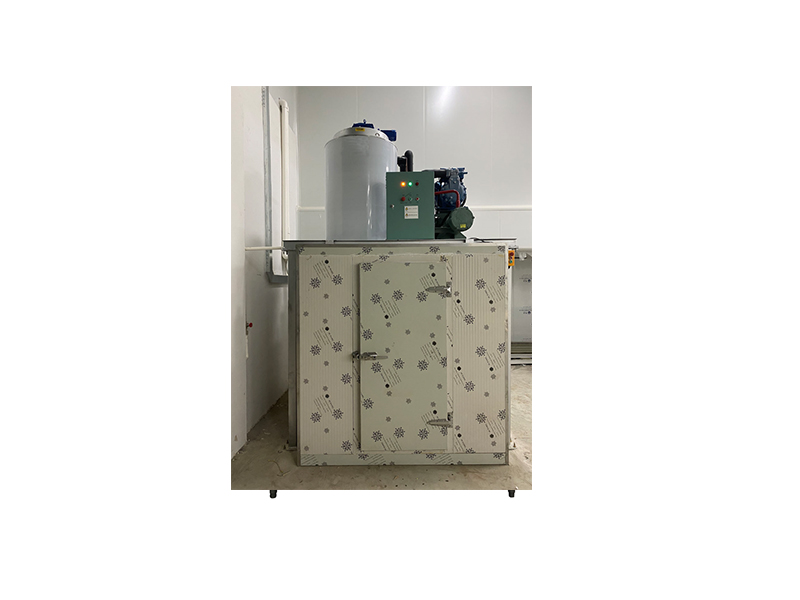
Flake ice is the standard cooling medium for fish handling because it conforms to the fish surface, cools quickly, and does not puncture skin the way block ice fragments can. The ice supply should be sized to the peak daily harvest, not the average. A farm that normally processes 2 tons per day but lands 5 tons on peak harvest days will run out of ice at the worst possible time. Flake ice machines in the 1 to 10 tons per day range cover most farm pack-out rooms, with the larger units used for centralized collection or processing stations.
Cold Storage and Logistics Zone
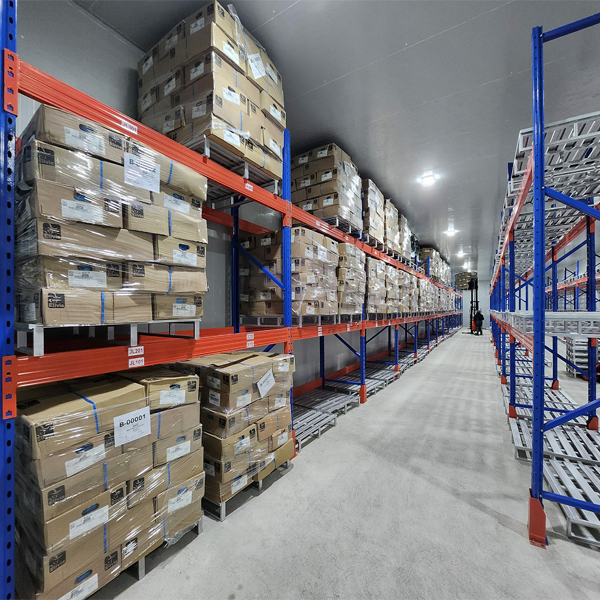
Once fish is packed, a separate cold room maintains the product at a stable storage temperature until transport. This is the zone that most closely resembles a standard food cold room. Insulated panels, a properly sized condensing unit, and a reliable door are the main components. For frozen products, the storage room is typically held at -18°C to -25°C. For fresh chilled fish, 0°C to 2°C is more common.
The table below summarizes the main zones and their typical design focus.
| Zone | Primary medium | Typical design target | Main equipment |
|---|---|---|---|
| Live holding | Water | Species-specific, often 4°C to 8°C for temperate fish | Chiller or water-cooled condensing unit |
| Harvest chill | Water and ice | 0°C to 4°C rapid surface chill | Chiller room or insulated harvest bins, flake ice |
| Ice storage | Air | -5°C to -10°C to reduce melting | Insulated ice room, small condensing unit |
| Finished storage | Air | 0°C to 2°C fresh, -18°C to -25°C frozen | Cold room panels, condensing unit, evaporator |
Refrigeration Load and System Sizing for Aquaculture Farms
Sizing starts with a load calculation, not with a horsepower guess. The total load includes the sensible heat of incoming water, pump and aeration heat, heat transmission through walls and roof, product respiration and field heat, air infiltration from door openings, defrost heat, and people or forklift activity inside the room.
For water cooling, the base sensible heat load can be estimated from water flow, temperature difference, and the specific heat of water. A larger flow rate at a higher inflow temperature creates a much larger load than a small tank with a slow water exchange. For air-side rooms, the product load is often the largest single component during harvest hours because fish arrives warm from the pond or sea.
Oversizing a compressor by a small margin is acceptable for pull-down capacity, but gross oversizing causes short cycling, poor dehumidification, and higher running cost. Undersizing is worse because the system cannot pull down the harvest load in the available time. The practical approach is to size for peak harvest flow and ambient summer temperature, then check that the system can also run efficiently at partial load during lower-activity periods.
Equipment Configuration: Condensing Units, Evaporators and Ice Systems
Aquaculture rooms usually require medium-temperature and low-temperature equipment in separate circuits. A harvest chill room and a live holding water loop use medium-temperature refrigeration. A frozen storage room or ice storage room uses low-temperature equipment. A single system that tries to serve all zones at once often sacrifices control accuracy.
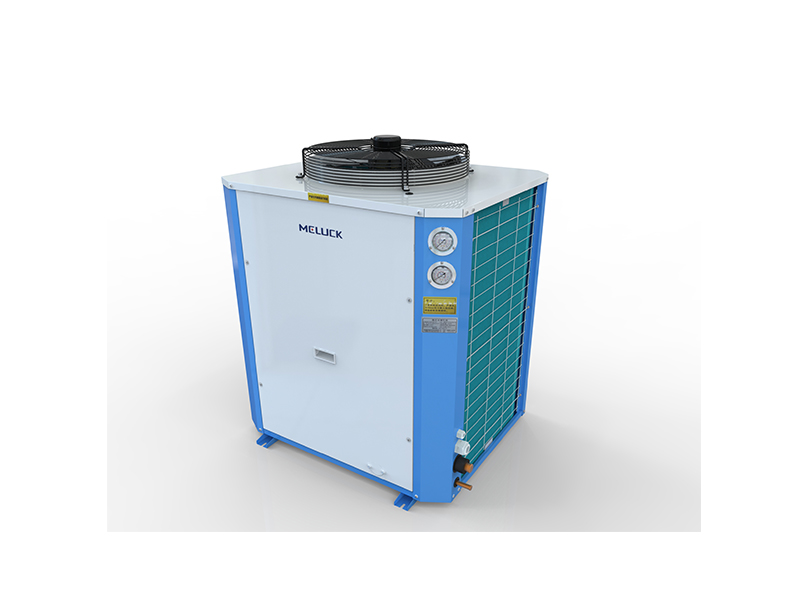
Semi-hermetic reciprocating condensing units are a common choice for aquaculture cold rooms because they handle frequent start-stop operation well and are available in a wide capacity range. Screw condensing units become justified for large centralized facilities, especially where multiple rooms operate continuously. The evaporator in a chilled fish room should be selected for high humidity and frequent washdown, with coil spacing and drain trays that can tolerate fish slime, ice, and cleaning chemicals.
A turnkey example from past projects illustrates the integrated approach. A multi-zone seafood facility in Manta, Ecuador combined a 10-ton per day flake ice plant with an ice storage room, a processing room, frozen storage, and a blast freezer. The system used separate Bitzer compressor circuits for each temperature zone, which kept the ice room stable while the blast freezer pulled down a heavy load. The same zoning principle applies to a fish farm that holds live fish, harvests daily, and stores packed product before transport.
Ready to fix a system specification?
If you are planning a live fish holding room or a harvest chill room, send a short inquiry to meluck@meluckcooling.com with your species, daily harvest volume, water source, and power supply. A technical consultant can return a cooling load estimate and an equipment list for your peak operating day.
Water Quality, Backup Cooling and Remote Power
Water quality is a refrigeration issue, not only a biology issue. Warm water holds less dissolved oxygen, so a cooling failure quickly becomes an oxygen failure in a live holding system. The correct response is not to add more ice and hope. The farm needs an alarm, a defined critical temperature, and a backup power plan for the water pumps and aeration system before the compressor restart sequence is considered.
Codes and hygiene guidance for fish handling also set the operating conditions for the refrigeration room. Drainage, cleaning, separation of clean and dirty zones, and temperature logging are part of compliance [2]. The cold room itself must support the cleaning schedule, which means the panel surface, floor drainage, and door hardware need to be washdown-compatible [3]. Insulated panels with a food-safe internal surface and a manual sliding door reduce contamination and make daily cleaning easier.
For sites where mains power is unstable or absent, <Cold Room Power Solutions for Remote Locations and Islands> covers off-grid and generator-powered refrigeration options.
Many aquaculture farms operate in coastal, island, or rural locations where the power grid is not strong enough for a direct-on-line compressor start. In these cases, the design must include generator capacity, voltage stability, and possibly a smaller staged start sequence. A compressor that requires a large starting current may overload a weak generator even if the running load looks acceptable. The best solution is usually to include the generator load calculation at the same time as the refrigeration load calculation.
Common Failure Points and Maintenance
The most common aquaculture refrigeration failures are not exotic. They are fouled water-side heat exchangers, low refrigerant charge, failed condenser fans, drifted temperature sensors, and blocked evaporator coils. In live holding systems, a water-side heat exchanger that is never cleaned will lose capacity gradually until the system can no longer hold water temperature on a hot afternoon. The operator sees fish stress first, long before the compressor alarm activates.
A practical maintenance routine should include monthly cleaning of air-cooled condenser fins, quarterly inspection of water filters and strainers, calibration checks on temperature sensors, and a review of compressor discharge and suction pressures. For seawater or brackish systems, heat exchanger corrosion should be inspected at least twice a year. Spare parts should include contactor, control fuse, fan motor, door gasket, and a spare temperature controller where the farm is far from local supply.
Selecting a Supplier for Aquaculture Refrigeration
Aquaculture is a demanding application because the system must serve live animals, fresh harvest, ice supply, and stored product without interruption. A supplier that only sells a cold room may not understand the water-side load or the harvest peak. A supplier that only sells chillers may not handle the insulated room, door, and panel requirements correctly. The strongest approach is a turnkey provider that can engineer the full chain from water cooling to harvest room to cold storage, and that has experience in warm-climate food projects.
When evaluating a supplier, ask for a cooling load calculation, equipment selections for the peak harvest day, a commissioning plan, and after-sales support. The quotation should not be a single compressor size without context. It should show how the system behaves at high ambient temperature, during harvest pull-down, and under partial load. That level of detail is what separates a real aquaculture refrigeration design from a generic cold room package.
Plan Your Aquaculture Refrigeration System With an Inquiry List
For a firm quotation, prepare the following before contacting a refrigeration engineer:
- Species and required live holding temperature range
- Daily or peak harvest volume in kilograms or tons
- Water source, salinity, and water exchange rate
- Available power supply, voltage, frequency, and generator backup
- Site location and expected maximum ambient temperature
- Existing insulated rooms or new-build preference
Send the list to meluck@meluckcooling.com or call +8617369893087. MELUCK provides design, equipment matching, installation, commissioning, and after-sales support for aquaculture and seafood cold chain projects.
FAQ
What temperature should a live fish holding area use?
The correct water temperature depends on species. Temperate fish such as trout and salmon are often held at 4°C to 8°C, while warmwater species such as tilapia may need cooling only when water rises above their normal range. The room air temperature is less important than the water temperature and oxygen level.
How does flake ice improve harvest chilling?
Flake ice has a large contact surface and conforms to the fish, so it cools faster than block ice or cold air alone. It also causes less mechanical damage to fish skin. The ice system should be sized for the peak daily harvest, not the average harvest.
Can an aquaculture cold room run on a generator or off-grid power?
Yes, but the generator and compressor starting current must be designed together. A weak generator can fail to start a large compressor even when it can carry the running load. Remote and island sites should include generator load calculations, staged start control, and a backup power plan for water pumps and aeration.
What refrigeration system is best for a fish farm?
The best system is a zoned design with separate circuits for live holding water, harvest chilling, ice storage, and finished storage. This usually combines a water-cooled chiller or condensing unit for water, medium-temperature cold rooms for harvest and packing, and low-temperature equipment for ice or frozen storage.
How do I size a condensing unit for an aquaculture harvest room?
Start with the peak harvest weight and the required pull-down time, then add heat from water, equipment, infiltration, walls, lighting, and people. Size for the hottest expected ambient temperature. Slight oversizing is acceptable if the controls can stage partial load correctly, but gross oversizing causes short cycling and poor humidity control.
What spare parts should an aquaculture farm keep?
The minimum spare parts list includes a temperature controller, contactor, control fuse, condenser fan motor, door gasket, and water strainer. Farms in remote areas should also keep refrigerant and a spare high-pressure or low-pressure switch where local supply is limited.
References
[1] FAO. The State of World Fisheries and Aquaculture 2024. Food and Agriculture Organization of the United Nations. https://www.fao.org/publications/sofia/2024/en/
[2] Codex Alimentarius. Code of Practice for Fish and Fishery Products. CXC 52-2003, Rev. 2022. FAO/WHO.
[3] FAO/WHO. General Principles of Food Hygiene. CXC 1-1969, Rev. 2022.
[4] FAO. Ice in Fisheries. FAO Fisheries Technical Paper No. 331. 1995.
If you're interested, check out these related articles:
Date Palm Cold Storage: Temperature and Humidity for Long-Term Preservation
Garlic Cold Storage Room: Humidity and Temperature Control
Blood Bank Cold Room: Ultra-Precise Temperature Control
Cold Room for Chocolate Distribution: Bloom Prevention Guide
With over 15 years of experience as a MELUCK refrigeration engineer, I specialize in the design of cold storage, chillers, ice makers, and cold chain energy-saving systems, providing technical support to distributors and engineering companies worldwide.

meluck