
Blood Bank Cold Room: Ultra-Precise Temperature Control
Storing blood products safely demands far more than keeping a room cold. A blood bank cold room must maintain ultra-precise, uniform temperatures across every shelf and corner, because even a brief deviation can damage red cells, platelets, or plasma and put patient safety at risk. I have designed medical cold chain systems for export markets, and the common mistake I see is treating a blood storage facility like a standard chiller room. It is not. Blood bank cold rooms need engineered redundancy, validated thermal mapping, and fail-safe monitoring from day one. Skipping these steps leaves hospitals exposed to regulatory failure and costly product loss.
Why Temperature Precision Matters in Blood Bank Cold Storage
Blood components have narrow, non-negotiable storage ranges. Whole blood and red cells require 2°C to 6°C, fresh frozen plasma must stay below -25°C, and platelets need a controlled 20°C to 24°C with continuous agitation. A chiller room keeping red cells at 4°C but drifting to 7°C near the door or during defrost cycles creates a silent compliance breach. International standards such as AABB and EU GDP treat any excursion outside these limits as a critical non-conformance.
Uniformity is the real challenge. I have seen installations where the thermostat reading looked fine, but thermal mapping later revealed a 3°C gradient between the top shelf and the floor. That kind of variation happens when evaporator placement, airflow, or insulation is under-specified. For blood banks, the target is not just an average temperature; it is a tightly controlled envelope where every stored unit stays within range 24 hours a day.
Critical Design Elements for a Medical-Grade Cold Room
Starting from the building envelope, the panel system determines a lot of the long-term stability. I specify PIR (polyisocyanurate) cold room panels with B1 fire rating for medical projects. Compared to standard PUR panels, PIR provides better thermal resistance per millimeter and significantly lower smoke development in the event of a fire, a detail that hospital facility engineers consistently ask about.
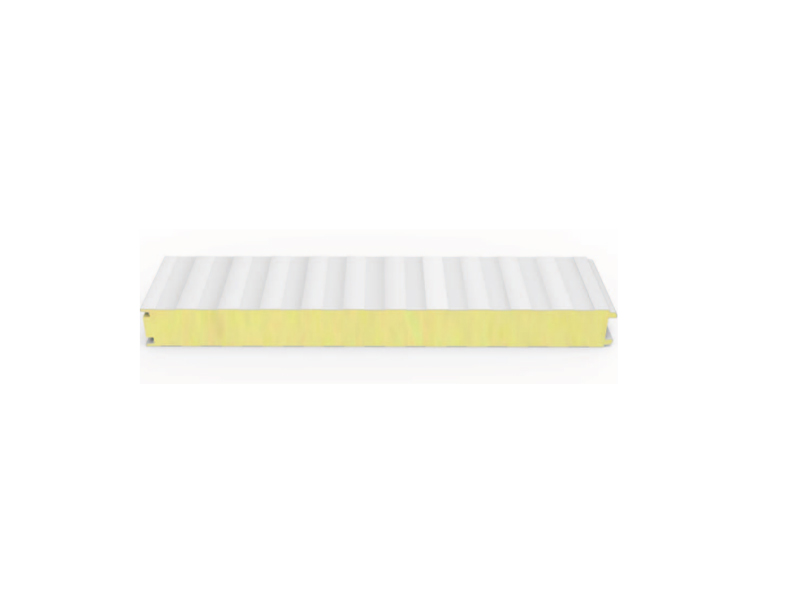
Inside, evaporator selection and air distribution are what drive temperature uniformity. For a 2°C to 6°C chiller room, we pair a properly sized DL-series air cooler with an electronic expansion valve to maintain stable superheat control, even under low load. The panel-to-panel cam-lock or slip-joint connection must be airtight. Even small air leaks through the door seals or panel joints introduce moisture and load swings.
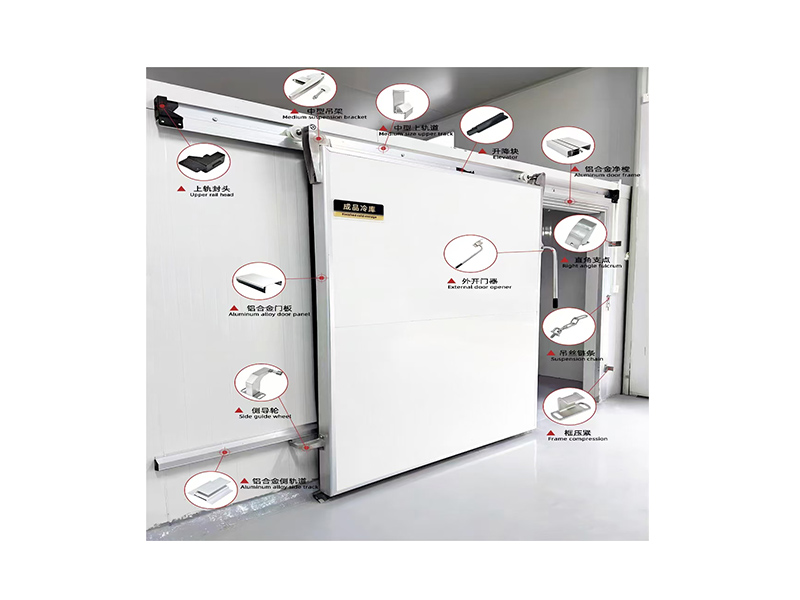
Another practical point is the door type. For medium-sized blood bank cold rooms, a manual sliding door with heated frame gasket prevents ice buildup and ensures a reliable seal, important when staff open the door frequently during busy collection processing periods.
System Redundancy: Ensuring Continuous Operation
No single-compressor chiller room is safe enough for a blood bank. Power failures happen. Compressor breakdowns happen. For medical cold chain, I always recommend N+1 redundancy as the minimum, not an option. That can mean a second independent condensing unit on standby with automatic switchover, or a parallel compressor rack where the failure of one compressor still leaves sufficient cooling capacity.
In some of our turnkey projects for temperature-sensitive processing, we have used Bitzer semi-hermetic reciprocating compressors specifically because their robust valve design and ability to handle frequent start-stop cycles make them suited for critical backup duty. Pair that with a dual-power source and a properly sized backup generator, and you cover both compressor failure and grid outage scenarios. I always push buyers to think about the cold room not as a standalone box, but as a system that includes the electrical infrastructure, alarm panel, and remote notification logic.
Meeting Compliance Standards and Validation Protocols
Compliance for blood bank cold rooms is not just about having the right equipment. It is about documented proof that the room performs as specified under worst-case conditions. The validation process typically follows IQ/OQ/PQ (Installation Qualification, Operational Qualification, Performance Qualification), including a full thermal mapping study with loaded and empty conditions, door-open tests, and power-off recovery tests.
I have seen projects where the buyer sourced the cold room from one vendor and the monitoring system from another, then struggled to reconcile the data formats during an audit. To avoid that, all temperature sensors, data loggers, and alarm outputs should be integrated and tested as one system before handover. Many importers ask about EU GDP compliance. The key is not just meeting a temperature setpoint, but demonstrating continuous monitoring, alarm escalation protocols, and corrective action procedures. These are items an experienced cold room manufacturer should prepare with you, not leave to the end user.
Choosing Equipment and a Reliable Supplier
Selecting the right condensing unit, panels, and control system requires matching the technical configuration to the local climate and power supply. In hot ambient regions, a Bitzer air-cooled condensing unit sized for 45°C ambient ensures stable head pressure and cooling capacity even during heat waves. For sites with unreliable grid power, a configuration that supports a soft-start generator transfer becomes critical.
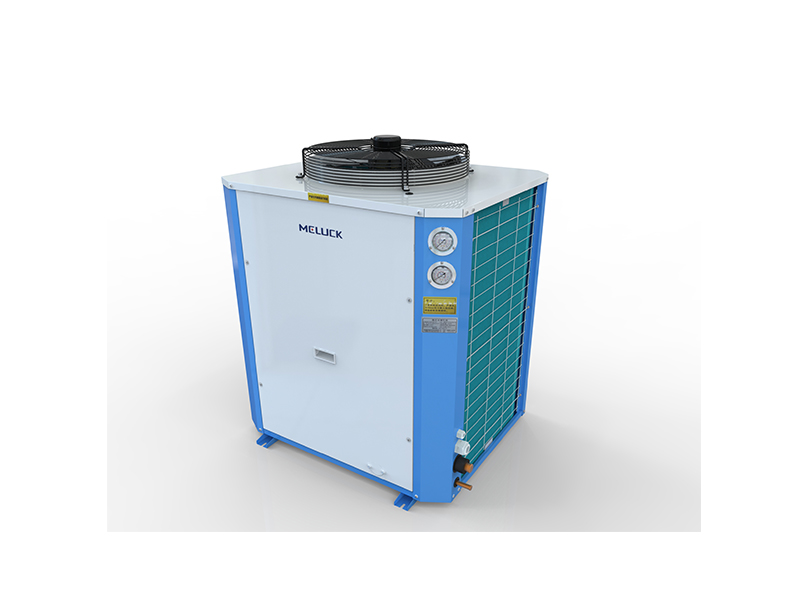
If your project involves multiple temperature zones, like a combined chiller room for red cells and a freezer room for plasma, the supplier should demonstrate how they will design the shared condensing unit rack, pipe runs, and control logic to avoid cross-interference. This is where factory engineering support separates a genuine manufacturer from a trading company. Ask to see previous thermal mapping reports for medical cold room installations. A capable supplier will have these ready and will discuss how they addressed any non-conformities.
When a blood bank cold room fails a validation, it is usually not because the equipment was faulty. It is because the design did not account for real usage patterns: frequent door openings, seasonal ambient swings, or a defrost cycle that pushes the internal temperature too high for too long. Those are the details a supplier with hands-on medical cold chain experience will catch early.
What We Recommend for Blood Bank Cold Room Buyers
Investing in a medical-grade cold room means accepting that off-the-shelf commercial units will not meet audit requirements. The premium you pay for PIR panels, Bitzer compressors with electronic control, and integrated 24/7 monitoring is returned in avoided product loss, reduced compliance risk, and a system that works reliably for years. If you are evaluating proposals, look beyond the insulation thickness and ask your supplier to walk you through the redundancy scheme, the alarm matrix, and the validation protocol. That conversation alone often reveals the difference between a box seller and a true cold chain partner.
To discuss your blood bank cold room specifications, send your required temperature range, storage volume, and any compliance standards you must meet to meluck@meluckcooling.com or call +8617369893087. We can review the technical configuration with you and propose a system that matches your medical cold chain needs.
Common Questions About Blood Bank Cold Room Systems
2°C to 6°C is a narrow window. How do you keep the temperature from drifting near the door?
Temperature drift near the door is most often caused by two things: insufficient air curtain or strip curtain provision, and undersized evaporator capacity that cannot recover quickly after door openings. In our designs, we position the evaporator to direct cooled air toward the door zone, use PVC strip curtains as a secondary barrier, and configure the cooling capacity to handle at least six door openings per hour during the mapping exercise. Thermal probes placed near the door latch point provide real-time data to confirm the recovery time is within acceptable limits.
Do blood bank cold rooms require a backup refrigeration unit or is a spare compressor enough?
A spare compressor stored in a warehouse is not a backup. When the primary compressor fails at 2 a.m., the room temperature will start rising immediately, and by the time a technician arrives with the spare, products may already be compromised. A proper backup means a second fully piped, powered condensing unit with automatic or manual switchover, tested during commissioning. For medium to large blood centers, we recommend a parallel rack with at least N+1 redundancy, where the failure of one compressor does not drop capacity below 100% of the design load.
How often should thermal mapping be performed after the initial validation?
The initial performance qualification should be followed by a requalification at least every two years, or any time a major component is replaced. However, a lighter annual review, where you compare recent continuous monitoring data against the original mapping baseline, is a practical way to detect drift in performance. I always tell operators that if they see a change in defrost duration or a wider temperature band than originally recorded, it is worth doing a focused mapping exercise rather than waiting for the audit.
Can one cold room store both red cells and plasma at the same time?
No, because red cells require +2°C to +6°C while frozen plasma must be kept at -25°C or colder. Running both in the same space would force a compromise that fails both sets of storage rules. The correct approach is to build two separate cold rooms, or a single room with a solid, fully insulated dividing wall and independent refrigeration systems for each zone. The thermal barrier must prevent cold air migration from the freezer side into the chiller side and avoid ice buildup on the shared partition.
Is it worth paying more for PIR panels instead of standard PUR panels for a medical cold room?
Yes, for hospital and blood bank environments. PIR panels provide better fire performance with a B1 fire rating, produce less smoke, and maintain structural integrity longer in a fire event, which is a direct safety consideration for occupied buildings. Additionally, PIR has a lower thermal conductivity over time, meaning the energy savings accumulate over the 15- to 20-year life of the room. In medical applications where the cold room often sits inside a main building, the fire safety argument alone typically satisfies hospital engineers.
When you are ready to move from specification to procurement, share your project details and we will prepare a compliant cold room configuration that includes PIR panels, Bitzer redundancy, and full validation support. Email meluck@meluckcooling.com or call +8617369893087.
If you're interested, check out these related articles:
Egypt French Fries Cold Storage Project - Meluck
Freezer Room Solutions -25C~-18C - Meluck
Myanmar Potato Seed Cold Storage Project - Meluck
Peru Avocado Pre-Cooling Cold Storage - Meluck
Processing Room Solutions for Food Plants - Meluck
With over 15 years of experience as a MELUCK refrigeration engineer, I specialize in the design of cold storage, chillers, ice makers, and cold chain energy-saving systems, providing technical support to distributors and engineering companies worldwide.

meluck