
Seafood Export Blast Freezer: IQF Standards and Rapid Freeze
A shrimp shipment rejected at an EU port because the core temperature was too high upon arrival represents far more than a lost container. It signals a freezer system that isn't matching the cold chain speed and temperature control the export market demands. For seafood exporters, blast freezing isn't a commodity step. It's the single most critical control point between dock acceptance and profitable shelf life. Yet the difference between a room that freezes product and one that freezes it to export specification is often misunderstood. Getting to -40°C quickly and holding the product at that condition until container loading requires more than horsepower. It means aligning air velocity, evaporator configuration, and compressor staging with the product's water content, thickness, and target market certification requirements. Over the years, I've seen far too many processors underinvest in blast freezing and later pay for it with downgraded product grades and rejected bills of lading.
Why Standard Freezing Isn't Enough for Export-Grade Seafood
Slow freezing creates large ice crystals that rupture cell walls. When the product thaws, those ruptured cells release moisture, leaving behind dry, stringy texture and significant weight loss. This drip loss isn't just a quality issue. It's a yield problem that compounds across a full production season. For shrimp, a 1 to 2 percent weight loss from slow freezing might not sound dramatic, but across several hundred tons, it cuts directly into export revenue. More importantly, markets that enforce HACCP-based cold chain verification now routinely test for protein denaturation indicators that reflect slow freezing. If your blast freezer can't pull the core temperature from +4°C to -18°C within the required time window, you aren't competing in the premium export segment.
At the heart of the problem is the difference between a standard freezer room and a blast freezer room designed for rapid heat extraction. The latter needs high-velocity air delivery, often in the range of 4 to 7 m/s, coupled with evaporators built for high delta-T and moisture management. Standard freezer rooms operating at -20°C with low air speed will freeze product, but they'll do it slowly enough that large crystals form and surface dehydration becomes uneven. For seafood species with delicate muscle structure like hake, sole, or certain squid, the quality gap between a 4-hour freeze and a 12-hour freeze is the difference between a product that looks fresh-thawed and one that already looks stale on the retail shelf.
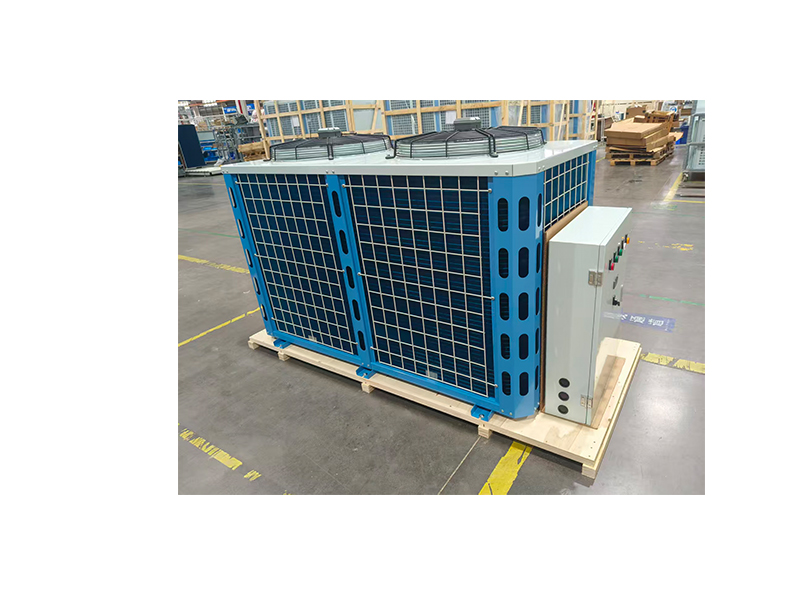
IQF Technology and Blast Freezer Room Design for Seafood Processing
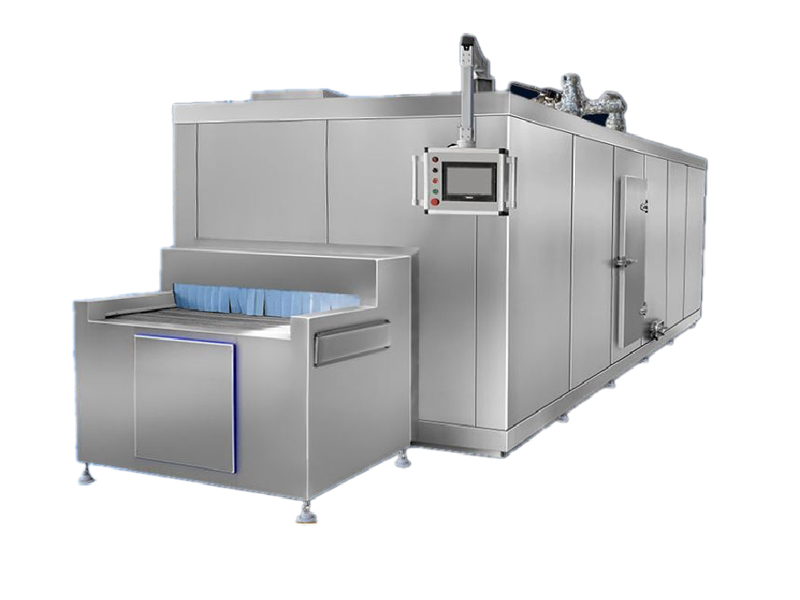
Individual Quick Freezing (IQF) has become the benchmark for premium seafood because it prevents product from clumping together into blocks. In an IQF system, individual pieces are frozen separately as they pass through a freezing tunnel or fluidized bed, typically within 5 to 30 minutes depending on size. This allows processors to package exact weights, maintain product identity, and deliver consistent cooking yields to the foodservice customer. While a blast freezer room can achieve similar freezing speeds if designed correctly, traditional batch-style rooms require careful tray loading, airflow management, and cycle programming to approach IQF-quality output for loose product.
For prawns, scallops, and small fish fillets, a tunnel-style IQF unit or a fluidized quick freezer often outperforms a blast room for throughput and product separation. But for whole fish, block-frozen shrimp trays for industrial use, or space-limited facilities, a well-designed blast freezer room with core temperature monitoring can still meet both EU and FDA rapid freeze requirements. The choice depends on product format and the downstream packaging line. In many plants I've worked with, a combination approach makes sense: an IQF tunnel for the premium loose-frozen line, and a blast room for bulk or larger items. The blast room then benefits from shared compressor infrastructure and can be sized to handle peak catch volumes without over-investing in continuous tunnel capacity.
Achieving -40°C to -60°C Rapid Freeze: Equipment Selection and Configuration
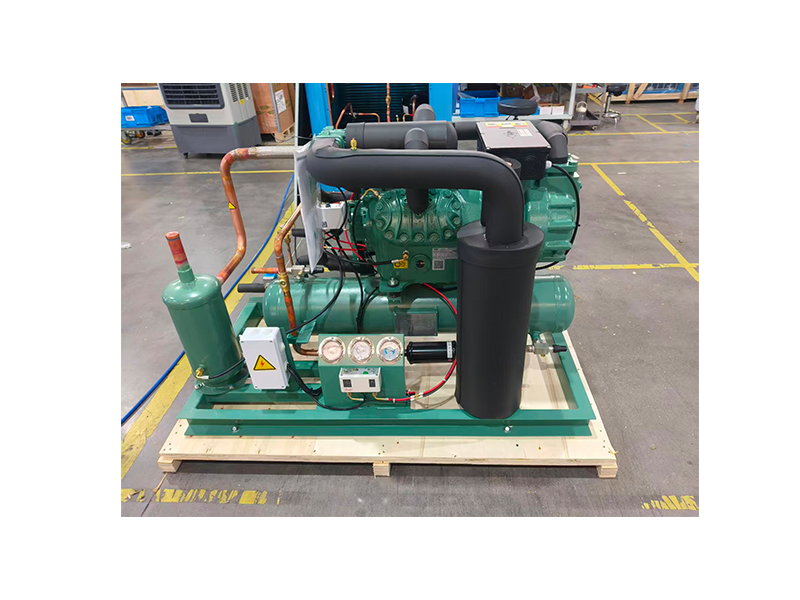
Maintaining a room at -40°C to -60°C while removing product heat requires a refrigeration system that can operate at extremely low evaporating temperatures without excessive discharge temperatures. For blast freezer applications, single-stage compressors start to lose efficiency and can risk overheating below -30°C evaporating. This is where two-stage compressor units or compound systems become standard. Bitzer's two-stage semi-hermetic condensing units, for example, are purpose-built for long-run blast freezing at -50°C and below. They use interstage cooling to keep discharge temperatures manageable while still delivering the mass flow needed to pull down hot product loads quickly.
From our project data, a 20HP two-stage Bitzer condensing unit can reliably serve a small blast room of around 100 cubic meters for fillet freezing, while larger rooms processing several tons per shift need 75HP to 125HP screw compressor packages. In the Ecuador Manta multi-temperature project, we used three Bitzer 40HP units for separate blast rooms holding shrimp and fish, each maintaining -35°C air temperature while extracting heat from freshly packed product. That level of compression density isn't about excess capacity. It's about the ability to pull the core product temperature down within the tight window that the client's inspection regime required. Undersizing the compressors leads to prolonged freezing cycles, product surface drying, and higher rejection rates at the container loading dock.
Below is a comparison of typical blast freezer compressor configurations for seafood processing based on sustained air temperature requirements and load type.
| Compressor Type | Typical HP Range | Suitable Air Temperature | Application |
|---|---|---|---|
| Bitzer single-stage semi-hermetic | 18–50HP | -25°C to -35°C | Small batch blast freezing, moderate loads |
| Bitzer 2-stage semi-hermetic | 16–20HP | -40°C to -50°C | IQF tunnels, thin-product rapid freeze |
| Bitzer screw compressor condensing unit | 75–125HP | -25°C to -40°C | Large blast rooms, continuous high-throughput |
| Parallel piston compressors | 3×25HP–4×30HP | -30°C to -40°C | Multi-batch blast rooms, flexible capacity staging |
Compliance Standards for Seafood Export: Cooling Curves and Documentation
European Union Regulation 853/2004 requires that quick-frozen fishery products achieve a core temperature of -18°C as rapidly as possible after processing, with the frozen state maintained without interruption through storage and transport. While the regulation doesn't specify an exact freeze rate in minutes, it establishes that the freezer must be capable of achieving the target temperature without excessive delay that could compromise product integrity. Practically, this means your blast freezer room or IQF tunnel must demonstrate, under maximum load, that it can bring product core temperature to -18°C within a time that preserves the product's organoleptic and safety qualities. For shrimp, we typically see acceptance when 90 percent or more of the batch reaches -18°C in under four hours post-blast start. For thicker whole fish, that window might extend to six hours, but consistently missing these markers will draw scrutiny during an official control inspection.
Documentation is the second half of compliance. Temperature-data loggers placed in representative product positions, automated defrost records, and door-opening logs form the evidence chain that a buyer or port authority will ask for. A blast room without networked temperature monitoring and backup recording isn't just vulnerable to disputes; it's essentially unverifiable for high-value shipments. I always recommend building in remote alarm capability for both the blast cycle and the adjacent holding freezer. If a compressor fails during a freeze cycle and the alarm only sounds locally, the chance of salvaging the batch drops significantly, especially in facilities that run night shifts with reduced staffing.
If your program includes product destined for the US market, aligning with FDA Seafood HACCP guidelines adds another layer: your blast freezing process must be included in the HACCP plan as a critical control point, with defined critical limits, monitoring frequency, and corrective actions. That means your blast room's cooling performance is part of your food safety system, not just a quality step. The refrigeration equipment choice directly affects your ability to maintain those CCPs under worst-case loading.
Building a Reliable Cold Chain in Hot Climates: Tropicalized Equipment and Redundancy
Operating a blast freezer room that pulls down to -40°C in ambient conditions above 40°C is a fundamentally different engineering problem than running the same room in a temperate climate. The condenser must reject heat at a much higher temperature differential, and the compressor's discharge temperature can climb into ranges that degrade oil and reduce valve life. Tropicalized condensing units with oversized condensers, high-ambient rated fans, and properly selected expansion valves are not optional extras. They are the minimum baseline for sites from the Gulf to coastal West Africa to Southeast Asia. In our Middle East and East African projects, we size air-cooled condensers for worst-case summer ambient plus a margin, and we default to R449A or R448A refrigerants that can tolerate higher condensing temperatures without excessive pressure drops.
Power stability introduces a second level of equipment selection. In many developing-market processing zones, voltage swings and phase imbalances are common. Direct-on-line compressors without phase protection and voltage monitoring will trip or fail prematurely under these conditions. Specifying condensing units with phase sequence protection, crankcase heaters, and suction accumulators prevents the kind of nuisance shutdowns that cost a full blast batch. For operations that can't afford any downtime, a parallel compressor arrangement can allow continued operation at reduced capacity if one machine goes offline. The cost of that redundancy often pays for itself in one avoided shipment delay.
From Room to Container: Integrating Blast Freezer Output with Cold Storage and Logistics
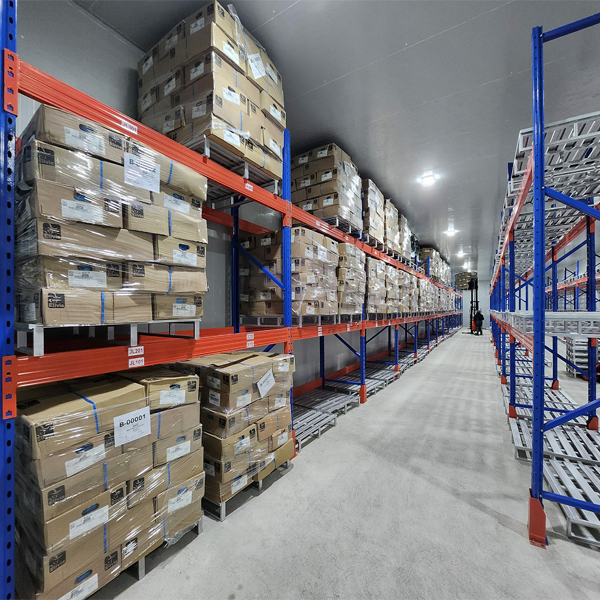
A blast freezer room is only one link in the chain. Frozen product that exits the blast room at -35°C must move into a holding freezer maintained at -18°C to -25°C, and from there into a container that can maintain that temperature through transit. The integration matters because warm air ingress during transfer, poor seal performance on freezer doors, or a holding freezer that struggles to recover temperature after receiving a batch will erode the quality gains achieved during the blast cycle. The best blast freezer results I've seen come from plants where the blast room, holding freezer, and loading dock form a continuous insulated envelope with airlocks and pressure balance, and where the holding freezer compressor capacity is calculated not just for storage but for the heat load of incoming frozen product at blast exit temperature.
For seafood export projects, we often specify a dedicated condensing unit for the holding freezer that can handle the pull-down after a blast batch is transferred, along with ceiling-mounted air coolers that distribute cold air evenly without excessive velocity. The holding freezer is not a blast room, but it must still have enough cooling capacity to bring the product surface temperature back to setpoint within an hour of transfer. A freezer room with undersized compressors will allow the product to warm slightly and then re-freeze, creating surface ice formation that degrades packaging appearance and can cause box adhesion inside the container. These are the small failures that accumulate into a costly cold chain problem, and they are almost always traceable to equipment selection that didn't account for real-world manual loading patterns rather than ideal steady-state conditions.
If you are evaluating a blast freezer project for a new processing line, the most important design input is your daily throughput requirement in real, peak-catch kilograms, not an average. Share that number with your equipment supplier along with the species, product format, and target market standards. That conversation, early in the planning stage, will determine whether a single blast room, an IQF tunnel, or a combination of both represents the right capital decision. Sending your quantity and process details to meluck@meluckcooling.com or reaching David Zhang on +8617369893087 is the fastest way to move from guesswork to a verified technical proposal. A blast freezer that matches your actual production rhythm will pay for itself in retained product grade and fewer rejected shipments far faster than a room that delivers cold air but not the thermal performance the export market verifies.
Common Questions About Seafood Export Blast Freezing
What is the difference between blast freezing and IQF?
Blast freezing uses a cold room with high-velocity air to freeze product in trays or racks, often a batch process. IQF tunnels or fluidized beds freeze individual pieces on a conveyor, keeping them separate. For shrimp and small fillets, IQF prevents clumping and allows exact-weight packaging without thawing. Blast rooms handle larger or irregular items and can still meet rapid-freeze standards when equipped with correctly sized evaporators and compressors, especially for block-frozen or bulk product.
How fast should seafood be frozen to meet EU export requirements?
While EU Regulation 853/2004 doesn't specify an exact freeze time in minutes, the expectation is that the product core temperature reaches -18°C as rapidly as the equipment can achieve without quality compromise. In practice, for shrimp we see successful compliance when the core hits -18°C within four hours from the start of the blast cycle for the majority of the load, and for thick fish portions within six hours. Slow freezing that causes excessive drip loss or protein degradation will be flagged during organoleptic inspection.
Can I use a standard freezer room at -25°C as a blast freezer?
A standard freezer room with ceiling evaporators and low air speed rarely achieves the heat extraction rate needed for export-grade rapid freezing. The product surface might freeze quickly while the core remains warm, leading to large ice crystals and eventual quality defects. Retrofitting a standard room with higher-capacity evaporators, increased compressor horsepower, and airflow management can improve performance, but it often requires significant insulation and structural changes. For new installations, building a dedicated blast room with proper design parameters is almost always more reliable.
Why do I need a two-stage compressor for -40°C blast freezer operation?
Single-stage compressors operating at evaporating temperatures below -30°C produce very high discharge temperatures that shorten valve life and reduce oil viscosity. A two-stage compressor with interstage cooling manages the pressure ratio split, keeping discharge temperatures in a safe range while maintaining cooling capacity. This becomes essential for blast freezers that must run continuously at -40°C air temperature with heavy product loads, where a single-stage machine would either overheat or require frequent off-cycle cooling, extending total freeze duration.
What documentation is required for blast freezer export compliance?
Your cold chain verification package should include calibrated temperature logger records from the blast cycle showing core product temperatures at regular intervals, door-opening logs, defrost records with timestamps, and compressor runtime data. If your product goes to the EU, the local competent authority may also request heat penetration studies to confirm the coldest spot in the freezer reaches setpoint under worst-case loading. Having this data in a retrievable format, backed by off-site storage, protects both your export license and your insurance claims if a dispute arises. If you need guidance on the specific data points your destination market inspectors require, send your product type and target country to meluck@meluckcooling.com and we'll outline the typical compliance package for your scenario.
If you're interested, check out these related articles:
Egypt French Fries Cold Storage Project - Meluck
Blast Freezer Room Solutions -40C~-60C - Meluck
Freezer Room Solutions -25C~-18C - Meluck
With over 15 years of experience as a MELUCK refrigeration engineer, I specialize in the design of cold storage, chillers, ice makers, and cold chain energy-saving systems, providing technical support to distributors and engineering companies worldwide.

meluck