
Blast Freezer for Bakery: Flash Freezing Dough and Pastries
A blast freezer room does more than just chill a bakery’s products—it can fundamentally change how a business handles production peaks, dough consistency, and shelf life. I have worked on cold storage projects across food processing sectors for over fifteen years, and the bakeries that get the most return from their investment are the ones that size and integrate the blast freezer as a dedicated production tool rather than treating it as an oversized refrigerator. This article explains how to match blast freezer specifications to actual bakery throughput, where the critical refrigeration decisions sit, and what drives long-term operating cost.
Why a Blast Freezer for Bakery Works Better Than a Standard Freezer
A walk-in freezer running at -18°C to -25°C works well for holding finished products, but it was never meant for rapid temperature pull-down. Put a batch of warm dough or just-baked pastry inside, and the room’s thermal mass absorbs the load slowly—the product surface freezes gradually, allowing ice crystals to grow large enough to rupture yeast cells and damage gluten structure. What you get is unpredictable proofing, inconsistent crumb, and visible quality loss.
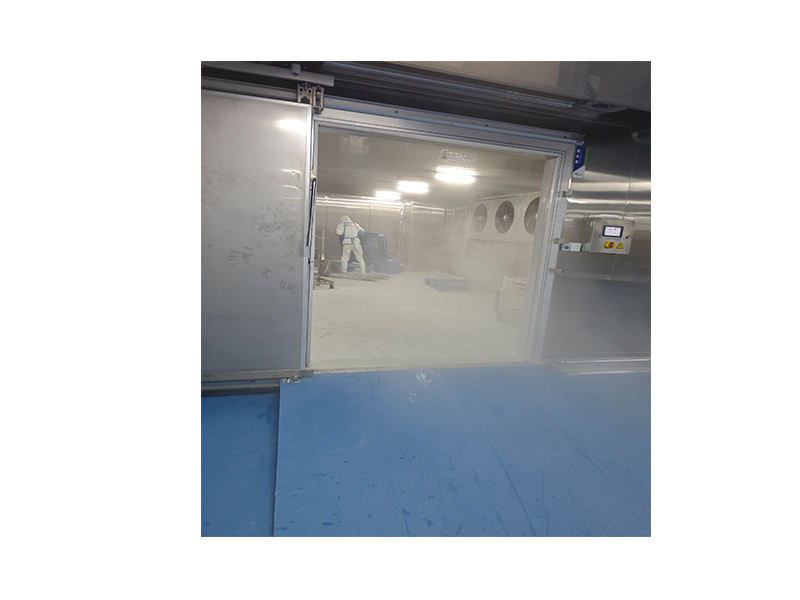
A blast freezer room solves this by forcing high-velocity cold air directly over the product at much lower temperatures, typically -35°C down to -40°Ce. The target is to bring the core temperature through the critical 0°C to -5°C zone as fast as possible, minimizing crystal growth and locking in the product’s structure. In bakery operations this matters for several product types: laminated dough that relies on discrete fat layers, par-baked bread that needs a clean freeze before storage, and delicate pastries where surface moisture can turn into icicles if freezing is too slow.
The difference shows up in daily operations, not just on a specification sheet. A standard walk-in might take six to eight hours to bring a loaded rack of dough to -18°C core; a properly sized blast freezer does it in under two hours. Faster pull-down means you can run multiple batches through the same room in a single shift, which directly increases production capacity without expanding your building footprint.
How to Size a Blast Freezer for Your Bakery Production
The most common mistake I see in bakery projects is choosing a blast freezer based on the available floor space rather than the actual throughput requirement. The correct sizing method works backward from three numbers: the weight of product you need to process per batch, the entry and target temperatures, and how quickly you need the cycle to finish.
As an example, a bakery producing 200 kg of unbaked croissants per batch at an entering temperature of 22°C and needing them down to -18°C core in 90 minutes will generate a heat load that demands a specific compressor capacity and air cooler surface. That calculation is not a rough estimate; it is a refrigeration load analysis that includes product load (mass × specific heat × temperature difference), respiration heat if the dough is still fermenting, fan motor heat, and door infiltration. Skipping this and installing an off-the-shelf condensing unit with "about the right horsepower" usually ends with underperformance in summer or when the bakery expands production a year later.
| Product Throughput | Recommended Blast Freezer Approach |
|---|---|
| Below 100 kg per cycle, one or two shifts | A single blast freezer room with a Bitzer 15-20 HP medium-low temperature condensing unit and dedicated evaporator; batch loading works well |
| 200–500 kg per cycle, continuous operation | A larger blast freezer room or two smaller rooms cycling alternately, with 30-50 HP condensing units and high-capacity air coolers designed for -35°C operation |
| Above 500 kg per cycle or multi-product lines (dough, par-baked, finished pastries) | Modular blast freezer rooms with parallel compressor racks or two-stage compression; workflows may include shock freezing tunnels connected to the cold room layout |
The table shows a rough sizing guideline, but the actual equipment selection has to account for the bakery’s daily peak hour and whether the blast freezer doubles as a shock freezer for finished goods. When the room needs to handle both dough and baked products at different times, we typically specify a controller that allows two preset freeze programs with different fan speed and temperature profiles.
What Refrigeration Components a Bakery Blast Freezer Needs
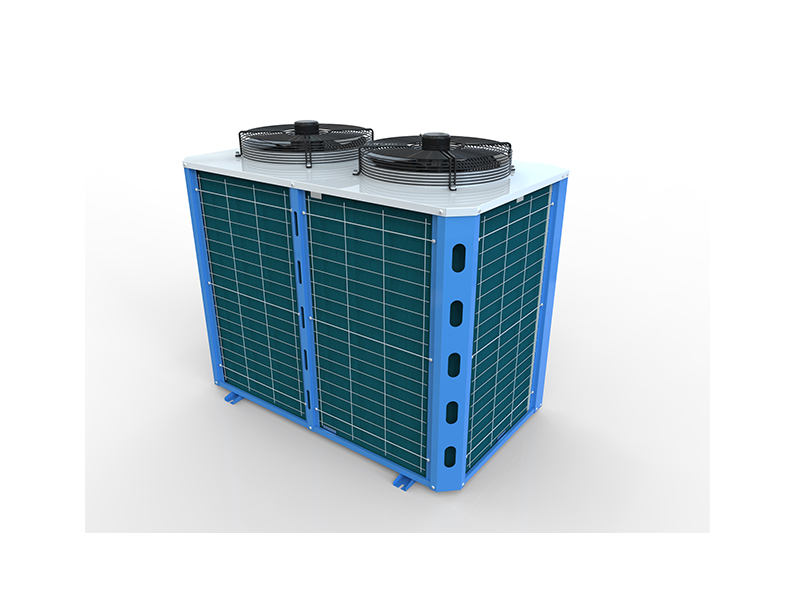
The refrigeration system behind a blast freezer room for a bakery is not the same as a chiller room or a standard freezer. Three components define the performance: the condensing unit, the air cooler evaporator, and the expansion valve setup.
The condensing unit has to deliver stable capacity at evaporating temperatures down to -40°C while running in ambient conditions that might reach 40°C if the unit is outdoors. In our projects we use Bitzer semi-hermetic reciprocating compressors for capacities up to about 50 HP, because they maintain volumetric efficiency better than scroll compressors at low suction temperatures. For larger systems or where the blast freezer operates as part of a multi-temperature cold storage facility, Bitzer screw compressor condensing units or parallel piston compressor racks offer better part-load control and can add significant energy savings over a year.
The air cooler must be matched to the room’s heat load and the required air velocity. A blast freezer evaporator differs from a standard DD series freezer cooler; it needs a much higher face velocity, often with a fin spacing wide enough to prevent frost blockage during the rapid pull-down phase. The unit is typically specified with electric defrost or hot gas defrost cycles integrated into the sequence, because frost accumulation on the coil will reduce airflow and extend freeze time within a few cycles if not managed.
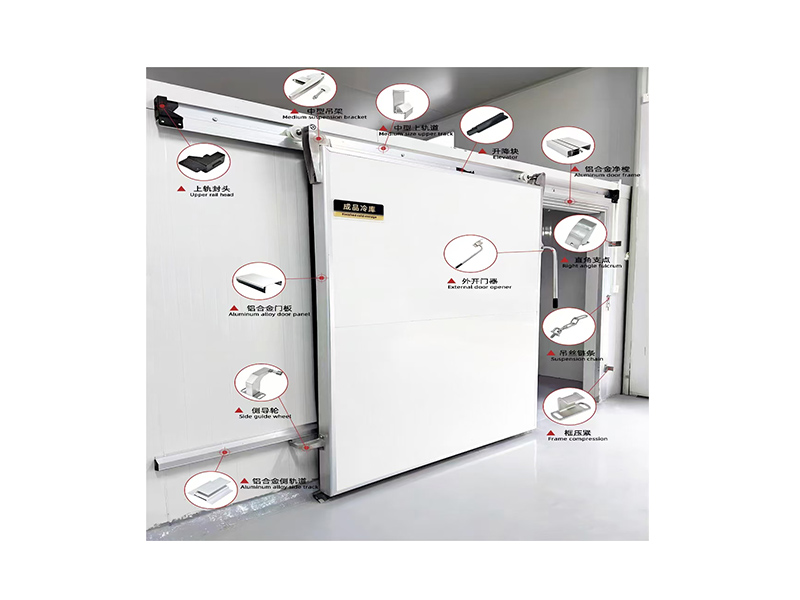
Insulation also matters more in a blast freezer than in a conventional cold room. Because the temperature difference between the room interior and the outside environment is often 50°C or more, even small thermal leaks add up fast. We use PIR cold room panels of at least 100 mm thickness for the walls and ceiling, and an insulated floor with a vapour barrier to prevent frost heave. A manual sliding door or sectional door with heating wire on the gasket and frame prevents the door from freezing shut between batches.
How Much Energy a Blast Freezer Room Consumes
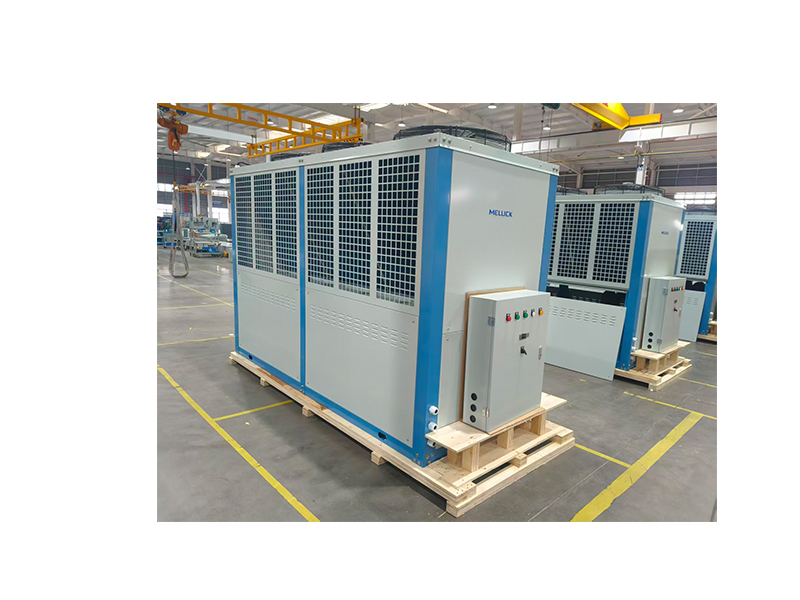
Bakery operators tend to focus on the purchase price of the equipment, but in a blast freezer the energy cost over ten years outweighs the capital expense several times over. The main energy drivers are the condensing unit’s coefficient of performance at low evaporating temperature, the defrost cycle frequency, and the air cooler fan power.
A well-designed blast freezer room with a Bitzer reciprocating or screw compressor and an appropriately sized air cooler will consume roughly 0.8 to 1.2 kWh per kilogram of product processed, depending on throughput and ambient conditions. If the defrost is set to run on a fixed timer rather than a demand-based sensor, you can easily add 15–20% to that figure without any corresponding production benefit. In practice, we program the controller to initiate defrost only when the differential pressure across the evaporator or the coil temperature indicates actual frost load, which keeps the defrost cycles to the minimum necessary.
The insulation quality and door seals are equally important. A poorly sealed door that stays open too long during loading or warps over time because the frame was not heated will pull in moisture-laden air continuously, leading to ice build-up both on the coil and on the floor. That not only increases defrost energy but also reduces usable room volume and creates a safety hazard for staff. In humid coastal locations, we have added strip curtains and rapid-close door mechanisms as standard on bakery blast freezer rooms, and the measured energy improvement is usually visible within the first utility bill cycle.
How to Integrate a Blast Freezer into a Bakery Production Flow
A blast freezer does not operate in isolation; it sits between the oven or the makeup area and the frozen storage. The workflow should minimize the distance and time that product spends exposed to ambient conditions. In a medium-sized bakery, the ideal configuration places the blast freezer room adjacent to the preparation area, with a direct pass-through door into the frozen storage room behind it.
The control system can be set to accept multiple loads per day without manual intervention. For example, a morning batch of dough might enter the blast freezer at 8:00 a.m., reach core temperature by 9:30 a.m., and then be transferred to the -18°C holding freezer while the blast freezer resets for a ready-to-bake batch at 10:00 a.m. With a two-speed fan and dual setpoint controller, the room can also switch to a holding mode overnight if the bakery does not run a third shift, saving the cost of a separate holding room.
If your bakery plans to export frozen dough or pastries, the blast freezer also becomes part of your compliance documentation. Many importing countries require evidence that the product passed through the 0°C to -5°C zone within a specified time window. A data logger that records air temperature and core temperature during every batch, with automatic report generation, replaces manual recording and makes audit preparation straightforward. Adding this at the specification stage costs very little compared to retrofitting it later.
Common Questions About Bakery Blast Freezer Rooms
What is the difference between a blast chiller and a blast freezer for bakeries?
A blast chiller typically pulls product temperature down to about +3°C and is used for cooked food cooling in catering kitchens. A blast freezer for bakery goes to -18°C core or lower and works with dough and baked products. If you only need to retard dough overnight, a chiller room might be enough, but for freezing par-baked or finished pastry for storage, the blast freezer is the correct tool.
Can I use a regular freezer room and just turn the temperature down?
Lowering the setpoint on a standard freezer room does not turn it into a blast freezer. The evaporator fan speed and coil surface area are not designed for high heat extraction rates, and the compressor will run into its operating envelope limits at very low suction temperatures. The result is very long freeze time and potential compressor damage. If your production volume justifies flash freezing, the equipment needs to be specified for the load.
How long does it take to install a blast freezer room?
Installation typically takes two to four weeks on site, depending on room size and whether the floor needs additional insulation. The panels, doors, and refrigeration equipment can be factory-made and shipped, then assembled on a prepared floor. The cycle including site survey, manufacturing, shipping, and commissioning usually spans six to eight weeks.
What maintenance does a blast freezer room need?
Daily checks include coil frost condition and door seal integrity. Monthly, the condenser fins should be cleaned, the defrost drain checked, and the refrigerant pressures logged. Every six months a technician should verify compressor oil level, electrical connections, and control calibration. A consistent log makes it easy to spot a degrading component before it causes a product loss event.
Can a blast freezer room be customized for different dough products?
Yes, in fact we rarely supply two identical blast freezer rooms because each bakery has its own mix of products, tray sizes, and rack configurations. The door opening size, internal airflow pattern, and freeze program settings are all adjustable during the design phase. If your bakery produces both puff pastry and bread dough, for instance, we can set two different freeze profiles with separate fan speed and defrost intervals to protect the more delicate pastry during the initial pull-down. Share your product categories, batch weight, and daily throughput, and we can propose a layout that matches your actual workflow rather than a standard template.
For a detailed technical proposal tailored to your specific bakery throughput, reach out with your batch sizes, target freeze time, and site conditions. You can contact me at meluck@meluckcooling.com or call +8617369893087.
If you're interested, check out these related articles:
Blast Freezer Room Solutions -40C~-60C - Meluck
Egypt French Fries Cold Storage Project - Meluck
Ecuador Multi-Temperature Cold Storage Project - Meluck
With over 15 years of experience as a MELUCK refrigeration engineer, I specialize in the design of cold storage, chillers, ice makers, and cold chain energy-saving systems, providing technical support to distributors and engineering companies worldwide.

meluck