
Pharmaceutical Cold Room Temperature Uniformity Requirements
Temperature uniformity in pharmaceutical cold rooms is not just a monitoring checkbox: it directly determines product integrity, regulatory compliance, and patient safety. When a storage room fails to maintain consistent temperatures across all points, entire batches of vaccines, biologics, or active pharmaceutical ingredients can be compromised. Many facility teams focus heavily on sensor placement and data logging, but the underlying problem often starts with the refrigeration system's design itself. Drawing on 15 years of refrigeration engineering work, we will examine what pharmaceutical-grade uniformity actually means, which design decisions matter most, and how to avoid the common pitfalls that undermine temperature stability even in seemingly compliant systems.
Why Temperature Uniformity Matters in Pharmaceutical Storage
Pharmaceutical cold rooms store high-value and temperature-sensitive products where even small deviations can cause degradation. Vaccines may lose potency if exposed to temperatures outside the 2–8°C range for more than a few hours. Biologics and cell therapies are even more fragile, sometimes requiring uniformity within ±0.5°C to remain viable. Uniformity is not the same as average temperature; it measures the range of temperatures across the entire storage volume over time. A room that averages 5°C but has corners at 7°C and shelves at 3°C is failing uniformity requirements, even if the average looks fine.
I recall a project early in my career where a lab cold room passed initial validation at no-load, but once filled with product, the temperature gradient between the top and bottom shelves exceeded 5°C. The issue traced back to insufficient air throw from undersized evaporators and blocked return air paths. The lesson: real-world uniformity depends on air distribution under actual storage conditions, not just sensor placement on an empty grid.
Regulatory Standards for Cold Room Temperature Performance
Several overlapping standards govern temperature mapping and uniformity acceptance in pharmaceutical storage. The table below summarizes the key requirements from the most referenced guidelines.
| Standard | Temperature Range | Mapping Duration | Sensor Points per Volume | Acceptance Criteria |
|---|---|---|---|---|
| WHO TRS 961 | 2–8°C cool, -20°C frozen | Minimum 24 hours, 7 days preferred | 1 per 5–10 m³ | ±2°C for cool, ±5°C for frozen within range |
| USP <659> |
| 2–8°C, controlled room temp 20–25°C | Minimum 24 hours | Risk-based, typically 9–16 sensors | All readings within specified range |
| ISPE Good Practice Guide | Any designated range | Summer and winter season mapping | Based on room geometry and product risk | Mean kinetic temperature (MKT) acceptable; excursions limited to 30 minutes |
| EU GDP Annex 11 | As per product license | Seasonal, after equipment change | Based on risk assessment | No excursion beyond labeled range; MKT calculation required |
These standards share a common requirement: the cold room must maintain temperature within tight limits at all points, not just at the control sensor. Achieving this means selecting refrigeration equipment and airflow design that can overcome heat gain from walls, doors, and product respiration while avoiding stagnant zones.
Refrigeration System Design That Delivers Uniformity
The most overlooked factor in temperature uniformity is the refrigeration system's air distribution capability. Pharmaceutical cold rooms require high-airflow evaporators with proper throw distance to reach all corners. Ceiling-mounted air coolers should be sized not only on total cooling capacity but on CFM per cubic meter to ensure adequate air movement. We typically specify air coolers with a high delta-T design for cold storage and multi-fan units to maintain coverage even if one fan fails.
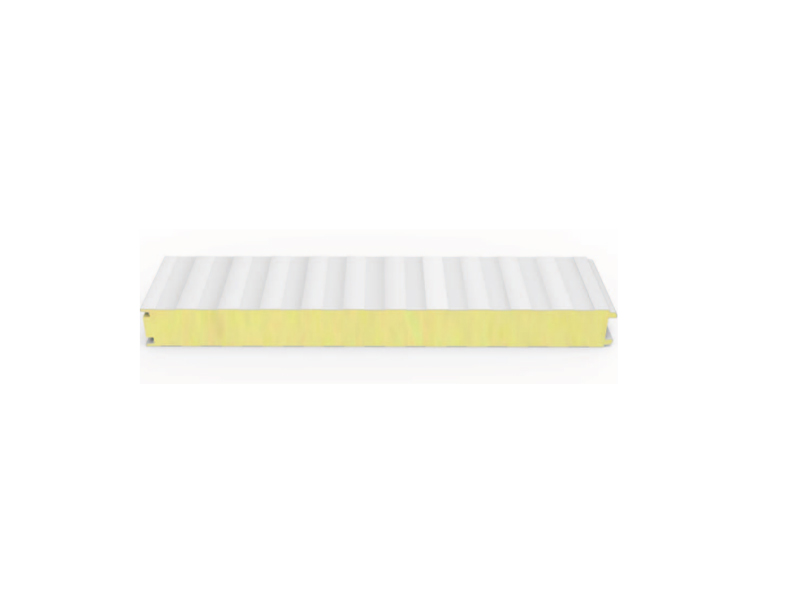
Insulation panel performance also matters. PIR cold room panels offer a higher R-value per inch than standard PUR, reducing heat ingress and minimizing wall temperature gradients that contribute to uneven interior temperatures. Door design is equally important; manual sliding doors with heated frames and proper gasket seals prevent localized cold loss near entry points.

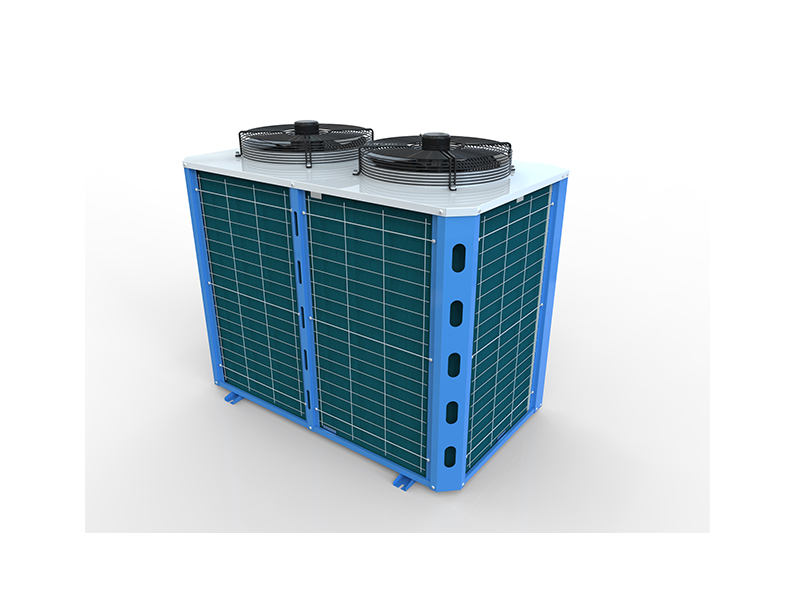
The compressor selection influences uniformity indirectly through cycle stability. A Bitzer reciprocating compressor with capacity modulation, for instance, can match load more smoothly than a single-stage scroll that cycles on and off repeatedly. In pharmaceutical applications, we often recommend parallel condensing units with intelligent staging controllers to handle part-load conditions without temperature swings.
If you are specifying a cold room for a pharmaceutical facility, the compressor and air distribution choices have more impact on long-term uniformity than you might expect. Getting these right from the start avoids costly revalidation later. Contact us at meluck@meluckcooling.com or call +8617369893087 to discuss your specific thermal load and airflow requirements before finalizing your design.
Validating Temperature Uniformity in Real Storage Conditions
Temperature mapping is the only way to confirm that a cold room actually meets uniformity targets, but many mapping protocols miss the real variability. Empty chamber mapping provides a baseline, but the true test occurs under loaded conditions with product simulating thermal mass. We advise clients to map with at least 15–20 calibrated sensors placed at worst-case locations: near the door, in corners, directly below evaporators, and in the geometric center. The mapping should run for at least 7 days, capturing both busy periods with door openings and quiet overnight cycles.

During a pharmaceutical facility audit I participated in, the mapping data revealed a 3°C gradient along the 12-meter length of the room. The immediate suspicion was sensor error, but the real cause was a return air path partially obstructed by stacked pallets. Simple adjustments to storage layout and installation of air socks dramatically improved distribution within a week. This kind of field observation is common but rarely discussed in formal guidelines.
Common Field Failures That Destroy Uniformity and How to Prevent Them
Even well-designed cold rooms can develop uniformity problems if operational issues creep in. From our service records, the most frequent field failures include:
- Undersized evaporators that cannot maintain temperature near the far wall during hot summer days.
- Blocked airflow caused by product stacked against the back wall, limiting air throw and creating dead zones.
- Door seal deterioration that lets warm, humid air in near the entrance, causing localized temperature spikes and frost buildup.
- Thermostat placement in a dead zone where the control sensor reads the coolest spot while the rest of the room drifts.
- Condenser coil fouling that reduces system capacity, forcing the compressor to run longer and causing wider temperature swings.
Preventing these failures starts with proper equipment sizing based on worst-case ambient conditions, not just average. We also recommend a maintenance schedule that includes quarterly airflow checks, door seal inspections, and condenser cleaning. A logged temperature monitoring system with remote alarms will catch drift before product is affected.
Building a Pharmaceutical Cold Room That Stays Compliant
A temperature-uniform cold room is not something you achieve once and forget; it requires ongoing verification that the refrigeration system continues to perform as designed. This depends on the quality of components, the installation, and the support you receive over the equipment's lifetime. At MELUCK, our cold room systems are built with Bitzer compressors, high-efficiency PIR panels, and industrial air coolers selected specifically for the room's geometry and load profile. Each project includes a detailed commissioning report and temperature mapping documentation to support your regulatory filings.
If your next project requires a cold room that maintains pharmaceutical-grade uniformity under real operating conditions, we can design and deliver a turnkey system matched to your product's temperature range and your facility's climate. Share your floor plan and temperature requirements at meluck@meluckcooling.com or call +8617369893087 so we can prepare a technical proposal with the appropriate compressor sizing and airflow plan.
Common Questions About Pharmaceutical Cold Room Uniformity
How often must temperature mapping be repeated after initial validation?
Annual remapping is standard for most pharmaceutical cold rooms, but the frequency depends on the product risk and regulatory requirements. If the room experiences a major equipment change (new compressor, evaporator, or control system), a full remapping is mandatory. Many quality teams also re-map after seasonal extremes or significant changes in storage layout. In our experience, a routine partial mapping with 5–7 sensors can be conducted between annual cycles to confirm stability without a full study.
Can an older cold room be upgraded to meet modern pharmaceutical uniformity standards without a full rebuild?
That depends on the existing insulation integrity, door condition, and the refrigeration system's remaining capacity. In projects we have supported, replacing the air cooler with a higher-CFM unit and adding air deflection ducts improved uniformity significantly without structural changes. However, if the wall panels have absorbed moisture or the compressor is undersized for the required lower tolerance, a full redesign is usually more cost-effective than patching. Each room deserves a site assessment to determine the most practical upgrade path.
What is the biggest mistake people make when trying to achieve uniform temperatures in pharma cold rooms?
A common misconception is that adding more sensors or logging points will solve the problem. While monitoring is essential, it cannot correct an underlying design flaw. The real mistake is treating the cold room as a simple box and ignoring the fluid dynamics of air movement. I have seen facilities spend tens of thousands on monitoring systems while the actual gradient remained unchanged because the evaporator was too small for the room length. Fix the airflow first, then validate with sensors.
How do I know whether my cold room's temperature mapping results are acceptable for a GMP inspection?
Acceptability hinges on two criteria: all recorded temperatures must stay within the product's labeled storage range, and the mean kinetic temperature (MKT) should not indicate a cumulative thermal stress beyond limits. You will also need to explain any excursions with a root cause analysis and corrective action. If you are preparing for an audit and would like a second opinion on your mapping data, we often review client data and identify whether the deviations point to a design issue or an operational change. Share your mapping report at meluck@meluckcooling.com for a technical review and recommendation.
If you're interested, check out these related articles:
Chiller Room Solutions -10C~10C - Meluck
Egypt French Fries Cold Storage Project - Meluck
With over 15 years of experience as a MELUCK refrigeration engineer, I specialize in the design of cold storage, chillers, ice makers, and cold chain energy-saving systems, providing technical support to distributors and engineering companies worldwide.

meluck