
Slaughterhouse Chiller and Freezer Room Equipment Guide
If you are equipping a slaughterhouse, the cold chain is not an afterthought. It sits at the core of meat safety and yield. The problem with most generic cold storage advice is that it is written for warehouses with steady-state loads. A slaughterhouse runs on a completely different rhythm. Hot carcasses come off the line at nearly body temperature and must be pulled down rapidly through the danger zone before cutting and freezing can even begin. Getting that process right takes refrigeration equipment selected for the flow of work, not just the size of the rooms. We design multi-zone cold storage for processing plants on several continents, and the same principle holds everywhere: if your chiller and freezer rooms are not matched to the production pulse of the kill floor, you will lose yield, shelf life, and audit points.
Why Slaughterhouse Refrigeration Demands a Different Approach
A standard cold storage facility handles product that arrives already cool and only needs temperature maintenance. A slaughterhouse cold room must remove a large quantity of heat from a warm carcass in a short window while the line keeps moving. The entering product load is far higher, and the cooling must happen fast enough to stay ahead of bacterial growth. Continuous operation means the refrigeration system never gets a chance to coast—it cycles between high heat removal during processing hours and holding mode overnight.
In beef and pork plants, the first stage after dressing is the hot carcass chiller. Here the meat passes through a chilling tunnel or a batch chiller within 90 to 180 minutes after slaughter, and the internal temperature must drop from around 38°C to below 7°C at the deep bone. That is not just a matter of adding more horsepower. The air velocity, coil capacity, and tunnel layout determine whether the plant hits its throughput target without cold spots or condensation problems. At our facility in Egypt we designed a multi-zone system for a frozen food processor where the blast freezer, packaging area, and cold store were sequenced exactly to the production line. The concept transfers directly to a slaughterhouse: the location of the chiller relative to the kill floor and the cut room dictates duct layout, door placement, and the staging area for trolleys and gambrels.
How to Calculate Slaughterhouse Refrigeration Load
Standard cold room load formulas fall short when you apply them to a slaughter line. The most common mistake I see in projects is taking the peak daily tonnage and dividing by 24 hours to get an average cooling load. That works for a distribution centre; it fails for a plant where 70 percent of the daily kill enters the chiller in a four-hour window.
A proper slaughterhouse load calculation breaks the heat gain into five categories: product load (sensible heat from warm meat, plus latent heat from surface moisture), respiration heat, air infiltration through doors, fan motor heat, and transmission through panels. For the chiller, the product load dominates and it is not linear. A 250 kg beef side entering the tunnel at 38°C must shed over 25 MJ of sensible heat to reach 7°C, and the cooler has to remove that energy in under four hours. If your kill rate is 40 head per hour, that adds up to a substantial, concentrated pull-down duty.
For quick sizing, an experienced engineer works backward from the mass flow rate and the required temperature drop rather than using square-footage rules of thumb. I prefer to build a load profile that shows the hourly heat rejection curve. The condensing unit then gets sized for the peak hour, not the 24-hour average. This is where parallel compressor racks or a well-chosen Bitzer semi-hermetic compressor can give you the capacity modulation to handle the swing without cycling excessively.
Chilling Tunnel Equipment: Selecting the Core Components
The chilling tunnel is an air-blast system that forces cold air over hanging carcasses at a high velocity, typically 3 to 5 meters per second. The equipment group that matters most here is the evaporator and its coil configuration. A standard finned-coil evaporator designed for a holding cooler will struggle with dehumidification and air distribution in a fast-chill tunnel. In slaughterhouse conditions, we use industrial air coolers with wider fin spacing to cope with moisture and frost, and to allow easier cleaning between shifts.
The table below compares the main evaporator types you will consider for different slaughterhouse zones:
| Evaporator Series | Typical Temperature Band | Best Fit in a Slaughterhouse | Key Advantage |
|---|---|---|---|
| DL-type (medium-temperature) | 0°C to +10°C | Chilling tunnel (meat sides) | High air throw, suitable for hanging product |
| DD-type (low-temperature) | -18°C to -25°C | Freezer room for cartoned meat | Low moisture pickup, consistent coil performance |
| DJ-type (blast freezer) | -30°C to -40°C | Rapid blast cells for offal or small cuts | Heavy-duty defrost, high fan pressure |
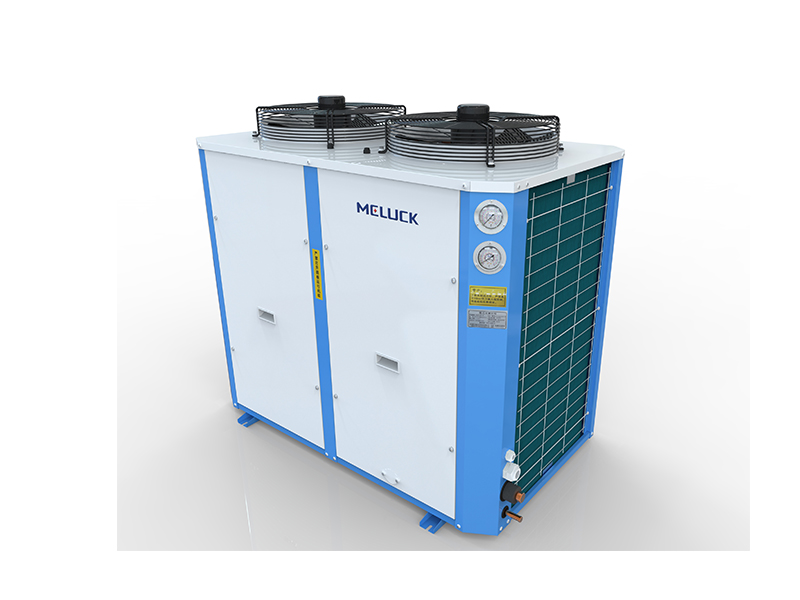
Beyond the evaporator, the refrigeration circuit needs a condensing unit designed for outdoor installation in a wet, sometimes corrosive environment. We have used Bitzer reciprocating condensing units in projects from South America to Southeast Asia and they hold up well under continuous duty. The condenser coil should either have pre-coated fins or be a microchannel design if the yard air carries salt or processing residue.
Freezer Room Layout and Equipment for Meat Products
Once the carcass is chilled, the next step is breaking and boning in a processing room held between 5°C and 10°C. The freezer room then takes the finished cuts or boxes to a core temperature of -18°C or below. Here the refrigeration demand is less about rapid pull-down and more about maintaining a stable deep-freeze temperature across a large storage volume with daily ingress.

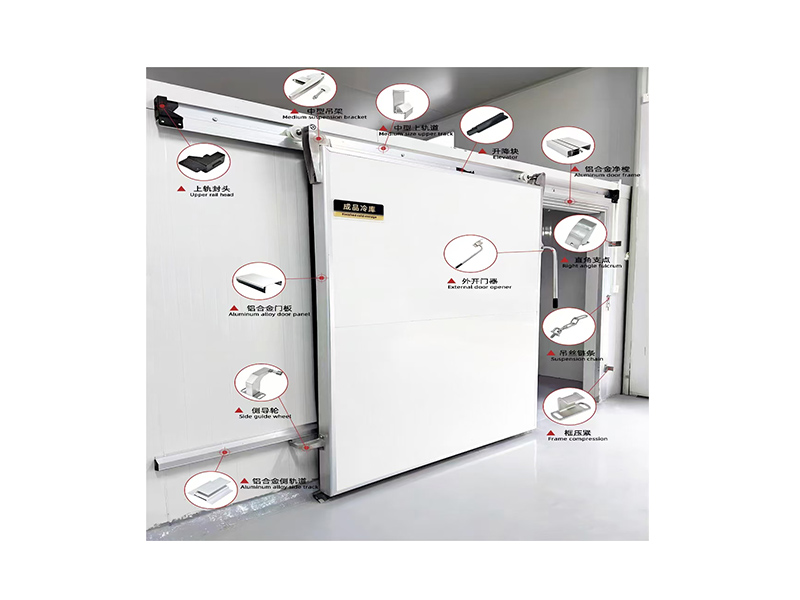
For a 200-square-metre freezer room storing 100 tonnes of boxed beef, I would specify 150 mm polyurethane (PUR) or PIR panels with a camlock connection for air tightness. PIR gives a better fire rating, which matters if local regulations or insurer requirements are strict. The doors need to be heavy-duty sliding types with a heated gasket track to prevent ice lock. A manual sliding door with a high-density PU core and a reinforced aluminum track works well for most medium-traffic openings.
The condensing unit for the freezer should be a low-temperature model with sufficient capacity to handle the infiltration load of a busy shift. A Bitzer 4HE-18Y or a 6GE-34Y, depending on the volume, paired with a DD-type air cooler, provides an efficient combination. Parallel units can offer redundancy if the plant runs 24/7 and cannot afford a defrost interruption that affects the entire room.
Hygiene, Corrosion Protection, and Maintenance for Slaughterhouse Cold Rooms
Nothing shortens the life of a slaughterhouse cold room faster than poor drainage and skipping the weekly washdown. The combination of blood, fat, and cleaning chemicals attacks standard galvanized steel within a couple of years. All interior liners, drain pans, and fasteners should be stainless steel or have an epoxy coating rated for food contact. Evaporator housings ought to be accessible for deep cleaning, ideally with removable side panels.
We recommend building a maintenance schedule around the daily kill rhythm. At the end of each processing day, a low-pressure rinse removes solids from the floor and door tracks. Once a week, the evaporator coils get a foam cleaner and a rinse, and the drain lines are flushed with warm water to prevent blockages. The condensing unit fins should be blown out monthly—more often if the ambient air is dusty—and compressor oil and refrigerant charge should be checked quarterly.
Having an after-sales agreement that includes remote monitoring can prevent a midnight call-out. A temperature alarm tied to a cloud-connected controller gives you real-time alerts if a door is left open or a compressor trips. In our turnkey projects, we train the plant's maintenance crew on the first two service interventions and leave behind a list of critical spare parts, such as door gaskets, controller probes, and fan motor bearings. If a problem goes beyond a simple reset, having a supplier that can dispatch a technician or guide your team over video call shortens the downtime significantly.
Common Questions About Slaughterhouse Cold Storage
What temperature should a beef chiller maintain immediately after slaughter?
The target air temperature in a beef chilling tunnel is usually between -1°C and +1°C with a high air velocity. The goal is to bring the deep-bone temperature below 7°C within 24 hours, but most commercial operations aim for a 90–120-minute pull-down of the surface temperature to slow microbial growth before the carcass moves to an equilibrium chiller. The exact settings depend on fat cover and carcass size, so it is worth running a test protocol with your refrigeration engineer during commissioning.
Can I use a standard cold room as a slaughterhouse chiller?
Physically you can, but operationally it will underperform. Standard cold rooms lack the high air velocity, the defrost recovery, and the corrosion resistance that a slaughterhouse chiller demands. I have seen processors retrofit a holding cooler for hot carcasses and within six months the evaporator fins were packed with fat residue and the room could not hold temperature. Spending the capital on an engineered chiller tunnel from the start is less expensive than dealing with failed audits and product downgrades.
How often should I defrost the evaporators in a meat freezer room?
Most low-temperature evaporators need a defrost cycle every 6 to 8 hours. The exact interval should be set based on the frost accumulation observed during operation—not a generic timer. If you see frost building more than 5 mm on the coil before the next defrost, shorten the cycle. Defrost systems can be electric, hot-gas, or water; in a slaughterhouse, I prefer electric defrost for freezer rooms because it avoids introducing additional moisture into the space.
What is the difference between a chilling tunnel and a blast freezer?
A chilling tunnel reduces the temperature of unfrozen meat from around 38°C to just above the freezing point, typically in a few hours, without forming ice crystals inside the muscle. A blast freezer takes that further, freezing the product rapidly down to -18°C or lower to lock in quality and prepare for frozen storage. In a slaughterhouse, the chilling tunnel handles the hot carcass, and the blast freezer is used for offal, trimmings, or value-added products that go directly from the processing room to frozen.
How do I know if my slaughterhouse cold room is meeting food safety standards?
You will know during an audit. But before that, look at your automated temperature logs. If the chiller shows excursions above 7°C for more than 15 minutes during production, or if the freezer ambient climbs above -15°C, you have a problem. HACCP planning for slaughterhouses requires that you identify critical control points—typically the chiller exit temperature and the freezer storage temperature—and verify them with calibrated probes. If you are preparing for an export certification audit, it can be helpful to have the equipment supplier review your data logger placement and alarm settings. We do this as part of our commissioning handover, and it often catches small compliance gaps that on-site teams overlook.
Effective slaughterhouse refrigeration is about more than just staying cold. It demands a system that follows the animal from the kill floor to the loading dock, removing heat at the exact pace your production schedule requires. If your current chilling tunnel cannot hold the pull-down rate, or your freezer room consumes half the working day in defrost, we are happy to review your layout and give you a technically grounded proposal. Send your throughput numbers and a sketch of the floor plan to meluck@meluckcooling.com, or call us at +8617369893087. We can build a configuration that keeps your line moving and your audit scores clean.
If you're interested, check out these related articles:
Blast Freezer Room Solutions -40C~-60C - Meluck
Ecuador Multi-Temperature Cold Storage Project - Meluck
With over 15 years of experience as a MELUCK refrigeration engineer, I specialize in the design of cold storage, chillers, ice makers, and cold chain energy-saving systems, providing technical support to distributors and engineering companies worldwide.

meluck