
Cold Room vs Refrigerated Truck: When Fixed Storage Wins
Cold room vs refrigerated truck decisions usually come down to one operational fact: moving product needs wheels, holding it for hours or days needs volume. In fifteen years of designing cold chain systems, I have watched buyers pay too much for reefer capacity when a fixed cold room would have cost less per pallet and held temperature with fewer breakdowns. The sections below compare both options against throughput, dwell time, power cost, and food safety compliance so you can decide before a capital budget is committed. My recommendation: if product spends more than 24 hours on site, build fixed cold storage first and buy trucks only for the last mile.
Why Do Refrigerated Trucks Win for Moving Product?
A refrigerated truck earns its keep when goods are actively moving from one point to another. The refrigeration unit on a trailer works against a thin insulated box, frequent door openings, and engine-driven power, but it creates one unique advantage: the cold chain travels with the product. For daily distribution routes, smaller drop sizes, and collection from dispersed suppliers, that mobility is hard to replicate. I still recommend reefer fleets for regional distribution where goods leave within hours, not days, and where the route itself is the cold chain.
The weakness shows up when the truck stops. A trailer parked overnight as storage burns diesel, cycles hard in high ambient heat, and exposes product to wider temperature swings at the loading dock. That is not a refrigeration failure. It is the wrong tool for holding inventory.
When Does the Cold Room vs Refrigerated Truck Equation Favor Fixed Storage?
A fixed cold room beats a reefer fleet whenever the operator needs volume, stability, or processing around the clock. The structure delivers more pallet positions per unit of floor area than a line of trailers can offer, and the compressor can be matched to the room load rather than to the worst-case road condition. That matching matters for temperature uniformity in high-care food handling.
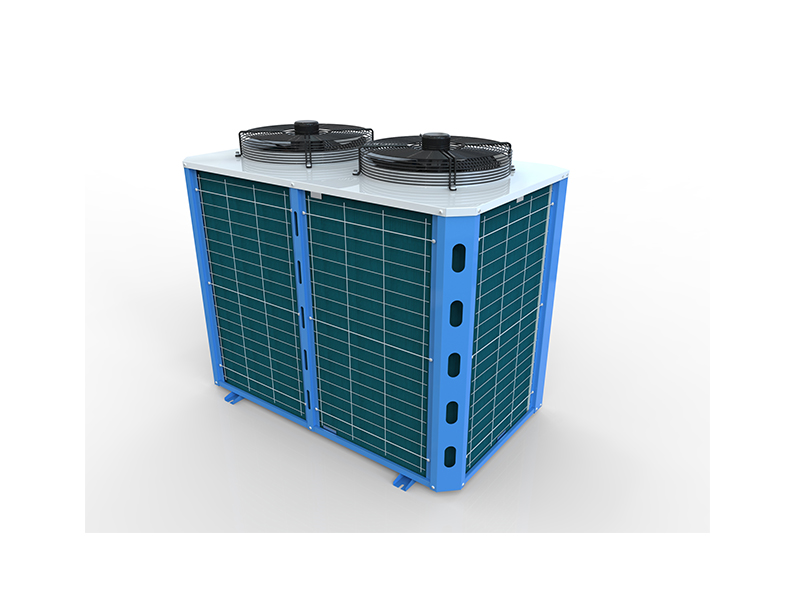
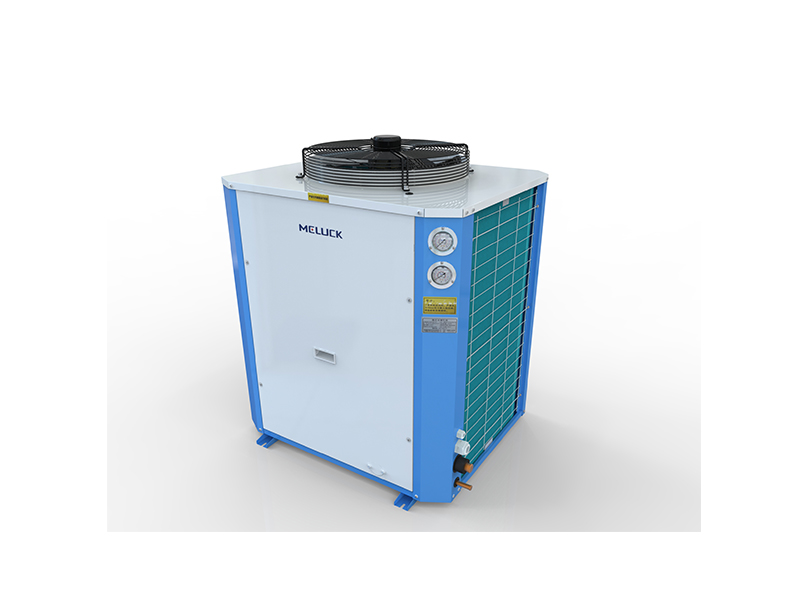
In a recent avocado project in Peru, we installed a 17 meter by 12 meter by 3.1 meter cold room holding +10°C with two Bitzer 20HP condensing units and two ceiling-mounted evaporators. The buyer had been losing roughly 15% of harvested fruit to spoilage before the room was built. After the cold room was commissioned for pre-cooling and export staging, rejection and spoilage dropped below 4%. The key variable was time: the fruit now spends its critical holding hours at a stable setpoint instead of waiting in ambient heat for a truck.
Why On-Site Volume Changes the Cost Conversation
Fixed cold rooms also change cost in a way trucks cannot. Once the room is built, the main operating costs are electricity and scheduled maintenance. A trailer fleet keeps adding diesel, driver time, reefer maintenance, and depreciation for every hour it waits. When dwell time passes roughly 24 hours, the fixed room usually wins on cost per pallet stored, even before you account for fewer product losses.

What Numbers Should Drive a Cold Room vs Refrigerated Truck Comparison?
The clearest way to separate the options is to look at what each one optimizes.
| Factor | Refrigerated truck | Fixed cold room |
|---|---|---|
| Primary job | Move product | Hold and process product |
| Temperature stability | Moderate, sensitive to door openings | High, stable after pulldown |
| Operating cost driver | Diesel and reefer maintenance | Electricity and fixed plant maintenance |
| Capacity limit | One trailer load | Room volume and racking design |
| Compliance fit | Transit logging | Continuous monitoring, HACCP records |
| Flexibility | High, changes route daily | Low, fixed location |
For most operators, the decision flips on dwell time and daily throughput. If product passes through the site within a few hours, a truck or receiving dock with temporary staging may be enough. If the same product waits for inspection, processing, order consolidation, or export documentation, the fixed room is doing real cold chain work that a trailer does poorly.
If your product mix includes high-value export lots or long inspection holds, it is worth confirming the required temperature tolerance before finalizing your equipment selection. Send your storage temperature and throughput to meluck@meluckcooling.com.

Can a Cold Room vs Refrigerated Truck Fleet Work as One System?
Most of the efficient sites I have worked on use both assets in sequence. A fixed cold room handles receiving, pre-cooling, processing, and storage; a refrigerated truck handles movement between facilities or last-mile delivery. The cold room is the anchor that absorbs surges, and the truck fleet runs lean because it does not double as storage.
The Ecuador Manta project we delivered is a clear example. The facility combines a -35°C blast freezer, -18°C frozen storage, -10°C ice storage, a 5°C to +10°C processing room, and a 10 ton per day flake ice system. The fixed rooms lock product quality at each processing stage, while trucks move finished export loads from the site. The client gained a closed-loop cold chain and avoided the previous losses from uncontrolled processing temperatures.
What Should You Confirm Before Building a Fixed Cold Room?
The biggest risk for a buyer is not choosing between a truck and a room. It is sizing the room wrong and paying for either too much compressor capacity or too little insulation. Before you commit, confirm four things: storage temperature and tolerance, daily throughput in pallets or tons, product dwell time, and available power supply. These inputs determine panel thickness, condensing unit selection, evaporator choice, and door configuration.
If you are evaluating a fixed cold room for your operation, send your target temperature, daily throughput, and site dimensions to meluck@meluckcooling.com or call +8617369893087. We will confirm the right compressor capacity, panel type, and layout instead of leaving you with a quotation that ignores your operating conditions.
What Else Do Operators Ask About Cold Rooms and Refrigerated Trucks?
Does a fixed cold room ever replace refrigerated trucks completely?
No, not in most distribution networks. A fixed cold room controls holding conditions on site, but it cannot move product to a customer. The two assets serve different points in the chain. Buyers who run their own fleet still need fixed storage at the depot, and buyers with no fleet still depend on contracted trucks for transport. The practical goal is to stop using trailers as overflow storage, which is where many cold chain failures start.
How long can product sit in a refrigerated truck before it should move to a fixed cold room?
It depends on the product and ambient conditions, but for high-risk perishables I prefer to keep stopped trailer time as short as possible. A truck trailer is not a storage room; door openings, heat soak, and package blocking can create uneven zones even when the setpoint looks correct. If product will wait more than a few hours, move it into a fixed room where airflow and temperature are designed for holding.
Is a used reefer container cheaper than a fixed cold room?
A used reefer container looks cheaper up front, but in a cold room vs refrigerated truck comparison it rarely wins once you add site preparation, power supply, aging reefer unit repairs, and limited airflow for palletized storage. It can be a useful temporary fix, especially for small volumes, but it is not a long-term substitute for a properly sized cold room when throughput grows or when inspectors expect cleanable, validated surfaces.
What temperature range does a fixed cold room hold better than a truck?
Across the projects I have commissioned, the fixed room holds a setpoint more consistently because the compressor, evaporator, and insulation are matched to one stable load. Trucks are built for changing road conditions and frequent door use. For long-term frozen storage or export staging, the fixed room delivers better temperature uniformity and more reliable compliance records. If you are trying to match a specific product tolerance to a room specification, share your target range and throughput, and we can confirm the equipment pairing that meets it.
If you're interested, check out these related articles:
Peru Avocado Pre-Cooling Cold Storage - Meluck
Blast Freezer Room Solutions -40C~-60C - Meluck
Ecuador Multi-Temperature Cold Storage Project - Meluck
Chiller Room Solutions -10C~10C - Meluck
Freezer Room Solutions -25C~-18C - Meluck
With over 15 years of experience as a MELUCK refrigeration engineer, I specialize in the design of cold storage, chillers, ice makers, and cold chain energy-saving systems, providing technical support to distributors and engineering companies worldwide.

meluck