
Cold Storage Project ROI: A Practical Financial Evaluation
Cold storage project ROI turns on avoided product loss, not the quoted equipment price. A buyer in a tropical port city can source the same chiller room from three suppliers, yet one project returns its capital in two years while another drains cash for five. We design and commission cold rooms for seafood, fruit, and frozen food exporters, and the projects that pay back fastest share a pattern: the refrigeration load is matched to the product, the condensing unit is sized for the local climate, and the buyer tracks spoilage reduction from day one. The numbers are not hard to calculate if you use operating losses as the denominator.
The Real Cost Base Behind Cold Storage Project ROI
Most buyers compare supplier quotes on panel price and compressor brand. That is the smallest part of the decision. A cold storage project carries five cost layers: installed equipment, energy consumption, maintenance and spare parts, product loss from temperature deviation, and capital tied up during construction and commissioning. The first two appear on a purchase order. The last three appear on the operating statement.
| Cost layer | What buyers often check | Where the ROI effect shows up |
| Installed equipment | Panel thickness and compressor brand | Year one capital outlay |
| Energy consumption | Compressor COP and fan load | Monthly electricity bill |
| Maintenance and spare parts | Service response and spare part stock | Years two to five |
| Product loss from temperature deviation | Spoilage rate and export rejection | Every harvest or process batch |
When we quote a cold room, we ask for daily throughput, product type, and ambient temperature before panel thickness or compressor horsepower. A 17m by 12m by 3.1m avocado pre-cooling room in Peru needed 2 Bitzer 20HP condensing units and 2 ceiling-mounted air coolers to hold 10°C plus or minus 0.5°C. The client's rejected fruit fell from about 15% to below 4% after commissioning. That shift, not the equipment invoice, moved the project into faster payback.
Equipment Choices That Move Cold Storage Project ROI
Condensing units and evaporators are the two components that decide whether a cold room holds temperature without wasting power. A low first price on an undersized compressor produces exactly one outcome: the unit runs long cycles, the suction pressure drifts, and the product warms during pull-down after loading. We have seen this in hot coastal sites where a medium-temperature unit was purchased for a freezer application because it was cheaper. The repair cost arrived before the first service invoice.
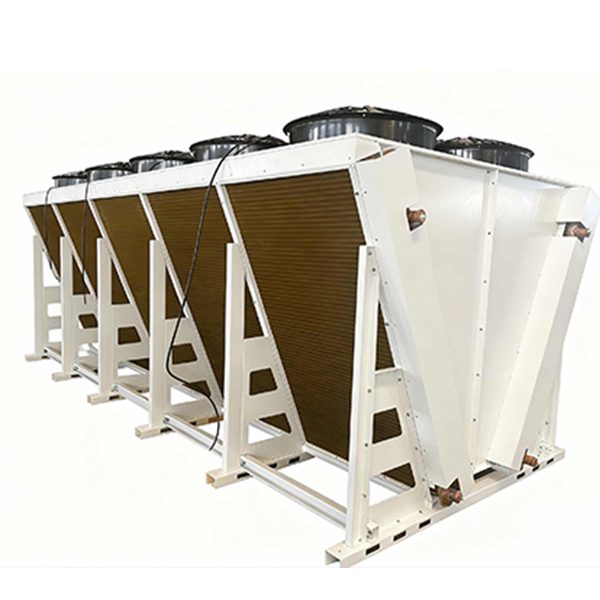
For chiller rooms holding 0°C to 8°C, a medium-temperature condensing unit is correct. For freezer rooms at -18°C to -25°C, a low-temperature unit is required. For blast freezing at -35°C or below, two-stage or screw compressor units are the only realistic choice. The parallel condensing unit is useful when a large cold room has a widely varying load because it stages compressor capacity instead of short-cycling one large machine.
Our condensing unit range starts at 2HP and reaches 50HP for single compressors, with screw units for larger projects. The right match is based on the room's heat load, not on the room's square meters alone.
Cold Storage Project ROI in Hot Climates and Export Markets
Hot ambient temperatures and unstable power are the two biggest enemies of cold storage project ROI in emerging markets. A condensing unit sized for a 35°C ambient will not reject enough heat at 45°C, so the compressor runs hot and the room cannot hold setpoint. Buyers in port cities, processing zones, and desert climates need the condenser and compressor selected for the maximum ambient, not the average.
In many of these markets the grid runs at 60Hz. We keep 60Hz-ready equipment for projects in Ecuador, the Philippines, and the Gulf region. In Manta, Ecuador, our team installed a multi-temperature facility with blast freezer rooms at minus 35°C, frozen storage at minus 18°C, an ice storage room at minus 10°C, and a processing room held at 5°C to 10°C. The equipment had to run continuously in a coastal high-humidity environment while meeting export inspection standards.
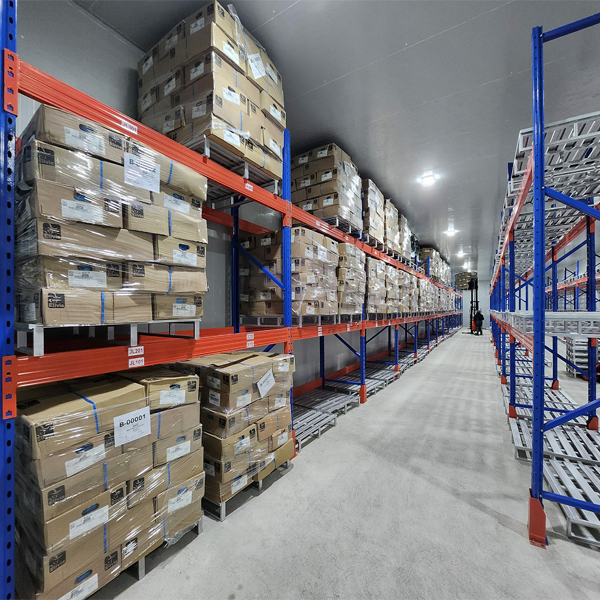
For fruit exporters, the ROI arithmetic is direct. A Peru avocado room with 2 Bitzer 20HP units cut spoilage from about 15% to below 4%, which changed shipping flexibility more than the power bill. For a French fries processor in Egypt, a multi-zone system with blast freezing at minus 35°C, packaging at 5°C to 10°C, and finished storage at minus 20°C reduced product loss and quality defects to below 2%. Those improvements are the real return on a cold storage project, and they do not show up in a simple per-panel quote.
The Payback Calculation Buyers Usually Miss
Simple payback compares installed cost with annual operating savings. The mistake is using energy savings alone. For most cold storage projects, the dominant saving is avoided product loss. The formula is: installed cost divided by the sum of annual spoilage reduction, energy savings, and labor or throughput gains.
Assume a buyer handles $800,000 of annual product throughput and loses 15% to spoilage before the room is built. If a proper cold room reduces that to 4%, the annual spoilage saving is $88,000. Add a smaller energy improvement, and a $150,000 installed room can pay back in roughly two years. The calculation changes by product: fish and berries carry higher per-ton value than root vegetables, so the same cold room may pay back much faster for one operator than another.
If your product mix includes high-spoilage items like seafood, cut flowers, or berries, the biggest variable in your ROI model is the temperature pull-down curve. Send your room dimensions, product type, and daily throughput to meluck@meluckcooling.com and we will confirm the refrigeration load and compressor match before you lock the capital budget.
Post-Commissioning Risks That Erode Cold Storage Project ROI
A cold room that is left dirty will not hold its ROI. Air cooler fins and coils collect frost, dust, and meat or fruit residue. When airflow drops, the evaporator temperature falls, the system runs harder, and the product in the corners warms. The usual sign is a room that reaches setpoint only at night and creeps up during loading hours.
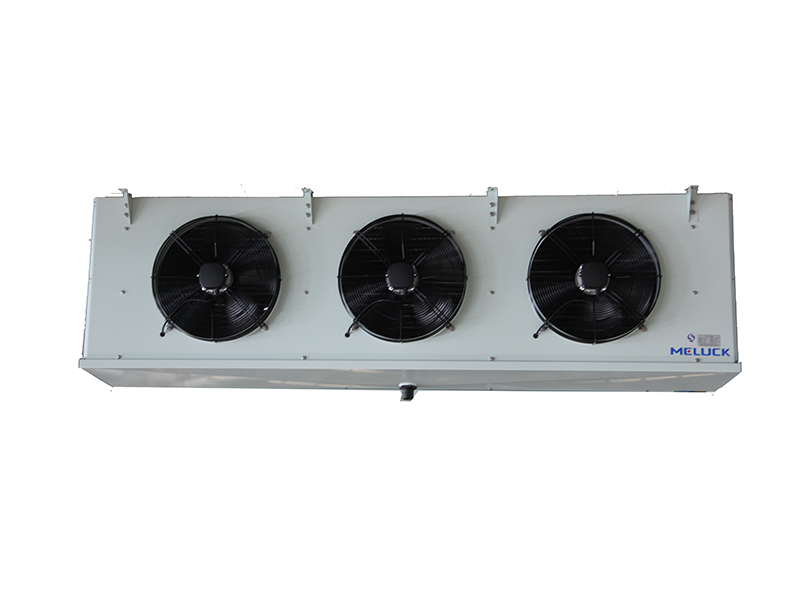
Door discipline matters more than most buyers expect. Leaving a sliding door open during a shift pulls in hot air and frost load. Dock and sealing failures quietly add load. We train operators to log door-open time and check defrost water drainage because these small routines extend compressor life and keep power use predictable.
If your cold room is already running and you are seeing unstable temperature, frosting evaporators, or a power bill that is higher than the calculation promised, the fastest fix is an engineering review, not a new compressor. Send your current setpoint, room size, product load, and a photo of the evaporator to meluck@meluckcooling.com or call +8617369893087. We will identify the load mismatch and confirm what to correct before you spend more capital.
Common Questions About Cold Storage Project ROI
How long does a cold storage project take to pay back?
Most well-designed cold rooms for high-value perishables pay back in two to four years. The spread depends on product value and spoilage rate. A seafood or berry processor can recover capital faster than a root vegetable packhouse because the avoided loss per ton is higher. We model this from your daily throughput and current rejection rate before quoting the room. In a Peru avocado project, spoilage fell from about 15% to below 4%, which made the payback visible within the first export season.
Does a cheaper condensing unit always reduce the initial investment?
No, and this is one of the most expensive assumptions in cold storage procurement. A cheaper unit that cannot reject heat at the site's maximum ambient will run longer cycles, shorten compressor life, and fail to hold temperature during pull-down. The invoice is lower, but the operating cost and product loss move against you within months. For freezer rooms and hot climates, we specify low-temperature or high-ambient units rather than applying a medium-temperature unit to a job it cannot handle.
What spoilage reduction should I use in my ROI model?
It depends on your product and current handling. For fruit and vegetables without pre-cooling, losses of 10% to 20% are common in warm climates. For frozen food in a stable freezer, the target is below 2%. Use a conservative number first, then verify it with daily temperature logs. We start with your actual rejection rate, not an industry average. The Peru avocado room reduced spoilage to below 4%. The Egypt French fries project kept quality defects under 2%. Those are project-specific results, not generic benchmarks.
Can I finance a cold storage project for an emerging market site?
In projects we have supplied, buyers often combine supplier payment terms with local equipment financing or lease structures, but the equipment package must be export-ready and matched to the local power supply. We prepare the technical specification and phased delivery planning so the financing request is based on a complete cold chain, not a partial quote. For 60Hz grids, which are common across parts of the Middle East, Africa, Southeast Asia, and Latin America, the condensing unit selection has to be confirmed early. Share your financing timeline and site voltage, and we will align the equipment scope with the drawdown schedule.
If you're interested, check out these related articles:
Freezer Room Solutions -25C~-18C - Meluck
Chiller Room Solutions -10C~10C - Meluck
With over 15 years of experience as a MELUCK refrigeration engineer, I specialize in the design of cold storage, chillers, ice makers, and cold chain energy-saving systems, providing technical support to distributors and engineering companies worldwide.

meluck