
Banana Ripening Room vs Cold Storage for Importers
Every banana importer eventually faces the same equipment decision: whether a standard cold storage room is enough, or if a dedicated ripening room is required to meet market demand. The wrong choice leads to wasted inventory, inconsistent quality, and missed delivery windows. While most articles on this topic stop at temperature setpoints, this article addresses the practical equipment selection and supply chain implications from a cold chain engineer's perspective. We cover capacity planning, compressor sizing, and real import scenarios so you can specify the right system from the start.
What Is a Banana Ripening Room and How Does It Work?
A banana ripening room is a controlled-environment cold room that transforms green, unripe bananas into uniformly yellow, ready-to-eat fruit on a predictable schedule. It does this by cycling temperature, introducing ethylene gas, and managing CO₂ and humidity with much tighter precision than a simple storage room ever needs.
The process starts by pulldown cooling the fruit to a uniform holding temperature around 13–14°C to equalise field heat. Then ethylene is injected at 100–150 ppm for around 24 hours with air circulation to trigger the ripening cascade. After ethylene exposure, the room is ventilated to remove CO₂ and the temperature is adjusted to 15–18°C to control the speed of ripening. For the next 4–6 days the room maintains a specific combination of temperature, relative humidity (ideally 85–95%), and fresh air exchange. This combination determines whether the bananas arrive at the warehouse with a solid green-yellow colour index or already tipping into full yellow.

The refrigeration system in a ripening room must handle a much wider BTU load range than a storage room because the fruit generates significant heat of respiration once ethylene triggers ripening. A Bitzer 4PE-15Y or 4NE-20Y condensing unit with a ceiling-mounted air cooler is a common pairing for a 20-foot container load. The key is uniform airflow, typically 0.2–0.3 m/s air speed across the boxes, so the bananas at the centre of the stack ripen at the same rate as those near the door.
How Cold Storage Differs from Ripening Rooms for Bananas
Cold storage rooms are designed to hold product at a fixed temperature and slow down biological processes, not to actively convert green fruit to yellow. For bananas, cold storage runs between 13°C and 14°C with slightly lower humidity, typically 85–90%, and does not use ethylene. The objective is to suspend the fruit in its current state until the importer is ready to begin ripening or ship to a secondary market.
This distinction matters because attempting to ripen bananas in a cold storage room—by raising temperature or adding ethylene without proper ventilation—results in uneven ripening, blackened skins, and softening at the container walls where cooling is fastest. We have seen importers lose entire shipments this way, particularly in tropical ports where ambient temperatures push the cold room’s compressor to its limit and the temperature swing across the room width exceeds 2°C.
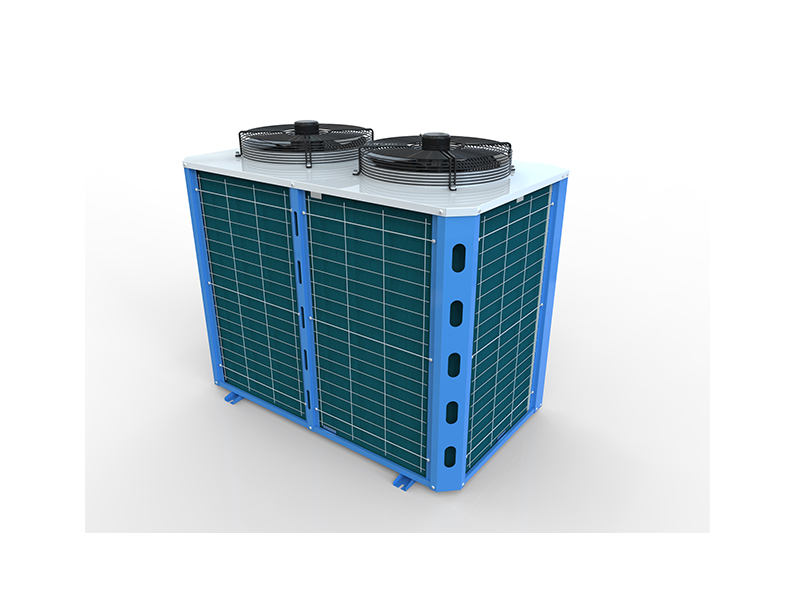
The compressor selection reflects the lower heat load: a medium-temperature Bitzer 4EES-4Y or 4DES-5Y condensing unit is adequate for a standard 40-foot cold storage container room holding palletised green bananas, assuming proper insulation. The key design parameter is maintaining temperature stability across the room, not the rapid pulldown or wide BTU range a ripening room requires.
Why Importers Need Both: Matching Equipment to Supply Chain Stage
In a typical import operation, bananas arrive at port as green fruit in reefer containers. The importer has two possible paths: direct sale to a distributor who owns ripening facilities, or in-house ripening before delivery to retail. If you only sell green fruit, a cold storage holding room with backup redundancy is the priority. If you own the ripening step, then you need at least one dedicated ripening room, plus cold storage capacity to stage incoming fruit before it enters the ripening cycle.
From experience supporting cold chain projects in Africa, the Middle East, and South America, the most common mistake we see is undersizing the cold storage buffer. A ripening room can process a batch in 5–7 days, but an import vessel may discharge 40 containers in a single call. Without enough holding capacity, fruit sits on the dock or in unrefrigerated warehouses, and quality degrades fast. I recommend a minimum cold storage volume equivalent to two weeks of throughput, with the ability to expand as volumes grow.
If your program involves rapid turnover to multiple retail chains with different colour specifications, reach out to discuss the staging arrangement for your specific volumes and peel colour targets. Sharing your weekly throughput and target ripening schedule helps us confirm whether a separate cold storage cold room plus multiple ripening rooms layout makes more sense than a single multi-purpose space.
Key Technical Requirements for Banana Cold Storage and Ripening Rooms
Temperature and Humidity Control
Both room types require stable temperature but the tolerance differs. Cold storage should hold ±0.5°C, while a ripening room must hold ±0.3°C during the ethylene and maturation phases because ethylene sensitivity and respiration rate are temperature-dependent. Humidity must be actively managed: too low and the fruit loses weight through transpiration; too high and condensation on boxes encourages mould. We incorporate humidifier packs or water-spray air handlers in all ripening room designs we deliver.
Insulation and Air Sealing
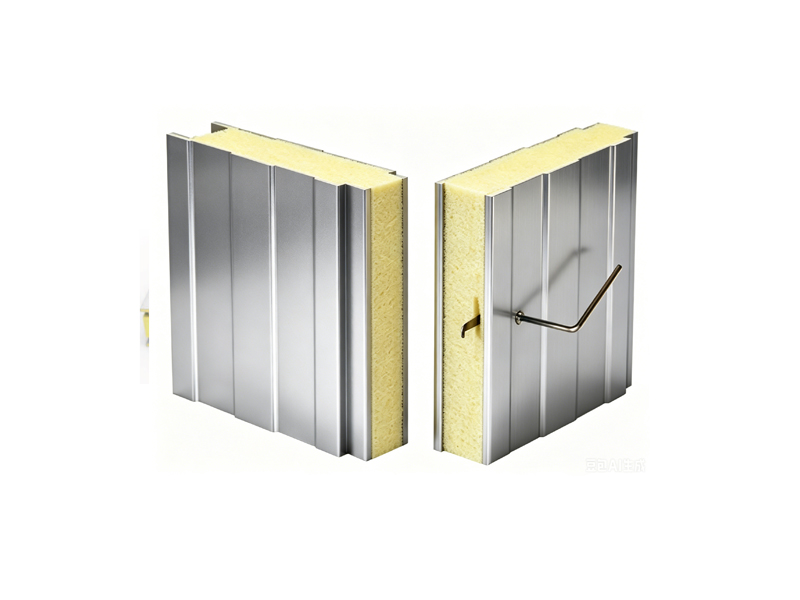
The building envelope is the foundation of stable control. For both room types, 100mm PUR or PIR sandwich panels with tongue-and-groove joints achieve the necessary R-value and prevent moisture ingress. PIR panels with B1 fire rating are now standard for high-volume commercial facilities to meet insurer requirements. A sliding cold room door with heated perimeter gasket is essential to minimise air exchange during busy loading periods, especially in tropical ports where humidity is high.
Refrigeration Capacity and Redundancy
Ripening rooms need a refrigeration system sized for sensible and latent heat removal plus the peak respiration load of ripening fruit, which can reach 6–8 kW per pallet during the peak day. A Bitzer 2-stage 16HP or 20HP condensing unit is often required if the ambient temperature exceeds 38°C, as it does in many import markets. For cold storage, a parallel condensing unit arrangement with three or four Bitzer piston compressors provides capacity modulation and built-in redundancy. If one compressor trips, the system keeps running, which is critical when a shipload is worth hundreds of thousands of dollars.
Equipment Selection Guide: Choosing the Right Condensing Unit and Panel
Matching equipment to your specific banana import operation starts with three data points: average weekly throughput in pallets, peak ambient temperature at the site, and available power phase and frequency. With that, you can finalise compressor horsepower, panel thickness, and air cooler model.
For a standard 20-pallet cold storage room holding green bananas at 13°C, a Bitzer 12HP medium-temperature condensing unit with a DL-series air cooler provides sufficient cooling while keeping running costs reasonable. If the room is in a location with 60Hz power, we stock 60Hz-ready Bitzer and Copeland condensing units that avoid the pitfalls of frequency mismatch, which can degrade compressor performance by 15–20%.
For a ripening room of the same size, the load nearly doubles during ethylene response. A Bitzer 25HP unit with a DD-series high-static air cooler is a better starting point because it can drive the cold air through the tight row spacing in box-stacked pallets. The panel for a ripening room often merits a step thicker, 120mm instead of 100mm, to reduce thermal bridging when room temperatures are cycled repeatedly.
Common Equipment Questions from Banana Importers
How long does a banana ripening room take to pay for itself?
In markets where the price premium for ready-to-eat bananas is at least 15–20% above green fruit, a well-utilised ripening room often recovers capital cost within two to three seasons, based on avoided spoilage, reduced demurrage, and higher unit margin. The payback accelerates if the cold storage buffer stops product degradation after discharge. For importers handling 10–15 containers a month, the jump from green-only sales to ripened delivery is where the margin shift happens.
Can I convert an existing cold storage room into a ripening room?
It is possible in principle but requires adding an ethylene generator, ventilation fans, humidity control, and often a larger condensing unit to cover the extra heat load. The control logic must be upgraded to handle multi-step profiles. Most conversions fall short because the original insulation and air distribution were not designed for uniform ripening, leading to hot spots. If you are considering a conversion, share your existing room drawings and current compressor tag data so we can evaluate whether it makes technical and economic sense before you invest in a retrofit.
What is the biggest equipment failure risk in a banana ripening facility?
Compressor burnout under frequent start-stop cycling during the pulldown and ethylene phases, especially in high ambient environments. The Bitzer semi-hermetic compressors we supply include crankcase heaters and suction accumulators that significantly reduce failure risk, but the system must also be protected with a proper suction pressure regulator to prevent liquid slugging. Over five years of monitoring installations, the stations with a secondary standby unit on a manual changeover lost zero total loads, while those with single-point redundancy lost at least one full room load per year on average.
What cold storage temperature is best for green bananas if I only store, not ripen?
Green bananas store best at 13°C to 14°C—never below 12.5°C—with relative humidity kept at 85–90%. At 13°C, respiration is minimal and the fruit can be held for up to three weeks without triggering chilling injury. Below 12°C, the peel suffers greyish-brown discoloration that appears after the fruit is removed to warmer air, which makes it unsaleable. I always recommend a cold room controller with a high/low temperature alarm and a chart recorder, because a single 8-hour cold excursion can compromise the entire batch.
Does my ripening room need approval for food safety compliance?
In most countries, a banana ripening room falls under the same food safety requirement as a produce storage facility: it must meet HACCP-based temperature monitoring and be constructed with food-grade materials. The panelling must be non-toxic, easily cleanable, and resistant to ethylene exposure. Our ripening rooms use stainless steel interior liners and food-safe sealants because we found that some conventional sealants react with ethylene and create off-flavours. If your market requires EU or US-style compliance documentation, share your requirements and we will confirm the certification package available for your project.
If you're interested, check out these related articles:
Freezer Room Solutions -25C~-18C - Meluck
Myanmar Potato Seed Cold Storage Project - Meluck
Ecuador Multi-Temperature Cold Storage Project - Meluck
Blast Freezer Room Solutions -40C~-60C - Meluck
With over 15 years of experience as a MELUCK refrigeration engineer, I specialize in the design of cold storage, chillers, ice makers, and cold chain energy-saving systems, providing technical support to distributors and engineering companies worldwide.

meluck