
Cold Room for Food Importers and Distributors: Multi-SKU
Cold room for food importers and distributors is not a single temperature box. It is a receiving, holding, order picking, and dispatch system that has to protect dairy at 2°C, fresh produce at 8°C, and frozen seafood at -18°C in one physical footprint. The most costly specification errors come from designing the room around a product list instead of a receiving schedule. I have seen projects where the chiller room was sized correctly on paper but failed the first mixed-load week because the refrigeration system could not handle simultaneous pulldown and holding duty.
Multi-SKU Cold Storage Changes the Import Distribution Equation
An importer does not store products long enough to treat the cold room as a warehouse. The room is a buffer between a container being unloaded and an order being assembled. Pallet throughput changes daily, and one shipment may contain chilled, ambient, and frozen lines that all need temperature protection before the next delivery run. That changes the refrigeration design in two ways.
First, the room has to be divided by actual product tolerance. A compromise setpoint of 4°C protects neither frozen goods nor fresh produce. Second, the cooling load has to follow receiving peaks, not average inventory. On the day a container arrives, the room must remove field heat or shipping heat from every pallet while doors are open and forklifts are moving. A room designed only for steady holding load will drift on the days that determine product quality.
Zone Temperature Mapping Prevents Mixed Load Spoilage
Mixed SKU does not mean one setpoint. The most workable import distribution cold room splits space into controlled zones and treats the buffer areas between them as order picking zones, not long-term storage.
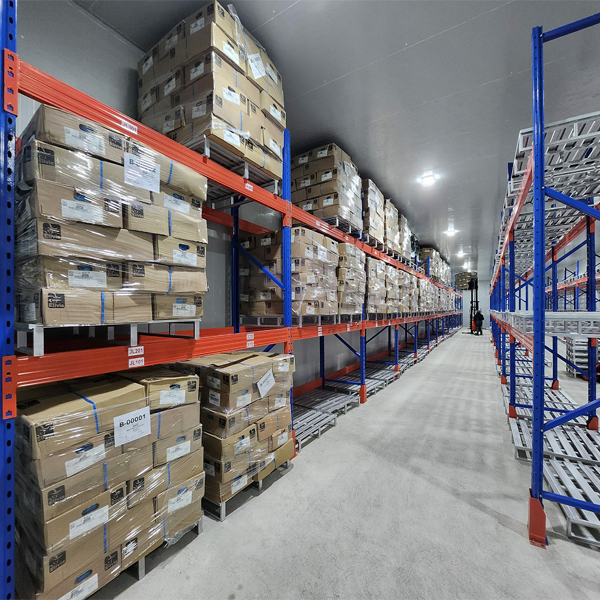
What temperature should each import category actually run at?
| Zone | Setpoint | Typical import lines | Main failure signal |
|---|---|---|---|
| Fresh chilled | 0°C to 4°C | Dairy, fresh meat, leafy produce, juices | Freeze damage near air cooler, condensation |
| Dry produce | 8°C to 12°C | Citrus, tomatoes, potatoes, onions | Dehydration, mold, uneven ripening |
| Frozen storage | -18°C to -22°C | Frozen seafood, meat, prepared foods | Temperature cycling, clumping, freezer burn |
| Deep frozen | -25°C or lower | Ice cream, tuna, value-added frozen lines | Recrystallization, texture loss |
The table looks straightforward, but the failure points sit at the boundaries. If frozen and chilled pallets share a common receiving area with one insulated panel wall, frost forms on the chilled side every time the freezer door opens. That is why I prefer separate vestibules or high-speed doors for frozen and chilled docks when the order profile mixes both.
How do you stop frozen and chilled zones from fighting each other?
Separate the air masses. Use full-height insulated partition walls, independent doors, and a pressure relief damper if the rooms are adjacent. The chiller room should not be used as a corridor to reach the freezer. In practice, that layout choice removes most of the cross-zone frost, condensate, and temperature swing that importers notice in the first season.
If your program includes mixed frozen and chilled SKUs arriving in the same window, confirm both latent capacity and door sequencing with an engineer before finalizing the panel layout. Send your SKU list, target temperatures, and receiving pattern to meluck@meluckcooling.com and I will confirm the zone calculation.
Refrigeration Capacity Must Match Receiving Peaks Rather Than Average Stock
A common importing error is to size the condensing unit for average daily heat load. Receiving peaks carry a much higher load because the product arrives warm and the room must pull it down while doors are open. If you calculate capacity only from steady holding load, the room struggles on the days it matters most.
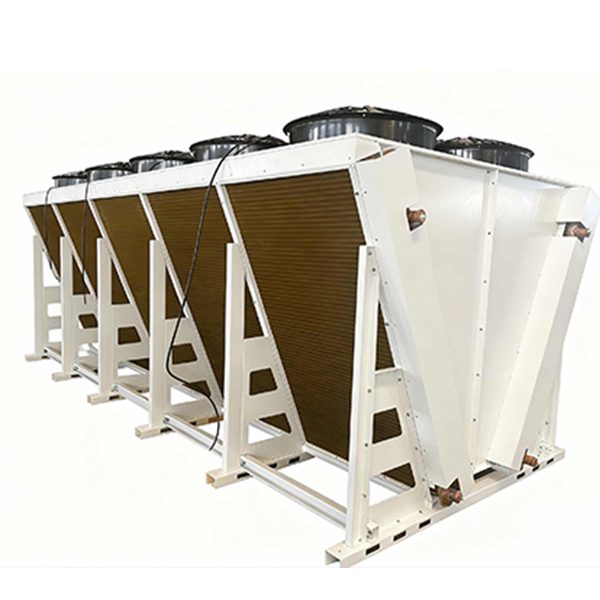
In the Cairo French fries project, the blast freezer used a Bitzer 125HP system for the -35°C zone and separate 75HP units for frozen storage. That capacity split kept pulldown load from destabilizing the storage rooms. For an import distribution cold room, the same logic applies even if the room is smaller. The chilled zone needs enough capacity to absorb a full truckload of dairy arriving at 8°C or 10°C and bring it below 4°C within a defined window.
Why does pulldown load matter more than average load?
Average load hides peaks. A room holding stable inventory may need only 40 percent of its installed capacity during normal conditions. During receiving, the load can double for several hours because the product is warm, the doors are open, and infiltration air is entering continuously. A system sized closer to the peak handles that event without freezing the evaporator coil or running the compressor outside its operating envelope.
Construction and Commissioning Details for Import Distribution Cold Rooms
Panel type, door hardware, and commissioning checks usually get less attention than compressor selection, but they decide whether the room holds its temperature under real throughput. For imported food, hygiene and condensation control matter as much as capacity.

High-density PIR panels give a better fire rating and lower thermal conductivity than standard PU in many frozen applications. The panel joint is just as important. A camlock or slip-joint system that leaves no open foam edge reduces moisture migration and makes washdown safer. On the door side, a manual sliding door with a heavy-duty aluminum track and full-height gasket protects the opening without creating a dead zone inside the room.

In the Peru avocado cold room, the insulation and door design helped cut rejection from roughly 15 percent to below 4 percent, but the real stabilizer was the site commissioning run. The system was pulled down and held at 10°C with a fluctuation of ±0.5°C before handover. That is the standard I want for an import distribution room before the first container is unloaded.
What do we check before the first shipment lands?
The main checks are door gasket compression, panel joint tightness, setpoint accuracy, defrost termination, and drainage slope. After that, I run a pulldown test, then a holding test with the doors closed, then a live receiving simulation with the doors opened at the expected frequency. The live test exposes problems that a stable empty room cannot show.
What to Send Before You Commit to a Layout
If you have a mixed SKU import operation, the room layout decision should not wait until every SKU is confirmed. Most importers know their product families and rough pallet counts before the racking plan is fixed. That is enough to start the thermal load calculation.
The fastest way to avoid buying too much or too little refrigeration is to send a one-page load profile: target temperatures, pallet counts, receiving windows, and the share of frozen versus chilled throughput. We check the zone capacity, defrost schedule, and pulldown load, then confirm the equipment list before you commit to a layout. Send your SKU list and target temperatures to meluck@meluckcooling.com or call +8617369893087, and we will confirm the heat load calculation for your receiving profile.
Common Questions About Import Distribution Cold Rooms
Can one cold room hold both frozen and chilled imported products?
One cold room can hold both frozen and chilled imported products only if the zones are physically separated by insulated partition walls and independent doors. Trying to run a single compartment at a compromise temperature ruins both product groups. Frozen lines need -18°C or lower, while dairy and fresh meat need 0°C to 4°C. A combined room without separation will frost, condense, and create temperature swings that shorten shelf life and raise rejection risk.
What is the most common mistake when sizing a cold room for import distribution?
Many importers assume the compressor decision is the main step. In practice, the zone layout and door schedule often have a bigger effect on product quality. A well-matched condensing unit will not correct a room where frozen pallets are pulled through the chilled receiving area. We look at the order profile first, then match compressor capacity to peak pulldown, not average holding load.
How long should commissioning take before we load the first inventory?
It depends on the room size and the number of zones. For a small single-zone chiller, commissioning can be completed in two to three days after installation if the power supply, refrigerant charge, and controller setpoints are stable. For a multi-zone import distribution room with frozen storage, I would reserve five to seven days. That includes pulldown testing, defrost verification, door interlock checks, and a 24-hour holding test before inventory moves in.
Do we need three separate rooms or can zones share one structure?
In a seafood import project we commissioned in Manta, Ecuador, the difference between the first and third day of testing was the defrost and drainage balance across five temperature zones. We held each zone at its target before the client moved product. The main lesson was straightforward: do not treat commissioning as a short check after construction. It is the only point at which you can fix zone interaction problems without disrupting live inventory. Send your SKU list and receiving schedule to meluck@meluckcooling.com and we will confirm the commissioning plan for your zone layout.
If you're interested, check out these related articles:
Freezer Room Solutions -25C~-18C - Meluck
Chiller Room Solutions -10C~10C - Meluck
Myanmar Potato Seed Cold Storage Project - Meluck
Ecuador Multi-Temperature Cold Storage Project - Meluck
With over 15 years of experience as a MELUCK refrigeration engineer, I specialize in the design of cold storage, chillers, ice makers, and cold chain energy-saving systems, providing technical support to distributors and engineering companies worldwide.

meluck