
Cold Room for Bakery Distribution: Chiller and Freezer Zones
Cold room for bakery distribution is a zoning problem before it is a refrigeration problem. Dough, cream-filled goods, and finished products do not share one thermal window, and a distribution center that treats them as a single room wastes energy and shortens product life. I have seen butter-laminated dough sweat inside a 6°C chiller because the setpoint was correct for finished bread but wrong for dough retarding. The design that works separates chiller and freezer zones by product timing, airflow, and door traffic, then matches each zone to the right compressor and evaporator.
What Temperature Zones Does a Bakery Distribution Cold Room Need?
The first decision is not the room size. It is the zone map. Bakery distribution centers usually handle four or five product families, and each family has a temperature point where product life stops making sense.
| Zone | Temperature range | Typical bakery products | Design focus |
|---|---|---|---|
| Dough retarding | 2°C to 4°C | Laminated dough, croissant, danish | Hold humidity near 80% to 85% with moderate air movement |
| Cream and filled goods | 0°C to 4°C | Cream-filled pastries, mousse cakes | Keep separate from dough to stop surface moisture transfer |
| Finished goods chiller | 2°C to 6°C | Packaged bread, decorated cakes, buttercream | Limit door openings and stage defrost |
| Frozen storage | -18°C to -25°C | Par-baked goods, frozen pastry, butter blocks | Use DD series evaporators and electric defrost |
| Blast freeze | -30°C to -40°C | Flash-frozen dough, unbaked pastry | High velocity airflow with dedicated compressor capacity |
For dough retarding, I keep the room at 2°C to 4°C and aim for relative humidity around 80% to 85%. Below that, dough skins over. Above that, condensation collects on the evaporator and can drip back into product. Finished goods chillers run warmer, at 2°C to 6°C, but they still need staged defrost because packaging introduces moisture every time doors open. Frozen storage sits at -18°C to -25°C, and if frozen goods enter from a blast freezer or an external truck, the freezer must recover quickly or rack surfaces will frost over.
How Should Chiller and Freezer Zones Be Separated and Laid Out?
Zone separation fails when rooms share one airspace or one drafty opening. I prefer insulated panel partitions with separate drains and independent pressure relief. A chiller room at +4°C and a freezer at -20°C should not share a common doorway without an air lock; ice builds on the floor, door frames frost, and warm air pulls moisture into the freezer. Use a staging corridor or a high-speed insulated door between zones.
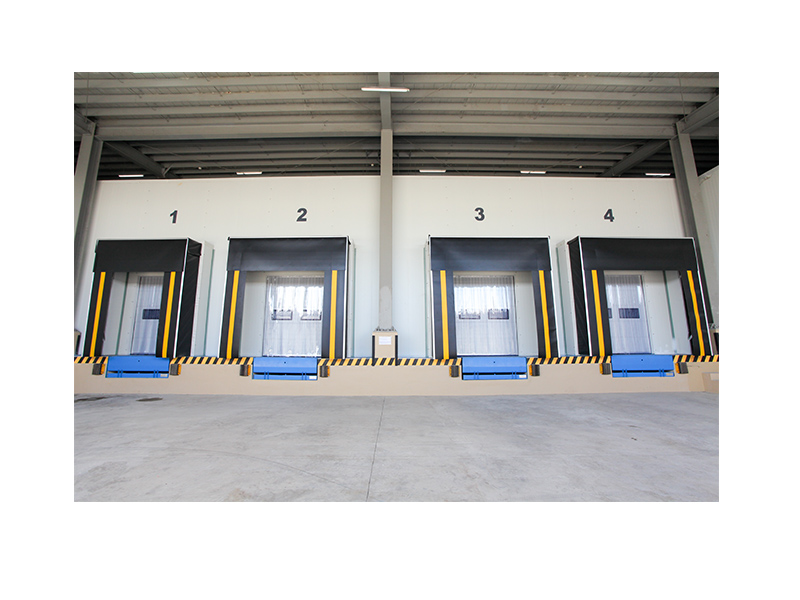
Layout then decides whether the team can move racks from the chiller to the dock without leaving a door open. I keep rack movement in a straight line, put the freezer at the far end, and keep the chiller close to the dispatch door. Wide insulated sliding doors work well for rack passage, but they should not face the prevailing wind or the hot dock side without a lobby. Sectional doors suit dock openings. Strip curtains reduce air exchange during extended loading, door frames need heater wiring to prevent frost lock, and floor drains should sit outside the thermal envelope.
Why Does Airflow Design Matter More Than Temperature Setpoint?
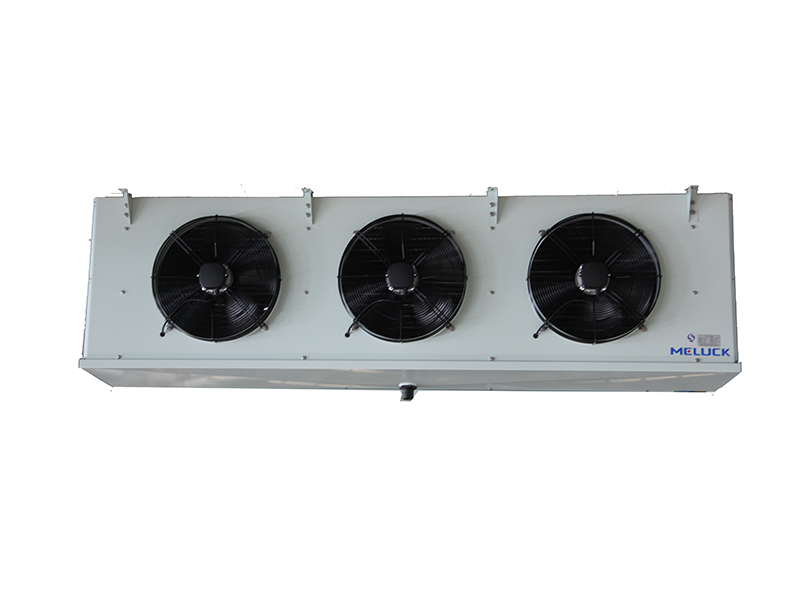
A cold room can show 4°C on the controller and still spoil butter-laminated dough if air does not move across the product stack correctly. Bakery goods are dense and stacked on racks, so pockets of stale air hold heat and moisture. Unit cooler placement has to force air through the rack rows rather than just around the room perimeter. For chiller zones I specify DL series air coolers for low air velocity, and for freezer zones DD series units with the right fin spacing and electric defrost.
Defrost choice matters alongside airflow. Frozen dough releases moisture into the room, and a poorly staged defrost lets that moisture settle on product. I set defrost cycles around production peaks, not around a fixed clock, so the room recovers before the next batch arrives.
If your distribution center mixes frozen laminated dough and cream-filled decorated cakes in the same shift, confirm the airflow and latent load profile before you lock the equipment list. Send your daily throughput and product mix to meluck@meluckcooling.com and I will check the zone balance.
Which Refrigeration Equipment Fits Bakery Distribution Cold Rooms?
For a distribution center cold room, condensing unit selection follows zone load, ambient temperature, and recovery duty. A chiller zone holding finished goods at 2°C to 6°C can often run on medium temperature reciprocating condensing units matched to the room volume and daily pull-down load. Freezer zones need low-temperature units rated for -18°C to -25°C, and any blast chill or blast freeze step needs dedicated compressor capacity rather than borrowing from storage. I specify original Bitzer units from 4HP to 50HP depending on the load, with low-temperature variants for the freezer rooms.
| Equipment | Application | Selection focus |
|---|---|---|
| DL series air cooler | Chiller room from 0°C to +8°C | Low air velocity for sensitive dough and cream goods |
| DD series air cooler | Freezer room from -18°C to -25°C | Fin spacing and electric defrost matched to moisture load |
| Blast freezer evaporator | Blast freeze from -30°C to -40°C | High velocity airflow for rapid crust set |
| PIR cold room panel | Freezer walls and ceiling | B1 fire rating and low thermal conductivity |
| Bitzer condensing unit | Medium and low temperature zones | Original compressor, load-matched capacity |

What Should You Finalize Before Releasing the Cold Room Order?
Most stalled bakery cold room projects I see are stuck on a missing zone map, not a missing quotation. The risk shows up later: panels are ordered, unit coolers arrive, and then the client realizes cream-filled products need 0°C to 4°C while the rest of the room holds 6°C. That mismatch forces costly on-site rework. The simplest path is to send the site dimensions, product list, daily throughput, and installation timeline before equipment is fixed. We will confirm the zone loads, door positions, panel thickness, defrost method, and condensing unit capacity together. Send those four items to meluck@meluckcooling.com or call +8617369893087 and we will return a zoned cold room layout with equipment selections for review.
What Do Bakery Distribution Teams Ask About Cold Room Zoning?
Can a single cold room serve both finished goods and dough retarding?
Only if the airflow and staging are separated. A single room can run at 2°C to 4°C, but finished products and retarding dough will experience different humidity and air speed needs. I prefer two zones with a common partition. The separate zone keeps packaging moisture from landing on dough. If space is tight, a divided room with independent evaporator coils is the minimum.
Should bakery freezers always run at -18°C?
Not always. -18°C is enough for many finished frozen goods, but par-baked dough and butter-heavy laminated products retain quality better at -21°C to -25°C. The lower range reduces fat migration and slows texture loss. Choose -18°C when storage time is short and turnover is high. Choose -25°C for long holding or sensitive dairy and butter products.
What panel thickness works for a bakery distribution freezer?
It depends on the target temperature and roof heat load. For a -18°C to -25°C freezer, 100mm to 150mm PIR panels with a B1 fire rating make sense. For a 0°C to +8°C chiller, 75mm to 100mm PU panels usually work. High ambient climates and uninsulated roofs push the calculation toward the thicker option. Have the supplier run the heat load based on the actual site, not a catalog guess.
How many blast chill hours do bakery distribution centers need?
In butter-heavy and frozen dough programs I have worked on, a blast freeze or blast chill step before storage reduces freezer recovery load. The exact hours follow batch size and product thickness. A small distribution center may only need a dedicated blast freezer for peak production days, while a high-volume plant needs continuous blast capacity. Size the freezer to the largest single batch, not the daily average. Share your batch weight and turnaround target with meluck@meluckcooling.com and we will confirm the load before ordering.
If you're interested, check out these related articles:
Processing Room Solutions for Food Plants - Meluck
Chiller Room Solutions -10C~10C - Meluck
Blast Freezer Room Solutions -40C~-60C - Meluck
With over 15 years of experience as a MELUCK refrigeration engineer, I specialize in the design of cold storage, chillers, ice makers, and cold chain energy-saving systems, providing technical support to distributors and engineering companies worldwide.

meluck