
Cold Room for Butcher Shops: Chiller and Freezer Specs
Most butcher shop storage problems do not start with the compressor. They start with a specification written around a generic cold room instead of the shop's actual daily flow: carcass receiving, breaking, tray packing, and overnight holding. A cold room for butcher shops usually needs two separate temperature zones. The chiller holds fresh cuts near 0°C to 4°C, and the freezer protects boxed or pre-cut meat at -18°C or below. Getting those two zones wrong costs more in product loss and rework than any panel or condensing unit upgrade can recover.
Butcher Shop Cold Room Performance Requirements
A butcher shop cold room is not one room with one setting. It is two environments that fail for different reasons. The chiller side has to remove heat from fresh meat quickly enough to bring surface temperature down after cutting, but not so fast that the edges freeze and discolor. The freezer side has to pull core temperature down and hold it steady, because repeated temperature swings create ice crystals inside the meat and cause purge when the product thaws.
| Zone | Setpoint | Common Use | Equipment Note |
|---|---|---|---|
| Fresh meat chiller | 0°C to 4°C | Carcass and cut holding | Medium-temperature Bitzer or Copeland condensing unit with a DL air cooler |
| Mixed product chiller | 2°C to 5°C | Poultry, cured meat, prepared trays | Same chiller can be divided with a well-sealed partition |
| Frozen meat storage | -18°C to -22°C | Boxed primal cuts, offal, bones | Low-temperature condensing unit with a DD air cooler |
| Long-term freezer | -22°C to -25°C | High-fat offal and reserve stock | Bitzer freezer condensing unit or two-stage unit for larger rooms |
In shops we have surveyed, the most common misstep is running the chiller at 6°C to 8°C because staff want a more comfortable workspace. That setting works for some prepared foods, but fresh red meat loses firmness and bright color faster under frequent door openings. The specification should treat the chiller as a food safety boundary first and a work area second.

Walk In Chiller Specifications for Butcher Shop Cold Rooms
A walk-in chiller for a butcher shop should be specified at 0°C to 4°C for fresh red meat and 2°C to 5°C for a mixed room holding poultry, cured meats, and prepared trays. A medium-temperature condensing unit is the correct match. For a typical urban shop with a 15 m³ to 30 m³ chiller, a Bitzer 4HP to 7HP unit or a Copeland scroll unit in the same range is usually enough, depending on door traffic and the temperature of incoming meat. The evaporator should be chosen for high humidity and medium temperature difference, because fresh meat releases moisture and a coil selected for a dry warehouse will pull too much water from the product.
Chiller Temperature and Defrost
Setpoint stability matters more than the number on the controller. A chiller that cycles between 1°C and 7°C may still average 4°C, but the warm half of that cycle speeds bacterial growth and softens the fat on exposed cuts. Use a medium-temperature air cooler with electric or hot gas defrost so the evaporator clears frost without flooding the room with heat. I have replaced several undersized evaporators in butcher chillers where the controller held the right setpoint but the air leaving the coil was too warm because the coil was too small.
Airflow and Evaporator Placement
Place the evaporator so cold air flows over hanging carcasses or shelving without blowing directly on fresh cuts. Direct high-velocity air causes surface dehydration and darkening. In narrow butcher shops, the best position is usually above the main aisle, with return air pulled from the storage side. If the room is split into raw and cooked areas, use separate air coolers or a correctly placed partition rather than one oversized coil.
Freezer Room Specifications for Meat and Offal Storage
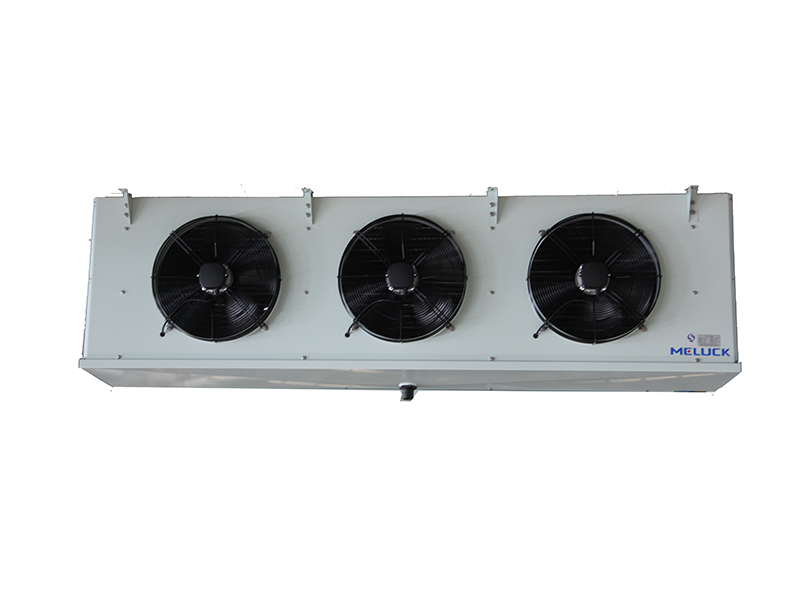
A butcher shop freezer should be specified at -18°C to -22°C for boxed primal cuts, offal, bones, and reserve stock. If the shop wants to keep product for more than three months or store high-fat offal, -22°C to -25°C is the safer range. Low-temperature condensing units in the Bitzer 4HP to 23HP freezer range or equivalent Copeland models are the standard match for small and medium freezer rooms. The air cooler should be a DD series or similar low-temperature evaporator with enough fin spacing to handle frost buildup.
When a Freezer Room Needs to Freeze, Not Just Store
A -18°C storage freezer is not a blast freezer. If the shop receives fresh meat and wants to freeze trays or trimmings in the same room, the pulldown load changes completely. Putting 200 kg of warm meat into a standard storage freezer at the end of the day pulls up the room temperature and slows the freeze, which can affect texture. For that workflow, specify a separate blast freezer section or a low-temperature room with a two-stage condensing unit and enough evaporator capacity for the daily batch size.
If your freezer also receives warm meat for freezing instead of only storing already frozen boxes, confirm the pulldown load before finalizing your BOM. Contact meluck@meluckcooling.com with your batch size and we can check whether a standard freezer or a small blast freezer is the better match.
Panel, Door, and Floor Requirements That Lower Daily Costs
Panel selection for a butcher shop cold room should follow the same logic as the refrigeration equipment. A chiller room can operate well with 75 mm to 100 mm polyurethane or PIR panels. A freezer room should use at least 100 mm insulation, and 120 mm to 150 mm is a better choice where electricity costs are high or the room operates below -20°C. PIR panels carry a higher fire rating than standard polyurethane and are worth the extra cost when the cold room shares a wall with a kitchen or customer area.
Doors cause more daily heat gain than many owners expect. A manual sliding door with high-density insulation is the practical choice for medium and large butcher shop openings because it saves aisle space and closes cleanly. For smaller walk-in rooms, a solid insulated hinged door is acceptable if the frame is sealed correctly. Add strip curtains or a fast-closing mechanism on the chiller door, because staff will enter the room repeatedly during peak hours.

The floor needs insulation and a vapor barrier under the panel system, especially in a freezer room. Without a proper floor, frost can form under the panel and eventually lift or crack the surface. For shops that wash down daily, specify an aluminum or stainless floor finish, a central drain, and a slight slope so water does not pool under shelving.
Sizing and Equipment Selection for a Butcher Shop Cold Room
Start sizing from daily meat volume, not from available space. A shop processing 300 to 500 kg per day can usually work with a 10 m³ to 20 m³ chiller and a 6 m³ to 12 m³ freezer, depending on shelving and trolley access. For small shops under 300 kg per day, a monoblock refrigeration unit on a compact walk-in can be the simplest arrangement because it combines the condenser and evaporator in one unit. For larger rooms or separate zones, split systems with Bitzer, Copeland, or Invotech condensing units give more capacity and easier service access.
Match the condensing unit to the room, not just to a horsepower figure from another shop. A chiller with frequent door openings needs reserve capacity of roughly 20 percent above the steady-state load. A freezer needs capacity for the maximum batch that will be loaded in a day. The control system should log temperature and trigger an alarm if the room rises above the target band, because a silent failure can destroy a full freezer before anyone notices.
If your shop has a short delivery window or meat arrives warm from the abattoir, confirm the pulldown load before you lock panel and compressor sizes. Send your room dimensions, expected daily volume, and whether you need both chiller and freezer to meluck@meluckcooling.com or call +8617369893087. We will verify the condensing unit match, insulation thickness, and door layout before you place the order.
Common Questions About Butcher Shop Cold Rooms
What size cold room does a small butcher shop need?
A shop processing 300 to 500 kg of meat per day can usually work with a 10 m³ to 20 m³ chiller and a 6 m³ to 12 m³ freezer. The range exists because the right size depends on trolley access, shelving, and whether the shop cuts throughout the day or mainly in the morning. Shops below 300 kg per day often use a compact monoblock walk-in, while shops handling whole carcasses need more floor area for hanging rails.
Can one refrigeration unit run both chiller and freezer rooms?
A single unit running both rooms is less practical than it sounds, because the two spaces need different evaporating temperatures and defrost behavior. The chiller works near 0°C to 4°C with a medium-temperature evaporator, while the freezer needs a low-temperature evaporator below -18°C. A parallel or multi-compressor rack can serve both zones, but for most butcher shops it is cleaner and more efficient to install separate condensing units matched to each room.
What temperature should a butcher shop freezer be set at?
It depends on product holding time and fat content. For boxed cuts held under three months, -18°C to -20°C is sufficient. For offal, high-fat meat, or stock kept longer than three months, set the room at -22°C to -25°C to slow fat oxidation and texture loss. The setpoint also matters because a freezer that barely reaches -18°C on a hot day spends too much time above that line, so the condensing unit should be sized for the warmest ambient conditions in your location.
How long can fresh meat stay in a chiller room?
In butcher shops I have worked with, fresh red meat packed in a 0°C to 2°C chiller remains in good condition for three to five days when incoming hygiene is sound and the room is not overloaded. That window shortens if the chiller is opened constantly or if cuts are stacked tightly, which blocks airflow. Shelf life depends on initial bacteria load, so the cold room can only slow deterioration, not reverse it. If your shop needs to hold meat longer, share your daily volume and incoming meat temperature and we can confirm the right chiller capacity and air cooler size.
If you're interested, check out these related articles:
Ecuador Multi-Temperature Cold Storage Project - Meluck
Peru Avocado Pre-Cooling Cold Storage - Meluck
Processing Room Solutions for Food Plants - Meluck
Freezer Room Solutions -25C~-18C - Meluck
Blast Freezer Room Solutions -40C~-60C - Meluck
With over 15 years of experience as a MELUCK refrigeration engineer, I specialize in the design of cold storage, chillers, ice makers, and cold chain energy-saving systems, providing technical support to distributors and engineering companies worldwide.

meluck