
Cold Storage and Flake Ice Systems for Fish Landing Stations
Fish landing stations lose an estimated 10-15% of catch value to spoilage before the first transaction, but integrating correctly sized flake ice production with multi-temperature cold storage cuts losses and raises export readiness. Over fifteen years of designing cold chain facilities for coastal markets, including a turnkey project in Manta, Ecuador, we have seen how matching ice output to daily landing volumes and zoning storage from blast freezing to constant-temperature processing turns a basic shed into a hygienic, commercially viable handling center. The difference between a facility that just chills fish and one that preserves quality for premium buyers comes down to two things: cold storage designed for how fish actually move through the station, and flake ice available when and where handling demands it.
Cold Storage and Flake Ice in Landing Stations
Fish quality deteriorates within hours without rapid cooling. At a landing station, the cooling load hits in surges: several boats unload at once, and the peak catch volume in a few hours determines whether the refrigeration system can keep up or temperatures drift into the bacterial growth zone. Two separate but linked systems meet this demand: flake ice machines that produce thin, subcooled ice flakes for immediate contact chilling on the dock and in transport boxes, and cold rooms sized to absorb the heat of that catch once it moves inside for sorting, processing, and holding. The ice is the first line of defense; the cold storage is what keeps the product from losing what the ice protected.
An effective landing station design separates handling areas by temperature regime. Ice production sits close to the unloading point, and ice storage maintains a buffer at around -10°C so operators are never waiting for a machine to catch up. Cold rooms then step down the temperature: a processing room at 5°C to 10°C keeps workers productive and product cool during grading and packing, a chiller room at 0°C to 2°C holds fish for same-day or next-day shipment, and a blast freezer drops core temperature to -35°C or lower for export-grade frozen fish. In the Manta project, we applied exactly this multi-zone approach with a 10-ton/day flake ice system feeding an integrated facility that handled everything from fresh tuna to frozen fillets under one roof.
Sizing Flake Ice Production to Daily Catch
The most common mistake in landing station design is undersizing the ice machine. A rule of thumb we use in tropical and subtropical ports is 1.5 to 2 kilograms of ice per kilogram of fish landed, depending on how long the catch sits before entering cold storage and whether transport is insulated. If a station lands 8 metric tons of fish on a peak day, the ice machine must reliably produce at least 12 to 16 tons in 24 hours, not just on average but over the four- to six-hour window when boats actually unload. That means the machine’s rated daily output needs a multiplier for real-world conditions: ambient heat, water temperature, and operating interruptions.
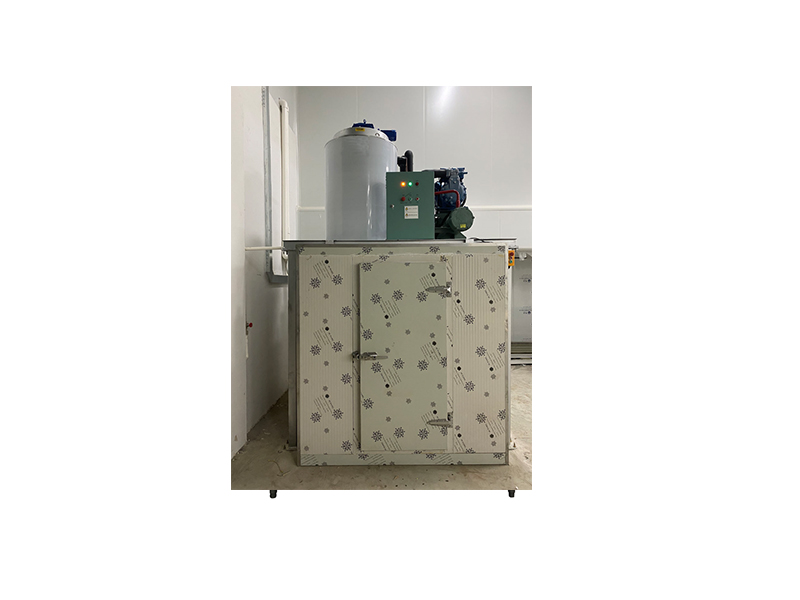
The table below gives a practical starting point for matching daily catch volume to flake ice machine capacity, based on a 1:1.5 ice-to-fish ratio with a modest buffer. These figures assume the ice is used for both contact chilling and some post-handling transport insulation.
| Peak Daily Catch (tons) | Recommended Ice Machine Capacity (tons/24h) | Typical Ice Storage Buffer |
|---|---|---|
| 1–2 | 1–3 | 1.5 tons |
| 3–5 | 5 | 3 tons |
| 6–10 | 10 | 6 tons |
| 12–15 | 15 | 8 tons |
In Ecuador, the 10-ton flake ice machine we installed runs continuously during the fishing season and has kept pace with daily landings of up to 8 tons of tuna, shrimp, and dorado. The ice storage room at -10°C holds a half-day buffer, so unloading is never waiting on ice production.
Designing Multi-Temperature Cold Storage for Fish
A landing station is not a uniform freezer. Different species, destinations, and post-harvest steps call for different temperatures, and trying to serve them all with a single cold room compromises quality and wastes energy. A practical multi-temperature layout starts with the processing room, then flows into blast freezing and finally into frozen storage, with ice storage positioned to serve both the dock and the processing area.
Blast Freezing for Quality Retention
For species destined for export, a blast freezer at -35°C to -40°C locks in texture and prevents large ice crystals from rupturing muscle fibers. The air velocity and evaporator placement in a blast freezer matter as much as the temperature, because rapid surface heat transfer requires consistent airflow over the product. In the Manta facility, three blast freezer rooms each measured 7 × 5 × 4 meters and used dedicated Bitzer 40HP compressors with blast-freezing air coolers. Product reached -18°C core temperature in under four hours, compared to overnight in a conventional freezer, and the fast pull-down directly reduced drip loss at thaw.
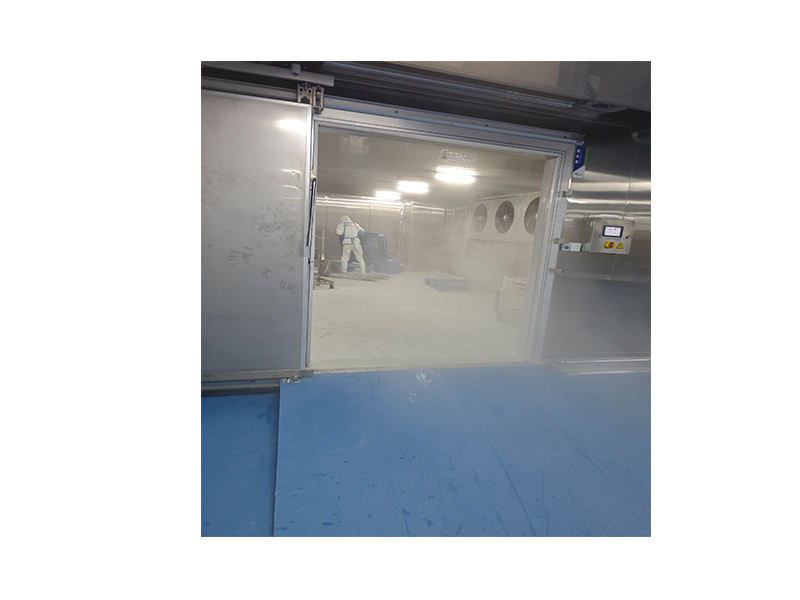
Behind the blast freezer, frozen storage at -18°C to -25°C holds processed goods until shipment. Insulation selection shifts toward PIR panels for rooms operating below -18°C, because the thermal performance and fire-rating advantages over standard PUR become significant in continuous low-temperature service. A dedicated ice storage room, kept at -10°C, prevents flake ice from caking into blocks while still being cold enough to avoid melting and water accumulation on the floor.
If your landing station handles species that require both fresh-chilled and frozen export streams, verifying the blast freezer capacity and the processing room’s ability to handle both flows simultaneously prevents a bottleneck later. Reach out at meluck@meluckcooling.com with your species mix and daily volume estimates, and we can confirm whether a single equipment set or separate parallel lines makes more sense for your throughput.
Integrating Refrigeration Equipment for Energy Efficiency
Coastal environments impose specific demands on refrigeration hardware: salt spray, high humidity cycles, and wide ambient temperature swings between day and night. Equipment selection that works in a warehouse cold room in a moderate climate often fails prematurely when installed steps from the ocean. We spec Bitzer semi-hermetic reciprocating compressors for landing station condensing units because their oil system tolerates humidity better than hermetic scrolls and the serviceable design lets local technicians replace valves and gaskets without returning the whole unit.
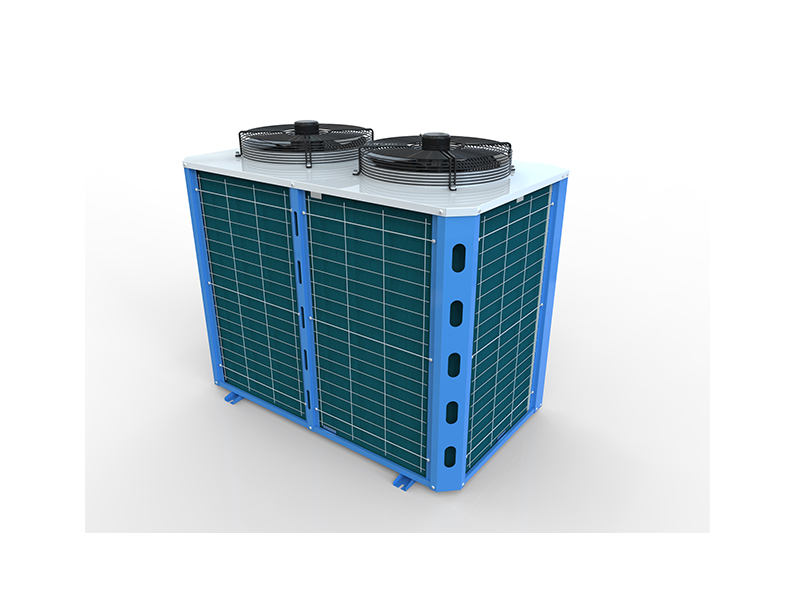
The condensing unit sizing starts not with the cold room’s volume but with the daily pull-down load, which in a landing station is dominated by the fish itself. A single large condensing unit might look simpler on paper, but parallel compressor racks let the system match capacity to the fluctuating load: full output during the morning unloading peak, part-load overnight when only frozen storage is active, and rapid response when a blast freezer cycle starts. In our Manta installation, a Bitzer 30HP condensing unit handled the frozen storage room while separate 40HP units drove the blast freezers, avoiding cross-circuit pressure disturbances.

Evaporator selection for each zone follows the temperature difference required. Freezer rooms need DD-series high-delta-T evaporators with electric defrost to manage frost buildup under frequent door openings, while processing rooms and chiller rooms can use DL-series units with off-cycle air defrost. In all cases, epoxy-coated coil fins slow the corrosion that salt air accelerates, and that small incremental cost adds years of service life.
Project Implementation from Planning to Operation
A turnkey approach to landing station refrigeration means the same team handles site survey, cold room design, equipment manufacturing, international shipping, installation, commissioning, and operator training. When the concrete pad dimensions, panel layout, and piping runs are coordinated during design rather than discovered on site, the installation window shortens and the risk of mismatched components vanishes. For the Manta project, our team completed the full system installation and commissioning in one coordinated deployment, and the operators received hands-on training covering daily start-up, defrost management, and alarm response before handover.
A complete handover package includes as-built drawings, equipment manuals, maintenance schedules, and a spare parts list tailored to the specific compressor, evaporator, and control models installed. We also recommend a remote monitoring system that logs temperatures and compressor run hours, so off-site engineers can spot a drifting suction pressure or an overdue defrost cycle before product is affected. After commissioning, reliable after-sales support turns a well-designed system into a stable long-term asset.
A landing station refrigeration system should work for a decade or more, but it can only do that when the original design accounts for peak loads and the coastal environment. If you are planning a new facility or upgrading an existing one, share your expected catch volumes and operational goals at meluck@meluckcooling.com or call +8617369893087. We will size the combined cold storage and flake ice configuration that matches your throughput, with a detailed equipment specification and layout proposal.
Common Questions About Landing Station Refrigeration
What is the ideal cold storage temperature for different fish products?
For fresh chilled fish held up to 72 hours, 0°C to 2°C in a high-humidity chiller room is standard. For frozen fish intended for export, -18°C is the minimum; we actually set frozen storage rooms at -20°C to -25°C to provide a margin against door openings and defrost cycles. Some high-value species like tuna for sashimi markets require blast freezer pull-down to -60°C, but that is a specialized freezing step, not a storage temperature.
How do I keep flake ice from melting and clumping before use?
An ice storage room maintained around -10°C solves this. If the room is too warm, the bottom layer of ice melts and refreezes as a solid block. If it is too cold, the ice flakes lose their thin, dry texture and start to stick together, especially in humid coastal air. The ice storage door should open directly toward the dock or processing area, and the room should hold at least a half-day’s production so the ice machine never runs just-in-time.
Can I run both the cold rooms and the flake ice machine from the same compressor rack?
It is technically possible to connect an ice machine to a central refrigeration plant, but we generally avoid it. Flake ice machines rely on a specific evaporator temperature and flooding condition that a multi-load rack cannot maintain efficiently while also serving blast freezers or chiller evaporators. Dedicated stand-alone condensing units for each ice machine keep control simple and isolate any downtime.
What maintenance keeps a landing station cold store running in a salt-air environment?
Monthly coil cleaning with fresh water to remove salt deposits, checking door gaskets for hardening, and verifying that electric defrost elements are drawing correct current are the minimum. We also recommend inspecting expansion valve superheat settings and compressor oil acidity every three months in coastal installations, because salt-laden air accelerates refrigerant system wear in ways that landlocked sites rarely see. For a maintenance schedule tailored to your equipment and local climate, send your installation details to meluck@meluckcooling.com and we will outline a checklist specific to your system.
If you're interested, check out these related articles:
Peru Avocado Pre-Cooling Cold Storage - Meluck
Freezer Room Solutions -25C~-18C - Meluck
Egypt French Fries Cold Storage Project - Meluck
Chiller Room Solutions -10C~10C - Meluck
Processing Room Solutions for Food Plants - Meluck
With over 15 years of experience as a MELUCK refrigeration engineer, I specialize in the design of cold storage, chillers, ice makers, and cold chain energy-saving systems, providing technical support to distributors and engineering companies worldwide.

meluck