
Export Processing Zone Cold Rooms: Customs Bonded Design
Export processing zone cold rooms sit where refrigeration engineering meets customs compliance. Operators often treat them as standard chiller or freezer rooms, then face discrepancies when inspectors find unsealed access, mixed-duty inventory, or gaps in the temperature record. A customs bonded cold room only works when temperature control, access sealing, and inventory zoning are designed together from the first site survey. That means specifying panel type, door hardware, and refrigeration capacity around the customs procedures your shipment will pass through, not around a generic storage temperature alone.
Customs Bonded Rules That Set the Cold Room Specification
In an export processing zone, cold rooms often operate as customs bonded premises. Goods entered under duty suspension stay under customs control until they are re-exported or declared for domestic consumption. The customs authority sets conditions around physical separation, access points, and records before the refrigeration system is considered. In bonded facilities we have supplied across South America and Africa, the approved layout had to show a single access point, sealable openings, and a clear line between duty-suspended inventory and locally cleared stock.
For the refrigeration engineer, this changes the specification. The room dimensions must match the inspection path, not just pallet racking. The controller log becomes an audit record, so the recording interval and backup power arrangement need to align with customs requirements. Door interlocks and alarm routing matter as much as pull-down speed because unauthorized entry creates a liability larger than product loss.
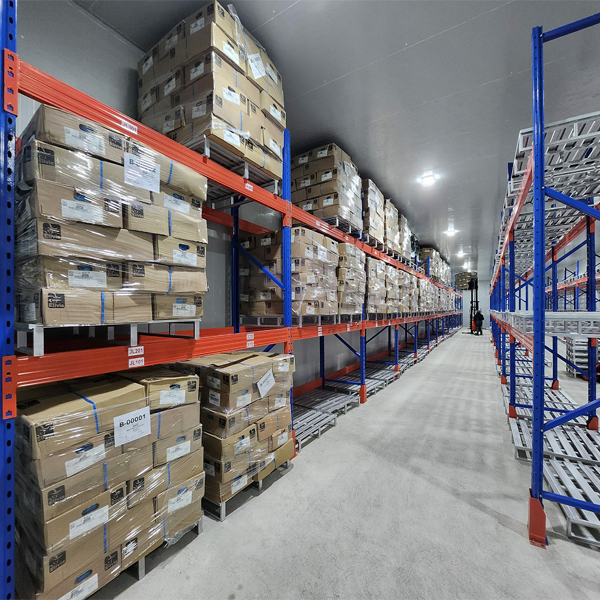
Zoned Temperature Control for Export Processing Zone Cold Rooms
A bonded facility rarely stores one product at one temperature. Seafood exporters may need blast freezing, frozen storage, and chilled processing in the same footprint, while fruit exporters need a tighter controlled-ambient room separate from frozen goods.
| Zone | Set point | Typical goods | Key design concern |
|---|---|---|---|
| Chilled | 0°C to +4°C | Meat, dairy, prepared foods | High humidity and air throw |
| Frozen | -18°C to -22°C | Seafood, vegetables, pastries | Compressor capacity at hot ambient |
| Blast freeze | -35°C | IQF products, meat portions | Air velocity and pull-down time |
| Controlled ambient | +10°C to +15°C | Fruit, vegetables, fresh export | Respiration heat and moisture loss |
We built a multi-temperature facility in Manta, Ecuador for a seafood exporter where blast freezing, frozen storage, ice storage, and processing were linked in one production loop. Keeping the processing room at 5°C to 10°C while the blast freezer pulled down to -35°C relied on separate condensing units matched to each zone's heat load, not one oversized system trying to cover all rooms.
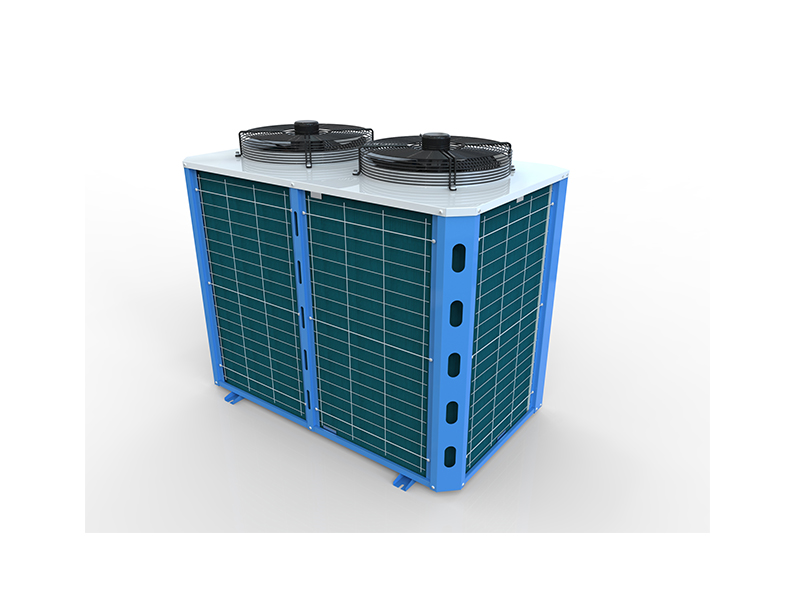
Refrigeration Selection for Customs Bonded Cold Storage
Refrigeration load in a bonded cold room differs from a standard warehouse because door openings follow inspection schedules. A customs inspection can keep the door open longer than a normal loading cycle, and the system must recover before the audit record shows a temperature excursion. We size condensing units with this door-open recovery in mind, using reciprocating compressors for medium-temperature rooms and two-stage or screw machines for deep freeze applications.
The power supply also deserves attention. Export zones often run on generator backup or shared transformer capacity, so the compressor start-up current and defrost schedule should be checked against the site electrical design. If the room handles high-value goods, a second refrigeration circuit may cost less than a single circuit failure during a bonded goods inspection.
If your program involves bonded seafood or meat that must stay below -18°C during inspection windows, confirm the pull-down recovery time with your equipment supplier before finalizing the BOM. Share your door cycle and product load at meluck@meluckcooling.com.
Panel and Door Specifications That Reduce Inspection Risk
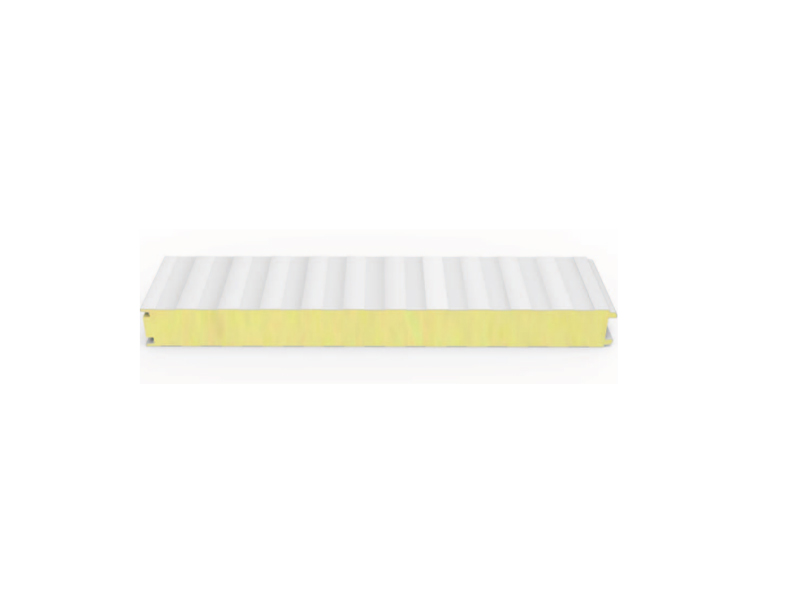
Panel joints are a compliance point in bonded cold rooms because gaps trap condensation and give inspectors a reason to flag hygiene. We use PIR panels with a slip-joint connection for higher insulation value and B1 fire rating in rooms that sit inside multi-tenant processing zones.
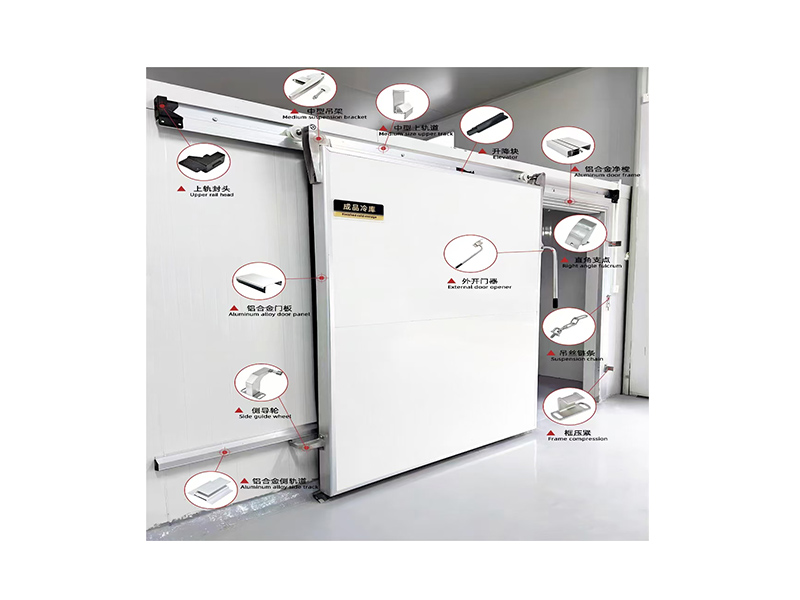
The door matters more than most buyers expect. A manual sliding door with a soft-seal frame and lockable handle gives customs a clear closed state, while a poorly adjusted seal shows frost or condensation during the first audit. Floor insulation and drainage should also be detailed in the layout drawing, because standing water at the threshold weakens both hygiene and thermal performance.
Supplier Requirements for Customs Bonded Cold Storage Projects
Operators often buy panels from one supplier, condensing units from another, and leave the customs layout to a local contractor. The result is a cold room that holds temperature but fails the bonded facility inspection because access control and documentation were not designed as one system. Working with a manufacturer that handles panel construction, refrigeration matching, and on-site commissioning removes that split. MELUCK has 50 technicians for installation and after-sales service, and we support export zone projects from the first site survey through operator training.
Send your proposed bonded floor plan and product temperature requirements to meluck@meluckcooling.com or call +8617369893087, and we will confirm the room layout, refrigeration capacity, and customs access points before you commit.
Common Questions Export Processing Zone Operators Ask Before Buying
Does a customs bonded cold room need a separate room for duty-suspended goods?
Yes, unless the customs authority approves a documented separation scheme. Physical partition walls with separate doors usually get the fastest approval. Bonded and locally cleared goods should not share an open storage area because the inventory control system must show exactly which stock is under duty suspension. If your product mix includes re-export and domestic sale, plan the room as two sealed compartments from the start. Share your intended stock classification and we can advise which partition layout your local authority is likely to accept.
What temperature log interval do customs inspectors usually expect?
It depends on the authority, but most bonded cold storage approvals require continuous recording with a backup that outlasts the longest closure. We configure controllers to log at 15-minute intervals and store at least 30 days of data. For high-value goods, inspectors look for gaps in the data more than the exact set point. If your destination market requires EU or equivalent compliance, ask for audit-ready logs before installation rather than after the first inspection.
Can we install a standard cold room in a customs bonded area?
A standard cold room is rarely enough once the access and seal requirements are applied. The panel and refrigeration system may be identical, but the door hardware, alarm outputs, and documentation package differ. Buyers usually spend less overall by ordering the bonded version initially than by retrofitting seals and controllers after the first inspection. Ask the supplier to list the customs-specific modifications before comparing prices.
How do we avoid temperature excursions during inspections?
In programs we have supported, the biggest excursion risk is door-open time during an inspection, not equipment failure. The inspector may hold the door open while checking pallet labels, and warm air floods the room. We address this by sizing the evaporator and condensing unit for recovery after a defined door-open period, and by fitting strip curtains or air curtains where customs allows. If your inspection process runs longer than ten minutes, send us the room dimensions and product load at meluck@meluckcooling.com to confirm the recovery time.
If you're interested, check out these related articles:
Ecuador Multi-Temperature Cold Storage Project - Meluck
Myanmar Potato Seed Cold Storage Project - Meluck
With over 15 years of experience as a MELUCK refrigeration engineer, I specialize in the design of cold storage, chillers, ice makers, and cold chain energy-saving systems, providing technical support to distributors and engineering companies worldwide.

meluck