
Refrigeration System Reliability for Critical Cold Rooms
Refrigeration system reliability in mission-critical cold rooms is not built by choosing a larger compressor. Most downtime I have investigated starts before the compressor runs: an undersized condenser, an alarm that was ignored, or a door that stayed open too long during loading. The cold room that holds export seafood, vaccines, or processing work cannot recover slowly. We design cold rooms around the entire failure chain instead of a single component list. Commissioning records from our projects in Ecuador, Egypt, and Peru show the same pattern, that reliability is created before startup and protected by monitoring, spare parts, and a clear response sequence.
Refrigeration System Reliability Starts With the Failure Chain
Most buyers think reliability means selecting a proven compressor and keeping a spare on the shelf. In mission-critical rooms, the compressor is seldom the first failure point. Refrigeration system reliability is the result of the whole chain: heat load, power quality, defrost scheduling, door management, and alarm response. If one link breaks, product temperature rises. I start every reliability review by walking that chain instead of comparing compressor labels.
| What Spec Sheets Cover | What Actually Causes Downtime |
|---|---|
| Compressor capacity at rated conditions | Condenser capacity loss at high ambient |
| Insulation panel thickness | Panel joint air leakage after installation |
| Defrost timer settings | Defrost termination failures that leave coils iced |
| Temperature controller accuracy | Alarm thresholds that no one monitors overnight |
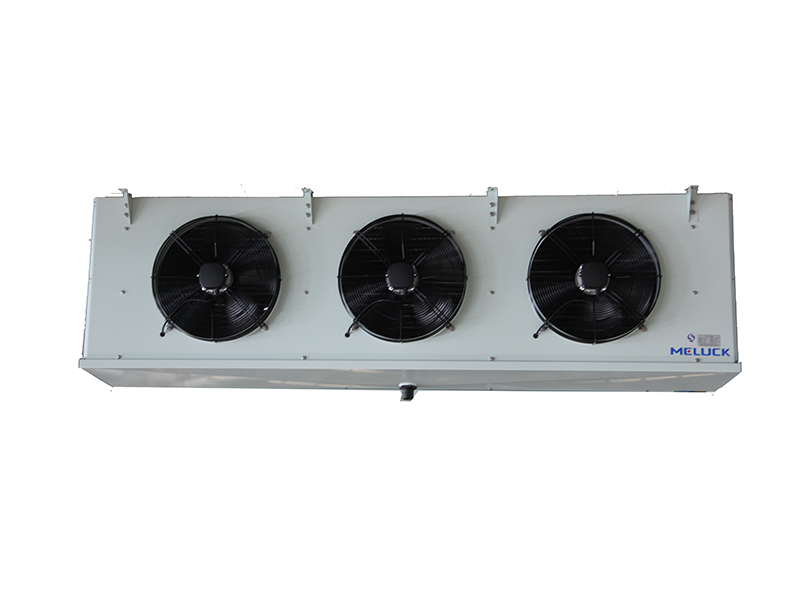
In the Manta, Ecuador project, the original failure was not a weak compressor. The facility lacked ultra-low quick-freezing equipment and an independent ice storage room. Product temperatures changed during manual processing, which led to spoilage and repeated export inspection failures. The fix was a zoned system: blast freezing at -35°C, frozen storage at -18°C, ice storage at -10°C, and processing at 5°C to 10°C. Each zone received a matched Bitzer compressor and air cooler. That removed the manual handling gaps instead of simply adding capacity.
Load Matching and Site Conditions Decide Refrigeration System Reliability
A cold room cannot hold temperature if the refrigeration load was estimated too low. We calculate product mass, entering temperature, pull-down time, door traffic, lighting, fan motors, and defrost heat. Any missed load becomes a permanent capacity gap. For export seafood and processing rooms, I would rather see a realistic door schedule than a safety factor without source data.
Why High Ambient Conditions Change Condensing Unit Capacity
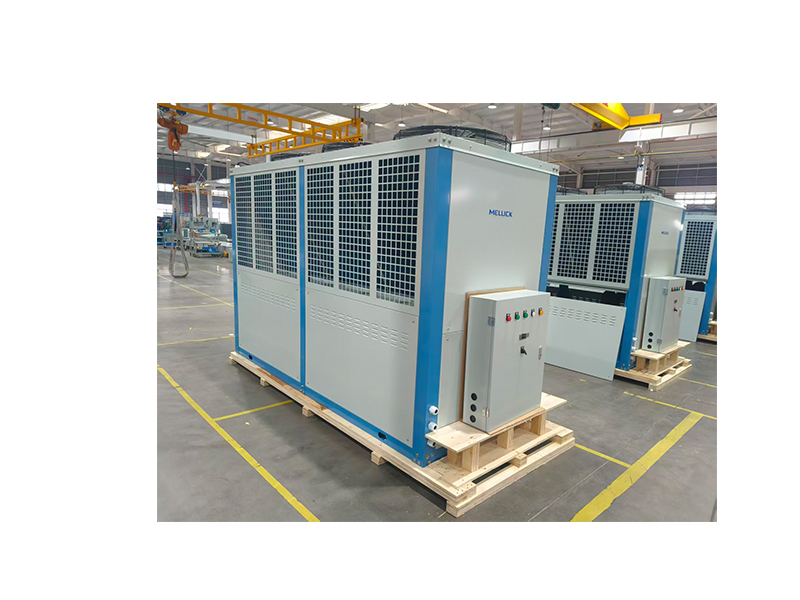
An air-cooled condenser rejects heat into the surrounding air. As ambient temperature rises, the temperature difference across the condenser shrinks, and the condensing unit rejects less heat. A unit selected at 32°C may lose usable capacity on a 45°C roof. On the Cairo French fries project, the plant needed stable packaging at 5°C to 10°C, frozen storage at -20°C, and blast freezing at -35°C. We selected high efficiency Bitzer compressors and industrial air coolers specified for Egypt's hot climate and 24/7 operation. The sequence worked because each zone's heat load and ambient condition were calculated separately.
What 60Hz Power Means for Export Cold Room Projects
A compressor or fan motor rated for 50Hz will run faster on 60Hz power. That changes capacity, amp draw, and sometimes oil return. Before we ship to a project country, our engineers confirm motor frequency, control voltage, and overload settings against the site supply. In markets where 60Hz power is common, this check is as important as ambient temperature. The same applies to condenser fans and defrost heaters.
Commissioning Exposes Reliability Gaps Before Startup
A cold room can be mechanically complete and still fail on its first hot day. Commissioning is the first time the system runs as a complete chain. We treat it as a test, not a formality.
What Should a Commissioning Checklist Verify Before Handover?
The minimum checks we run include insulation envelope integrity, panel joint seals, door gasket contact, and floor seal condition. On the refrigerant side, we verify subcooling, superheat, oil level, and leak tightness. Controls are checked for the correct setpoint, alarm delay, defrost termination temperature, and door switch behavior. Power checks include voltage, phase rotation, and safety interlocks. Each check produces a record, not a verbal confirmation.
Why Do Pull Down Tests Reveal Hidden Reliability Issues?
A pull-down test runs the empty room from ambient to target temperature. It exposes weak capacity, uneven airflow, slow defrost recovery, and door sealing problems before product enters. On the Peru avocado project, we pulled the room to a stable 10°C with a tolerance of ±0.5°C before the client loaded fruit. The two 20HP units and ceiling evaporators achieved that because the air distribution and insulation were verified first. Pre-cooling then slowed ripening and cut rejection from around 15 percent to below 4 percent.
If your cold room runs at high ambient, on generator power, or with long loading cycles, confirm condensing unit derating and defrost sequence before you finalize the equipment list. Send your target temperature, product type, daily throughput, and site voltage to meluck@meluckcooling.com.
Spare Parts and Remote Monitoring Keep Recovery Short
A mission-critical room needs a recovery plan, not only a maintenance plan. When a fault occurs at night or during peak season, downtime is controlled by how fast the fault is identified and corrected.
What Spare Parts Actually Prevent Long Downtime?
The parts I recommend keeping on site are contactors, fuses, filter driers, fan blades, door gaskets, defrost heaters, temperature controllers, and pressure switches. These are the parts that fail without warning. A spare compressor is less useful if the system has no bypass procedure or the oil charge is wrong. We stock spares to match each exported system and train operators on the replacement tasks that can be done safely without a technician.
For larger systems, we use PLC touchscreen control with remote monitoring. A fault signal reaches the operator before the cold room temperature rises far enough to damage product. On the Egypt French fries plant, the monitoring and alarm sequence kept product loss and quality defects below 2 percent after commissioning.
Refrigeration System Reliability Planning Ends With a Specification Review
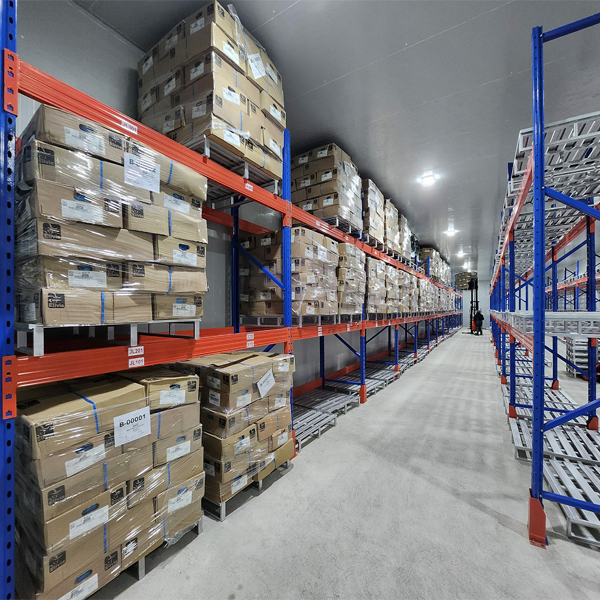
Refrigeration system reliability planning is not a catalog exercise. It starts with the load, the site conditions, and the recovery plan. We review cold room dimensions, product type, storage temperature, daily throughput, door traffic pattern, and power details before we propose equipment. That review lets us match condensing units, evaporators, panels, and controls to the actual operating condition rather than a generic capacity range.
Send your cold room dimensions, target temperature, product type, and power supply details to meluck@meluckcooling.com. For urgent project timelines, call +8617369893087. Our engineering team will return a specification review and an equipment recommendation with commissioning and after-sales service included.
Common Questions About Refrigeration System Reliability
Does adding a second condensing unit make a cold room reliable?
A second unit only improves reliability if the system is designed around automatic changeover and the load is matched to both units. Many buyers treat backup equipment as a substitute for load calculation. The more common failure points remain power supply, door seals, defrost controls, and alarm response. A spare compressor or condensing unit changes the outcome only after the failure is detected and the switchover works. Before adding redundancy, verify the electrical panel, defrost sequence, and alarm routing. That yields more protection than a second compressor sitting disconnected.
How often should mission-critical cold rooms be serviced?
At least quarterly for refrigeration checks, with monthly operator checks on door seals, condenser fins, defrost operation, and alarm logs. The quarterly service should include subcooling and superheat verification, oil level and acid testing if indicated, contactor inspection, and sensor calibration. Monthly checks do not need a technician. They are visual and log based. The key is that the checks are recorded and trended, not completed mentally. A rising discharge pressure or a longer defrost time is an early warning. Those small changes show up only when someone looks at the log regularly.
Is a generator enough to protect refrigeration during power cuts?
It depends on generator sizing, transfer time, and how the cold room restarts. If the generator is undersized, the compressor may struggle to start, or the voltage drop may trip controls. If transfer time is long, the room gains heat before cooling resumes. A generator works as part of a wider power protection plan that includes phase monitoring, restart delay, and alarm verification. We review the starting current and total connected load before confirming that a generator can carry the system. Oversizing the generator without checking the transfer switch can still leave the cold room down.
What should I confirm before sourcing equipment for a high ambient site?
In high ambient projects we have commissioned, the decisive checks are condensing unit derating, condenser coil surface, and control settings for hot starts. A coastal site with high humidity adds another layer because coil corrosion and fin spacing affect long term performance. I ask for the site location, maximum ambient temperature, power frequency and voltage, product type, and required storage temperature. With that data, we can confirm the right equipment match instead of guessing from a catalog. Share your cold room dimensions, target temperature, and power details with us at meluck@meluckcooling.com and we will confirm the configuration.
If you're interested, check out these related articles:
Blast Freezer Room Solutions -40C~-60C - Meluck
Processing Room Solutions for Food Plants - Meluck
Freezer Room Solutions -25C~-18C - Meluck
Myanmar Potato Seed Cold Storage Project - Meluck
Chiller Room Solutions -10C~10C - Meluck
With over 15 years of experience as a MELUCK refrigeration engineer, I specialize in the design of cold storage, chillers, ice makers, and cold chain energy-saving systems, providing technical support to distributors and engineering companies worldwide.

meluck