
Mushroom Cold Room Humidity and Temperature Control Guide
Mushrooms are one of the most perishable commercial crops in the cold chain. They carry roughly 90% water by weight, they have no thick protective skin, and they keep respiring after harvest. In a mushroom cold room, temperature and humidity are not separate settings. They work as one system, and when either drifts, product quality drops within hours.
The management challenge changes with the stage. A cultivation room operates in the 13°C to 26°C band with relative humidity between 85% and 95%, plus controlled carbon dioxide and fresh air exchange. A storage room operates near 0°C to 2°C with relative humidity around 90% to 95%. Both environments punish refrigeration equipment that was sized for ordinary dry cold storage, because sustained high humidity changes coil behavior, defrost frequency, panel sealing, and condensation control.
Why Mushroom Rooms Need Separate Humidity and Temperature Control
Cooling air removes moisture. When a standard evaporator pulls a room down quickly, it also strips water from the air, and the mushrooms give up more water trying to balance the vapor pressure. That is why a mushroom room cannot rely on temperature control alone. The refrigeration system must remove heat without over-drying the room, which means a larger coil surface, a smaller temperature difference across the coil, and a humidity control loop that adds moisture when the dew point falls too low [1][2].
Cultivation rooms add a second layer. Mushroom mycelium and fruiting bodies respond to carbon dioxide concentration, fresh air volume, and temperature oscillations, not just the average reading. A button mushroom room held at 16°C to 18°C during pinning can still fail if the CO2 level stays above about 1,000 ppm, because pins become thin and caps stay small [2]. That makes the cultivation room a climate room more than a cold store.
Cultivation-Phase Parameters by Mushroom Type
Cultivation parameters shift by species and by growth phase. The figures below are the typical operating bands used in commercial production; individual strains and casing mixes will move the setpoints slightly [2][3].
| Mushroom type | Spawn run | Pinning and primordia | Fruiting |
|---|---|---|---|
| Button mushroom | 22°C to 25°C, 90% to 95% RH | 16°C to 18°C, 90% to 95% RH, CO2 below 1,000 ppm | 16°C to 18°C, 85% to 92% RH |
| Oyster mushroom | 24°C to 28°C, 95% to 100% RH | 12°C to 18°C, 95% to 100% RH, CO2 below 1,000 ppm | 15°C to 21°C, 85% to 95% RH, CO2 below 800 ppm |
| Shiitake | 21°C to 27°C, 95% RH | 16°C to 21°C, 90% to 95% RH, cold strains 10°C to 16°C | 16°C to 21°C, 85% to 90% RH |
| Enoki | 22°C to 25°C, 95% RH | 14°C to 16°C, 90% to 95% RH | 14°C to 16°C, 90% to 95% RH |
These ranges matter because several species pass through more than one room. Large farms split spawn run, pinning, and fruiting into separate climate zones so each space holds a narrow band without cycling the whole building. Smaller growers often accept a compromise room and lose yield during the transition between phases [2].
Storage-Phase Temperature and Humidity Settings
After harvest, the target changes completely. The goal is to slow respiration and water loss without freezing the tissue or leaving free water on the cap surface. Free surface water feeds bacterial blotch and rapid decay in button mushrooms, which is why storage humidity runs high but not saturated [1][4].
| Mushroom type | Storage temperature | Relative humidity | Expected fresh shelf life |
|---|---|---|---|
| Button mushroom | 0°C | 95% | 5 to 7 days |
| Oyster mushroom | 0°C to 2°C | 90% to 95% | 7 to 14 days |
| Shiitake | 0°C to 2°C | 85% to 90% | 14 to 21 days |
| Enoki | 0°C to 2°C | 90% to 95% | 7 to 14 days |
The narrow window explains why mushroom storage rooms fail more often than they should. A room that holds 2°C but allows the humidity to fall to 80% will still shrink caps, soften texture, and lose saleable weight. A room that holds 98% relative humidity at 2°C will fog surfaces and encourage surface spoilage [1].
Mushrooms and table grapes share a similar post-harvest problem: a crop that transpires and respires fast, where a few points of humidity difference change shelf life and saleable weight. <Grape Cold Storage: Temperature and Humidity Control Guide> covers the same humidity-sensitive post-harvest control approach in fruit cold rooms.
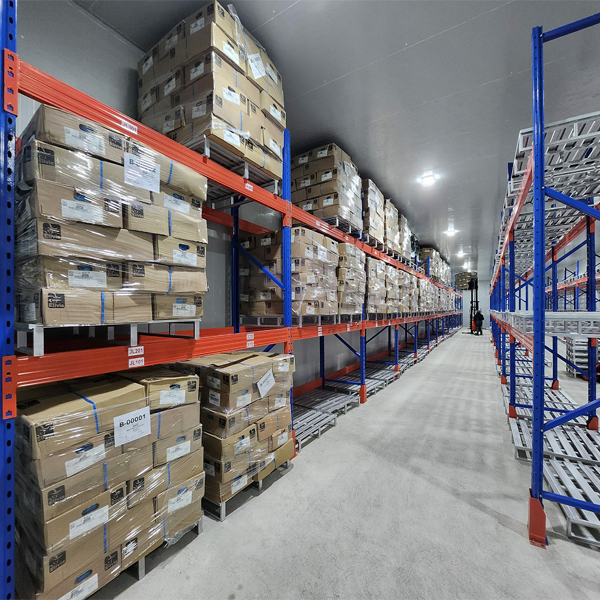
For longer holding, processed mushroom products such as blanched slices and IQF pieces are frozen and held at -18°C, where respiration stops and texture loss shifts to ice crystal management rather than humidity control. Fresh mushrooms do not tolerate that route without processing.
Cold Room Equipment for High-Humidity Mushroom Environments
The equipment set for a mushroom room differs from a general dry cold room in four places.
First, the evaporator. A high-humidity room needs a coil with a large surface area and a small temperature difference across it, so the coil removes heat without pulling too much moisture from the air. The casing should be corrosion-resistant, the drain pan deep enough for continuous condensate, and the air throw gentle rather than a hard jet toward the beds. Standard air cooler lines for chiller rooms are the starting point, with a humidity-tolerant finish for cultivation duty.
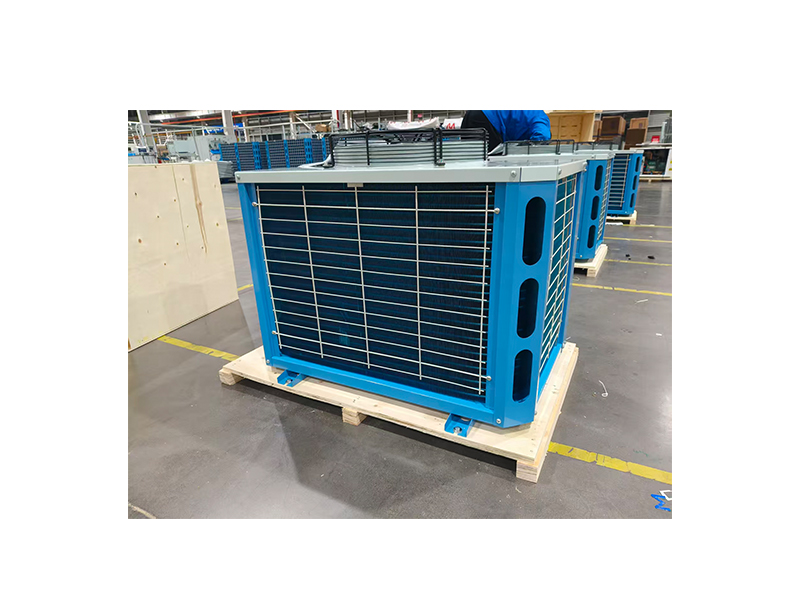
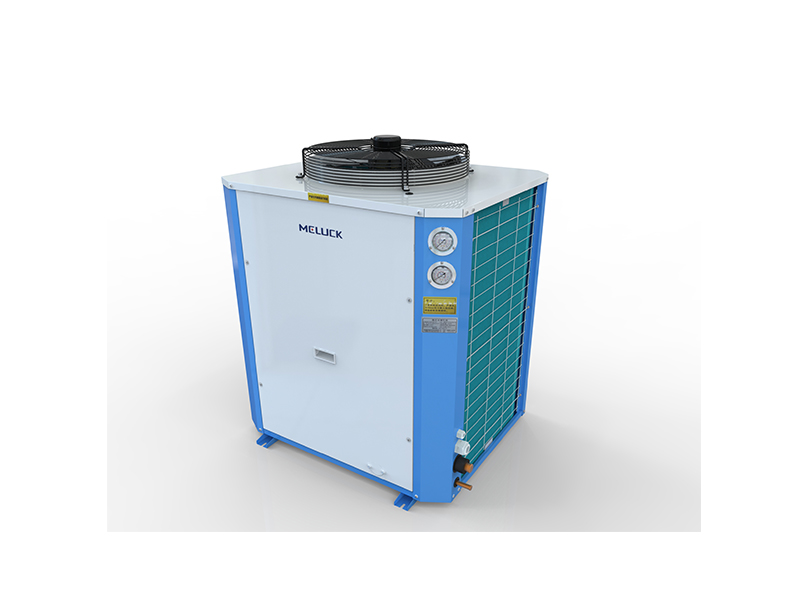
Second, the condensing unit. Mushroom rooms run near setpoint for long stretches, so the unit needs stable part-load operation rather than raw peak capacity. Scroll and semi-hermetic reciprocating units with broad capacity matching work well here. MELUCK builds these around <Bitzer condensing units> sized from small grower rooms to full farm zones, paired with the coil type above.
Third, the envelope. Panels must stay sealed under sustained high humidity and repeated washdown. High-density PU and <PIR cold room panels> with vapor-tight joints keep moisture from condensing inside the panel core and degrading insulation. The flashing at joints, corners, and door frames matters more in a mushroom room than in a frozen store.
Fourth, the control loop. A mushroom room needs at least two sensors, a humidity sensor and an air temperature sensor, plus a product probe in larger stores. The controller should accept a target band, stage humidification and dehumidification, and log data. Remote monitoring is valuable for cultivation phases because pinning rooms can drift overnight and wipe out a flush before the morning check.
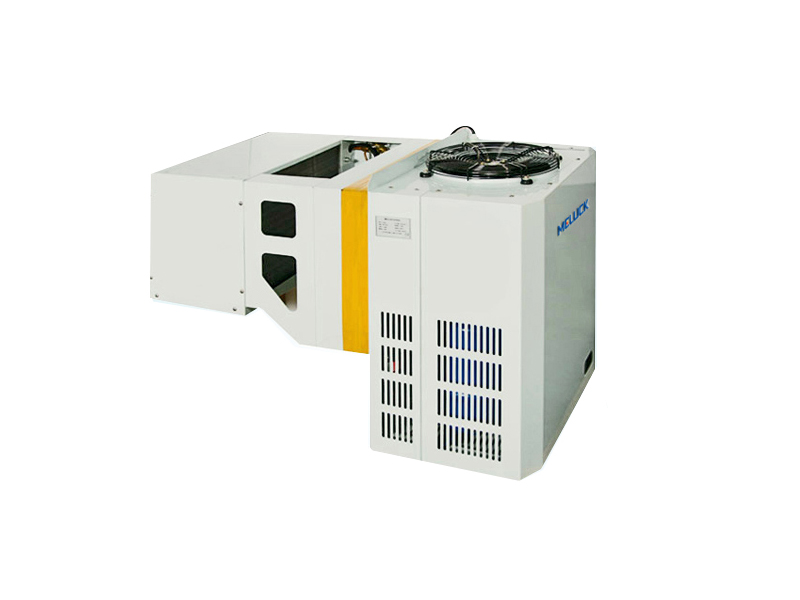
Small cultivation rooms and trial farms can start with a <monoblock refrigeration unit>, but monoblocks suit sealed, low-air-exchange rooms better than fruiting rooms that need continuous fresh air and CO2 exhaust. Fruiting rooms almost always justify a split system with a remote condenser and an indoor evaporator, because the heat load moves in steps during flush cycles.
Specify the Right Set for Your Mushroom Room
Choosing between a monoblock, a split condensing unit, and a full climate-room package depends on room volume, cropping cycle, and fresh-air exchange rate. The practical method is to list room dimensions, the target phase bands, peak harvest weight, and daily flush frequency, then run the load calculation against local summer conditions instead of copying another farm's equipment list.
A load calculation for a mushroom room is different from a warehouse calculation because the latent load from humidification and product respiration is real and continuous. If you are sizing a first room or converting an existing structure, send the room dimensions and mushroom type to meluck@meluckcooling.com. A technical proposal with panel, condensing unit, evaporator, and control selection carries less risk than a catalog guess.
Airflow, Condensation, and Defrost Design
Air distribution inside a mushroom room should be gentle and even. Directed high-velocity air dries the cap surface faster than the stem, and overdried caps crack or brown. Commercial fruiting rooms generally keep air movement low and uniform across the bed surface, with enough exchange to hold CO2 in range without creating dead zones [2].
Condensation control is the second engineering issue. Doors, panel joints, floor gullies, and evaporator drains all collect moisture in a 90% to 95% humidity room. Drain lines must slope and include traps so room air does not feed condensate back into the room. Door frames benefit from heat tracing where the room faces a warm corridor, and vapor barriers on the warm side of panels stop interstitial condensation.
Defrost is the third issue. A humid room above 0°C will still frost a coil running at a suction temperature below 0°C. The defrost schedule should be short and frequent rather than long and rare, because long off-cycle defrosts add sensible heat to the room and widen the temperature swing. Electric or off-cycle defrost with a drain heater works for most mushroom rooms, while hot-gas defrost fits larger coil installations.
A mushroom fruiting room and a banana ripening room face the same control problem: holding temperature, humidity, and gas levels inside a narrow band to steer a living crop. <Banana Ripening Room vs Cold Storage for Importers> covers the climate-room logic that also applies to mushroom cultivation spaces.
Common Control Failures That Ruin Mushroom Beds
Most mushroom room losses come from a small number of repeated faults.
Sensor drift. Humidity sensors placed next to the evaporator read a different value than the bed zone. Without calibration or a second sensor, the controller corrects the wrong air. Mushroom rooms need sensor placement rules, not just a smart controller.
Overcooling at night. When outdoor temperature drops, a fixed-capacity unit can pull the room below setpoint, crossing the dew point and dripping water onto caps. Dripping water on button mushrooms invites bacterial blotch within days [1].
Oversized evaporator. A coil that cycles hard pulls humidity down fast, dries the caps, and then shuts off while the humidifier fights back. The result is oscillation, not control. Coil surface and airflow should be matched to the latent load, not to a worst-case sensible peak.
Saturated storage air. Running fresh mushroom storage at 98% to 100% relative humidity sounds protective but produces free surface water. Stored mushrooms keep better at 90% to 95% with steady airflow and low temperature than in a fogged room [1][4].
Aggressive defrost. Long defrost cycles push room temperature up and melt frost into water that either re-freezes or drains poorly. Short frequent defrost cycles keep the coil dry with less temperature excursion.
Door discipline. Every warm, humid air entry adds condensation load and forces the coil to recover. Interlocked doors, strip curtains at loading points, and limited door openings reduce the visible fogging that follows a busy packing shift.
Humidity control cuts both ways. Dried products represent the opposite risk, as material that absorbs moisture and molds when a room runs too humid. <Cold Storage for Nuts & Dried Fruits: Prevent Rancidity & Mold> covers moisture and mold prevention from the other direction and is useful when the same facility handles dried mushroom slices.
Get a Mushroom Cold Room Designed Around Your Growing Cycle
MELUCK designs and supplies complete mushroom cold storage and cultivation climate rooms: PU and PIR insulated panels, heat-matched condensing units, high-humidity evaporators, staged humidification, controllers with remote monitoring, and full installation, commissioning, and operator training.
Because mushroom rooms run humid and delicate, the system is specified around your crop phases first and the refrigeration hardware second. If you can share the room size, mushroom type, daily output, and the climate at the site, the engineering team can propose a configuration matched to those conditions.
For a mushroom cold room quotation or a cultivation room design review:
- Email: meluck@meluckcooling.com
- Phone / WhatsApp: +8617369893087
FAQ
What is the ideal humidity for a mushroom cold room?
For fresh mushroom storage, the practical band is 90% to 95% relative humidity depending on species. Fruiting rooms run 85% to 95% relative humidity. Below about 85%, caps shrivel and lose weight; above 95% in storage, free surface water invites bacterial blotch and decay [1][4].
What temperature should a mushroom storage cold room run at?
Fresh mushrooms store best at 0°C to 2°C with high relative humidity. Button mushrooms do best right at 0°C, while oyster, shiitake, and enoki tolerate 0°C to 2°C without chilling injury risk [1].
Can one cold room serve both cultivation and storage?
Not well. Cultivation rooms run between 13°C and 26°C with CO2 control and 85% to 95% relative humidity, while storage rooms run near 0°C to 2°C. A single room can carry two setpoint profiles only if the evaporator, controller, and fresh-air system are selected for both ranges, which usually drives up cost and compromises each phase.
What evaporator design works best in a high-humidity mushroom room?
A large coil surface with a small temperature difference, corrosion-resistant casing, a deep drain pan, low air velocity, and a short defrost schedule. The goal is to remove heat without stripping moisture from the air near the beds.
How do you prevent condensation from dripping onto mushroom beds?
Position the evaporator away from direct bed airflow, keep the drain pan and drain line trapped and sloped, run short frequent defrosts, vapor-seal panel joints, and control door openings. Overcooling below dew point during cool nights is a common cause, so part-load control or a capacity step helps.
Which mushroom species needs the lowest storage humidity?
Shiitake stores best at 85% to 90% relative humidity, lower than button or oyster mushrooms, to reduce surface wetness and slow spoilage.
References
[1] U.S. Department of Agriculture, Agricultural Research Service. The Commercial Storage of Fruits, Vegetables, and Florist and Nursery Crops. Agriculture Handbook 66, revised edition, Washington, D.C., 2016.
[2] Penn State Extension, College of Agricultural Sciences, The Pennsylvania State University. Mushroom Production: Environmental Management in Growing Rooms.
[3] Food and Agriculture Organization of the United Nations. Post-harvest Management of Fresh Mushrooms. FAO Agricultural Services Bulletin.
[4] Cantwell, M. and Nie, X., University of California, Davis, Postharvest Technology Center. Mushroom: Recommendations for Maintaining Postharvest Quality.
If you're interested, check out these related articles:
Bitzer 2-Stage Compressor for Ultra-Low Temp Cold Rooms
Cold Room for Bakery Distribution: Chiller and Freezer Zones
Cold Room Project Kenya: High Ambient Equipment Selection
Bitzer Screw Compressor Condensing Units for Deep Freeze Storage
With over 15 years of experience as a MELUCK refrigeration engineer, I specialize in the design of cold storage, chillers, ice makers, and cold chain energy-saving systems, providing technical support to distributors and engineering companies worldwide.

meluck