
Cold Storage for Nuts & Dried Fruits: Prevent Rancidity & Mold
Storing nuts and dried fruits at ambient temperatures is a slow-motion quality failure. A cold room that keeps lettuce crisp will ruin almonds within weeks if the humidity isn’t tightly controlled. I’ve seen processors lose entire shipments because a standard chiller room, perfectly fine for vegetables, created condensation inside nut packaging and kicked off mold growth that inspection rejected at the port. The difference between a cold room that preserves nuts for twelve months and one that accelerates spoilage comes down to three design parameters: temperature stability below the fat oxidation threshold, low relative humidity without overdrying, and airflow velocity that doesn’t pull moisture into the product.
Why Standard Cold Rooms Don’t Work for Nuts and Dried Fruits
A typical chiller room for fresh produce runs at 0°C to 4°C with 85% to 95% relative humidity. Those conditions are exactly what nuts and dried fruits cannot tolerate. The problem is water activity. Almonds, cashews, walnuts, and dried apricots have water activity (aw) between 0.3 and 0.6. In that range, mold growth is suppressed but not impossible when the surrounding air is saturated. If the cold room evaporator is designed for high humidity produce, it removes sensible heat but little moisture. The air stays wet. Over weeks, the packaging or the product surface equilibrates with that wet air, local aw rises above 0.65, and Aspergillus or Penicillium colonies take hold.
Rancidity works on a parallel track. Unsaturated fats in nuts oxidize faster as temperature rises. The reaction rate roughly doubles for every 10°C increase above the optimal storage range. A room running at 10°C to 12°C might feel cool, but over three months the free fatty acid content in walnuts climbs past the sensory threshold. I’ve tested shelf life projections using accelerated oxidation models for various nut types, and the difference between 8°C and 12°C can cut shelf life by 40% or more. Most cold rooms built for general food storage are not designed to hold a steady 5°C to 8°C with humidity under 55%, which is where nuts and dried fruits need to be.
Temperature Control to Slow Fat Oxidation
The primary target for nut cold storage is a consistent +5°C to +8°C for medium-term storage up to twelve months. Almonds and hazelnuts tolerate the lower end; walnuts and pecans, with higher oil content, benefit from storage closer to 0°C to 4°C for long-term holding. Dried fruits like raisins, dates, and apricots generally store well at 5°C to 10°C, but the upper limit must stay below 12°C to prevent sugar crystallization and color darkening.
Achieving that narrow band requires a condensing unit capable of handling a low-sensible heat load. Nut storage rooms generate almost no respiration heat, unlike fruit or vegetable rooms. The refrigeration load is dominated by infiltration through door openings, wall gain, and occasional fan heat. Oversizing the compressor leads to short cycling, temperature swings, and poor humidity control. For a typical 50-square-meter nut storage room holding 20 tons of product, I’d specify a Bitzer 5HP to 7HP reciprocating condensing unit paired with a low-velocity evaporator. The Bitzer semi-hermetic compressors are reliable under frequent cycling that comes with low-load conditions, and the capacity control is precise enough to avoid temperature overshoot.
Defrost strategy is another factor. Electric defrost is standard for freezer rooms, but for nut and dried fruit rooms running above freezing, off-cycle defrost is usually enough. Introducing heat into a low-load room during electric defrost pushes the temperature up and creates short-term humidity spikes. We always recommend off-cycle defrost with a fan delay to minimize moisture reintroduction.
Humidity Control Is What Prevents Mold
Temperature alone doesn’t stop mold. I’ve inspected rooms where the thermostat read a steady 6°C but the relative humidity was 78%, and mold was visible on the ceiling panels within weeks. Nuts are hygroscopic. A whole almond at 5% moisture content will pull water from air above 55% RH. The target for most nut and dried fruit storage is 50% to 60% RH, with an absolute ceiling of 65%. For dried fruits with higher residual moisture, like figs and dates, the range can be slightly higher, 60% to 65%, but never above 70%.
The refrigeration system’s ability to dehumidify depends on the evaporator coil surface temperature and the air-on temperature. To strip moisture, the coil must run consistently below the dew point of the return air. In a 6°C room at 55% RH, the dew point is around -2°C to -3°C. That means the evaporator must operate with a coil temperature below that, which a standard medium-temperature air cooler may not achieve if it’s sized too small or if the refrigerant suction pressure is set conservatively. I typically select a DD-series evaporator with a larger surface area and lower fin spacing, allowing it to pull down humidity while maintaining the room temperature setpoint without excessive cycling.
Two practical tips from our commissioning experience: always install a humidistat in the return air path, not on the wall near the door, and never rely on floor drains inside the room. Floor drains in a nut storage room become evaporation sources that fight the dehumidification system. Any water inside the cold room, including from wet cleaning, must be removed immediately and the floor dried. We designed a nut storage facility in the Middle East where the client insisted on a floor drain for wash-down, and within four months the ambient humidity near the drain area was 15% higher than the rest of the room, causing localized mold on pallets stored nearby.
Airflow and Evaporator Selection
Air movement inside a nut storage room is a balancing act. Too much airflow accelerates moisture loss from the product surface, causing dried fruits to harden and nuts to develop an undesirable dry, crumbly texture. Too little airflow creates dead zones where humidity stratifies and mold finds a foothold.
The industry rule of thumb for fresh produce, which often calls for air circulation rates of 80 to 100 air changes per hour, doesn’t apply here. For nuts and dried fruits, we aim for 40 to 60 air changes per hour, with air velocity across the product below 0.3 meters per second. This is achieved by selecting an evaporator with low-speed fans, typically six-pole or eight-pole motors rather than four-pole, and by placing the evaporator to create a gentle horizontal air pattern rather than a direct blast onto stored product.
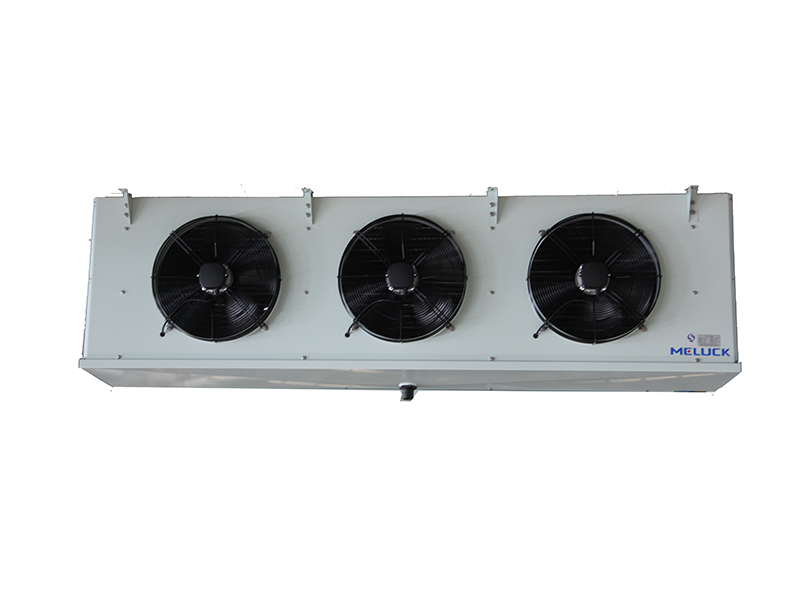
Product stacking also matters. Pallets should be arranged with aisles parallel to airflow, and there should be at least 150mm clearance between the top of the stack and the ceiling evaporator. Stacking product too tightly or too high blocks air return and forces the unit to short-cycle. In a cashew storage room we commissioned in Southeast Asia, the operator had stacked bags floor-to-ceiling, and the temperature difference between the top and bottom of the stack was 7°C. Redistributing the load and adding a second evaporator solved it.
Insulation, Panel Selection, and Food Safety
The cold room envelope matters just as much as the refrigeration system. Nuts and dried fruits are often exported, so the storage facility may need to meet import country standards, which increasingly require fire-rated insulation. I always recommend PIR (polyisocyanurate) panels with a B1 fire rating over standard PU (polyurethane). PIR panels provide better thermal resistance per millimeter and, critically, do not contribute to flame spread the way PU can in a fire. For a chiller room holding nuts at 6°C, 100mm PIR panels offer sufficient R-value and meet most international food safety audit requirements.

Floor insulation is another detail that gets missed. A nut storage room built on an uninsulated concrete slab will condense moisture at the floor-wall junction if the ground temperature is high and the room is cold. We always install 100mm of XPS insulation under the floor screed, with a vapor barrier on the warm side to prevent moisture drive. It’s a small upfront cost that pays back in mold prevention.
Hygiene from a food safety standpoint is straightforward but not always practiced. Dry nuts and fruits don’t generate the organic residues that fresh produce does, so daily wash-downs aren’t necessary. But quarterly deep cleaning with a dry vacuum and food-grade sanitizer, combined with annual swab testing for mold spores on panel surfaces and evaporator fins, is a good protocol. I’ve seen a food safety audit fail because the inspector found black dust accumulation on evaporator fins in a dried fruit room, which turned out to be mold spores from a previous ambient storage area that had never been cleaned. Keeping a simple cleaning log and scheduling a pre-season inspection solves this.
Equipment Selection for Long-Term Nut and Dried Fruit Storage
The most reliable nut storage rooms I’ve commissioned use a straightforward configuration: a Bitzer or Copeland condensing unit sized for the low-sensible load, a low-speed DD evaporator with corrosion-resistant epoxy-coated fins, a digital controller with humidity readout, and a PIR panel cold room with a manual sliding door. This setup, correctly installed, will hold 5°C to 8°C at 50% to 55% RH year-round with energy consumption around 15 to 20 kWh per day for a 50-square-meter room.
For larger facilities, parallel compressor racks offer better staging and redundancy, but for most nut processors handling 20 to 100 tons, a single 5HP to 15HP condensing unit with a matching evaporator is the right balance of cost and performance. The key is specifying the room from the start as a low-humidity, medium-temperature application, not as a standard chiller room that will later be “adjusted.” That adjustment usually fails.
If you’re planning a cold room for nuts or dried fruits and the refrigeration supplier hasn’t asked about your product’s water activity, target humidity, and stacking pattern, you’re probably looking at a system designed for general produce that will create more problems than it solves. We design every nut storage room starting with the product’s post-harvest physiology and working backward to the evaporator coil temperature, because that’s the difference between a facility that preserves quality and one that quietly destroys it.
Common Questions About Nut and Dried Fruit Cold Storage
Is it possible to store nuts and dried fruits together in the same cold room?
Yes, but only when the temperature and humidity requirements overlap. Most tree nuts store well at 5°C to 8°C and 50% to 55% RH, which is also suitable for low-moisture dried fruits like raisins, apricots, and dates. High-moisture dried fruits such as figs and prunes, which need 60% to 65% RH, should be stored separately or in a partitioned zone if the nuts are sensitive to moisture. In multi-product rooms, always segregate by water activity, not just by commodity type, and monitor humidity at the product level rather than at the thermostat location.
What is the most common mistake in designing a cold room for nuts?
Specifying a standard produce chiller room with a high-humidity evaporator coil. Produce rooms are designed to add moisture to the air; nut rooms must remove it. The wrong evaporator will keep the room cold but humid, accelerating mold growth. The second mistake is oversizing the condensing unit, which leads to short cycling, poor dehumidification, and temperature instability. A correctly sized system runs with longer compressor on-cycles that allow sustained dehumidification.
How do you verify the cold room is working correctly for nut storage?
Install two independent temperature and humidity loggers, one at the return air intake and one at the product level on the farthest pallet. At commissioning, run the room for 48 hours with a dummy load and check that humidity stays below 55% at the set temperature and that the temperature spread between the two loggers is less than 2°C. Also check that the defrost cycle does not push room humidity above 65%, even briefly. If it does, the defrost termination setting is too high or the fans are turning on before the coil is fully dry. Share your product specifications and we’ll confirm the optimal setpoint parameters for your specific nut or dried fruit variety.
If you're interested, check out these related articles:
Myanmar Potato Seed Cold Storage Project - Meluck
Peru Avocado Pre-Cooling Cold Storage - Meluck
With over 15 years of experience as a MELUCK refrigeration engineer, I specialize in the design of cold storage, chillers, ice makers, and cold chain energy-saving systems, providing technical support to distributors and engineering companies worldwide.

meluck