
Cold Room Power Solutions for Remote Locations and Islands
For businesses operating on islands or in remote inland areas, the lack of a stable power grid turns cold storage from a routine investment into a complex engineering challenge. Standard cold room designs assume reliable electricity, but off-grid sites need a power-first approach: sizing generators to handle compressor startup loads, integrating solar-hybrid systems to cut daily fuel costs, and selecting equipment that won’t fail in high humidity and salt-laden air. Over the years, I’ve seen too many projects where the refrigeration system was right but the power supply wasn’t, leading to spoiled cargo and expensive emergency repairs. In this guide, we’ll break down the practical power and equipment strategies that make cold rooms work reliably in remote locations, from small islands in the Pacific to desert processing zones in Africa.
Assessing Your Site’s Power and Cooling Load
Before ordering any equipment, you need a realistic number for both the total cooling load of your cold room and the electrical power required to run it. For remote sites, oversizing the generator is as dangerous as undersizing, an oversized unit runs at low load, wet-stacking and wasting fuel, while an undersized one trips under compressor start-up surge. A common rule of thumb for off-grid cold rooms is to add a 30% margin above the nameplate kW rating of the condensing units, plus another 15% for defrost heaters, lights, and controls. But rules of thumb fail when you don’t account for the local ambient temperature. In Manta, Ecuador, a coastal city where MELUCK installed a multi-zone cold storage facility including a -35°C blast freezer, the design ambient temperature was 35°C, and the condensing units had to be derated by roughly 12% compared to standard tropical ratings. Always perform a load calculation using ASHRAE methods with local climate data, it’s the only way to avoid a system that works in theory but not in reality.
Generator vs Solar-Hybrid: Building a Resilient Power Supply
Off-grid cold rooms typically rely on diesel generators, but fuel logistics can quickly become the biggest operational headache on an island or remote site. I’ve worked on projects where the monthly diesel bill for a single 50kW generator was higher than the lease payment on the cold room itself. The solution is a hybrid system: solar photovoltaic panels with battery storage handle the base load during daylight hours, and a generator takes over at night or during cloud cover, while also covering the high surge currents when a compressor starts.
A properly designed solar-hybrid cold room can cut diesel consumption by 40–60% in tropical regions with good solar irradiation. The key is to size the inverter to handle the compressor’s locked-rotor current, for a Bitzer 20HP reciprocating compressor, that surge can reach 150A at 230V, which many consumer-grade inverters cannot provide. Industrial hybrid inverters with surge ratings of 3x the continuous rating are essential. Also, the battery bank needs to store enough energy to run the cold room through the night without discharging below 50% depth of discharge repeatedly, or the batteries will die within two years. In a recent project in a Pacific island port, we designed a 30kW solar array with an 80kWh lithium battery bank that covered a 5°C chiller room’s load for 18 hours, with the generator only running for 6 hours at night. The fuel saving paid back the solar installation in about 18 months.

For generator sizing, we always recommend a diesel generator with a permanent magnet alternator and an electronic governor, they handle load steps better than capacitor-regulated units. Fuel storage should be at least 30 days of operation in remote areas, with a bunded tank and a water-separation filter.
Choosing Condensing Units for High Ambient and Corrosive Environments
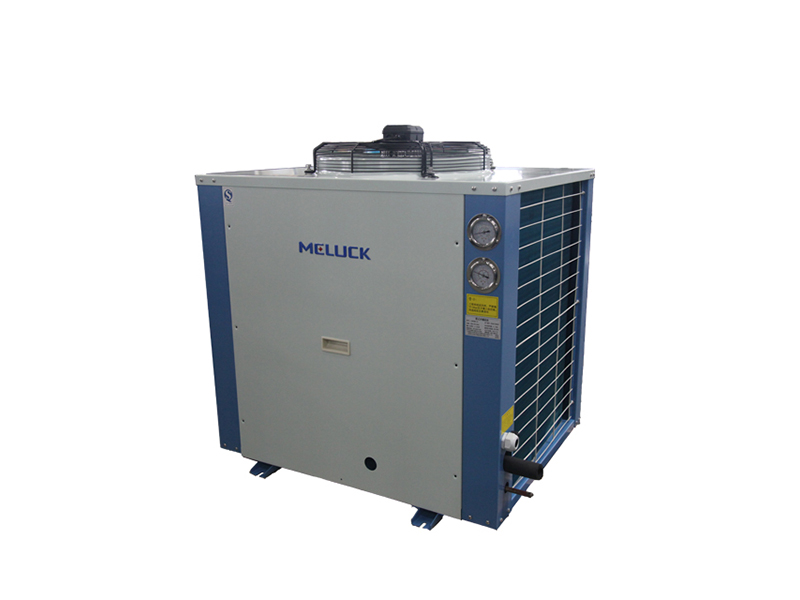
Islands and coastal remote sites expose refrigeration equipment to salt spray, high humidity, and sustained temperatures above 35°C. A standard air-cooled condensing unit designed for moderate climates will fail prematurely. I’ve seen condenser fins corrode into white powder within 18 months on a tropical island. The right choice is a condensing unit with a corrosion-resistant coating, like epoxy-coated copper fins or all-aluminum microchannel coils, and a compressor that is rated for high condensing temperatures without overheating.
Bitzer semi-hermetic reciprocating compressors are a common choice because they can operate with discharge temperatures up to 130°C and are built for industrial duty cycles. At MELUCK, we stock 60Hz-ready Bitzer units specifically for island and remote markets where power frequency differs from the 50Hz grids of Asia or Europe. For example, in the Philippines, where 60Hz is the norm, a 50Hz unit would run 20% faster and burn out quickly. Always specify the correct frequency when ordering.
We also fit oversized condensers, roughly 130% of the nominal capacity, to handle high ambient temperatures without short-cycling the condenser fan. For off-grid sites, a variable-speed condenser fan is worth the extra cost because it allows the condensing unit to run efficiently at partial load, reducing generator stress when the room is already at temperature.
| Ambient Temperature (°C) | Capacity Multiplier for Condensing Unit |
|---|---|
| 25 | 1.0 (nominal) |
| 30 | 1.1 |
| 35 | 1.2 |
| 40 | 1.3 |
| 45 | 1.4 |
Modular Construction and On-Site Assembly in Hard-to-Reach Areas
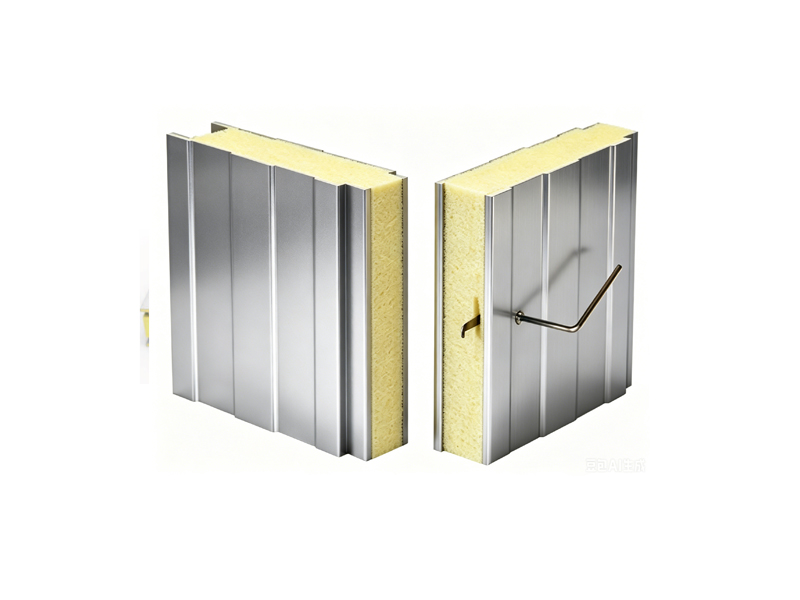
Transporting a complete cold room to an island or a remote mining site demands a different approach than a suburban warehouse project. Here, modular cold rooms built from prefabricated PU or PIR panels offer the best balance of portability and thermal performance. The panels are stacked on pallets, shipped in a single container, and assembled with simple cam-lock systems by a local crew, no heavy welding or on-site foaming needed. We recommend using 100mm thick PIR panels for freezer rooms and 80mm for chillers, which gives you a U-value around 0.2 W/m²K, sufficient to minimize heat gain even with a 40°C ambient temperature.
For remote installations, we also recommend adding an extra layer of moisture barrier under the floor panels and using a suspended floor with a ventilated cavity to prevent ground moisture from rotting the insulation. In the Myanmar tomato cold room project, we used this method to keep the floor dry despite heavy monsoon rains, and the panel integrity remained good after three years.
On islands without a crane, manual sliding doors are easier to install than swinging doors because they don’t require perfectly level frames. They also seal better against wind-driven rain. And it’s wise to order an extra set of panel gaskets and door seals with the initial shipment, a lost seal in a remote location can stop operations for weeks while a replacement is couriered out.
Maintenance and Remote Support for Long-Term Reliability
When a cold room fails on a remote island, a technician can’t simply drive over. That’s why we design remote cold rooms with a low-intervention philosophy: equipment that self-monitors and needs minimal hands-on maintenance. Each refrigeration unit should be fitted with a PLC controller that logs temperature, compressor run hours, and alarm events, and can be accessed via GSM or satellite modem. I’ve used these controllers to diagnose a faulty condenser fan on a project in Ecuador while sitting in Shanghai, the on-site staff simply swapped the fan motor after a video call, saving a two-week service trip.
Preventive maintenance in remote areas boils down to a few simple rules: clean the condenser coil every 30 days with a soft brush or a backpack blower if compressed air isn’t available; check the door seals monthly; and keep a spare set of contactors, fuses, and a condenser fan motor on site. The biggest risk is not the compressor, but a failed capacitor or a tripped overload that nobody notices. We also recommend a physical temperature alarm with a loud siren visible from the operator’s house, it’s more reliable than a remote alert that might miss a signal drop.
Securing Your Investment: What to Ask a Supplier Before Ordering for a Remote Project
Building a cold room in a remote location is a long-term commitment, and the choice of manufacturer matters more than the price tag. I always tell customers to ask three questions: First, does the supplier have case studies from similar climatic zones? Our projects in Manta (Ecuador), Cairo (Egypt), and Myanmar’s tropical highlands prove that the equipment can handle heat and humidity. Second, what is the spare parts warm-up time to your location? We maintain a spare parts inventory in our Anhui factory and can dispatch critical parts by airfreight within 48 hours to most regions. Third, does the supplier offer commissioning support or can they train your local crew remotely? A supplier who only ships boxes is a risk you can’t afford on an island.
If your project is still in the planning stage, share your location coordinates, room size, and type of cargo (fresh produce, frozen seafood, etc.) with us at meluck@meluckcooling.com or call +8617369893087. We can run a preliminary load calculation and power sizing estimate, including a solar-hybrid feasibility check, without any obligation. Getting the power right before you pour the concrete floor will save you years of trouble.
Common Questions About Cold Rooms in Remote and Off-Grid Locations
Can I run a cold room entirely on solar power without a generator?
Yes, but only if the battery bank and inverter are sized for the worst-case scenario, including multiple cloudy days and the compressor’s starting surge. For a small 20 cubic meter chiller room at +2°C in a sunny latitude, a 15kW solar array with a 40kWh lithium battery can run it 24/7. However, for freezer rooms at -20°C, the energy demand roughly doubles, making pure solar much more expensive and harder to justify without a backup generator.
How do I transport a cold room to an island that lacks a deep-water port?
We often load the container onto a flat-deck barge or a small RORO vessel at the nearest hub port. The panels and equipment are packed in standard 20- or 40-foot containers, and we coordinate with local shipping agents to arrange final-mile delivery. It’s important to notify us of the port limitations early so we can pack the container accordingly, for example, reducing the pallet height to fit under low doorways or using a crane truck at the destination.
What is the most common cause of cold room failure in remote areas, and how can I prevent it?
In my experience, the number one failure is not the refrigeration unit itself, but the power supply: voltage drops during generator start-up, fuel contamination, or a dead battery in the controller. The second most common is a blocked condenser coil from dust or salt buildup. Both are preventable: install a voltage stabilizer between the generator and the control panel, and schedule a 15-minute condenser coil check every two weeks.
Does MELUCK offer installation supervision for projects in very remote areas?
Yes. We send a commissioning engineer to the site for any project larger than about 50kW of installed cooling capacity, and for smaller systems we provide detailed installation manuals plus live video support during assembly and start-up. In some countries we have trained local agents who can handle the installation. We also offer remote monitoring setup so we can watch the system’s performance for the first 30 days after commissioning and flag any issues before they become serious.
What about maintenance contracts for off-grid cold rooms?
For projects in Africa, Southeast Asia, and the Pacific, we typically set up a partnership with a local refrigeration technician who we train remotely and supply with critical spares. We don’t lock customers into annual maintenance contracts, but we stock spare parts from common consumables to full compressors and can ship them quickly. If you want a more comprehensive arrangement, we can structure a service agreement that includes scheduled preventive maintenance visits and 24/7 remote monitoring support. Share your location and system size with us, and we’ll propose a service plan that fits your budget and local resources.
If you're interested, check out these related articles:
Chiller Room Solutions -10C~10C - Meluck
Egypt French Fries Cold Storage Project - Meluck
Peru Avocado Pre-Cooling Cold Storage - Meluck
Freezer Room Solutions -25C~-18C - Meluck
Myanmar Potato Seed Cold Storage Project - Meluck
With over 15 years of experience as a MELUCK refrigeration engineer, I specialize in the design of cold storage, chillers, ice makers, and cold chain energy-saving systems, providing technical support to distributors and engineering companies worldwide.

meluck