
Evaporator Selection for Cold Rooms: Temperature and Load
Selecting a cold room air cooler is less about matching a catalog number and more about matching three things at once: the calculated heat load, the room temperature and humidity target, and the evaporating temperature of the refrigeration system. Buyers who start from room volume alone often oversize the coil for first cost, then pay for it later through low humidity, frequent defrosts, or a compressor that trips because the evaporator and condensing unit were rated at different conditions.
An evaporator, also called a unit cooler or air cooler, absorbs heat from room air and transfers it into the refrigerant. The selection decision sets the coil surface area, fin spacing, fan airflow, throw distance, and defrost method. This guide works through the order of decisions that keeps the selection technically correct.
Match the heat load before you compare catalog capacity
A cold room load has four parts: transmission through the insulated panels, product heat from pull-down and respiration, infiltration through door openings, and internal gains from fans, lighting, workers, and forklifts [1]. ASHRAE groups these as transmission, product, infiltration, and internal loads, and each must be calculated at peak design conditions rather than average weather.
The evaporator should remove the total calculated peak load at the design evaporating temperature, with an allowance for fan heat and defrost heat. If the coil capacity is published at a standard rating condition, re-rate it to the actual room and suction temperature of the project. Selecting on room volume alone is the most common sizing error because it ignores product throughput and door activity, which are often the largest load components in a busy cold room [1].
Temperature difference (TD) is the core sizing variable
TD is the difference between the entering room air temperature and the refrigerant evaporating temperature. Some manufacturers rate coils on leaving air temperature instead, so the basis must be confirmed before comparing units. A larger TD allows a smaller and cheaper coil for the same capacity, but it lowers the suction pressure, increases compressor energy use, and removes more moisture from the room air [2].
The practical trade-off for humidity-sensitive products is why TD selection matters. Meat, flowers, leafy vegetables, and fresh cheese prefer a lower TD to keep relative humidity high and reduce weight loss. Frozen storage and blast freezing can use a higher TD because rapid temperature pull-down matters more than moisture retention.
| Room type | Typical storage temperature | Evaporator TD (K) | Humidity objective |
|---|---|---|---|
| Chiller room, fresh produce, meat, dairy | 0°C to 8°C | 5 to 8 | 85% to 90% RH |
| Freezer room, frozen goods | -18°C to -25°C | 6 to 8 | 80% to 90% RH |
| Blast freezer | -30°C to -40°C | 8 to 10 | High air velocity, short freeze time |
| Processing room | 5°C to 10°C | 6 to 8 | 60% to 75% RH, operator comfort |
These values are typical engineering starting points, not universal rules. The final TD should follow the product's moisture sensitivity and the coil rating basis in AHRI Standard 420 [2].
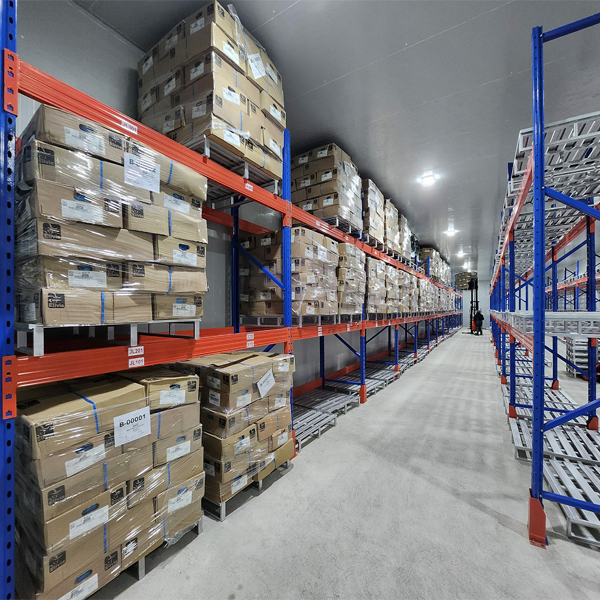
For fresh produce and other medium-temperature loads, holding humidity is as important as holding temperature. <Chiller Room Solutions -10C~10C> covers 0°C to 10°C room design and the equipment choices that protect weight and shelf life.
Airflow, throw, fin spacing, and defrost
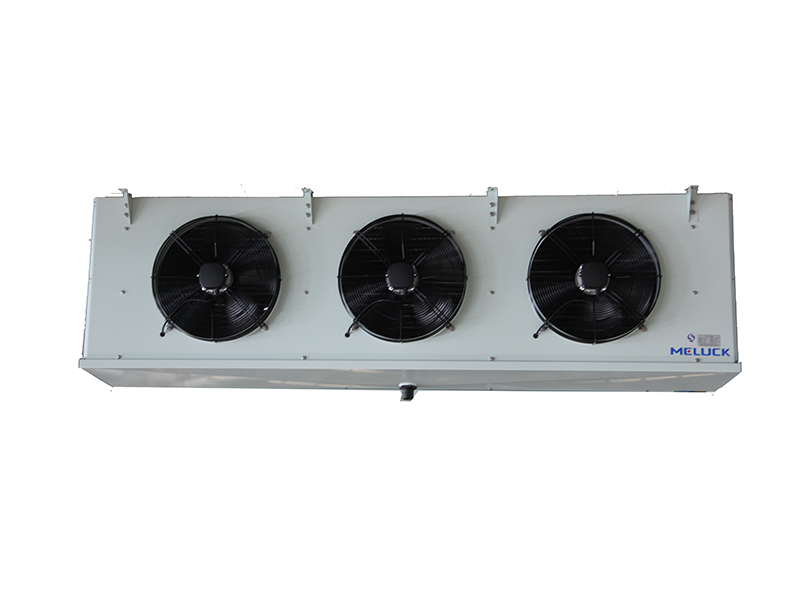
The coil's fin spacing must match the operating temperature. Freezer evaporators use wider fin spacing to limit frost bridging between fins; chiller coils can use closer fin spacing for better heat transfer at higher suction temperatures. Air throw must reach the far end of the room and return across stacked product, or the room develops dead zones and uneven temperature [2].
Defrost selection follows the operating band. Freezer rooms generally require electric or hot gas defrost to remove frost, while chiller rooms above about 2°C can often use off-cycle defrost. The defrost heat and fan heat must be added back into the coil capacity check, or the unit will appear correctly sized on paper and underperform in service [1]. EN 378-2 sets the safety and construction requirements for these components and their controls [3].
Defrost and setpoint controls also belong in the selection conversation. <Remote Control Condensing Units: Smarter Cold Room Management> covers smart panel functions that reduce downtime and spoilage.
Match the evaporator to the condensing unit
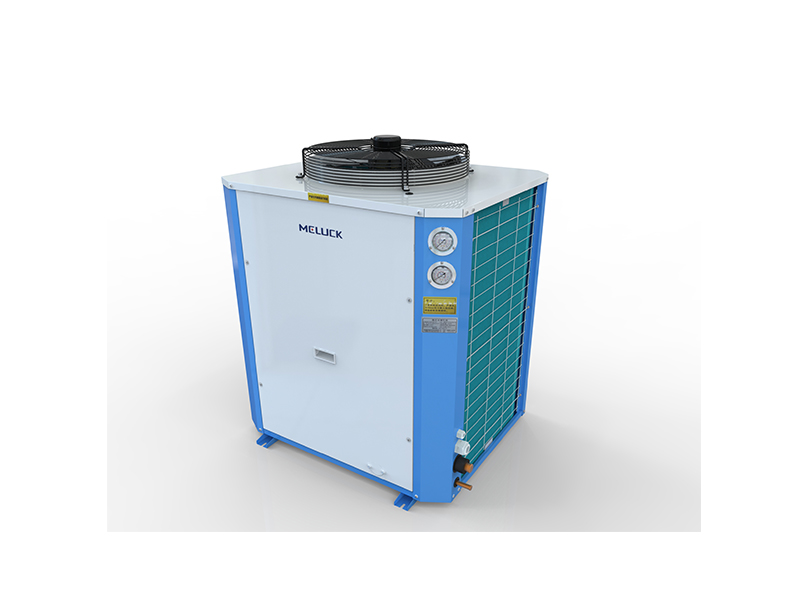
The evaporator and condensing unit must be selected at the same evaporating temperature [1]. A unit cooler chosen for a -25°C room at 6 K TD runs near -31°C suction; the condensing unit must deliver its published capacity at that suction condition, not at a warmer chiller rating. Mismatched pairs are the source of low suction pressure alarms, short cycling, and poor freeze performance.
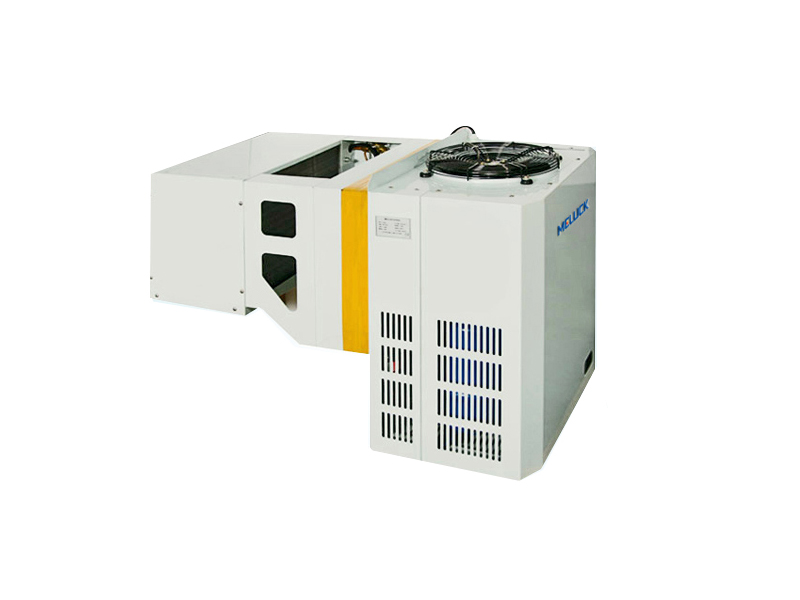
MELUCK applies this as a design rule. The DL, DD, and DJ series air coolers are matched to original Bitzer or Copeland condensing units after correcting for the design suction temperature, and the pairing is re-checked for high ambient and 60 Hz markets where the load and compressor envelope both shift. Small walk-in coolers sometimes use a monoblock unit that combines both sides in one frame, which removes the matching step but limits capacity and placement.
For frozen storage, a lower room temperature shifts the required evaporating temperature and the matching compressor envelope. <Freezer Room Solutions -25C~-18C> covers the -18°C to -25°C band and the condensing unit options that hold it.
A repeatable selection sequence
- Fix the room temperature and relative humidity target from the product type.
- Calculate the total peak heat load using transmission, product, infiltration, and internal loads [1].
- Choose the evaporator TD that protects the product's moisture and quality [2].
- Select a unit cooler rated at that TD and at the design evaporating temperature; re-rate from the manufacturer's standard conditions and allow for fan and defrost heat [1][2].
- Check fin spacing, air throw, and air changes per hour for the room geometry [2].
- Match the condensing unit at the same suction condition and correct for ambient, refrigerant, and power frequency [1].
- Verify defrost, control, safety, and commissioning in line with the relevant standard [3].
Real projects follow the same path. In an Egyptian French fries plant, the -20°C finished product rooms used industrial ceiling air coolers, while the -35°C blast freezer section used high-capacity blast freezer evaporators; the coil count and placement were driven by load and freezing time, not floor area alone. In a Peru avocado pre-cooling room, two ceiling-mounted evaporators served a 17 m by 12 m by 3.1 m room at 10°C, holding a stable temperature for fruit quality. These are MELUCK case examples, and both underline that the evaporator list follows the load calculation.
Need a specific selection? Send your room temperature and humidity target, dimensions, product type, daily throughput, ambient climate, and power supply to meluck@meluckcooling.com or call +8617369893087. I normally return a load check and a shortlist of DL, DD, or DJ unit coolers matched to a condensing unit within one working day.
Mistakes that quietly reduce evaporator performance
- Sizing by room volume instead of calculating the peak heat load [1].
- Selecting a higher TD than the product can tolerate, which lowers humidity and increases weight loss.
- Ignoring defrost heat and fan heat when verifying coil capacity.
- Using a tight-fin-spacing chiller coil in a freezer, which frosts over quickly.
- Pairing a large unit cooler with a condensing unit rated at the wrong suction condition.
These mistakes usually do not fail immediately; they appear as unstable temperature, high energy use, or short coil life after commissioning. Re-checking the selection at the design evaporating temperature catches most of them before equipment is ordered [1].
Ready to select or quote?
Send these details to meluck@meluckcooling.com or call +8617369893087:
- Room dimensions and panel thickness
- Required storage temperature and relative humidity
- Product type and daily throughput
- Ambient design temperature and power supply
- Preferred compressor brand and any existing condensing unit
I will return a paired evaporator and condensing unit shortlist with capacity notes, and I can add a field installation and commissioning plan if the project needs it.
FAQ
What is the difference between DL, DD, and DJ evaporators?
DL units are matched to chiller rooms at medium temperature, DD units are matched to freezer rooms with lower suction temperatures, and DJ units are built for blast freezers and low-temperature high-delta applications. The model letter reflects the fin spacing, fan, and coil configuration for its operating band.
Should I choose a low TD or a high TD?
For humidity-sensitive products such as flowers, leafy vegetables, and fresh meat, choose a lower TD around 5 K to 6 K. For frozen storage and blast freezing, a higher TD of 8 K to 10 K is acceptable because rapid temperature pull-down matters more than moisture retention.
Can one large evaporator serve a long room?
A single unit may short-circuit airflow in a long, narrow room. Two or more smaller units placed to throw air down the long axis usually give better temperature distribution than one oversized coil at one end.
What happens if the evaporator is oversized?
An oversized coil at the same TD removes more moisture, can cause temperature swings under part load, and may not drain defrost water effectively. An oversized coil that is then run at a lower TD can work, but only if the condensing unit and expansion valve are matched to the actual condition.
Do I need to show my load calculation to select a unit?
Yes. A reliable selection requires the calculated peak load and design conditions. The load calculation is the evidence that the evaporator and condensing unit are matched to the project, not to guesswork.
References
[1] ASHRAE, ASHRAE Handbook: Refrigeration, Evaporators chapter, American Society of Heating, Refrigerating and Air-Conditioning Engineers, 2022.
[2] AHRI, AHRI Standard 420, Performance Rating of Forced-Circulation Free-Delivery Unit Coolers for Refrigeration, Air-Conditioning, Heating, and Refrigeration Institute, Arlington, VA.
[3] EN 378-2:2016+A1:2022, Refrigerating systems and heat pumps - Safety and environmental requirements - Part 2: Design, construction, testing, marking and documentation, European Committee for Standardization.
If you're interested, check out these related articles:
Cold Room for African Processing Zones: Sourcing and Setup
Remote Control Condensing Units: Smarter Cold Room Management
Cold Room Zoning for Meat Packaging: Condensing Unit Guide
Cold Room for Catering Companies: Portable vs Fixed Options
Cold Room Project UAE: Equipment for Food Processing
With over 15 years of experience as a MELUCK refrigeration engineer, I specialize in the design of cold storage, chillers, ice makers, and cold chain energy-saving systems, providing technical support to distributors and engineering companies worldwide.

meluck