
Chiller Room at 0°C to +8°C: Applications and Equipment
A chiller room operating at 0°C to +8°C is a positive-temperature cold room designed to preserve perishable products without freezing them. The band is widely used because it slows microbial growth and enzymatic spoilage while protecting product texture, moisture content and appearance [1]. Under HACCP-based food safety systems, refrigerated storage for potentially hazardous foods is commonly maintained at 5°C or below, while fresh produce and shorter holding operations may use the upper part of the range [2].

What the 0°C to +8°C Range Is Used For
Chiller rooms are not freezer rooms. A freezer room normally operates at -18°C to -25°C, while a 0°C to +8°C room keeps products chilled but unfrozen. The distinction matters because the refrigeration system, air cooler, defrost method and control settings are different for medium-temperature operation.
Common applications include fresh meat and poultry holding, fish receiving and short storage, dairy products, prepared foods, beverages, fruits, vegetables and packaged food distribution. The same temperature range also appears in restaurants, supermarkets, food processing plants, central kitchens, hotel catering operations and export consolidation facilities.
| Product category | Common working setpoint | Key control points |
|---|---|---|
| Fresh meat and poultry | 0°C to 2°C | Separate storage, high hygiene level, limit holding time |
| Fish and seafood | 0°C to 2°C | Rapid chilling after receiving, clean drainage, high humidity |
| Dairy products | 2°C to 4°C | Avoid frequent door openings, maintain steady airflow |
| Fruits and vegetables | 4°C to 8°C depending on variety | Prevent chilling injury, control moisture and ethylene |
| Prepared foods and beverages | 4°C to 8°C | Rotation by date, separation from raw ingredients |
The exact setpoint should follow product type, packaging, holding duration and local food safety requirements [1].
Equipment Configuration for a 0°C to +8°C Chiller Room
The room envelope usually uses PU or PIR sandwich panels. PIR panels provide better fire performance and are often specified where local building or insurance requirements call for a B1-rated insulation core. Panel thickness and joint design should be selected from the calculated refrigeration load and the indoor and outdoor design temperatures.
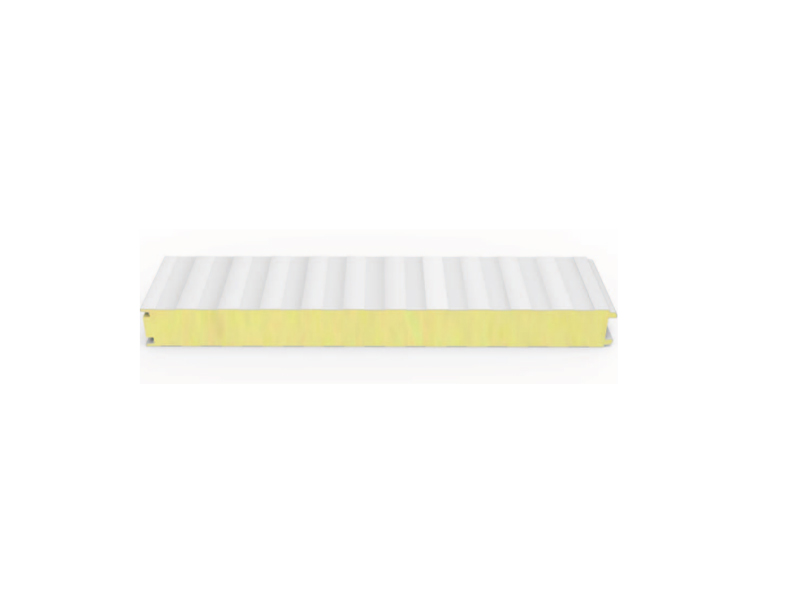
PIR cold room panels are suitable for chiller and freezer projects where thermal performance and fire rating both matter. For standard prefabricated rooms, camlock or slip-joint panel systems should be matched with insulated doors that close tightly and reduce air exchange during loading.
Panel selection also affects fire compliance and long term insulation stability. <Cold Room Panel Fire Rating: PIR vs PU Commercial Compliance> covers how PIR compares with PU under commercial fire regulations.
The cooling side for a 0°C to +8°C room typically includes a medium-temperature condensing unit and a ceiling-mounted air cooler. Chiller room air coolers are selected for medium evaporating temperatures; freezer evaporators are not interchangeable because they are designed for deeper temperature differences and different defrost requirements.

An air cooler evaporator should provide even air distribution across the stored product, avoid short cycling at the coil face, and be positioned so cold air does not blow directly onto sensitive unpacked product. The condensing unit can be a monoblock package for small rooms or a split system with an air-cooled condenser for larger rooms.
For commercial and industrial chiller rooms, medium-temperature scroll or semi-hermetic reciprocating condensing units are common. A Bitzer 20HP reciprocating condensing unit can serve medium to large rooms where stable cooling and serviceability are required.
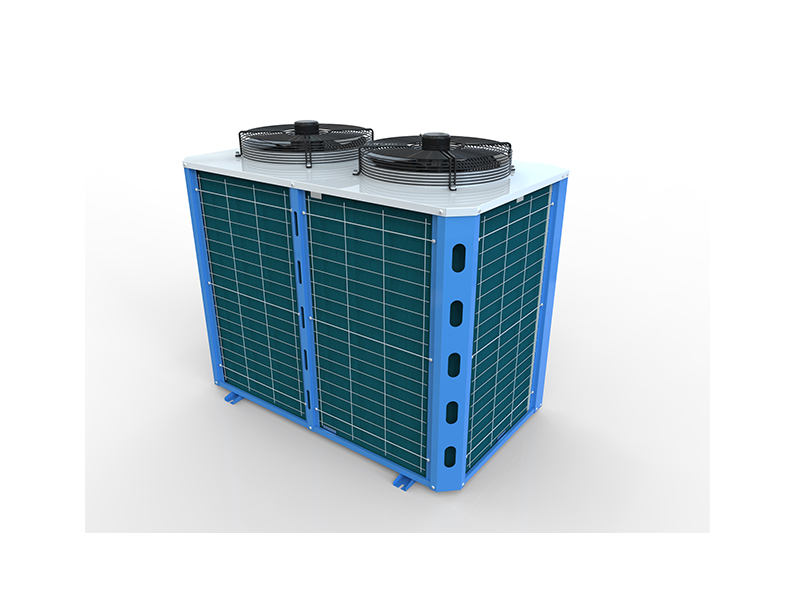
Matching Refrigeration Capacity and Air Distribution
A reliable chiller room starts with a load calculation that accounts for wall and ceiling heat gain, product pull-down load, door infiltration, fan heat, lighting, occupant activity and defrost. ASHRAE refrigeration design methods treat these components separately so the condensing unit and evaporator are not selected by room volume alone [3].
For products entering at ambient temperature, pull-down load is often larger than the steady holding load. The system should be checked for both conditions. If the room receives warm product throughout the day, the air cooler and condensing unit need enough sensible capacity to return the product to the target band quickly without over-dehumidifying the room.
Air distribution affects product temperature more than many operators expect. The air cooler should create a controlled air pattern that reaches the far side of the room without leaving stagnant zones behind racks or pallets. Return air should be unobstructed, and temperature sensors should read air that represents the product zone rather than cold discharge air near the coil.
When one chiller room needs higher capacity or longer refrigerant line runs, compressor selection becomes more demanding. <High-Capacity Condensing Unit Selection for Cold Storage> covers high-capacity options and the factors that drive unit sizing.
Food Safety, Monitoring and Audit Readiness
Temperature control in a chiller room is only as good as the monitoring record. Cold rooms used for food should have continuous temperature monitoring, with sensors placed in the return air stream or in a product simulator rather than in the coldest corner of the room [4].
Food businesses operating under HACCP or ISO 22000 need documented temperature checks, corrective action procedures and cleanable surfaces [5]. Drainage should be sloped and screened, floor joints should be sealed, and the room should be arranged so raw and ready-to-eat products do not cross-contaminate.
Defrost also matters in medium-temperature rooms. Even at 0°C to +8°C, off-cycle or electric defrost may be needed depending on humidity, door traffic and coil temperature. A coil that builds ice changes airflow and can create temperature drift that is difficult to notice from a door-mounted display alone.
Audit preparation usually comes down to temperature records, door seals, airflow and cleaning. <Cold Room Food Safety Audit: Prep Tips for Inspections> covers what inspectors look for in commercial cold rooms.
Getting a Chiller Room Sized Correctly
A 0°C to +8°C room is straightforward in principle, but the correct configuration depends on product type, entering temperature, daily throughput, ambient design temperature and door traffic. Before selecting equipment, prepare these details: room dimensions, product and entering temperature, daily throughput, peak ambient conditions, required pull-down time, and local power supply.
For a project-specific recommendation, contact a refrigeration engineer at meluck@meluckcooling.com or call +8617369893087 with those details. The engineer can check the heat load, confirm whether a monoblock or split system is suitable, and propose a matched panel, air cooler, condensing unit and control package.
Common Configuration Mistakes
- Undersizing the evaporator or condensing unit for peak pull-down instead of steady holding conditions.
- Placing the temperature sensor in cold discharge air, which hides warm spots in the product zone.
- Failing to specify defrost and drainage, which leads to coil ice and slow temperature drift.
- Mixing products with incompatible temperature, moisture or ethylene sensitivity in one small room.
- Applying freezer-room evaporator selection to a chiller room, causing excessive dehumidification or inefficient operation.
- Ignoring door traffic when calculating infiltration, especially in loading-heavy distribution rooms.
Engineering Review and Turnkey Proposal
Shanghai Meluck Refrigeration Equipment Co., Ltd supplies chiller rooms, condensing units, air coolers, PU and PIR panels, doors and control systems for food processing, distribution and export cold chain projects. The engineering team supports equipment matching, installation guidance, commissioning and after-sales service.
For a chiller room configuration matched to your product and site conditions, contact meluck@meluckcooling.com or call +8617369893087 with your project details.
FAQ
What temperature should a chiller room run at?
A chiller room typically operates between 0°C and +8°C, but the exact setpoint depends on the product. Meat and fish usually sit near 0°C to 2°C, dairy around 2°C to 4°C, and many fruits and vegetables between 4°C and 8°C. The setpoint should be confirmed from product storage guidance and food safety requirements.
Can I store meat and fresh produce together in a 0°C to +8°C chiller room?
In a small room, it is generally better to separate raw meat, fish and ready-to-eat or fresh produce because of cross-contamination risk and humidity differences. If only one room is available, use physical separation, sealed packaging, separate shelving and a setpoint that protects the most sensitive product.
How is a chiller room different from a freezer room?
A chiller room holds product at positive temperatures, generally 0°C to +8°C, without freezing it. A freezer room operates at -18°C to -25°C or lower for long-term frozen storage. The two room types use different insulation, air cooler selections, defrost strategies and refrigeration unit operating conditions.
What details are needed to configure a chiller room correctly?
Prepare the room dimensions, product type, entering product temperature, daily throughput, peak ambient temperature, desired pull-down time, and available power supply. These inputs allow a proper heat load calculation and matched selection of panels, door, air cooler, condensing unit and controller.
References
[1] Codex Alimentarius Commission. General Principles of Food Hygiene, CXC 1-1969, revised 2022.
[2] U.S. Food and Drug Administration. Food Code, 2022.
[3] ASHRAE. ASHRAE Handbook: Refrigeration, 2022.
[4] European Committee for Standardization. EN 12830:2018, Temperature recorders for transport, storage and distribution of temperature sensitive goods.
[5] International Organization for Standardization. ISO 22000:2018, Food safety management systems.
If you're interested, check out these related articles:
Condensing Unit for Dairy Farms: Milk Pre-Cooling Guide
Selecting a Condensing Unit for Tropical Climates
Seafood Supermarket Cold Room: Design and Equipment Guide
IQF Quick Freezer for Cheese and Dairy Processing: Key Specs
Cold Room for Hospital Food Service: Zones & Safety
With over 15 years of experience as a MELUCK refrigeration engineer, I specialize in the design of cold storage, chillers, ice makers, and cold chain energy-saving systems, providing technical support to distributors and engineering companies worldwide.

meluck