
Condensing Unit for Dairy Farms: Milk Pre-Cooling Guide
Rapid milk cooling is the first line of defense against bacterial growth on dairy farms. A properly selected condensing unit for dairy farm milk pre-cooling can drop temperatures from 35°C to 4°C within minutes, preserving quality before the bulk tank takes over. But I’ve seen farms where undersized units or mismatched heat exchangers left milk too warm for too long, leading to spoilage and rejected loads. The difference comes down to correct sizing, the right compressor type, and an installation that accounts for actual milking schedules—not just nameplate specs.
Why Milk Pre-Cooling Matters on Dairy Farms
Fresh milk exits the cow at approximately 35°C, an ideal breeding ground for bacteria. EU and many national regulations require cooling to below 4°C within two hours of milking, and the faster this happens, the lower the bacterial load and the longer the shelf life. A dedicated pre-cooling stage using a plate heat exchanger or ice bank can strip out a large share of the heat before the milk even reaches the bulk tank, reducing the load on the tank’s refrigeration system.
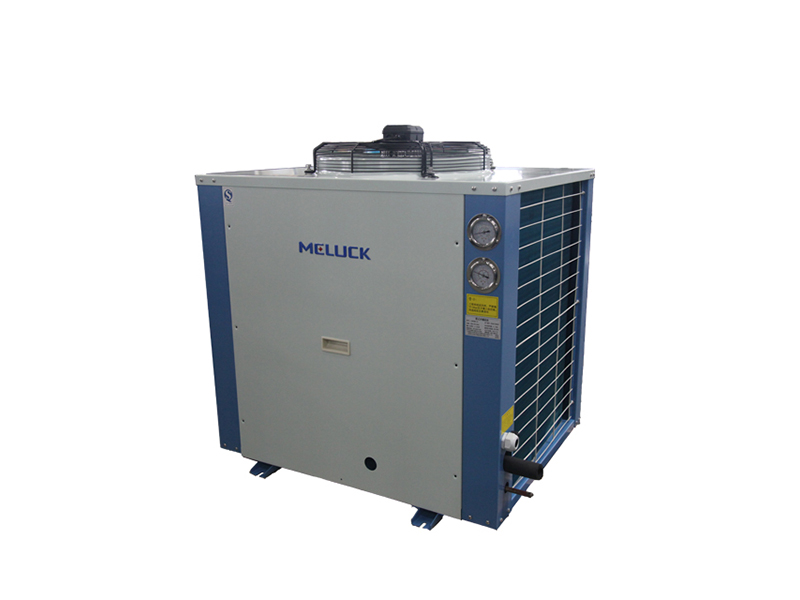
In practice, farms without pre-cooling often see the bulk tank compressor running for extended periods, struggling to pull down temperature while new milk continues to arrive. The result is higher energy use, shorter compressor life, and occasional quality failures at the collection point. A well-matched condensing unit with a plate exchanger avoids that bottleneck.
How to Size a Condensing Unit for Dairy Farm Milk Cooling
Sizing starts with three numbers: daily milk yield, the number of milkings per day, and the target cooling time. For example, a herd producing 1,000 liters per day, milked twice, needs to cool roughly 500 liters within one to two hours after each session. The cooling load depends on the temperature drop (from 35°C to the heat exchanger outlet temperature) and the desired total pulldown time. Oversizing leads to short cycling and moisture problems; undersizing leaves milk above the safe temperature threshold.
The table below gives a starting point for condensing unit horsepower selection based on milk volume, assuming a well-sized plate heat exchanger using ambient-temperature water.
| Daily Milk Yield (liters) | Suggested Condensing Unit HP Range |
|---|---|
| 500 | 4–5 HP |
| 1,000 | 9–10 HP |
| 2,000 | 15–20 HP |
| 5,000 | 40–50 HP |
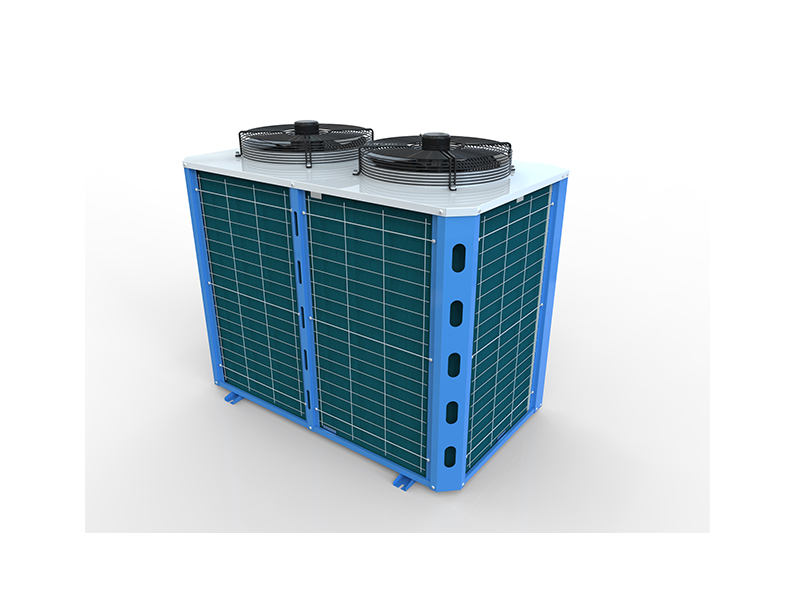
These figures assume the condensing unit works in conjunction with a plate heat exchanger that handles roughly 40–50 percent of the total cooling. I’ve found that farms using well water at 12–15°C can often cut the refrigeration load almost in half before the condensing unit even starts, which dramatically lowers electricity costs.
If your farm has an unusual layout or uses a well-water recovery system, the interaction between the heat exchanger and condensing unit becomes more complex. Reach out at meluck@meluckcooling.com and we can check the sizing for your specific setup before you commit.
Compressor Types and Component Selection for Dairy Condensing Units
Dairy farm condensing units typically use semi-hermetic reciprocating compressors from Bitzer or scroll compressors from Copeland. Reciprocating machines are more forgiving with dirty power and high starting torque, which matters on rural supplies. Scroll compressors offer quieter operation and better part-load efficiency but are more sensitive to liquid slugging. For larger operations, a screw compressor condensing unit may be justified, but that level of capacity is rare on a single farm unless a central milk collection center is involved.
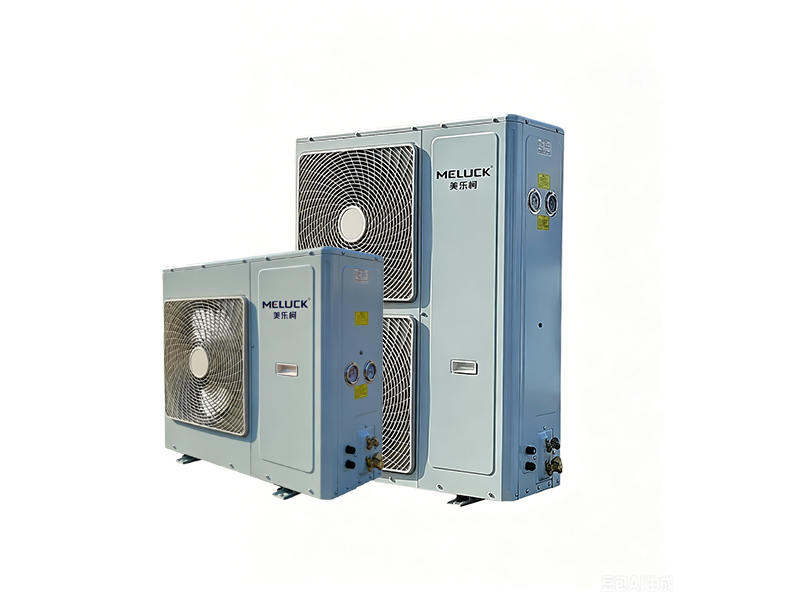
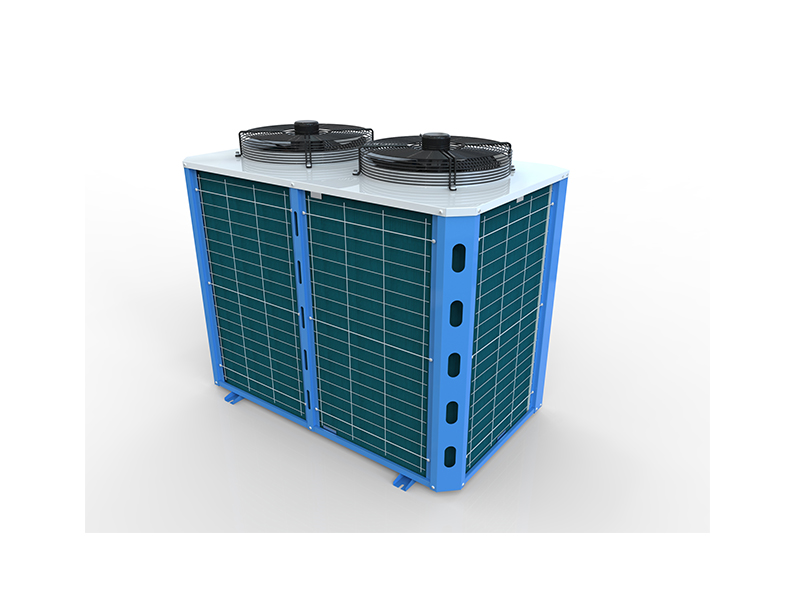
Beyond the compressor, the condenser coil and housing matter in a dairy environment. Barns and milking parlors expose equipment to dust, moisture, and ammonia. I always specify a condensing unit with a corrosion-protected condenser coil (copper-fin with anti-corrosion coating or all-aluminum micro-channel) and an IP54 or higher electrical enclosure. These small details prevent early failures that frustrate farmers and disrupt milk collection.
The air-cooled condenser must be placed where it can reject heat freely without recirculation. Even a seemingly open corner can trap hot air and push condensing temperatures well above design, knocking 20–30 percent off capacity during summer.
Energy Efficiency and Operating Costs
Electricity represents the largest operating expense for a dairy farm cooling system after labor. A condensing unit’s coefficient of performance (COP) directly translates into the monthly bill. Newer condensing units using scroll or semi-hermetic compressors with electronic expansion valves and variable-speed fan motors typically achieve a COP 15–25 percent higher than older fixed-speed units. In our experience, switching from an old on/off condensing unit to a properly sized unit with an electronic controller can cut daily energy consumption by roughly a quarter, which over ten years pays back the initial premium many times over.
Heat recovery is another lever: the waste heat from the condenser can preheat water for udder washing or cleaning, further offsetting costs. But the system must be designed for it upfront; retrofitting is rarely cost-effective.
Installation, Maintenance, and Choosing a Supplier
Installation mistakes can undo a good equipment selection. The condensing unit needs a solid, level base, at least 50 cm of clearance on all sides for airflow, and short, well-insulated refrigerant lines. I’ve seen farms where a contractor buried suction lines in hot ground or kinked a pipe, causing an immediate loss of cooling and a compressor failure within weeks. A site survey by someone who understands both refrigeration and dairy workflow is cheap insurance.
Maintenance is straightforward but must be scheduled. Coils should be cleaned every three months (more often in dusty barns), refrigerant charge and oil level checked semi-annually, and the condenser fan bearings inspected annually. A simple maintenance contract with a local technician who knows the equipment avoids most mid-season emergencies.
If you are planning a new milk cooling system or upgrading an existing one, we can help. Share your daily milk volume, milking schedule, and farm location with us at meluck@meluckcooling.com or call +8617369893087. I’ll work with our engineering team to recommend a condensing unit and heat exchanger combination that fits your operation, without overpaying for capacity you don’t need.
Common Questions About Dairy Farm Milk Cooling Condensing Units
How often should a dairy farm condensing unit be serviced?
At least twice a year—before peak summer and after winter. A pre-summer check confirms the refrigerant charge, condenser cleanliness, and compressor oil condition. The winter check addresses any moisture or corrosion that accumulated during cold, damp months. More frequent cleaning may be needed in dusty or barn environments. A simple maintenance log helps spot slow performance declines before they become emergencies.
Can I use a standard residential air conditioner condensing unit for milk pre-cooling?
It’s a common misconception that any outdoor unit will do. Residential air conditioner compressors are not designed for the high starting frequency, wide temperature range, or continuous run time of milk cooling. Using one usually leads to early compressor failure and voided warranty. Milk cooling requires a commercial-grade condensing unit rated for medium-temperature refrigeration with a proper compressor and heat exchanger.
What is the benefit of a plate heat exchanger in a milk cooling system?
It depends on your water source and electricity cost, but in most cases a plate exchanger can cut the refrigeration load by half or more. By using well water or municipal water at ambient temperature, you strip out heat before the condensing unit runs. The result is a smaller condensing unit, lower energy bills, and a faster cooling cycle. Farms with cheap electricity may skip it, but for operations that pay high rates or run on generator power, a plate exchanger pays off quickly.
How long does a condensing unit typically last on a dairy farm?
In the farms I’ve worked with, a well-maintained Bitzer or Copeland unit easily reaches 10 to 15 years. The compressor itself often lasts even longer if the system is sized correctly and protected from liquid slugging. The condenser coil usually needs replacement or major repair first, especially in aggressive environments. Regular cleaning and corrosion protection extend that timeline.
Should I oversize the condensing unit for future expansion?
Future-proofing is smart, but oversizing too much causes short cycling, moisture problems, and higher starting current. A better approach is to select a condensing unit that can handle up to 20–25 percent above current peak load, or to specify a modular design where a second unit can be added later. If you are uncertain about capacity for future growth, share your current and projected milk volumes with us at meluck@meluckcooling.com and we’ll recommend a system that works today and tomorrow.
If you're interested, check out these related articles:
Chiller Room Solutions -10C~10C - Meluck
Peru Avocado Pre-Cooling Cold Storage - Meluck
Ecuador Multi-Temperature Cold Storage Project - Meluck
Freezer Room Solutions -25C~-18C - Meluck
Blast Freezer Room Solutions -40C~-60C - Meluck
With over 15 years of experience as a MELUCK refrigeration engineer, I specialize in the design of cold storage, chillers, ice makers, and cold chain energy-saving systems, providing technical support to distributors and engineering companies worldwide.

meluck