
5-Ton/Day Flake Ice Machine for Mid-Scale Food Processing
A 5-ton/day flake ice machine produces roughly 5,000 kg of thin, dry, subcooled ice every 24 hours, about 208 kg per hour when feedwater and ambient conditions match the nameplate rating. For a mid-scale food processing operation, this output usually means enough ice for batch chilling, ingredient cooling, and short-term holding without paying for a 10-ton industrial plant that would spend most of its life running at partial load.
Flake ice is different from block or tube ice because it is formed, scraped, and discharged as small, flexible flakes with a large surface-to-volume ratio. That structure cools product quickly, conforms to irregular surfaces, and causes less mechanical damage to soft foods than sharp or heavy ice.
Why 5 Tons Per Day Fits Mid-Scale Processing
Mid-scale usually means a facility running one or two production shifts with a defined throughput target. A 5-ton/day machine can supply full output over a 24-hour cycle or a smaller useful draw over a shorter processing window, depending on storage and production scheduling. The right size still depends on heat load, feedwater temperature, and the actual ice draw at each step.
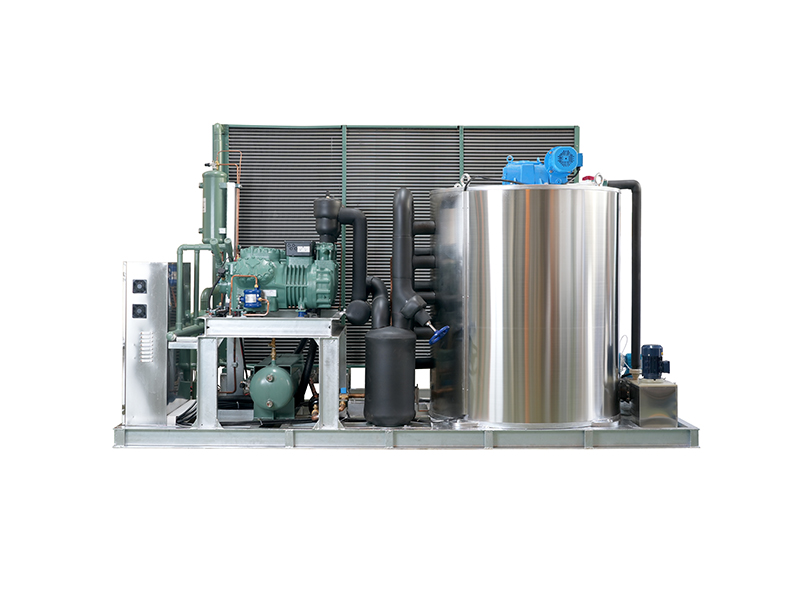
Typical roles include:
- Contact cooling for seafood, poultry, and processed meat
- Dough temperature control in bakery and ready-meal lines
- Ingredient water cooling or mixing in food formulations
- Short-term holding in bins or insulated containers during packing
- Emergency cooling during line stoppages or peak season
Because the machine operates continuously, the important question is not only whether it can make 5 tons. The real question is whether the plant can store, distribute, and use 5 tons in the same period. If ice is made faster than it is consumed, storage bin capacity becomes the next bottleneck.
Capacity and Cooling Load Reality
A rated 5 tons/day is not the same as 5 tons of guaranteed useful ice in every site. Output changes with feedwater temperature, condenser airflow or water temperature, refrigerant charge, and power stability. Before locking a model, confirm the nameplate rating conditions and derate if the site has warm water or high ambient air.
A heat balance is more reliable than guessing. Estimate the product mass, starting temperature, required final temperature, and process time, then compare that cooling load with available ice production. The latent heat of melting is about 334 kJ/kg, which explains why ice can absorb a large amount of heat as it melts, but the actual delivered cooling depends on contact time, drainage, and product coverage. ASHRAE refrigeration methods provide a formal framework for these calculations [3].
For planning, document six numbers:
| Factor | What to Document |
|---|---|
| Peak daily ice draw | kg or tons used in the busiest shift |
| Product inlet temperature | warmest incoming product |
| Target holding temperature | process or storage limit |
| Feedwater temperature | incoming water temperature to the icemaker |
| Ambient design temperature | condenser environment |
| Bin capacity | usable ice storage before refill |
This list turns the 5-ton rating into a workable system check rather than a single marketing number.
Application Zones
Seafood and Fish Processing
Seafood is one of the most demanding applications because direct ice contact affects temperature control, texture, and pathogen growth. Ice made from potable water and used as a food-contact surface must follow sanitation controls just like any other product-contact surface [1]. Seafood is also among the most globally traded food commodities, and much of that trade depends on reliable cold chains [2].
In seafood operations, flake ice works best when catch chilling, cold rooms, and quick freezing are matched. <Cold Storage for Fishing Ports: Catch-to-Chill Design Guide> covers integrated ice, chiller, and freezer zones for port operations.
Once product is packed and frozen, storage temperature determines quality and shelf life. <Indonesia Seafood Cold Storage: Reliable Cold Room Design> covers reliable cold room design for seafood processors.
If the operation also exports frozen items, rapid freezing matters more than ice volume alone. <Seafood Export Blast Freezer: IQF Standards and Rapid Freeze> covers IQF standards and rapid freezing requirements.
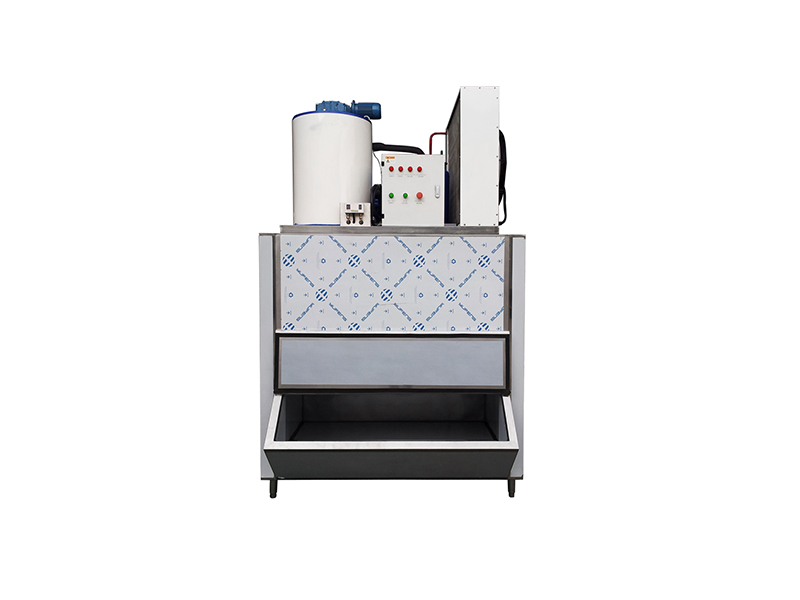
In fish receiving, flake ice is often used in direct layers or slurry. In processing, it cools fillets and whole fish during cutting, packing, and transport. A 5-ton/day machine can support a mid-scale seafood room, but the buying decision should be based on the busiest day, not the average day.
Meat and Poultry Processing
In meat and poultry lines, flake ice controls temperature during mixing, mincing, and stuffing. Thin flakes disperse evenly in formulations, which helps maintain stable batch temperature without crushing emulsions. Ice used with meat must follow the same hygiene rules as other food-contact surfaces, including potable water supply and routine cleaning [1].
Bakery, Ready Meals, and Prepared Food
For dough and prepared food, flake ice slows fermentation and controls final dough temperature. A 5-ton/day machine is often adequate for midsize bakeries or central kitchens producing multiple batches per shift. The scraper-type design works well when frequent, smaller ice draws are needed rather than one large cooling event.
Produce and Short-Term Holding
Flake ice can cool leafy vegetables and some field-packed produce, but postharvest requirements vary by crop. For many fresh commodities, forced-air or hydro-cooling is more effective than direct ice. A 5-ton/day unit is best used where contact cooling is already part of the packing process.
System Design: Condensing Unit, Water, and Storage
A flake ice machine is only one part of the system. The supporting components determine output, energy use, and cleanability.
Condensing Options
Air-cooled machines are easier to install and are common where water is scarce. Water-cooled units can provide more stable capacity in high ambient temperatures, but they add water consumption and require water treatment or heat rejection. For food processing, the choice should follow site climate, power stability, and hygiene requirements.
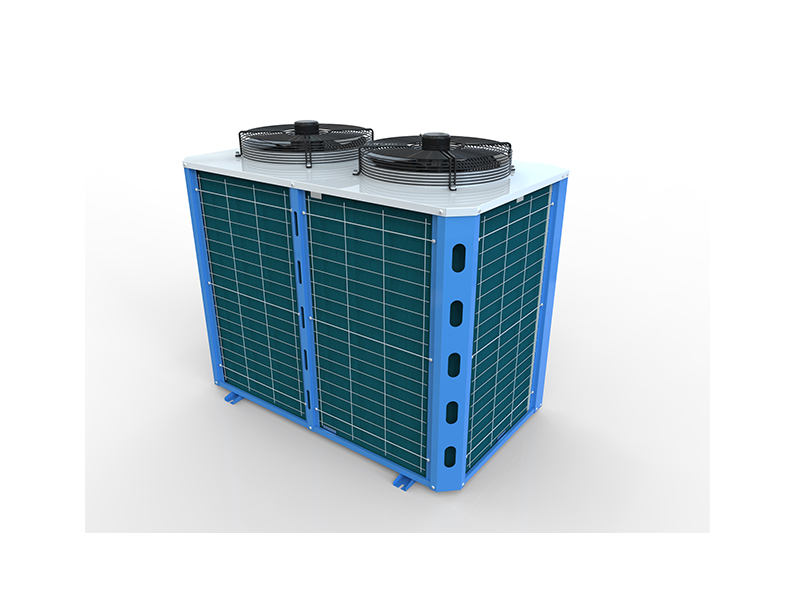
The condensing unit must be matched to the icemaker load and the design ambient. If the machine is placed in a hot, humid room, condenser performance and head pressure control become the main limits. A properly ventilated air-cooled unit or remote condenser can prevent reject heat from entering the processing room.
Feedwater Quality
Flake ice used in food must come from potable water. Hardness, suspended solids, and microbial contamination affect ice appearance, output stability, and safety. Filtration, softening, or blowdown may be needed when the site uses well water or variable municipal supply. Water temperature and pressure should match the manufacturer's specified range.
Ice Storage and Handling
A 5-ton daily rating means little without an ice bin, cart, or screw conveyor sized for the peak draw. Store flake ice in a clean, insulated bin with drainage. Do not let meltwater accumulate in product contact areas. Rotate inventory so old ice does not sit against fresh product.
Selecting a 5-Ton/Day Unit
Look beyond the table rating and check:
- Evaporator and ice-contact material
- Air-cooled or water-cooled configuration
- Refrigerant and ambient operating limits
- Electrical load and power supply stability
- Cleaning access and drain design
- Spare parts and service response in the region
Request a capacity curve for actual feedwater and ambient conditions. A 5-ton flake ice machine should be offered with enough technical information to compare daily output and energy consumption, not just price.
If the site is scaling up or has seasonal peaks, compare the capital and running costs of the five-ton unit with a 2-3 ton unit running at full load, or a 10-ton unit sized for future expansion. The five-ton machine is often the practical step when daily demand is close to the rated output, but only a site-specific load review can confirm that.
Get a Site-Specific Selection
Before fixing the model, send peak ice draw, feedwater temperature, ambient temperature, and existing power supply to the equipment supplier's engineering team. A proper selection compares air-cooled and water-cooled configurations at your conditions and confirms whether a five-ton rated machine matches the real 24-hour draw. Request the capacity table and cleaning access details, and ask if a test report or local service support is available. Do not order on daily tonnage alone.
Energy and Operating Cost View
Flake ice machines are energy-intensive. Power use depends on compressor configuration, condenser type, feedwater temperature, and refrigeration system efficiency. When evaluating options, ask for energy use per ton at the design ambient and water temperature. A more efficient machine may cost more upfront but can reduce running cost over the life of the equipment. Compare total cost of ownership rather than purchase price alone.
Installation and Maintenance Notes
Install the machine on a stable, cleanable base with enough clearance for condenser airflow, water piping, and bin access. If using a remote condenser, keep refrigerant piping within manufacturer limits. Slope drains for washdown and prevent pooling.
Daily maintenance should include cleaning ice-contact surfaces, checking water pressure, inspecting scrapers or augers for wear, and monitoring discharge temperature. Weekly checks include condenser cleaning, water filter condition, and bin sanitation. A preventive schedule keeps output stable and supports food safety compliance [4].
Plan Your 5-Ton Flake Ice Line
MELUCK provides flake ice machines from small daily outputs to 10-ton industrial systems, plus the condensing units, cold rooms, and evaporators needed around the icemaker. If you are planning a mid-scale food processing line, send the engineering team your daily ice draw, feedwater conditions, ambient temperature, and power supply for a matched system selection.
Email: meluck@meluckcooling.com
Phone: +8617369893087
FAQ
How much product can a 5-ton/day flake ice machine cool?
There is no single answer. It depends on the product starting temperature, target temperature, and process time. The machine can make about 5,000 kg of flake ice per day, but the useful cooling delivered depends on how the ice is applied and whether the heat load calculation matches the production schedule.
Should I choose air-cooled or water-cooled for a 5-ton machine?
Air-cooled is easier to install and preferred when water is limited. Water-cooled can be more stable when ambient temperatures are high but adds water treatment and consumption. The choice should follow a site-specific comparison, not a general preference.
Is a 5-ton/day machine enough for seafood processing?
It can be enough for mid-scale fish receiving, icing, and short-term holding. For larger landing stations or export freezers, daily ice demand and cooling load may exceed 5 tons. Base the decision on the busiest production day rather than the average day.
What feedwater quality does the machine require?
For food processing, use potable water. Hardness, suspended solids, and microbial quality affect ice safety, output stability, and cleaning. A local water test helps determine whether filtration, softening, or treatment is needed.
How should flake ice be stored after production?
Store it in a clean, insulated bin with drainage. Keep the bin closed when possible, rotate stock, and keep meltwater away from food contact surfaces. Bin capacity should be sized to the peak usage window so the five-ton machine can run efficiently.
What maintenance keeps output at 5 tons per day?
Daily cleaning of ice-contact surfaces, water pressure checks, scraper or auger inspection, and condenser cleaning keep output stable. Weekly checks should cover filters, drains, bin sanitation, and discharge temperature. Site conditions and water quality determine the exact schedule.
References
[1] U.S. Food and Drug Administration. Fish and Fishery Products Hazards and Controls Guidance, 4th ed. 2021. https://www.fda.gov/media/80637/download
[2] Food and Agriculture Organization of the United Nations. The State of World Fisheries and Aquaculture 2022. FAO, 2022. https://www.fao.org/3/cc0461en/cc0461en.pdf
[3] ASHRAE. 2018 ASHRAE Handbook - Refrigeration. ASHRAE, 2018. https://www.ashrae.org/technical-resources/ashrae-handbook
[4] International Organization for Standardization. ISO 22000:2018 Food safety management systems, Requirements. ISO, 2018. https://www.iso.org/standard/65464.html
If you're interested, check out these related articles:
Cold Room vs Refrigerated Truck: When Fixed Storage Wins
High-Capacity Condensing Unit Selection for Cold Storage
Date Palm Cold Storage: Temperature and Humidity for Long-Term Preservation
With over 15 years of experience as a MELUCK refrigeration engineer, I specialize in the design of cold storage, chillers, ice makers, and cold chain energy-saving systems, providing technical support to distributors and engineering companies worldwide.

meluck