
1-Ton/Day Flake Ice Machine for Small Seafood Markets and Restaurants
A 1-ton/day flake ice machine is a compact ice generator sized for small seafood markets, wet-market stalls, and restaurant fish stations. It produces about 1,000 kg of thin, dry ice flakes in 24 hours, which is enough to refresh display beds and holding bins several times in a service day. The key is not only capacity. The machine also needs a food-grade ice path, easy cleaning, and the right water and power setup for the site.
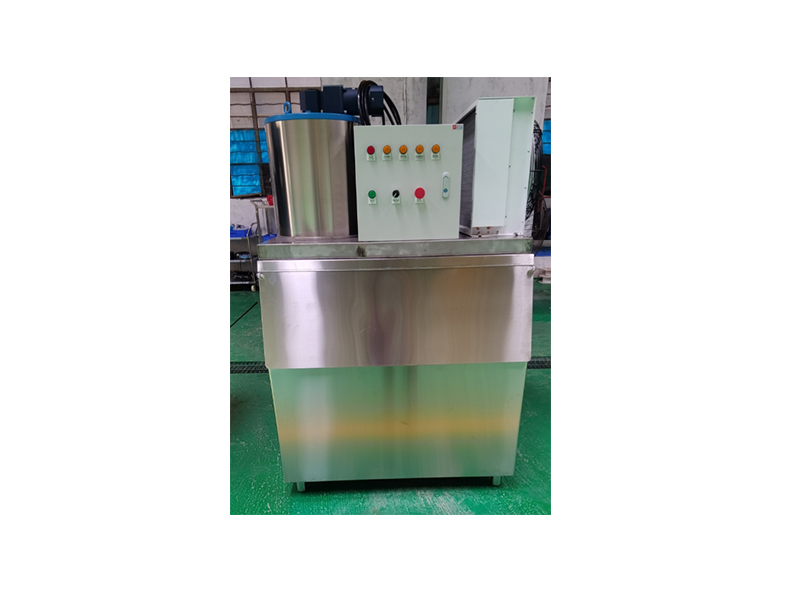
What a 1-Ton/Day Flake Ice Machine Is Built For
A 1-ton/day machine fits operations that need ice throughout the day but do not need continuous blast freezing or high-volume packing. Typical users include a seafood display counter that rebuilds ice beds each morning and afternoon, a restaurant that ices whole fish, crustaceans, and oysters in a short-term holding cabinet, and a small wet-market stall that sells fresh catch within 24 hours. It is not sized for processing plants that pack export cartons or for deep-freeze storage. FDA guidance for fish and fishery products requires rapid chilling to 4 degrees Celsius or below [1], so the ice machine must support that early temperature drop rather than simply covering product.
Why Flake Ice Works for Seafood Display
Flake ice is thin, flattened ice with a large surface area. That shape gives it faster heat transfer than block ice and better surface contact than cube ice. It also cushions fillets and whole fish instead of bruising them during display and transport [2]. Codex guidance for fish handling recommends ice made from potable water and prompt chilling after landing [3].
Seafood spoilage accelerates when surface temperature stays above 4 degrees Celsius. Flake ice fills the gaps around curved fish bodies, shrimp, and shellfish, which helps hold temperature evenly across the display bed. It is also easy to mound, drain, and replace during service, which matters in a small market where staff are handling money, customers, and fresh product at the same time.
Capacity, Configuration, and Installation
Daily Capacity: What 1 Ton Means in Practice
One ton per day equals 1,000 kg per 24 hours, or about 41.7 kg per hour on average over a full day. Actual output is not a flat number. A small flake ice machine produces ice in cycles and stores it in an insulated bin, so the counter can draw ice faster during morning setup and then let the machine replenish the bin through the afternoon. If a small seafood counter or restaurant uses a few hundred kilograms of ice per day, a 1-ton machine reserves spare capacity for hot days, cleaning, display refreshes, and weekend peaks.
Typical Equipment Features
| Item | Typical configuration for a 1-ton/day unit |
|---|---|
| Daily output | About 1,000 kg per 24 hours |
| Ice shape | Thin, dry flake |
| Food-contact surface | Food-grade stainless steel |
| Ice-making section | Flake ice drum evaporator |
| Condenser | Air-cooled or water-cooled depending on site |
| Power supply | 220-240V/60Hz or 380-400V/50Hz depending on model and destination |
| Storage bin | Integrated or external insulated bin |
Meluck's 0.5-1 Tons Flake Ice Machine covers this small-capacity class, with a stainless steel food-contact design for small shops and restaurants.
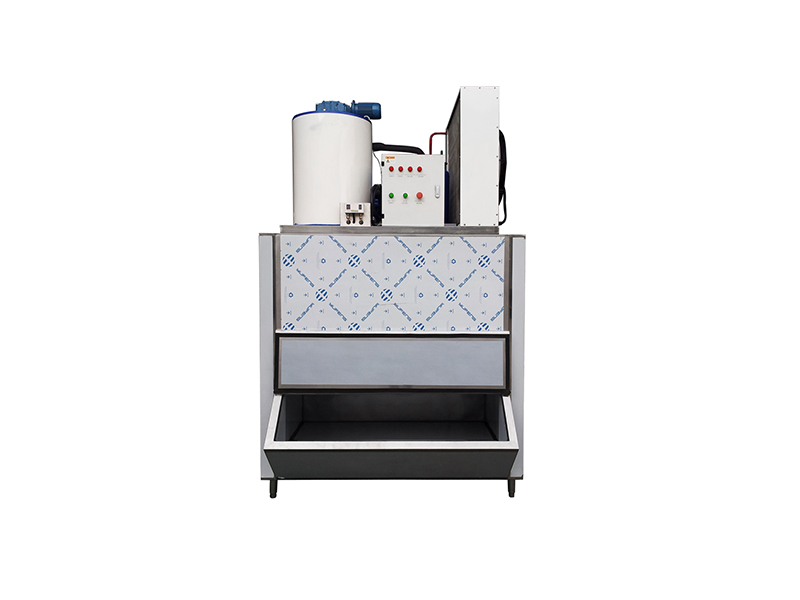
Water, Drain, and Power Requirements
Flake ice is food ice, so the machine should connect to a potable water supply [3]. Most small units need a water line at suitable pressure, and wastewater from the ice-making process flows to a floor drain or collection point. The refrigeration condenser may be air-cooled for lower maintenance or water-cooled for hot kitchen environments. Before ordering, confirm the available electrical phase and voltage, because a 1-ton/day model may be supplied in a different voltage configuration depending on the destination country.
For a site check, send your available voltage, water pressure, drain location, and desired storage bin size to meluck@meluckcooling.com. A refrigeration engineer can confirm the right condenser type and avoid a mismatch before the unit ships.
Matching the Ice Machine to a Cold Room or Display Counter
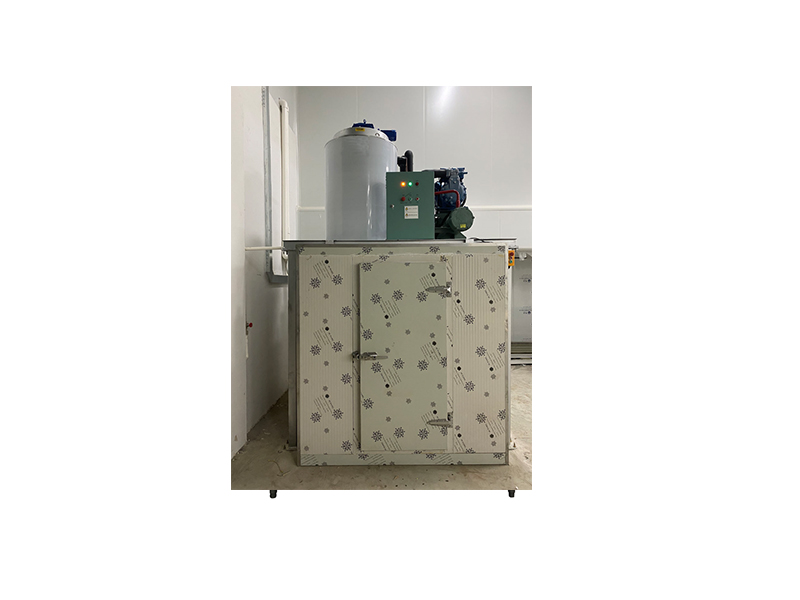
At a seafood market, the flake ice machine is only part of a short cold chain. Catch should move quickly from landing or delivery into a chilled holding area, then onto an iced display bed, then into refrigerated storage at the end of the day if unsold. A 1-ton/day ice machine supplies the display layer, while a compact chiller room handles overnight holding at 0 to 5 degrees Celsius [4].
That combined approach is strongest when ice production and refrigerated storage are planned together rather than bought as separate afterthoughts.
Seafood supermarket counters often need a chilled room behind the sales floor to hold product between deliveries. <Seafood Supermarket Cold Room: Design and Equipment Guide covers walk-in cold room layout and equipment pairing for seafood retail.
Restaurants that add a fish station may also need compact refrigerated storage for daily inventory. <Cold Room for Food Service: Compact Energy Efficient Options covers the storage side of a small food-service cold chain.
Daily Operation, Cleaning, and Cost Control
Cleaning and Food Safety
Flake ice machines used for seafood must be included in the sanitation schedule. Food-contact surfaces should be cleaned and sanitized regularly to prevent biofilm, slime, and odor. Use potable water only [3]. Keep the bin covered, use a clean scoop, and do not store nonfood items on the ice. The U.S. Food Code requires that ice used as food, including ice for display of fish and seafood, be made from potable water and protected from contamination [4].
Energy and Operating Cost
Operating cost depends on compressor power, runtime, water temperature, and electricity tariff. Instead of using a single marketing number, calculate the expected daily cost from the machine's nominal power input, actual running hours, local tariff, water consumption, and daily cleaning time. Air-cooled units in hot kitchens use more electricity because condensing pressure rises with ambient temperature, so keep the unit away from oven exhaust, direct sun, and poorly ventilated corners.
Maintenance Checks
Check the water filter, drain line, level sensor, and condenser airflow on a weekly schedule. In hard-water areas, calcium scale can build up on the evaporator and reduce ice output, so water treatment or a descaling program should be part of the service plan. A clean condenser and clean water line usually matter more to daily output than the machine's rated capacity alone.
Request a Sizing Confirmation for Your Seafood Counter or Restaurant
Before you order a 1-ton/day flake ice machine, share these details: peak daily seafood volume, display bed length, available electrical phase and voltage, water line and drain position, ambient temperature, and whether you prefer air-cooled or water-cooled operation. Send the information to meluck@meluckcooling.com or call +8617369893087 for equipment selection, spare parts, and shipping support. A clear sizing check will confirm whether the 1-ton unit is the right fit or whether a smaller or larger flake ice machine would run more efficiently.
Frequently Asked Questions
How much flake ice does a 1-ton/day machine make per hour?
A 1-ton/day machine produces about 41.7 kg of flake ice per hour on average over 24 hours. The machine does not deliver all of it at once. Ice is made in cycles and held in an insulated storage bin until the counter needs it.
Can a 1-ton/day flake ice machine run continuously in a hot restaurant kitchen?
Yes, if the condenser is matched to the ambient temperature. In a hot kitchen, a water-cooled condenser or a well-ventilated air-cooled unit will perform better. Keep the machine away from direct heat and confirm the 24-hour output rating at the expected kitchen temperature before ordering.
Is flake ice better than cube ice for seafood display?
Flake ice generally contacts the fish surface more completely and cools faster than cube ice. It is also softer, which helps avoid damage to fillets, shrimp, and whole fish [2]. Cube ice is a better choice for beverages, not for high-contact seafood chilling.
What water source should I use?
Use potable water [3]. A water filter helps protect the machine from scale and sediment, and the drain must carry away melt water and cleaning water without backing up into the ice bin.
Does a 1-ton/day machine replace a cold room?
No. Flake ice is for surface chilling and display. Overnight and backup storage still need a chiller room or freezer room at the correct holding temperature [4].
References
[1] U.S. Food and Drug Administration, Fish and Fishery Products Hazards and Controls Guidance, 4th ed., 2021.
[2] J. Graham, W. A. Johnston, and F. J. Nicholson, Ice in Fisheries, FAO Fisheries Technical Paper No. 331, Rome, 1992.
[3] Codex Alimentarius, Code of Practice for Fish and Fishery Products, CXC 52-2003.
[4] U.S. Food and Drug Administration, Food Code 2022.
If you're interested, check out these related articles:
Vietnam Cold Room Projects for Seafood and Agriculture
Green Coffee Storage: Temperature and Humidity Control
Ecuador Multi-Temperature Cold Storage Project
Seafood Supermarket Cold Room: Design and Equipment Guide
Cold Room Projects in Mexico: Food Processing Cold Storage
With over 15 years of experience as a MELUCK refrigeration engineer, I specialize in the design of cold storage, chillers, ice makers, and cold chain energy-saving systems, providing technical support to distributors and engineering companies worldwide.

meluck