
Temporary Refrigeration for Food Trade Show: Practical Guide
Keeping perishable samples, frozen products, or prepared foods at safe temperatures during a food trade show is a recurring headache for exhibitors. Most venues provide only basic power outlets and a bare stand, leaving cold chain entirely to the participant. Without the right temporary refrigeration setup, product spoilage, food safety violations, and a poor brand impression become real threats. In my fifteen years supporting cold storage projects for events worldwide, I have seen everything from simple portable coolers to fully assembled modular cold rooms deployed successfully—provided a few key parameters are locked in early. Planning equipment selection, sizing, power logistics, and compliance well ahead of the show floor is what keeps products safe and brand image untarnished.
Cold Storage Requirements at Food Trade Shows
A trade show booth is a completely different environment from a permanent cold room. Ambient temperatures inside exhibition halls can fluctuate sharply when doors open, thousands of visitors crowd the aisles, and temporary power supplies introduce voltage instability. Perishable displays—fresh dairy, seafood, meat, chilled beverages, or frozen pastry dough—need uninterrupted temperature control, often across multiple product categories. The event may run eight to twelve hours a day for several days, and restocking from a cooler hidden behind the stand is rarely convenient. This means the cold storage solution must be accessible, reliable, and sized correctly for the worst-case scenario rather than the average load.
Ignoring cold chain at a trade show does more than waste product. A visitor who notices condensation on a cheese sample or a softened frozen dessert forms a negative judgement about the company’s attention to quality. In markets where export buyers walk the floor, that impression can cost a distributor or contract. So the first step is to list all products to be displayed or sampled, note their ideal storage temperatures, and approximate the volumes. From that list, the equipment requirement becomes much clearer.
Equipment Options for Temporary Refrigeration
The simplest approach is a suite of plug-in refrigerated display cabinets—upright merchandisers or under-counter chillers that run on standard single-phase power. These work well for packaged goods like chocolate, bottled drinks, or pre‑packed cheese. But they offer almost no bulk storage and struggle to hold precise temperature in a crowded stand.
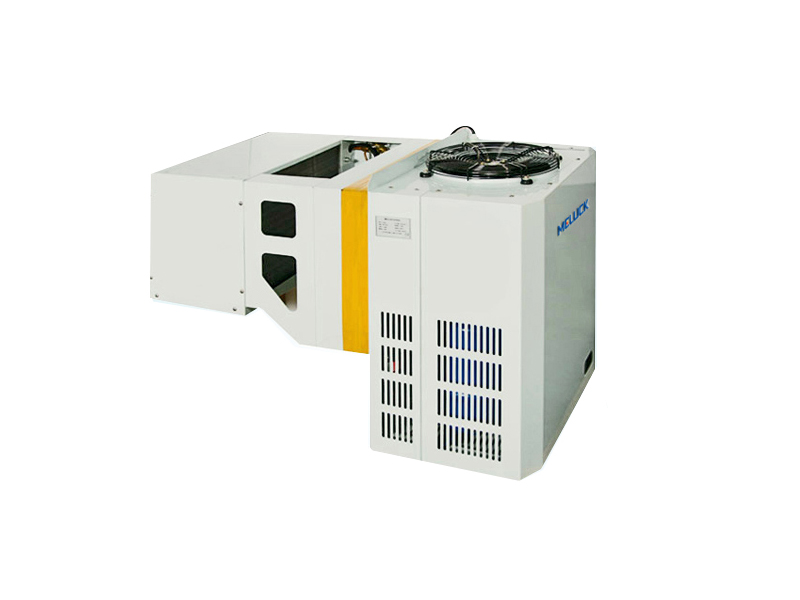
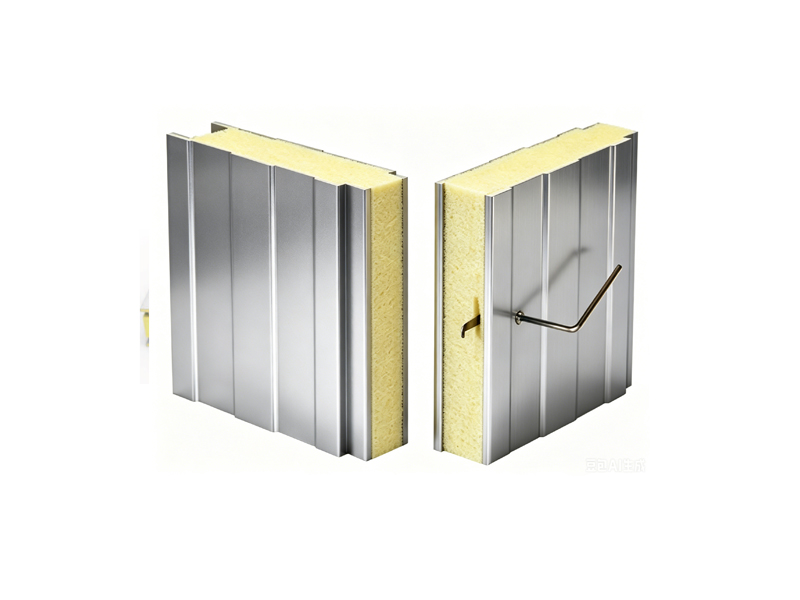
For exhibitors who need to store larger quantities and maintain a professional appearance, the practical middle ground is a compact monoblock cold room or a modular chiller room assembled on site. A monoblock unit integrates the evaporator and condensing unit into a single frame that mounts through a wall opening, making setup and teardown dramatically simpler than a split system. Modular rooms built from camlock PUR or PIR panels can be erected in under two hours by a two‑person team and offer a walk‑in storage space that doubles as a behind‑the‑scenes prep area. When the product is frozen, a freezer room capable of holding -18°C to -25°C is necessary; blast freezing is rarely practical on a show floor, but if samples must be kept at ultra‑low temperature, a portable freezer container can be parked outside the hall with the exhibitor’s permission.
The table below compares the main temporary refrigeration types according to capacity, temperature range, and installation effort.
| Equipment Type | Typical Temperature Range | Approx. Storage Volume | Power Requirement | Setup Time |
|---|---|---|---|---|
| Plug‑in display cooler | 0°C to +10°C | 200–600 L | Single‑phase 220V | Under 1 hour |
| Monoblock cold room | 0°C to +8°C or -18°C to -25°C | 3–30 m³ | Single‑ or three‑phase | 2–4 hours |
| Modular chiller/freezer room | 0°C to +8°C or -18°C to -25°C | 10–60 m³ | Three‑phase | 4–8 hours |
| Portable freezer container | -18°C to -25°C | 10–30 m³ | Three‑phase or generator | 1 day |
The right choice always depends on the volume of temperature‑sensitive stock and whether you need to access it frequently during the day. For trade shows where sampling is heavy and the booth is open for long hours, a walk‑in cold room behind the display area reduces the number of times staff must leave the stand.
If your exhibition involves multiple temperature zones—chilled dairy, frozen ice cream, and ambient‑stable dry goods—splitting the cooling load across two smaller monoblock rooms often proves more energy‑efficient and safer than trying to run a single unit at a compromise temperature. We have supplied event organisers and food processors with matched monoblock and modular rooms that let them set each zone precisely, and the feedback is that power consumption is easier to manage than expected when the compressor and evaporator are correctly sized.
Cold Room Sizing and Booth Layout Considerations
Sizing a temporary cold room for a trade show is not a scaled‑down version of a warehouse calculation. The heat load comes not only from the product itself but also from frequent door openings, LED lighting inside the stand, warm air leaking past curtain strips, and the heavy foot traffic just outside. I typically add a 20‑30% margin on top of the calculated cooling capacity to cover these unpredictable gains.
Start by listing the total mass of each product type that will be stored and the temperature difference between the product’s arrival condition and the target storage temperature. For example, if you plan to hold 200 kg of pre‑chilled vacuum‑packed meat at 0°C to +4°C, the transmission load through the panels and the infiltration load from door openings will dominate the energy requirement, not the product load. A simple rule of thumb is that a 10 m³ chiller room with 100 mm PIR panels will need about 1.5–2 HP of medium‑temperature refrigeration capacity for a typical eight‑hour exhibition day, assuming 30°C hall ambient. If the venue is in a hot climate or the room sits near a glass front, that requirement can rise to 3 HP. When floor space is limited, a monoblock unit gives you the entire room for storage because the condensing unit sits on the wall rather than occupying additional square metres.
Booth layout matters more than many first‑time exhibitors realise. Positioning a cold room with its door facing the back wall reduces cold air loss every time a staff member enters, while leaving the front of the booth free for customer‑facing display cabinets. One trick that has worked well on several projects is to build the booth backdrop with the cold room’s panel wall painted in the brand colour, so the cooling hardware becomes part of the stand design instead of an eyesore.

Power, Installation, and Venue Logistics
Power supply is the single most frequent stumbling block I encounter in exhibition cold storage setups. Most trade show organisers provide a standard 13‑ampere socket per stand, which may be barely sufficient for a small display cooler but inadequate for a cold room compressor starting at 4 HP and above. Before committing to equipment, obtain a detailed power schedule from the event organiser. Ask explicitly whether three‑phase power is available, what the socket type is, and whether you are allowed to run a generator as backup. If only single‑phase is available, your refrigeration options narrow to monoblock units and small chillers up to about 2 HP. Larger systems require three‑phase, and many international events in emerging markets will have generator sets as the only reliable source.
Installation time is another variable that catches exhibitors off guard. A modular cold room with pre‑fabricated panels may take a morning to erect, but that assumes the floor is level, the panels are stored nearby, and the power connection is ready. If you arrive at the venue the day before opening and the hall is still under construction with fork lifts moving past your stand, building a cold room can turn into a race against the clock. I strongly recommend scheduling at least one full day for installation and commissioning, and keeping a spare controller and door gasket on site. Having a local technician who knows the equipment can make the difference between a smooth setup and a stressful first morning.
For exhibitors who participate in multiple shows per year, investing in a dedicated set of modular panels and a matched condensing unit that travels in a custom crate pays for itself after three or four events. The crates protect the panels, speed up loading, and eliminate the unpredictability of hiring equipment from a different local supplier each time.
If your program involves maintaining frozen samples at -20°C or lower in a hot exhibition hall, it’s worth confirming the compressor’s high‑ambient performance before finalising the equipment list. Many standard condensing units start to lose capacity above 38°C, and in a Gulf or Southeast Asian venue that threshold is easily crossed. In those conditions we size for a 45–50°C condensing temperature and select a condensing unit with a larger condenser and higher‑displacement compressor, which prevents the system from tripping on high pressure during the busiest visiting hours.
Food Safety and Compliance During the Event
Temperature control at a food trade show is not just about product quality; it is a food safety obligation. Most national food safety authorities and international exhibition guidelines require that potentially hazardous foods be kept outside the danger zone of 4°C to 60°C. Even if there is no inspector standing beside your booth, a food safety incident traced back to a public event can trigger serious liability and reputational damage.
I advise every exhibitor to fit a temperature data logger inside each cold storage unit and set it to record at fifteen‑minute intervals. Many affordable wireless loggers now transmit data to a smartphone, so the stand manager can see immediately if a door has been left ajar or a compressor has cycled off. Keeping a printed log is helpful, but the real value is in catching a deviation before products spoil. Place the logger sensor in the warmest spot of the room, usually near the door, and not tucked into a cold air stream from the evaporator.
A basic HACCP‑style checklist for the event need not be complicated. Document the product temperature on arrival at the venue, the cold room’s set point, any cleaning and sanitising carried out on the room interior, and the temperature readings at booth opening, mid‑day, and closing. If you use ice for display, make sure the melting ice does not pool around electrical cables. Finally, check with the venue whether they have a certified waste disposal stream for spoiled products; throwing food waste into the general bin is frequently a violation of local health regulations.
Next Steps for a Reliable Show Cold Chain
Exhibiting at a food trade show puts your product quality under a spotlight. When the cold chain inside the booth holds steady while customers sample fresh‑tasting chilled or frozen items, it quietly reinforces the brand promise. When it fails, the consequences are immediate and visible. The good news is that temporary refrigeration no longer requires complex engineering on site. Compact monoblock units, modular cold rooms, and simple data loggers have removed much of the friction, provided the planning is done early.
If you are preparing for an upcoming exhibition and need help matching equipment to your specific product range, power availability, and booth layout, send your sample list and target temperatures to meluck@meluckcooling.com. Mention the venue and the dates, and we will recommend a configuration that balances reliability, power draw, and easy setup. For time‑sensitive inquiries, you can also reach me directly at +8617369893087.
Common Questions About Temporary Cold Storage for Trade Shows
Are monoblock refrigeration units really practical for a one‑week food exhibition?
Yes, and they are often the smartest choice. A monoblock unit arrives as a single piece that mounts through a pre‑cut opening in the cold room wall, so there is no refrigerant pipework to install on site. We have shipped monoblock rooms to exhibitors who set them up in under half a day with only a forklift driver and an electrician. The compressor and evaporator are factory‑matched, which removes the guesswork from installation. For short‑term use, they hold temperature reliably and require very little maintenance during the event.
What if the venue cannot provide three‑phase power?
Stay with single‑phase equipment. Monoblock cold rooms up to approximately 2 HP and most plug‑in display cabinets run on single‑phase 220 V. If your cooling load demands more capacity, two smaller single‑phase rooms can split the load without needing three‑phase. In cases where no mains power is reliable, we have delivered rooms paired with a trailer‑mounted diesel generator sized to handle compressor starting current, and that works for outdoor exhibitions or remote venues. Always confirm the generator’s voltage stability rating before coupling it to sensitive compressors.
How do I keep a frozen product display solid at -20°C in a 35°C hall?
The key is a low‑temperature cold room with thicker insulation and a compressor rated for high‑ambient operation. Use at least 100 mm PIR panels, a heavy‑duty door with heated frame to prevent ice build‑up, and a condensing unit with a larger condenser coil designed for 45–50°C ambient. We usually specify a Bitzer or Copeland low‑temperature compressor for such conditions because they maintain capacity where smaller commercial units fall short. Also, minimise door openings during the hottest part of the day and install strip curtains even if the room looks small.
Is it necessary to rent a cold room, or can I build a permanent unit that travels to multiple shows?
For exhibitors doing four or more shows per year, investing in a set of modular panels and a matched condensing unit is almost always cheaper after the first year than renting equivalent capacity. The panels can be dismantled, stacked into a purpose‑built crate, and shipped to the next destination. We have one long‑term customer in the dairy sector who moves the same 15 m³ freezer room across six European fairs annually; the only recurring cost is a pre‑show inspection and cleaning. The return on investment comes from consistent quality control, no last‑minute rental surprises, and the ability to brand the exterior panels. If you are interested in a movable cold room that fits your exhibition calendar, send your typical product volumes and the number of shows per year, and we can work out a total‑cost comparison.
If you're interested, check out these related articles:
Freezer Room Solutions -25C~-18C - Meluck
Egypt French Fries Cold Storage Project - Meluck
With over 15 years of experience as a MELUCK refrigeration engineer, I specialize in the design of cold storage, chillers, ice makers, and cold chain energy-saving systems, providing technical support to distributors and engineering companies worldwide.

meluck