
PUR Cold Room Panels for Frozen Storage: Technical Guide
PUR cold room panels are a practical way to build the insulated envelope of a frozen storage room, but their advantage comes from the whole panel system, not the foam alone. The foam core reduces heat gain, the metal facings protect it, and the joints, vapor barrier, and door details decide whether that performance holds at -18°C, -25°C, or lower. For buyers, the useful question is not whether PUR is good insulation but which panel build matches the room temperature, humidity, hygiene, fire, and traffic conditions of the project.
What PUR Cold Room Panels Do in a Frozen Storage Room
PUR cold room panels are prefabricated sandwich panels with a rigid polyurethane foam core bonded between metal or coated facings. The panel forms the insulated walls, ceiling, and sometimes the floor of a freezer room. It separates the cold interior from the warmer exterior, provides a cleanable surface for food operations, and creates the substrate for doors, penetrations, and internal fittings. The panel is an enclosure product, not a substitute for the building frame.
The practical advantages are easy to state but easy to misapply. Rigid PUR foam has low thermal conductivity, useful compressive strength, and closed-cell structure. Closed-cell foam resists moisture uptake better than open-cell insulation, but that advantage depends on the panel facings, joint seals, and vapor barrier remaining intact. A panel with good foam and poor joint detailing will still collect frost at the gaps.
PUR is also a family of products rather than one fixed specification. A panel for a chiller room and a panel for a -35°C blast freezer may both be called PUR, but they can differ in core density, facing material, joint type, fixing detail, and declared fire performance. Factory-made PUR products are specified under EN 13165, so the data sheet should state declared thermal performance and dimensional properties, not just foam density [1].
Where Heat Load and Vapor Control Drive Panel Choice
Panel thickness is a response to calculated heat gain, not a catalogue default. The room loses cold through the walls and ceiling, through the floor, and through every door opening and penetration. A thicker panel reduces transmission heat gain, but it does not fix infiltration. In frozen storage, moist air entering through doors carries latent heat that the refrigeration system must remove, and that load can exceed the wall gain during busy periods.
Vapor control is the other half of the design. Warm air moves toward the cold side, and if the vapor barrier is on the wrong side or interrupted, moisture can condense inside the panel, freeze, and degrade the insulation. The barrier belongs on the warm side and must be continuous around joints, door frames, pipe penetrations, drains, floor connections, and ceiling connections. Sealant at a joint is useful, but a bead of sealant alone is not a complete vapor barrier.
Useful design inputs include the room temperature, design ambient, room dimensions, product load, door schedule, defrost method, cleaning regime, and fire requirement. Without those inputs, any thickness recommendation is a guess. A supplier can propose a panel build, but the buyer should ask what heat load and vapor drive assumptions sit behind it.
The Panel Build Details That Matter Below -18°C
At freezer temperatures, the panel details that matter most are the ones that control air leakage, moisture movement, and structural movement. Core density, closed-cell content, compressive strength, and dimensional stability affect how the panel behaves under low temperature and repeated defrost cycles. Facings matter too. Galvanized steel is common for general cold storage, while stainless steel or a suitable coated finish is easier to clean in washdown areas.
Joints need close attention. A cam-lock or tongue-and-groove system pulls panels together and compresses the gasket, but it does not replace correct alignment and sealing. Joints should be clean, dry, and square before locking. Use a sealant rated for the service temperature and expected movement, and keep gaskets continuous. A joint that looks closed from the outside can still leak air if the gasket is twisted or the panel edge is damaged.
Floors and penetrations are part of the envelope. In a freezer room, the floor needs insulation and frost heave protection, which may include under-floor heating or ventilation depending on ground conditions and room size. Ceiling panels need independent support where equipment, air coolers, or service loads are present. Hanging heavy components from the panel skin is not a safe substitute for a designed support system. Rigid cellular products are also covered by product specifications such as ISO 4898, which address thermal insulation requirements for building products [2].
In MELUCK's PUR panel range, the cam-lock joint is part of the prefabricated system, but the project still needs a continuous vapor barrier and sealed penetrations. A cam-lock is a fixing method, not a complete air barrier by itself.
Matching PUR Panels to Frozen Storage Applications
A frozen food facility usually has several temperature zones, and each zone changes the panel requirement. A blast freezer, a long-term freezer store, a packaging room, and a dispatch dock do not need the same wall build, door type, or floor detail. The panel schedule should follow the process flow and the temperature exposure of each room.
| Frozen storage zone | Typical operating range | Panel build focus | First check |
|---|---|---|---|
| Freezer room, long-term storage | -18°C to -25°C | Continuous thermal envelope, door traffic, frost at penetrations | Calculated heat load and vapor barrier continuity |
| Blast freezer | -30°C to -40°C | Rapid pull-down, heavy frost, robust panel fixing, floor insulation | Panel support and low-temperature sealant |
| Packaging or processing area | +5°C to +10°C | Condensation control, washable facings, frequent doors | Hygiene regime and door protection |
| Chiller room, for contrast | 0°C to +8°C | Lower temperature difference, humidity control, cleanable surfaces | Product temperature and cleaning chemicals |
In a -18°C to -25°C freezer room, the panel build is only part of the envelope. Doors, thresholds, and floor insulation matter as much as wall thickness. A well-insulated wall beside a damaged door gasket still produces frost and energy loss. The freezer room should be detailed so that forklift traffic, pallet impact, and door movement do not break the vapor barrier or the panel edge.
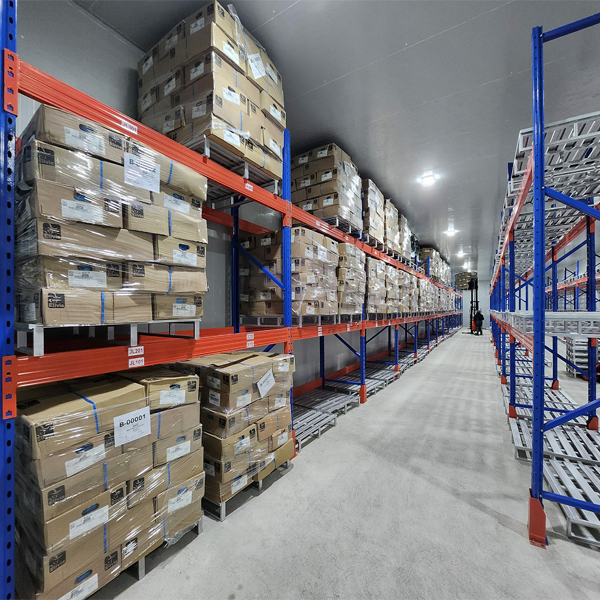
The same panel logic applies to chiller rooms at 0°C to +8°C, but the priority shifts from frost control to condensation and hygiene. A chiller room may use a different facing and joint detail because washdown chemicals and frequent door openings dominate the risk.

Blast freezers at -30°C to -40°C put more demand on panel fixing and sealant because of rapid temperature swings and heavy frost. The panel system must be detailed together with the evaporator, drain, defrost cycle, and door heating. A thicker panel alone does not solve a blast freezer problem if the ceiling support or floor insulation is wrong.
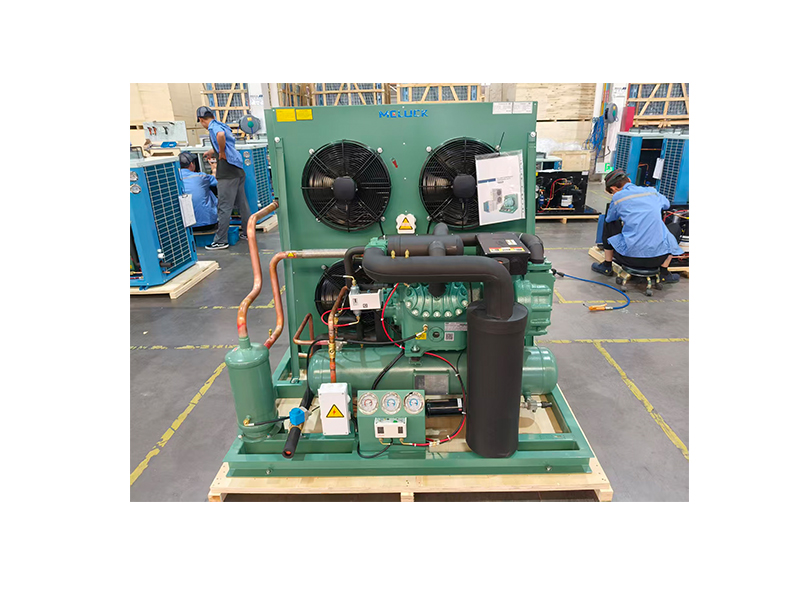
In the Cairo french fries project, the facility used -35°C blast freezing, a 5°C to 10°C packaging area, and -20°C frozen storage. That layout shows why one panel specification for the whole building is usually a false economy. Each zone has its own heat load, door pattern, and hygiene requirement.
A multi-zone frozen food plant needs a panel schedule that follows the process, not one wall build for every room. <Egypt French Fries Cold Storage Project> covers a multi-zone cold storage and blast freezer project for french fries processing.
Seafood frozen storage adds washdown, odor control, and heavy door traffic to the usual low-temperature duty. Panel facings and joint seals should be selected for the cleaning regime, not just the room temperature. A panel that performs well in a dry store may not hold up in a wet processing area.
Seafood frozen storage adds washdown and heavy door traffic to the usual low-temperature duty. <Shrimp and Fish Cold Storage Solutions in Bangladesh> covers cold storage solutions for shrimp and fish processing in Bangladesh.
Import and distribution centers usually need more than one temperature zone and a panel layout that can handle frequent product changes. An ante-room or dock shelter reduces infiltration, and the panel schedule should separate frozen storage from chilled or ambient handling areas.
Import and distribution centers usually need more than one temperature zone and a panel layout that can handle frequent product changes. <Cold Room for Food Importers and Distributors: Multi-SKU> covers multi-SKU cold room planning for food importers and distributors.
PUR vs PIR: What Changes in a Frozen Room
PUR and PIR are related materials, but they are not interchangeable by name. PUR is polyurethane. PIR is polyisocyanurate, a modified foam with a higher isocyanurate content. In frozen storage, both can work as panel cores, and the final choice usually turns on fire classification, insurance requirements, cost, and the supplier's declared data.
| Decision point | PUR | PIR | Practical reading |
|---|---|---|---|
| Core chemistry | Polyurethane foam | Polyisocyanurate foam | Both are rigid foam cores, but the product data and fire classification differ |
| Thermal performance | Suitable when thickness, joints, and vapor control are correct | Suitable, often chosen where fire performance is the priority | Compare declared thermal data, not the abbreviation alone |
| Fire behavior | Formulation-dependent | Generally better reaction-to-fire performance | Verify the EN 13501-1 classification for the actual product [3] |
| Cost | Usually lower | Usually higher | Compare installed cost, insurance, and code compliance, not just panel price |
| Best fit | Cost-sensitive frozen storage where the fire requirement is met | Projects with stricter fire or insurance requirements | Do not assume one core meets every code |
Fire performance should come from the product's reaction-to-fire classification under EN 13501-1, not from the letters PUR or PIR alone [3]. A supplier's claim that a panel is fire rated is not enough. The buyer needs the classification report, the facing and core combination it applies to, and confirmation that the tested build matches the proposed build.
In frozen storage, the fire risk is not only the panel core. Door frames, sealants, concealed spaces, electrical penetrations, and stored packaging all affect the fire strategy. The panel choice should fit the whole compartment design, not just the wall specification.
Installation and Jointing Checks Before the Room Is Sealed
Installation quality decides whether the panel data sheet translates into performance. Check panel alignment, plumb, square, joint compression, gasket continuity, and sealant cure. Panels that are forced into place can distort the joint, damage the facing, and leave a leak path that is hidden after the room is closed.
Door openings are the weakest part of the envelope. Use door heaters or anti-condensation control where specified, and protect thresholds from forklift damage. A damaged gasket or threshold becomes an infiltration path, and the refrigeration system pays for it every hour.
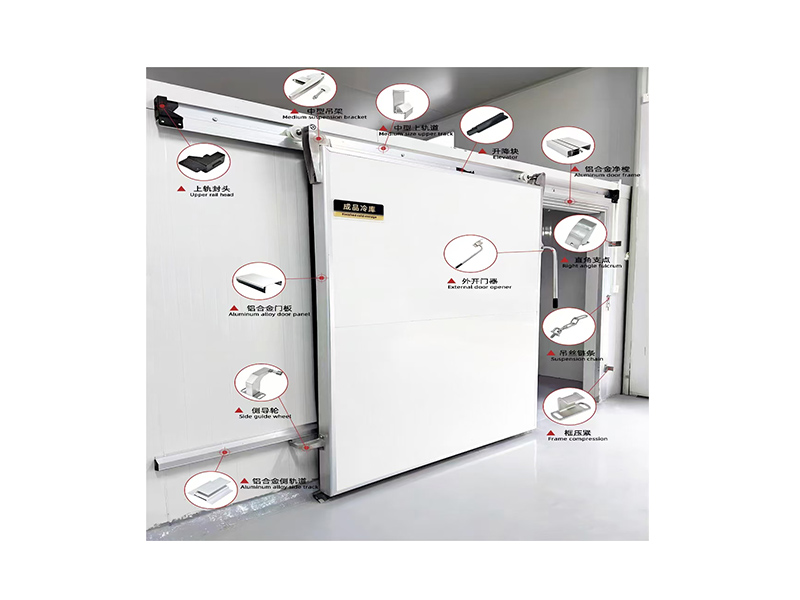
For dock and large openings, a sectional door can reduce cold air loss compared with an open doorway, but the surrounding panels and frame need reinforcement and sealing. The door is a moving part, so the panel edge, floor plate, and head detail must tolerate movement without opening a gap.
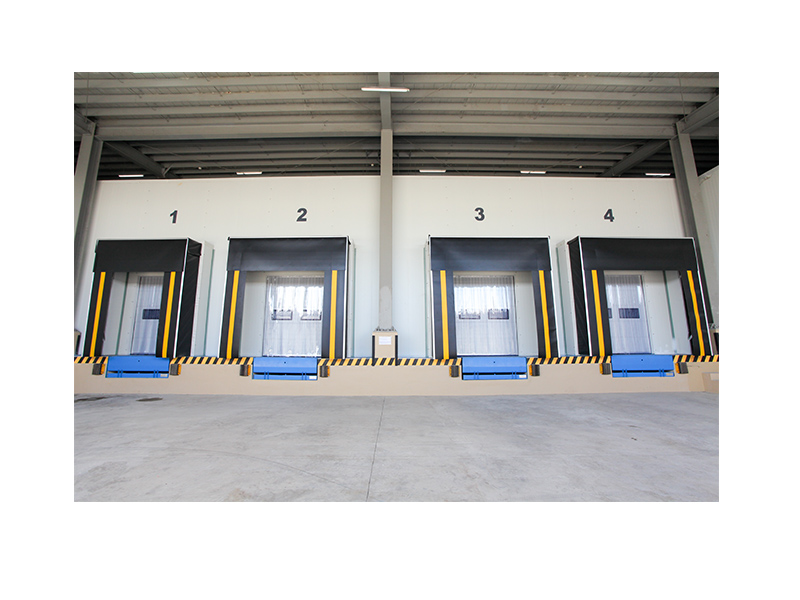
Before handover, check for gaps at penetrations, sealant adhesion, door alignment, floor insulation continuity, and drain traps. A thermal imaging survey can help locate missing insulation or air leaks, but it does not replace a proper airtightness and vapor barrier inspection.
Common PUR Panel Specification Mistakes
Several mistakes appear repeatedly in frozen storage projects. Specifying thickness without a heat load calculation is one. Treating the cam-lock as the vapor barrier is another. Using a general-purpose sealant at low temperature, mixing panel systems from different suppliers without checking joint compatibility, and ignoring floor insulation or frost heave also cause problems later.
Facing selection deserves more attention than it often gets. A coating that performs well in a dry chiller room may not survive washdown chemicals in a seafood or meat plant. The buyer should check the cleaning regime, the facing material, and the joint sealant together, because the panel is exposed to all three.
Fire classification and insurance requirements should be checked before the order, not after the panels arrive. The same applies to penetrations. A pipe or cable route that is cut on site without a sealed sleeve can become a vapor leak and a frost point. Good panel work is mostly the discipline of closing every gap before the room is commissioned.
Send the Room Data Before the Panel Schedule Is Fixed
The useful next step is to send the room schedule, not a request for a generic price. Include the room temperature, design ambient, dimensions, product load, door size and traffic, floor conditions, cleaning regime, fire requirement, and required completion date. That lets the supplier check panel thickness, joint details, door specification, and refrigeration match together.
Email meluck@meluckcooling.com or call +8617369893087 with those details, and ask for the panel build to be checked against the room's heat load and vapor control plan.
FAQ
What thickness of PUR panel is needed for a -25°C freezer room?
There is no single thickness that fits every -25°C room. Panel thickness follows the heat load calculation, design ambient, room dimensions, door traffic, and the required declared thermal performance. A room in a hot humid climate with frequent door openings needs a different build from a low-traffic store in a mild climate. Ask for the calculation basis and the panel's declared thermal data, then compare thickness and joint details together.
Are PUR panels suitable for a -40°C blast freezer?
PUR panels can be used in low-temperature rooms when the panel system is designed for the duty, but a -40°C blast freezer demands more than a thicker wall. Fixing details, ceiling support, floor insulation, low-temperature sealant, door heating, and defrost drainage all need to match the rapid temperature swings. Check the supplier's declared suitability and project references for the same temperature class rather than accepting a general cold room panel.
How do PUR and PIR panels differ in frozen storage?
Both are rigid foam sandwich panels. PIR generally offers better reaction-to-fire performance and thermal stability, while PUR is often cost-effective where the fire classification meets the project. The declared thermal data, facing, joint, and fire classification matter more than the core label. Compare the product's EN 13501-1 classification and full panel specification, not a generic claim.
Does a PUR cold room need a vapor barrier?
Yes, a frozen room needs a continuous vapor barrier on the warm side of the insulation. The panel facings and joints can contribute, but they do not replace a planned barrier. Seal joints, penetrations, door frames, floor and ceiling connections, and check the barrier before the room is closed. A gap allows moist air to condense and freeze inside the insulation, which reduces performance and can damage the panel.
How should PUR panel joints be sealed?
Joints should be clean, dry, aligned, and compressed by the cam-lock or tongue-and-groove system. Use a sealant rated for the service temperature and expected movement, and keep gaskets continuous. Sealant is not a substitute for correct panel alignment. Inspect each joint before the next panel is installed, because a joint that looks closed can still leak air.
References
[1] EN 13165:2012+A2:2016, "Thermal insulation products for buildings - Factory made rigid polyurethane foam (PUR) products - Specification," CEN, 2016.
[2] ISO 4898:2018, "Rigid cellular plastics - Thermal insulation products for buildings - Specifications," ISO, 2018.
[3] EN 13501-1:2018, "Fire classification of construction products and building elements - Part 1: Classification using data from reaction to fire tests," CEN, 2018.
If you're interested, check out these related articles:
Green Coffee Storage: Temperature and Humidity Control
Why Meluck Stocks 60Hz Condensing Units for Global Cold Rooms
Cold Room Projects in Thailand: Seafood and Fruit Cold Chain
Pharmaceutical Cold Room Temperature Uniformity Requirements
With over 15 years of experience as a MELUCK refrigeration engineer, I specialize in the design of cold storage, chillers, ice makers, and cold chain energy-saving systems, providing technical support to distributors and engineering companies worldwide.

meluck