
Cold Room Sandwich Panel Density: Key Specification Checks
Cold room sandwich panel density is one of the most misunderstood figures in a cold storage specification. It is often treated as a simple quality score, but density alone does not prove thermal performance, fire safety, or panel durability. The useful question is not which density is the highest, but which density is specified, how it is measured, and whether it remains consistent with the panel's foam chemistry and facing. Buyers who check density in context can avoid panels that look similar on a quotation but behave differently after installation. This guide explains what density indicates, how PUR and PIR panels differ, and what to request before approving a cold room envelope.
What Cold Room Sandwich Panel Density Actually Describes
Density in a cold room panel usually refers to the apparent core density of the insulation foam, not the weight of the finished panel. It is the mass of foam per unit volume, commonly stated in kilograms per cubic metre. The steel or aluminium facings are excluded from that figure because they would distort the comparison between suppliers.
The first specification check is therefore simple. When a quotation says high density, confirm whether the number applies to the foam core only or to a finished panel calculation. A core-only value is the one that matters for thermal and mechanical performance. A whole-panel figure can look high because the facings are heavy, not because the insulation is better.
A useful density specification should also include the tolerance or production range. One laboratory sample does not describe a full production batch. Foam mixed under factory conditions can vary slightly from panel to panel, and a reputable supplier should be able to state both the nominal density and the acceptable spread. If only one attractive number is offered without supporting data, the figure is not yet a specification.
How Core Density Affects Thermal and Mechanical Performance
Density influences a cold room panel in three main ways: compressive strength, dimensional stability, and insulation performance. These effects do not all move in the same direction at every density level.
Thermal Performance and Density
Foam insulation works mainly through closed cells that trap low-conductivity gas. A panel with too little foam density may contain open or collapsed cells, increasing heat transfer. A panel with an excessively high density may use more polymer without a proportional improvement in thermal resistance. The practical target is therefore not maximum density, but a density high enough to form a stable closed-cell structure and keep the panel flat and well bonded.
Strength and Panel Flatness
Higher core density does tend to improve compressive strength and screw pull-out resistance. This matters for wall panels that carry shelving, door hardware, or internal partitions. It also reduces the risk of visible undulation on large panel faces. But strength also depends on facing adhesion, foam distribution, and panel joint design. A dense core will not compensate for poor lamination or a badly fitted camlock or slip-joint connection.
For most buyers, the rule is to request density together with the panel's declared compressive strength and thermal conductivity. Those three values should be read as one set, not as separate quality scores.
PUR and PIR Panels Compared for Density and Fire Ratings
PUR and PIR are both rigid polyurethane-family foams, but they are not interchangeable on density alone. PIR chemistry is more cross-linked and generally retains its dimensional stability better at elevated temperatures. That does not automatically mean PIR has a higher density; it means the chemistry and fire performance must be evaluated together.
| Parameter | PUR Cold Room Panel | PIR Cold Room Panel |
|---|---|---|
| Main specification focus | Core density, camlock fit, standard chiller or freezer use | Core density, fire behavior, slip-joint air seal |
| Foam chemistry | Polyurethane, high-density foam core | Polyisocyanurate, more cross-linked structure |
| Better suited to | Budget-sensitive projects, chiller rooms, standard freezer rooms | Freezer rooms, high-ambient sites, fire-sensitive or code-driven projects |
| What density alone cannot confirm | Long-term gas retention and facing adhesion | Fire classification or foam consistency |
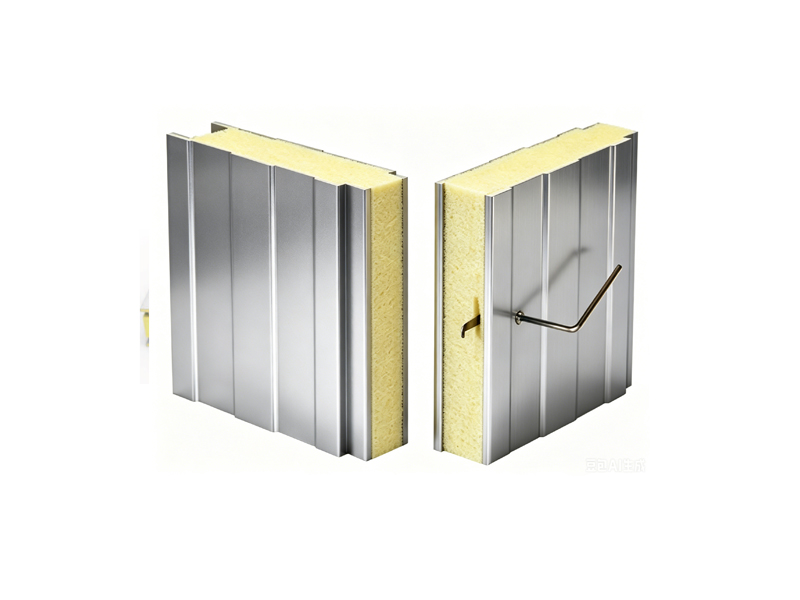
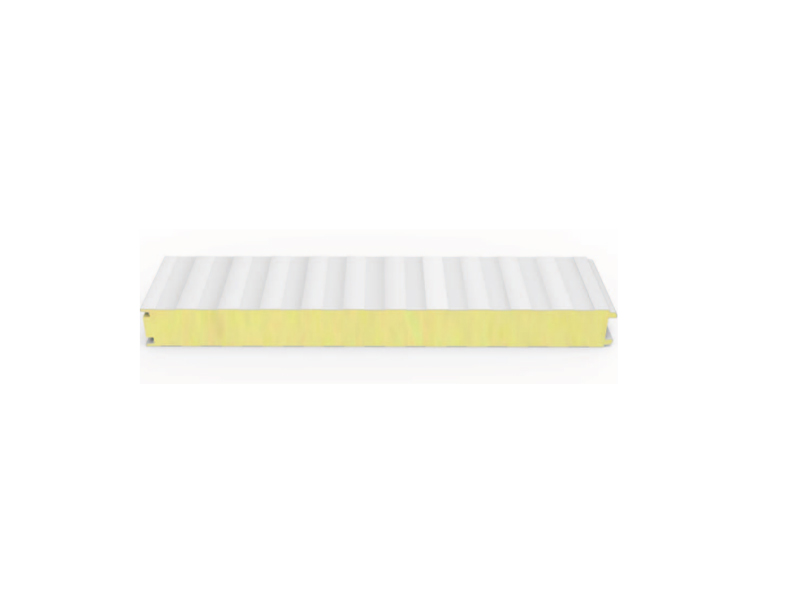
A PIR panel with a fire-improved formulation may need a specific density window to perform as declared. Chasing a higher number without knowing the formulation can create cost without a safety benefit. The safer approach is to compare the panel's complete technical data sheet, including foam type, density tolerance, thermal conductivity, compressive strength, and fire rating.
How to Verify Density Before You Approve a Panel
Density should be verified the same way as any other engineering value. Ask for the test method, the sample basis, and the production range. These checks prevent a supplier from using an attractive single figure that does not represent the panels you will receive.
| Check | What to Request | Why It Matters |
|---|---|---|
| Core density | Nominal density in kg/m³ and tolerance | Prevents comparing core-only and whole-panel figures |
| Sample basis | Test method and whether facings were removed | Density can look different if metal facings are included |
| Batch data | Typical production density range | One good sample does not prove consistent supply |
| Physical inspection | Cut panel or foam sample without visible voids | High density cannot fix collapsed cells or uneven distribution |
At MELUCK, panel specification checks start from the technical data sheet rather than a single density number. The most useful documents are the foam supplier declaration, the panel production records, and a cut sample from the actual panel thickness being quoted. If those items are unavailable, the density figure should be treated as a general guide rather than a confirmed engineering value.
Matching Panel Density and Thickness to Chiller and Freezer Rooms
A chiller room operating at 0°C to +8°C has a smaller temperature difference with the outside air than a freezer room at -18°C to -25°C. The freezer therefore demands a lower heat gain and a more stable envelope. In most projects, panel thickness and joint sealing carry more of that thermal load than small differences in foam density.
A freezer room should normally use a thicker panel than a chiller room, with the final thickness based on the target temperature, ambient conditions, and energy cost. Density then supports the selected thickness by keeping the panel surfaces stable and the joints aligned. A freezer room with high humidity or frequent door openings also needs good door sealing, because air leakage can overwhelm the benefit of a dense panel core.

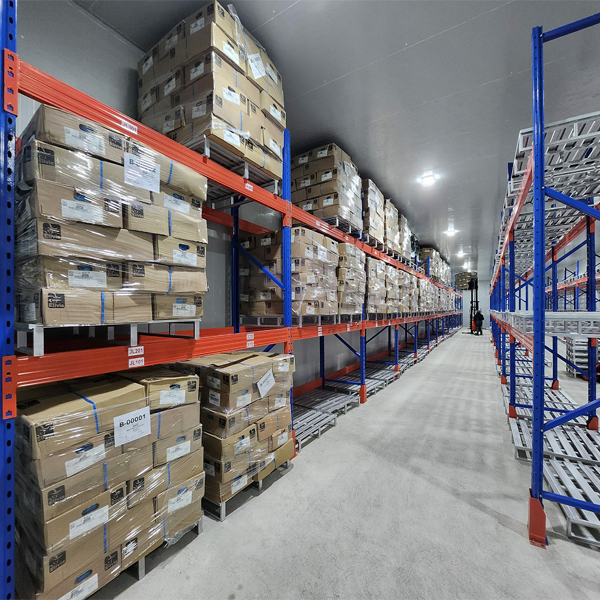
Freezer room panel selection has to balance density, thickness, and door sealing as one envelope system. <Freezer Room Solutions -25C~-18C> covers the temperature zones and equipment configurations that influence panel specification for frozen storage.
When the site is in a high-ambient or coastal climate, condensation risk and cooling load increase. The panel surface must stay above the dew point reliably, and the foam must resist ageing under heat. A density figure that worked in a moderate climate should be rechecked against the actual ambient design condition.
A panel specification that works in a mild climate can underperform in high-ambient coastal conditions. <Cold Room Project Saudi Arabia: High Ambient Gulf Design> covers design choices for heat-resistant cold room performance.
Why Higher Density Does Not Always Mean a Better Panel
A common buying mistake is to treat density as a ranking where more is always better. That logic leads to overpaying for material without a matching gain in performance. Beyond the useful range for a given foam, extra density can increase panel weight, make handling more difficult, and add cost without meaningfully lowering energy consumption.
The better test is whether the panel meets the project's required values for thermal conductivity, compressive strength, fire behavior, and dimensional stability. A slightly lower-density panel with a proven closed-cell structure and good facings can outperform a poorly made higher-density panel.
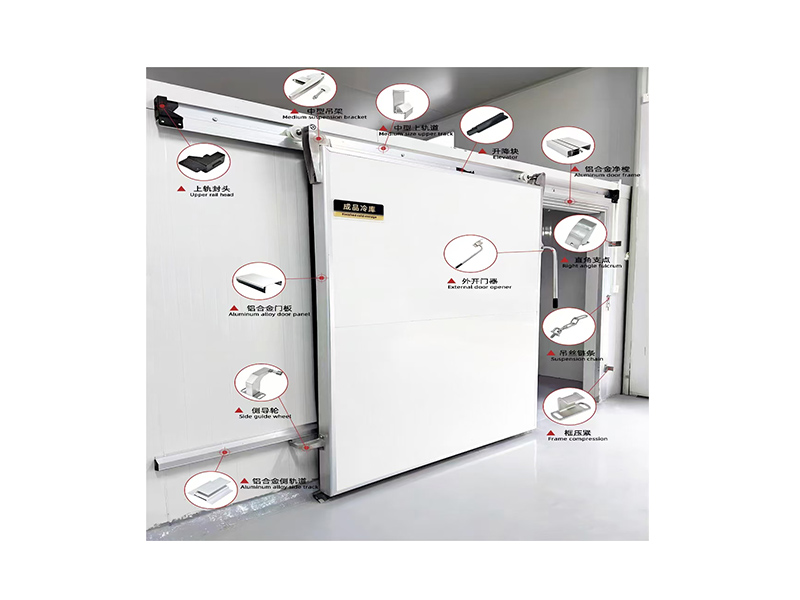
Airtightness also matters. A cold room is a system, and the performance of the panel core depends on the joints, corners, floor details, and doors. A dense panel with a poorly sealed sliding door will still allow moist air to enter and frost to form. Temperature stability is therefore not decided by foam density alone.
Temperature uniformity starts with the envelope as much as the refrigeration system. <Pharmaceutical Cold Room Temperature Uniformity Requirements> covers the control ranges that make panel density and sealing decisions easier to evaluate.
For most cold room projects, the right specification is a defined density window, a named foam chemistry, a test method, and a production tolerance. That combination gives the buyer something enforceable. A headline density figure alone is easy to quote and difficult to verify.
Confirm Your Panel Specification Before You Order
Send the project temperature range, room dimensions, required fire rating, and the panel density claims you have received. We will check the specification against the correct foam type, thickness, and panel system for your application. Contact Shanghai Meluck Refrigeration Equipment Co., Ltd at meluck@meluckcooling.com or +8617369893087.
FAQ
Does a higher core density always make a cold room panel stronger?
Not automatically. Higher density can improve compressive strength and screw holding, but strength also depends on facing adhesion, foam distribution, and panel construction. A dense panel with poor lamination can still delaminate or bend. Compare density, compressive strength, and thermal conductivity together.
How can I tell whether a quoted density is core density or whole-panel density?
Ask the supplier to confirm the test basis. Core density covers the insulation foam only and is the value used for thermal and structural comparison. Whole-panel density includes the metal facings and can look high without indicating better insulation. A clear specification should state the method and whether facings were removed.
Is PIR always better than PUR because it can have a higher density?
No. PIR generally offers improved fire behavior and high-temperature stability because of its chemistry, not simply because of density. PUR remains suitable for many chiller rooms and standard freezer rooms. The choice should be based on fire rating, temperature range, and budget, not on a density ranking.
What panel specification should I confirm for a freezer room?
Confirm the required room temperature, panel thickness, foam type, density tolerance, thermal conductivity, fire rating, and joint system. Freezer rooms usually need a thicker, well-sealed envelope than chiller rooms. Also check the door specification, because air leakage can reduce the benefit of a high-performance panel.
If you're interested, check out these related articles:
Freezer Room Solutions -25C~-18C
Ecuador Multi-Temperature Cold Storage Project
Grape Cold Storage: Temperature and Humidity Control Guide
Cold Room vs Refrigerated Truck: When Fixed Storage Wins
Myanmar Potato Seed Cold Storage Project
With over 15 years of experience as a MELUCK refrigeration engineer, I specialize in the design of cold storage, chillers, ice makers, and cold chain energy-saving systems, providing technical support to distributors and engineering companies worldwide.

meluck