
PIR Cold Room Panels: 7 Manufacturer Checks Before You Order
PIR cold room panels are only part of the finished cold store, but they determine the thermal envelope that the refrigeration system depends on every hour. The most important manufacturer checks are not how the panels look in a catalogue. They are the foam core chemistry, the fire test report, the metal facings, the joint design, and the batch quality evidence behind the order. Buyers who treat panels as a commodity often accept a lower grade core or an unsealed joint that leaks air and moisture later. A better approach is to ask for the documents and samples that prove the panel will hold the room at its design temperature under local ambient conditions.
What Happens Inside the PIR Core Determines Fire Performance
The first thing to verify is not the panel color or edge trim. It is the foam chemistry. PIR, or polyisocyanurate, and PUR, or polyurethane, look similar after lamination, but PIR is specified in many projects because it supports a stronger fire classification and better dimensional stability. A supplier that only lists foam density is not telling you whether the core is a full PIR formulation or a lower cost blend. Ask for the foam chemistry on the quotation and the test report that shows the fire class. MELUCK, for example, specifies a B1 fire rating on its PIR cold room panels because this rating matters when the room is part of a processing or export facility.
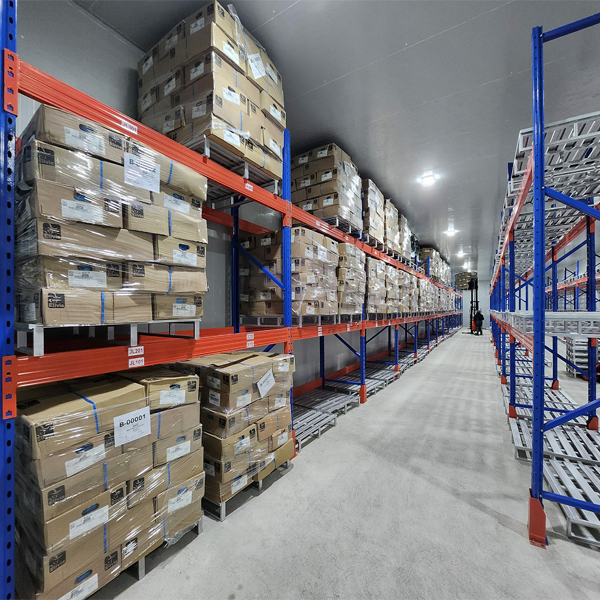
In a -25°C freezer room, the panel must also keep moisture from condensing inside the joint. A closed-cell foam core does part of the work, but the joint is where field failures usually appear. For food processing rooms, the facing surface and the joint finish are hygiene boundaries, not just vapor barriers. Any ledge, exposed foam, or unsealed gap becomes a point where condensation, dust, and organic material collect. Even a panel that tests well in a fire report can create a food safety problem if the installation leaves the joint exposed or the facing damaged.
Panel joints and surface finish are often among the first cold room details a food safety inspector checks. <Cold Room Food Safety Audit: Prep Tips for Inspections> covers how wall construction and documentation support a passing audit.
Read the Specification Beyond Density and Thickness
Panel specifications usually list density, thickness, and overall dimensions. Those three numbers are not enough to compare manufacturers. A proper specification also identifies the metal facing grade, the coating type, the connection system, and the declared thermal performance for the finished panel, not just the raw foam.
| Specification item | What to request | Why it matters |
|---|---|---|
| Foam core | Full PIR formulation and nominal density | Prevents a PUR blend from being passed off as PIR |
| Fire performance | Test report and classification | Confirms the fire rating can be supported by a document |
| Panel thickness | Thickness matched to room temperature | A chiller and a freezer have different heat gain limits |
| Facing material | Steel grade, coating, and food-safe finish | Determines cleanability, corrosion resistance, and service life |
| Connection detail | Joint type, cam-lock or slip-joint, and gasket | Controls air leakage and thermal bridging at panel interfaces |
| Batch records | Density tolerance, cutting dimensions, and date | Shows whether the factory controls production, not just the sample |
Request the metal facing standard before freight. A coated steel facing for a dry warehouse may not be suitable for a wet seafood processing room, where the panel must resist frequent washing and salt exposure. The same logic applies to door openings and floor channels. The panel envelope only performs when the details are compatible.

Chiller rooms are less demanding on thickness than freezer rooms, but surface condensation is a bigger operator complaint if the joint or door seal is weak. The panel finish should be selected for the products handled inside, especially where cleaning chemicals are used.
Seven Manufacturer Checks Before You Order
Use the following seven checks as a working list when comparing manufacturers and quotations. Not every supplier will provide every document immediately, but the response itself tells you how the company manages technical communication.
- Confirm the foam core is PIR, not a lower cost PUR blend.
- Request the fire classification test report and the test standard.
- Match the panel thickness to the room design temperature and local climate.
- Confirm the metal facing grade, coating, and cleanability for the intended use.
- Ask for a joint sample or a clear drawing of the locking detail.
- Request production batch records for density, dimensions, and cutting tolerance.
- Review packaging, moisture protection, freight handling, and after-sales support.
Compare Quotes on Delivered Envelope Cost
Panel unit price can mislead. A lower price per square meter often hides thinner steel facings, a blended core, or minimal packaging. Compare the delivered cost of the complete envelope, including corner panels, door openings, floor channel, sealants, and freight. Panels damaged in transit or exposed to moisture before installation can create latent problems that are more expensive to fix later than paying for better packaging up front.
Panel quality also changes the refrigeration load. A wall with a hidden gap or a thermal bridge forces the condensing unit to run longer, and the extra load usually shows up over years rather than in the first week. If the room is part of a high-risk operation or a long cold chain, the panel specification should be treated as part of the refrigeration system, not a separate building trade item.
A stable insulated envelope keeps the refrigeration load predictable over time. <Refrigeration System Reliability for Critical Cold Rooms> covers how envelope quality and system reliability interact in high-risk cold storage.
Plan the Joints and Site Conditions Before Signing
The best panel system can fail on site if the base is not level, the floor channel is not sealed, or the wall connections are not pulled tight in the right order. Before signing, ask the manufacturer for the installation sequence, the tolerance for panel squareness, and the recommended site preparation. For large openings, the door frame must sit inside the same thermal envelope rather than become a shortcut through the insulation.
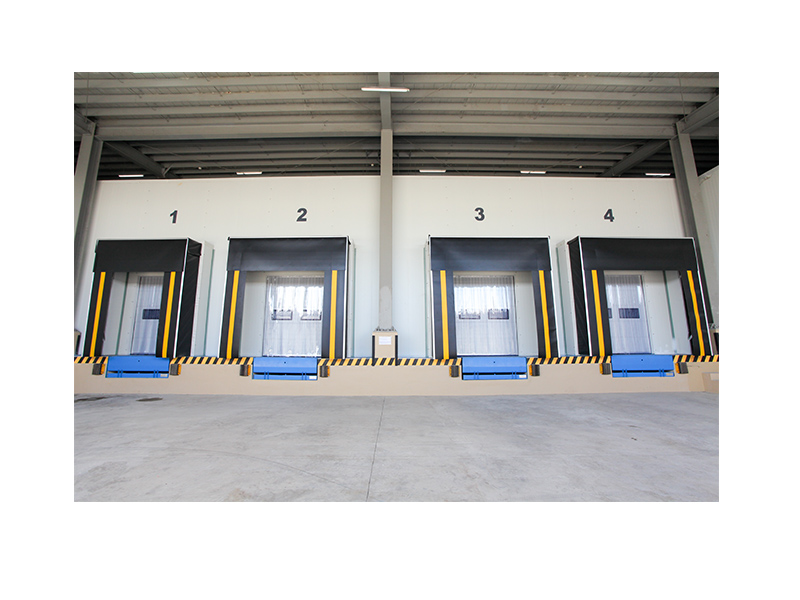
A sectional door or a sliding door opening is one of the largest interfaces in the envelope. Check that the door supplier and the panel supplier agree on the frame dimensions and the sealing detail. If the door frame is delivered by a different manufacturer, the handoff is where air leakage and condensation usually appear. For a chiller room exposed to high humidity, the cold-side joint gasket matters more than the number of locks. Confirm whether the panels are designed to be assembled with a gasket or with site-applied sealant. Both can work, but the maintenance is different.
Get a PIR Panel Specification Checked Before You Commit
Send your cold room dimensions, target room temperature, required panel thickness, and site ambient conditions to MELUCK. The engineering team can check the panel specification, joint detail, and freight plan before you commit to a manufacturer. Contact +8617369893087 or email meluck@meluckcooling.com.
Frequently Asked Questions About PIR Cold Room Panels
How do I confirm that the panels are PIR and not PUR?
A supplier should state the foam chemistry in the quotation and provide a test report or factory data sheet for the core. PIR and PUR can look the same after lamination, so the only reliable confirmation is the written specification plus the batch record. If the supplier will not confirm the core formulation, treat that as a supply risk rather than a routine omission.
What is the minimum PIR panel thickness for a freezer room?
Thickness depends on the room temperature, the local climate, and the running cost target. A freezer room generally needs a thicker panel than a chiller room because the larger temperature difference drives more heat gain and condensation risk. Ask the manufacturer to calculate the required thickness for your design temperature and ambient location instead of accepting a generic thickness by habit.
Can PIR panels be used in blast freezers and food processing rooms?
You can use PIR panels in both, but the specification changes. A blast freezer needs a panel and joint detail that can handle rapid temperature swings and low surface temperatures. A food processing room needs a facing finish and a joint detail that can be cleaned without trapping moisture or product residue. Ask for the specific application in the proposal rather than using one panel specification for every room.
What should the manufacturer include in the batch records?
The batch record should show the foam chemistry, nominal density, actual density or tolerance, panel dimensions, cutting marks, production date, and any fire test lot reference. This gives you a traceable link between the panels delivered and the specification approved. It is also the document you will want if panels arrive with dimensions that do not match the drawing.
If you're interested, check out these related articles:
Cold Room Power Solutions for Remote Locations and Islands
Indonesia Seafood Cold Storage: Reliable Cold Room Design
With over 15 years of experience as a MELUCK refrigeration engineer, I specialize in the design of cold storage, chillers, ice makers, and cold chain energy-saving systems, providing technical support to distributors and engineering companies worldwide.

meluck