
Pharmaceutical Chiller Rooms: Temperature Standards and Compliance
For pharmaceutical storage, temperature control is a regulatory and product-safety requirement, not a preference. A chiller room for pharmaceuticals typically maintains a narrow band, most commonly 2°C to 8°C, to protect vaccines, biologics, and temperature-sensitive medicines. Set the control point incorrectly, or allow slow drift during a defrost cycle or door opening, and the result can be a rejected batch, a recall, or a patient safety risk. This guide explains the temperature classes, the core compliance documents, design features that create stable conditions, and the validation work that proves a room is fit for purpose.
Pharmaceutical Chiller Room Temperature Classes
Temperature requirements begin with the product label, not with the room itself. Pharmacopoeias and regulatory guidance group storage into defined classes. The table below summarizes the classes most relevant to pharmaceutical sites.
| Storage class | Typical temperature range | Common pharmaceutical use | Primary reference |
|---|---|---|---|
| Frozen | -25°C to -10°C | Certain vaccines, biological samples, frozen APIs | USP <659> |
|
| Refrigerated | +2°C to +8°C | Vaccines, insulin, biologics, many injectables | WHO TRS 961, EU GDP |
| Cool | +8°C to +15°C | Some liquids, intermediates, certain creams | USP <659>
|
| Controlled room temperature | +20°C to +25°C, with controlled excursions | Many oral solids and dry powders | USP <659>
|
The World Health Organization model guidance for time- and temperature-sensitive pharmaceutical products frames these classes as storage and distribution requirements and calls for qualified storage equipment and temperature mapping [1]. The United States Pharmacopeia defines the formal storage terms used in the American market, including the refrigerator range of 2°C to 8°C [2]. In the European Union, GDP requires that product be stored under the conditions stated in the marketing authorization and that those conditions be demonstrated through mapping and monitoring [3].
For most finished pharmaceutical chiller rooms, the design target is refrigerated storage at 2°C to 8°C with a control setpoint near 5°C. The room must hold this band in every part of the usable volume, not only at the controller sensor. Products labeled for controlled room temperature or cool storage may need separate rooms or separate sections because one refrigeration envelope cannot realistically satisfy a 2°C to 8°C zone and a 20°C to 25°C zone at the same time.
Core Compliance Documents for Pharmaceutical Cold Storage
Compliance is a chain of documents, not a single certificate. Each document contributes a different layer: storage definitions, distribution practice, manufacturing practice, and stability conditions.
| Document | Scope | What it requires for a chiller room |
|---|---|---|
| WHO TRS 961, Annex 9 | Storage and transport of time- and temperature-sensitive medicines | Qualified equipment, temperature mapping, risk-based monitoring, handling of excursions |
| USP General Chapter <659> |
| Packaging and storage definitions | Formal temperature classes and storage terminology |
| EU GDP, 2013/C 343/01 | Good Distribution Practice in the EU | Storage under authorized conditions, mapping, calibrated monitoring, alarm handling, documentation |
| USP General Chapter <1079>
| Good storage and distribution practices | Storage area qualification, mapping, maintenance, records, deviation management |
| FDA 21 CFR Part 211.142 | cGMP storage of finished pharmaceuticals | Appropriate temperature, humidity, and light conditions per labeled storage |
| ICH Q1A(R2) | Stability testing of new drug substances and products | Long-term and accelerated conditions that inform the labeled storage range |
USP <1079> extends good storage practice from the manufacturing site to distribution and requires storage-area qualification and documented control [4]. FDA cGMP sets the obligation to store finished pharmaceuticals under conditions consistent with the label [5]. ICH Q1A(R2) supplies the stability conditions that determine what the label should say, which is why labeled ranges and room design must line up [6].
Design Features That Create Temperature Uniformity
The critical metric in a pharmaceutical chiller room is not the setpoint alone; it is spatial uniformity. A room that reads 5°C at the control sensor can still have warm corners near doors or dead zones behind high shelves. Mapping studies place sensors in three dimensions across the full usable volume and include worst-case points such as doorways, corners, ceiling areas, and return-air paths [1][3].
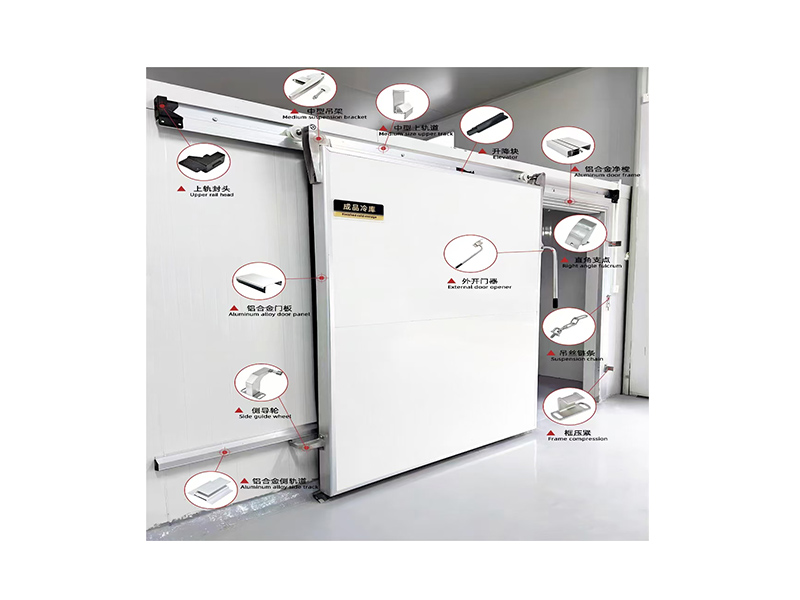
Uniform conditions come from several design choices working together. Evaporator airflow must reach every occupied zone without stratification or short-circuiting. High-density shelving needs planned air paths. Door openings should be minimized with insulated doors, strip curtains, or air curtains, and product should not be stored against walls or under direct airflow from the evaporator.
Temperature uniformity in pharmaceutical storage depends on air distribution, sensor placement, and mapping strategy. <Pharmaceutical Cold Room Temperature Uniformity Requirements> covers mapping methods and acceptance criteria in detail.
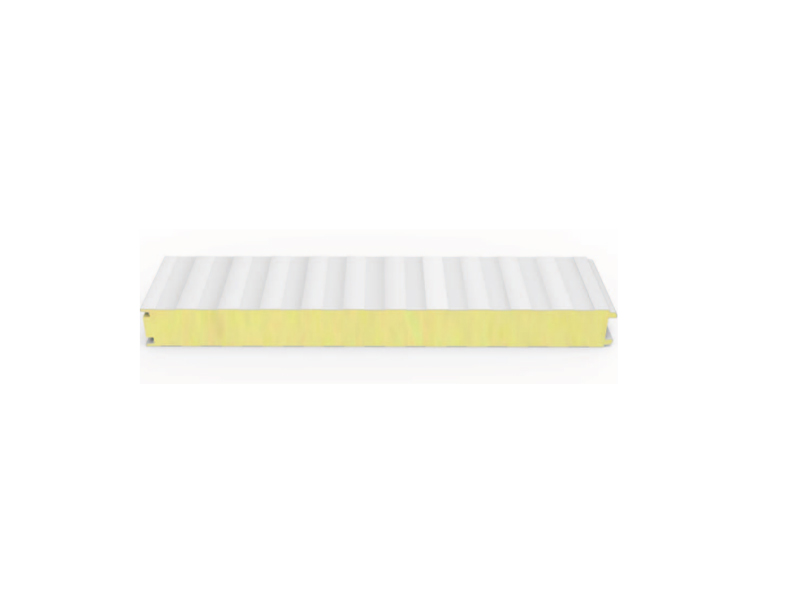
The building envelope matters as much as the refrigeration circuit. PIR insulated panels provide low thermal conductivity and a fire-performance rating commonly preferred in healthcare facilities, with sealed joints to limit moisture ingress and thermal bridging. The floor, ceiling, and door must be treated as part of the thermal boundary, and any penetration for pipes or cables must be sealed to prevent condensation and heat gain.
Monitoring, Alarms, and Documentation
A well-built room still fails in practice if nobody learns about a drift in time. Pharmaceutical cold storage requires continuous temperature monitoring with calibrated probes independent of the refrigeration controller [1][3][4]. Data loggers record at intervals short enough to capture excursions, and alarm thresholds are set to alert staff before product temperatures breach the acceptable range. Alarm handling, escalation, and investigation must be documented and available for audit [3][5].
Door management also affects performance. Each door opening admits ambient air and raises the average temperature near the entrance; strip curtains or air curtains reduce this effect.
Records are the compliance backbone. Under EU GDP and FDA cGMP, temperature data, alarm events, and corrective actions must be retained, reviewed, and retrievable [3][5]. A gap in the record can be treated as seriously as an actual temperature excursion during inspection.
Multi-Temperature Planning in Medical Facilities
Pharmaceutical operations frequently need more than one temperature class in the same footprint: a 2°C to 8°C chiller room beside a -25°C freezer, or a cool zone beside a controlled room temperature store. Keeping these zones physically separate and independently controlled prevents thermal interference and simplifies validation, because each room is mapped and qualified against its own range.
For ultra-precise medical storage, the same principles tighten further. <Blood Bank Cold Room: Ultra-Precise Temperature Control> covers the tighter alarm and redundancy strategies used in critical medical cold chain.
The same zoning logic appears in hospitals and other sites where one cold store must serve different functions. Clear zoning, separate sensors, and defined operating procedures keep product types from sharing an inappropriate temperature band.
Zoned designs also appear where cold stores serve multiple functions on one site. <Cold Room for Hospital Food Service: Zones & Safety> covers how separate temperature zones and safety practices are organized in hospital operations.
Equipment Selection for a Pharmaceutical Chiller Room
The refrigeration circuit, evaporator, and control system must be matched to the calculated load, including door openings, product pull-down, lighting, fan heat, and the local ambient climate. A condensing unit sized only for steady-state holding will struggle during pull-down after a delivery or a defrost cycle.
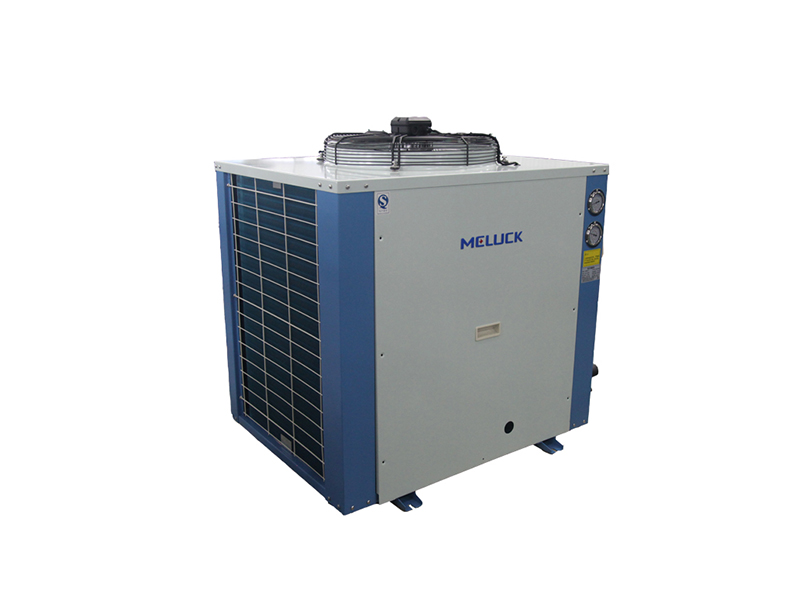
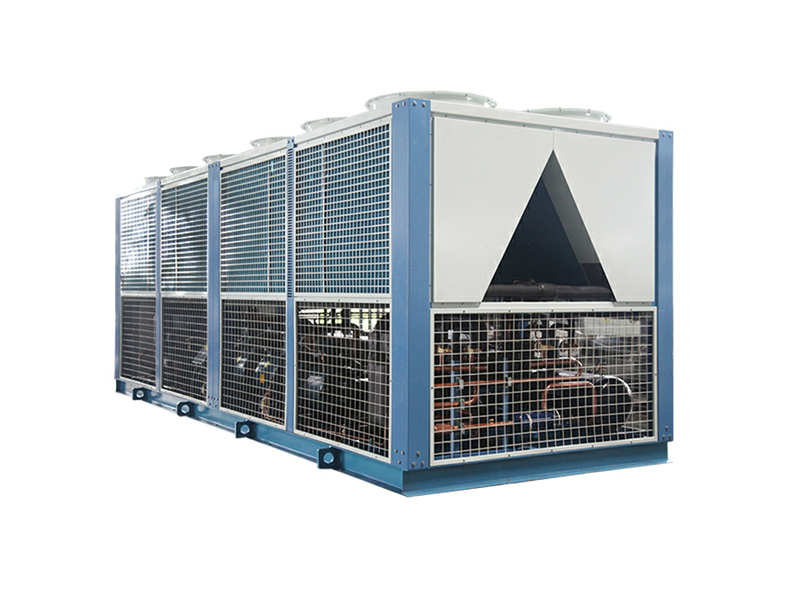
Air-cooled condensing units with matched evaporators are the standard configuration for small and mid-size pharmaceutical chiller rooms. For sites that also need process cooling, such as manufacturing equipment or water-based cooling loops, a separate industrial water chiller keeps that load off the cold room system and improves control stability.
The specification table below lists the fields a pharmaceutical cold room RFQ should capture.
| RFQ field | Typical pharmaceutical requirement | Notes |
|---|---|---|
| Storage setpoint | +2°C to +8°C, control near +5°C | Confirm against product labeling |
| Uniformity target | ±1°C to ±2°C across the mapped volume, set during mapping | Tighter for critical biologics |
| Door recovery | Return to range within a risk-assessed time | Test worst-case door opening |
| Panel fire performance | B1 or equivalent per local building code | PIR is a common choice |
| Monitoring | Independent calibrated sensors, short logging intervals | Alarm before excursion |
| Defrost | Off-cycle or tightly controlled electric defrost | Avoid product warming during defrost |
| Door type | Insulated with strip curtain or air curtain | Limit ambient ingress |
| Qualification | IQ/OQ/PQ with mapping protocol | Complete before use and periodically |
Specifying a Pharmaceutical Chiller Room
If you are preparing an RFQ or tender for a pharmaceutical chiller room, include the storage class, room dimensions, door schedule, ambient climate, and the mapping output your quality team expects. Send those details to our engineering team at meluck@meluckcooling.com and we can return a preliminary equipment match together with the documentation scope needed for GDP-style qualification.
Validation and Ongoing Compliance
Validation separates a pharmaceutical cold store from a room that merely has a cold air supply. The standard sequence is Installation Qualification, Operational Qualification, then Performance Qualification, supported by temperature mapping under empty and loaded conditions [1][3][4]. Mapping should run long enough to capture normal operation, door usage, defrost cycles, and seasonal extremes.
After initial qualification, requalification is required after significant modification, repair, or on a schedule defined by risk assessment [3][4]. Compliance is continuous: a qualified room without disciplined operation, calibration, and record review will drift out of control.
In day-to-day practice, MELUCK supplies pharmaceutical chiller rooms with PIR panels, Bitzer condensing units, and controls that support mapping and data export, which shortens the qualification documentation effort for the project team. This equipment is delivered and installed as part of the room package, with commissioning records handed over at completion.
Plan Your Pharmaceutical Chiller Room with MELUCK
Shanghai Meluck Refrigeration Equipment Co., Ltd. supplies turnkey pharmaceutical cold rooms, from PIR panel construction and Bitzer condensing units to installation, commissioning, and cold chain qualification support. Contact our refrigeration engineers at meluck@meluckcooling.com or call +8617369893087 to discuss temperature bands, mapping, and the compliance documentation your project requires.
FAQ
What temperature should a pharmaceutical chiller room run at?
Most pharmaceutical chiller rooms run at +2°C to +8°C, with a control setpoint near +5°C. The exact range must follow the product label and marketing authorization. Some products require cool storage at +8°C to +15°C, while frozen products sit at -25°C to -10°C [1][2].
What is the difference between a chiller room and a cold room for pharmaceuticals?
A chiller room is a positive-temperature refrigerated space, commonly 0°C to +8°C. In pharmaceutical use, the storage class and setpoint matter more than the name. A freezer room operates below 0°C and is a different thermal envelope. Confirm the specification by temperature range, not by room label.
Which compliance standards apply to a pharmaceutical chiller room?
Key documents include WHO TRS 961 Annex 9, USP General Chapters <659> and <1079>, the EU GDP guidelines, FDA 21 CFR Part 211, and ICH Q1A(R2) for stability-informed labeling [1][2][3][4][5][6].
How often should a pharmaceutical chiller room be temperature mapped?
Initial mapping is part of qualification. Periodic requalification usually follows an annual or risk-based schedule, and remapping is also required after major changes, repairs, or significant seasonal performance concerns [1][3][4].
Do I need an independent monitoring system?
Yes. The monitoring system should be independent of the refrigeration controller, with calibrated sensors, alarms, and audit-ready records so that a control failure remains visible [1][3][4].
References
[1] World Health Organization. Model guidance for the storage and transport of time- and temperature-sensitive pharmaceutical products. WHO Technical Report Series, No. 961, Annex 9. Available at: https://www.who.int/publications/m/item/trs961-annex9
[2] United States Pharmacopeia. USP General Chapter <659> Packaging and Storage Requirements. Available at: https://www.usp.org/harmonization/general-chapter-659
[3] European Commission. Guidelines of 5 November 2013 on Good Distribution Practice of medicinal products for human use (2013/C 343/01). Available at: https://eur-lex.europa.eu/legal-content/EN/TXT/?uri=CELEX:52013XC1105(01)
[4] United States Pharmacopeia. USP General Chapter <1079> Good Storage and Distribution Practices for Drug Products. Available at: https://www.usp.org
[5] U.S. Food and Drug Administration. 21 CFR Part 211, Current Good Manufacturing Practice for Finished Pharmaceuticals. Available at: https://www.ecfr.gov/current/title-21/chapter-I/subchapter-C/part-211
[6] International Council for Harmonisation. Q1A(R2) Stability Testing of New Drug Substances and Products. Available at: https://database.ich.org/sites/default/files/Q1A%28R2%29%20Guideline.pdf
If you're interested, check out these related articles:
Condensing Unit Installation Clearance: Key Spacing Rules
Cold Storage in Cambodia for Seafood and Rice Processing
Cold Room Project Kenya: High Ambient Equipment Selection
With over 15 years of experience as a MELUCK refrigeration engineer, I specialize in the design of cold storage, chillers, ice makers, and cold chain energy-saving systems, providing technical support to distributors and engineering companies worldwide.

meluck