
Chiller Room for Supermarket Chains: Multi-Temperature Zone Design and Equipment Selection
Chiller room design for supermarkets and distribution centers is not a single setpoint decision. It is a balancing act between food safety, product quality, store workflow, and energy use. Fresh produce, dairy, meat, seafood, and prepackaged chilled foods all need stable low temperatures, but not the same temperature and humidity band. International standards for refrigerated display cabinets, such as ISO 23953-2:2023 [1], separate product temperature classes, while walk-in chiller rooms must be designed around product holding limits and the reality of high door traffic.
What a Supermarket Chiller Room Needs to Do
A chiller room serving a supermarket normally operates between 0°C and +8°C, depending on the product mix. It supports store replenishment, short-term storage before shelf loading, and returned product handling. The design must deliver stable air temperature, appropriate humidity for high-moisture products, and fast recovery after door openings during peak shopping hours.
More important than peak cooling capacity is average holding performance. Frequent door openings cause warm air infiltration, so the room must recover quickly without freezing high-moisture products near the evaporator discharge. That makes air distribution and coil selection central to the design, not just compressor size.
Temperature Zone Planning for Supermarket Chiller Rooms
A practical chiller room layout starts with product groups, not with a single temperature. The common setpoints below provide a starting point for store planning:
| Product group | Common chiller setpoint | Design note |
|---|---|---|
| Leafy produce and fresh herbs | +2°C to +5°C | High humidity, gentle airflow |
| Dairy and eggs | +2°C to +4°C | Stable temperature, moderate humidity |
| Chilled meat | 0°C to +2°C | Avoid surface drying |
| Fresh seafood | 0°C to +2°C | Ice contact or high humidity |
| Prepacked chilled meals | 0°C to +5°C | Follow label-required holding limits |
For food safety, the U.S. Food and Drug Administration Food Code requires refrigerated storage at 5°C or below [2], but several product categories benefit from holding temperatures closer to 0°C when local standards and labels allow.
Supermarket operations rarely succeed with one setpoint for the entire cold room. Fresh produce, dairy, meat, and prepackaged meals have different respiration rates, moisture loss sensitivity, and regulatory holding limits. The result is a zoned approach: multiple chiller rooms or partitioned spaces operating within tight bands, with separate doors and evaporators to avoid cross-contamination and temperature drift.
Supermarket chain operators balancing fresh produce, dairy, and packaged meat zones need a clearer zoned design framework. <Cold Room Solutions for Supermarket Chains: Zoned Design> covers how to separate chiller and freezer zones without wasting floor space.
Chiller rooms running between -10°C and 10°C require different coil and compressor matching than standard 0°C to 8°C cold rooms. <Chiller Room Solutions -10C~10C> covers the equipment configuration for wider bands.
Refrigeration Load and Equipment Sizing
A reliable chiller room design starts with a load estimate. The main components are transmission through walls, ceiling and floor, infiltration from door openings, product pull-down, fan motors, lighting, defrost, and occasional occupancy by staff or loading equipment. The ASHRAE Handbook: Refrigeration provides a structured method for estimating transmission, infiltration, product, and internal loads [3].
After calculating the total load, add a practical safety margin for store-specific factors such as high traffic, frequent deliveries, and local ambient temperature. The equipment should be selected for the design ambient condition, not for a mild-season average. In warm climates, the condensing unit must reject heat at 35°C to 45°C ambient or higher, which can significantly reduce nominal capacity if not accounted for early.
Once the total cooling load is known, the next practical step is choosing a condensing unit that stays efficient at the store's ambient range. <High-Capacity Condensing Unit Selection for Cold Storage> covers how to match compressor capacity to peak load and ambient conditions.
Condensing Unit and Air Cooler Matching
For medium-temperature chiller rooms, air-cooled condensing units are widely used because they avoid water piping and simplify maintenance. Scroll compressors and semi-hermetic reciprocating compressors are common in the 2HP to 30HP range for store-level rooms, with larger systems used in distribution centers.
The evaporator should be selected for low air velocity where unwrapped product is stored, with enough coil surface to keep suction temperature stable. A chiller room near 0°C may need off-cycle defrost or electric defrost, while a room held at +5°C or above can often use air defrost. Frequent defrost cycles can dry out produce, so defrost should be demand-based or time-limited rather than continuous.
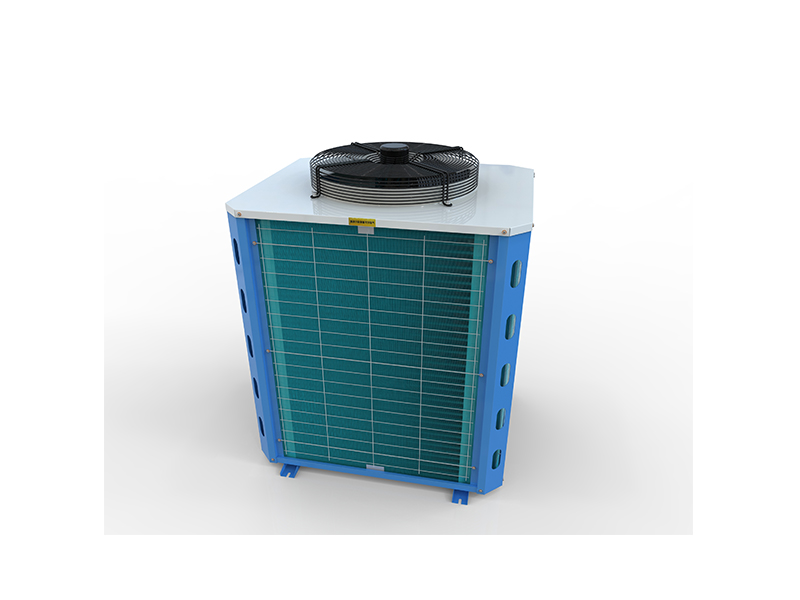
If you are currently sizing a chiller room for a store or distribution center, send the room dimensions, product mix, and expected daily turnover to meluck@meluckcooling.com. A quick load review can help prevent oversizing the compressor or selecting an evaporator with the wrong coil temperature for your humidity target.
Airflow, Defrost and Door Management
Airflow has a direct effect on product quality. Supply air from the evaporator should wash over stored product and return through clear aisles, not short-circuit directly back to the coil. Keep pallets and crates away from walls, and avoid blocking the return air path with tall stacks or temporary storage.
Door management matters as much as refrigeration capacity. Strip curtains, automatic closers, or high-speed doors reduce infiltration during restocking. Scheduling deliveries outside peak shop hours also helps the room recover faster without dropping temperature spikes into the sales floor.

Food Safety and Temperature Records
Supermarket chiller rooms are part of the cold chain, so they need records and alarms, not just a thermometer. Temperature sensors should be placed in the product zone, not only near the evaporator return. Calibration should be checked on a regular schedule, and alarm thresholds should be set close enough to trigger action before product loss occurs.
European food hygiene rules require food premises and equipment to be kept clean and maintained, with temperature control appropriate to the food being stored [5]. Similar principles apply in most export and retail markets: if temperature is not recorded, the cold chain cannot be verified.
Energy Efficiency in Supermarket Chiller Rooms
Energy performance comes from several small decisions. Setpoint discipline matters first: running a chiller room at +2°C when the product only requires +5°C increases compressor run time without adding shelf life. LED lighting, efficient fan motors, and proper door management all reduce internal heat load.
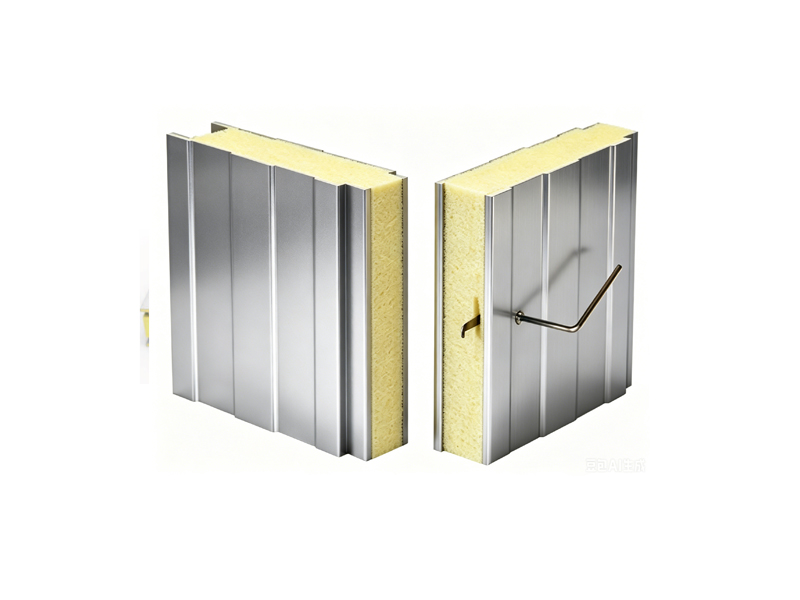
Panel insulation affects both pull-down time and steady-state energy consumption. Higher-density PIR or PUR panels with sealed joints reduce heat gain through the envelope and help hold temperature during high-traffic periods. Energy codes such as ANSI/ASHRAE/IES Standard 90.1 set minimum insulation and efficiency requirements for many commercial refrigeration systems [4].
Get Engineering Support for Your Supermarket Chiller Room
Supermarket chiller room projects are easier to specify correctly when the room layout, product mix, and local climate are reviewed together. MELUCK provides chiller rooms, condensing units, PIR/PUR panels, and air cooler selection support for store chains and distribution centers. For a technical review or quote, contact meluck@meluckcooling.com or call +8617369893087.
Frequently Asked Questions
What temperature should a supermarket chiller room run at?
The answer depends on the product mix. Many chiller rooms operate between 0°C and +8°C, but chilled meat and seafood often require 0°C to +2°C, while produce and dairy may tolerate slightly higher settings. Always follow local food safety rules and product label requirements.
How is a chiller room different from a freezer room?
A chiller room holds products above freezing, commonly 0°C to +8°C. A freezer room holds products at -18°C or lower. Freezer rooms need lower air temperatures, different evaporator coil selection, more attention to defrost, and thicker or better-performing insulation panels.
What condensing unit capacity do I need?
Room size alone is not enough to determine capacity. The correct condensing unit is based on transmission load, product load, infiltration, internal loads, and design ambient temperature. A refrigeration engineer should calculate the total cooling load before equipment selection.
How can supermarkets reduce chiller room energy consumption?
Use the warmest food-safe setpoint for each product group, reduce door openings, maintain clear return air paths, use efficient fan motors, and keep door seals and strip curtains in good condition. Defrost should be set to remove ice without running longer than necessary.
What records should I keep?
Maintain daily temperature logs, alarm event records, sensor calibration certificates, cleaning and maintenance records, and any corrective action reports. For food safety programs such as HACCP, these records should be available for audit.
References
[1] ISO 23953-2:2023, Refrigerated display cabinets - Part 2: Classification, requirements and test conditions. International Organization for Standardization.
[2] U.S. Food and Drug Administration. Food Code 2022. U.S. Department of Health and Human Services.
[3] ASHRAE. 2022 ASHRAE Handbook: Refrigeration. American Society of Heating, Refrigerating and Air-Conditioning Engineers.
[4] ASHRAE. ANSI/ASHRAE/IES Standard 90.1-2022: Energy Standard for Buildings Except Low-Rise Residential Buildings.
[5] European Commission. Regulation (EC) No 852/2004 on the hygiene of foodstuffs.
If you're interested, check out these related articles:
High-Capacity Condensing Unit Selection for Cold Storage
Condensing Unit Installation Clearance: Key Spacing Rules
With over 15 years of experience as a MELUCK refrigeration engineer, I specialize in the design of cold storage, chillers, ice makers, and cold chain energy-saving systems, providing technical support to distributors and engineering companies worldwide.

meluck