
Energy-Saving Chiller Room Design: Cut Costs, Keep Quality
Chiller rooms normally keep products between 0 °C and +8 °C for fresh meat, seafood, produce, dairy, beverages, and some pharmaceutical products. Because they run continuously, even a small design inefficiency becomes a large annual electricity bill. Chiller room energy saving therefore starts with the thermal envelope and system selection, not with controls added later.
For every 1 °C the evaporating temperature can be raised without compromising product temperature, compressor energy use usually falls by about 2–4 % [6]. The design task is to remove only the heat that must be removed and to reject it with as little electrical work as possible.
How a Chiller Room Uses Energy
A chiller room load is made up of several components: product pulldown and respiration, heat transmission through panels, air infiltration through doors, fan and defrost electrical use, and lighting [1]. Fixing one component while ignoring the others rarely delivers the expected saving.
| Load category | Main driver | Design lever |
|---|---|---|
| Product pulldown | warm product entering the room | separate pre-cooling, staged loading |
| Transmission | panel U-value, surface area, sealing | thicker PIR or PU panels, correct assembly |
| Air infiltration | door openings, temperature difference | strip curtains, rapid doors, alarms |
| Fan and compressor work | airflow design, part-load operation | EC fans, variable capacity, floating head pressure |
| Lighting and auxiliaries | lighting type and run time | LED, occupancy control |
This is a screening tool, not a replacement for a room-by-room load calculation. The exact split depends on product type, door traffic, and ambient conditions [1].

Choose the Right Panels and Seals Before Adding Capacity
The first cost-effective move in a chiller room is usually the envelope. A chiller room does not need the thick panels used at -25 °C, but undersized insulation quietly turns the compressor into a heater fighter. For 0 °C to +8 °C service, commonly specified PU panels are 75–100 mm thick, while PIR panels can often achieve a lower U-value at similar or slightly reduced thickness because of their lower thermal conductivity.
PIR cold room panels offer a practical advantage in chiller rooms where fire rating and long-term thermal performance matter. In hot climates, upgrading from a marginal panel specification to a properly calculated U-value can reduce transmission load for the entire life of the room, with no moving parts to maintain.
Seals are equally important. Poorly fitted panel joints, damaged door gaskets, and missing sweep seals let moist ambient air enter continuously. That air adds both sensible and latent load, raising compressor work and increasing frost on the evaporator.

Match Compressor Capacity and Condenser Conditions
Oversized compressors that start and stop frequently run less efficiently than correctly matched systems running longer at stable conditions. For a chiller room, the condensing unit should be selected for the actual pulldown and holding loads, not for an arbitrary safety margin. A Bitzer reciprocating condensing unit, for example, can be matched by capacity and evaporating temperature so it operates closer to its best efficiency point.
Condenser placement matters more than many operators expect. Heat rejection is not free; a dirty or obstructed condenser raises head pressure and compressor work [5]. Installation standards require enough clearance for air circulation and service access, and the room design should protect the condenser from recirculated hot air [2].
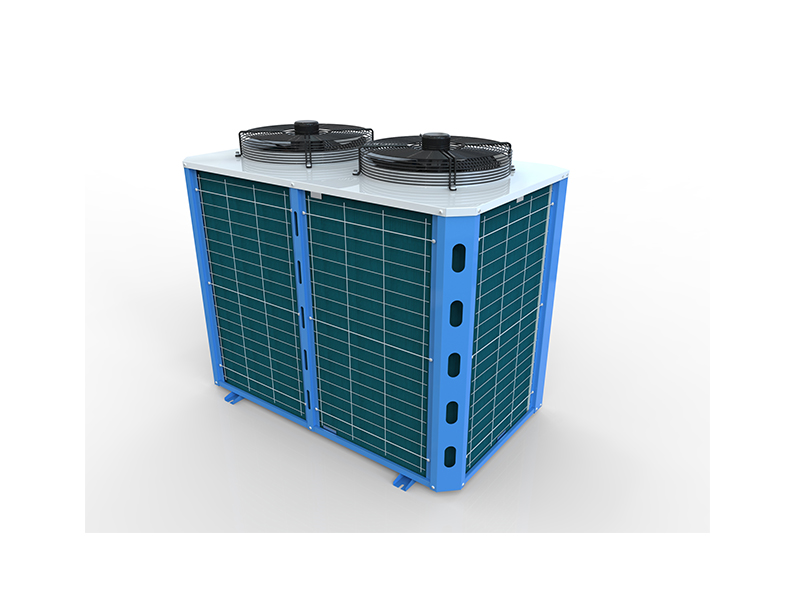
A condensing unit that cannot reject heat cleanly will consume more power even if the room temperature is stable. <Condensing Unit Installation Clearance: Key Spacing Rules> covers the spacing and airflow clearance required for efficient heat rejection.
Summer performance is often decided by compressor room ventilation and ambient conditions. High mechanical-room temperatures raise discharge pressure, increase energy use, and shorten equipment life, so ventilation and fresh-air intake paths should be reviewed at the design stage.
Keeping the compressor and condenser within design ambient conditions protects both energy performance and equipment life. <Compressor Room Airflow for Cold Storage: Design Factors> covers ventilation and heat buildup factors in mechanical rooms.
Improve Air Distribution and Defrost Control
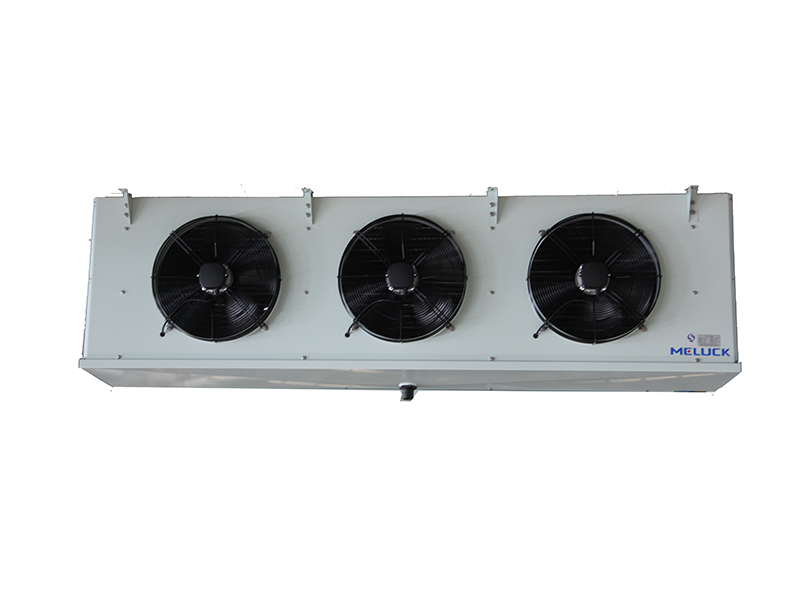
Even in a chiller room, frost can accumulate during long door-open periods or humid product loading. A correctly sized air cooler evaporator should provide uniform airflow without short-circuiting. Select a coil with a low enough refrigerant-to-air temperature difference to keep evaporating temperature as high as product temperature allows [6].
EC fan motors are now the standard energy-saving replacement in many refrigeration applications. Compared with fixed-speed shaded-pole or PSC motors running under part load, EC fans can reduce fan electrical energy use by a meaningful margin, commonly in the range of 20–50 % in retrofit comparisons [3].
Defrost method also affects energy. Electric defrost heats the coil and adds direct load, while hot gas defrost reuses compressor discharge gas and can be more efficient in rooms with frequent defrost cycles. For most 0 °C to +8 °C rooms, defrost frequency is lower than in freezer rooms, but the selected evaporator and controller should still reset defrost based on actual frost, not a fixed timer alone.
Control Set Points, Defrost, and Monitoring
Set point discipline is one of the simplest cost reducers. Running a general produce room at 2 °C when 5 °C is sufficient can add several percent to compressor energy because the evaporating temperature is forced lower. The right set point depends on product safety and shelf-life requirements, so any adjustment should be justified by product data or a food safety plan [1][2].
Monitoring closes the loop. A temperature controller with data logging, door alarms, and compressor runtime tracking shows whether the system returns to set point efficiently or cycles abnormally. Remote monitoring can flag a slowly rising discharge pressure or a stuck evaporator fan before product is lost, which also prevents wasted energy from degraded operation.
Doors, Infiltration, and Operating Discipline
Air infiltration is often the least appreciated energy load in a busy chiller room. Every door opening exchanges cold air with warm, humid outside air. Strip curtains, automatic rapid doors, and disciplined loading procedures reduce this exchange without expensive equipment.
Operational rules should be written into the site's cold chain procedures: keep doors closed, limit peak-period loading, pre-cool products where possible, and avoid storing warm containers directly against the evaporator air intake. Training is an energy measure because the best panel and condensing unit cannot compensate for a door left open.
If you are specifying a new chiller room and want to compare panel thickness, condensing unit capacity, and control options against your actual product load, send the room dimensions, storage temperature, and local ambient conditions to meluck@meluckcooling.com. A matched selection usually avoids the two most expensive mistakes: oversized mechanical capacity and undersized thermal protection.
When Energy-Saving Measures Pay Back
The right ranking of measures depends on electricity cost, daily operating hours, and product temperature requirements.
| Measure | Typical impact | Payback category | Notes |
|---|---|---|---|
| PIR or upgraded panel thickness | lower transmission load | medium term | best at new build |
| EC evaporator fans | fan energy reduction, less heat into room [3] | short-to-medium | strongest where fans run long hours |
| Floating head pressure | compressor saving in low ambient periods [5] | short | needs compatible controls |
| LED lighting | less lighting energy and heat | immediate | simple retrofit |
| Condenser cleaning and clearance | restores heat rejection, reduces power draw [5] | immediate | schedule before hot season |
| Door management and alarms | cuts infiltration and frost | immediate | training and procedure change |
A room running 24/7 in a high-tariff region may justify PIR panels and EC fans quickly, while a seasonally used room may recover panel upgrades more slowly. Use life-cycle cost, not first cost alone, when comparing quotes.
The final choice between a lower first cost and a lower running cost is a financial calculation, not a sales argument. <Cold Storage Project ROI: A Practical Financial Evaluation> covers the practical evaluation method.
Selecting Components That Keep Saving Over Time
Component selection should favor compressors and condensing units with good part-load performance, accessible service parts, and controls that support floating head pressure and variable fan speed. Genuine, correctly specified equipment tends to retain efficiency longer because clearances and lubrication stay within design limits [4].
A chiller room built with a properly matched Bitzer 25HP reciprocating compressor condensing unit, low-U-value panels, and EC-driven air coolers gives the operator more room to optimize set points and defrost without risking product quality.
MELUCK supplies chiller rooms, condensing units, air coolers, and PIR cold room panels for cold chain projects in more than 70 countries. If you are planning a chiller room or improving an existing one, send the storage temperature, product type, room size, and site ambient conditions to meluck@meluckcooling.com or call +8617369893087 for a technical selection. We can provide a matched system recommendation based on your load profile and electricity cost.
Frequently Asked Questions
What is the right temperature for a chiller room?
Most chiller rooms are designed for 0 °C to +8 °C, but the correct set point depends on the product. Meat and fresh fish generally need the lower end, while many fruits, vegetables, dairy, and beverages can operate at the higher end. Setting the room colder than required increases compressor energy without automatically improving product safety or shelf life [1].
Does raising the set point by 1 °C really save energy?
Yes, in most systems, a 1 °C higher evaporating temperature reduces compressor energy by about 2–4 % because the compressor sees a smaller pressure lift [6]. The saving is system-specific and should never push a product above its safe storage temperature.
Is PIR worth the extra cost for a chiller room?
In many cases yes, especially for new construction in hot climates or where fire rating requirements apply. PIR panels generally provide a lower U-value per unit thickness and better fire performance than standard PU panels. The extra first cost should be evaluated against electricity savings over the room's expected life [1].
How often should condenser coils be cleaned?
Clean condenser coils at least quarterly, and more often in dusty or coastal environments. Visual inspection should be part of the monthly preventive maintenance checklist. Fouled coils raise condensing pressure and increase compressor power, so cleaning is one of the fastest energy paybacks [5].
Can EC fans be retrofitted to an existing chiller room?
In many air coolers, yes, if the fan size and electrical supply allow a direct or adapted motor replacement. The best savings come when fans operate long hours and previously ran at fixed speed. A retrofit should be checked for motor compatibility and air performance before ordering [3].
References
[1] ASHRAE, "ASHRAE Handbook - Refrigeration," ASHRAE, Atlanta, GA, USA, 2022.
[2] EN 378, "Refrigerating systems and heat pumps - Safety and environmental requirements," CEN, Brussels, Belgium, 2016.
[3] European Commission, "Commission Regulation (EU) No 327/2011 implementing Directive 2009/125/EC with regard to ecodesign requirements for fans driven by motors," Official Journal of the European Union, 2011.
[4] ISO 5149, "Refrigerating systems and heat pumps - Safety and environmental requirements," ISO, Geneva, Switzerland, 2014.
[5] Carbon Trust, "Refrigeration systems: A guide to key energy saving opportunities," London, UK, 2015.
[6] International Institute of Refrigeration, "The carbon footprint of the cold chain," 29th Informatory Note on Refrigeration Technologies, Paris, France, 2021.
If you're interested, check out these related articles:
Cold Room Solutions for Supermarket Chains: Zoned Design
IQF Quick Freezer for Cheese and Dairy Processing: Key Specs
Cold Room Equipment Warranties: A Buyer’s Guide to Guarantees
With over 15 years of experience as a MELUCK refrigeration engineer, I specialize in the design of cold storage, chillers, ice makers, and cold chain energy-saving systems, providing technical support to distributors and engineering companies worldwide.

meluck