
Flake Ice Machine Energy Use: Calculate Cost per Ton of Ice
Flake ice machines are often compared by purchase price, but the real operating decision is energy use per ton. The metric that matters is specific energy consumption, usually expressed as kilowatt-hours per metric ton of flake ice, or kWh/t. Once you know kWh/t and your local electricity tariff, running cost per ton is a simple multiplication. The value you need is not always the compressor's catalog input power, because ambient temperature, inlet water temperature, condenser type, ice thickness, and maintenance all move the actual number from one installation to another.
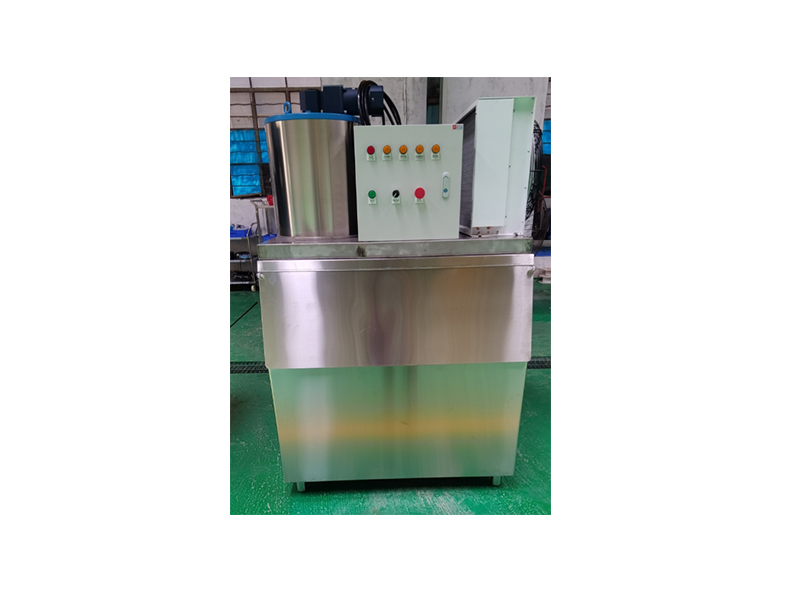
What Moves Flake Ice Machine Energy Use
The cooling load for one ton of ice has a fixed thermal floor and a variable electrical response above that floor. For water entering at 20°C and leaving as -5°C flake ice, the main loads are sensible heat removal to 0°C, latent heat of fusion, and subcooling of the ice. The calculation follows a standard refrigeration energy balance [1].
Q_total = 4.186 × (0 - t_water) + 334 + 2.108 × (t_ice - 0)
For t_water = 20°C and t_ice = -5°C:
Q_total = 4.186 × 20 + 334 + 2.108 × 5 = 428.2 kJ/kg
Convert that to thermal kWh per metric ton:
428.2 kJ/kg × 1000 kg ÷ 3600 s = 118.9 kWh_thermal/t
The electrical input is the thermal load divided by the refrigeration system COP, plus auxiliary loads such as the condenser fan, water pump, drum drive motor, and controls.
Electrical kWh/t = 118.9 ÷ COP + auxiliary kWh/t
At a reasonable air-cooled summer COP of 2.5 and auxiliary load of 4 kWh/t, the electrical energy is about 51-52 kWh/t. At a degraded COP of 2.0 with warmer condenser air, the same load becomes about 63-64 kWh/t. That swing is why field measurements, not nameplate kW, produce useful cost estimates.
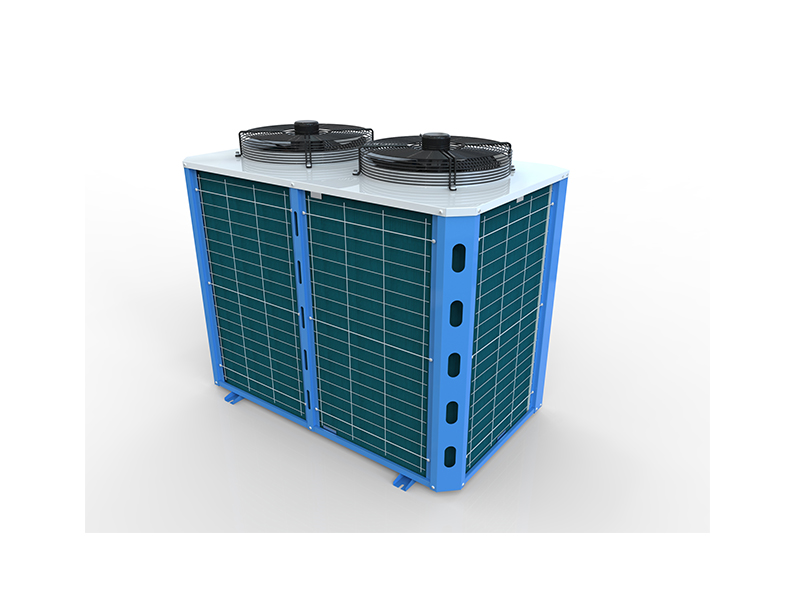
Heat rejection is the largest controllable variable. Air-cooled condensers are simple and need no cooling tower, but their condensing temperature rides above the outdoor dry-bulb temperature. Water-cooled condensers can hold a lower condensing temperature in hot climates, which raises compressor COP and lowers kWh/t, provided the cooling water cost is included.
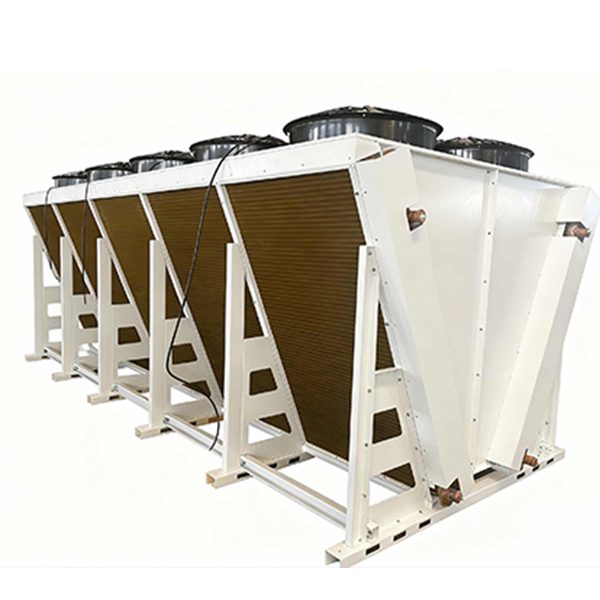
High ambient temperature reduces condenser capacity and pushes the compressor pressure ratio upward. Hot-climate installations therefore need more condenser surface or a water-cooled design to keep energy use from climbing well beyond the catalog rating [2].
High ambient temperatures reduce condenser capacity and increase compressor power draw. <Cold Room Project Kenya: High Ambient Equipment Selection> covers hot-climate equipment selection where condensing conditions drive annual energy cost.
Flake ice system energy use also depends on how the machine is integrated with the surrounding plant, not only on the refrigerant circuit.
Flake ice can serve process cooling loads where flow rate and hygiene affect system sizing. <Flake Ice for Chemical Reactor Cooling: Flow & Hygiene> covers how industrial operators balance ice demand, flow rate, and hygiene without oversizing compressors.
Calculate Running Cost per Ton in Four Steps
Step 1: Fix the operating point
Record the design values that determine the cooling load: incoming water temperature, target ice temperature, daily ice output, and the peak ambient temperature at the condenser. Do not use average annual ambient temperature when sizing, because the worst hot week usually determines peak compressor input.
Step 2: Establish specific energy consumption
Use either logged data or a supplier's full-load power curve. If you can log the machine, use this formula:
SEC = monthly kWh ÷ monthly tons produced
The monthly total should include the compressor, fans, pumps, drum drive, and any water treatment or heat-rejection equipment assigned to the ice service.
Step 3: Multiply by the electricity tariff
Cost per ton = SEC (kWh/t) × electricity rate ($/kWh)
A machine running at 60 kWh/t with a tariff of $0.12/kWh costs $7.20 per ton. If a water-cooled conversion drops SEC to 52 kWh/t at the same tariff, the cost falls to $6.24 per ton.
Step 4: Add time-of-use and demand-charge effects
Electric utilities may charge for kWh energy, peak kW demand, or both. If ice production can be shifted to off-peak hours, you may cut the energy charge even when SEC is unchanged. Peak demand charges are reduced by avoiding simultaneous startup of the ice machine, freezer compressors, and blast freezers in the same interval [3].
The same calculation works for any machine capacity. A 5-ton/day machine at 60 kWh/t uses about 300 kWh/day. At $0.11/kWh, the daily cost is $33.00, the monthly cost is roughly $990, and the annual cost is about $12,045. For a 10-ton/day machine at 52 kWh/t and $0.10/kWh, the daily energy is 520 kWh, the daily cost is $52.00, the monthly cost is about $1,560, and the annual cost is about $18,720.
Where the Energy Goes in a Typical Machine
The largest electrical consumer is always the compressor. After that, the condenser fan, water pump, and drum drive motor add smaller fixed loads that still reduce overall system COP if not controlled. A representative full-load split for a mid-size air-cooled flake ice machine is shown below [1].
| Load | Share of input | Typical role |
|---|---|---|
| Compressor | 75-85% | Raises refrigerant pressure and temperature |
| Condenser fan | 10-15% | Rejects heat to outdoor air |
| Water pump | 2-5% | Distributes water to the freezing surface |
| Drum drive and controls | 2-4% | Harvests ice and sequences operation |
When the compressor is operating at reduced capacity or cycling frequently, the auxiliary loads consume a larger share of total energy. That is another reason a correctly sized machine, running close to full ice demand, usually shows better kWh/t than a heavily oversized machine with short cycles.
How to Lower Energy Consumption per Ton
Improve condensing performance
Keep air-cooled condenser fins clean and clear of dust, scale, or packaging film. Check refrigerant charge at least once per season. Low charge reduces cooling capacity, lengthens run times, and drives up kWh/t without visible ice loss early in the cycle.
Pre-cool the makeup water
Water entering at 20°C requires less electrical energy than water entering at 30°C, because the sensible cooling load is smaller. In plants that already produce chilled water for process cooling, a small heat exchanger feeding the flake ice machine can capture some of that benefit.
Match capacity to daily demand
A flake ice machine that runs continuously at 80-90% of rated daily output usually operates more efficiently than a larger machine that cycles on and off. Specifying the correct daily capacity reduces both capital cost and long-term energy cost.
Use the right condenser for the climate
Water-cooled flake ice machines are common in seafood plants and chemical cooling applications where cooling water is available. Air-cooled machines are easier to install and suit locations where water cost is high or wastewater is difficult to manage. If your site has a large ambient swing, variable-speed condenser fans can maintain condensing pressure without wasting fan power during mild weather.
Shift production to off-peak periods
Flake ice storage allows many plants to make ice at night and draw down inventory during the peak tariff window. This does not lower kWh/t, but it lowers the operating cost per ton. It also reduces peak demand charge exposure if the ice machine is a large electrical load.
Selecting a Flake Ice Machine for Low Cost per Ton
The cheapest machine is not the one with the lowest purchase price. It is the one whose compressor, condenser, and control system match the plant's water supply, ambient conditions, and actual daily production. For small seafood counters, restaurants, and wet markets, a compact machine usually fits the demand profile: 0.5-1 Tons Flake Ice Machine. For supermarkets, fish processing rooms, and food distribution, a 2-3 Tons Flake Ice Machine balances output with space and heat-rejection requirements. For industrial seafood and food processing lines, the 5 Tons Flake Ice Machine and 10 Tons Flake Ice Machine are configured with air-cooled or water-cooled condensers, depending on site conditions.
To compare energy use for a specific model, send the daily ice requirement, incoming water temperature, design ambient temperature, and local electricity tariff to meluck@meluckcooling.com or call +8617369893087. Ask for a full-load power curve at your site conditions, not only the catalog rating point.
Get a Flake Ice Machine Energy Review
A site-specific calculation pays for itself. Include the following details in the inquiry, and a commercial refrigeration engineer can compare air-cooled and water-cooled configurations before you order.
- Daily flake ice requirement in metric tons
- Incoming water temperature and source condition
- Peak ambient temperature at the installation site
- Local electricity cost in $/kWh and any demand charge
- Preferred condenser type, or whether cooling water is available
- Existing power supply voltage, phase, and frequency
Send the details to meluck@meluckcooling.com or call +8617369893087.
FAQ
How many kWh does a flake ice machine use per ton?
Most field measurements fall between 45 and 80 kWh per metric ton, depending on condenser type, ambient temperature, inlet water temperature, refrigerant charge, and maintenance. A water-cooled machine in a mild climate may be near the lower end, while an air-cooled machine in a hot climate with warm supply water may be near the upper end.
What is a good COP for a flake ice machine?
For a flake ice machine operating at evaporating conditions below 0°C, an effective cooling COP of 2.2 to 2.8 is typical for a well-maintained system. COP drops as condensing temperature rises or refrigerant charge drifts low.
Does a water-cooled flake ice machine use less energy per ton?
In many cases, yes. Water-cooled condensing can hold a lower head pressure than air-cooled condensing in hot climates, so the compressor does less work per ton of ice. The trade-off is cooling water consumption, pumping cost, and condenser water treatment.
How can I measure the actual energy consumption of my flake ice machine?
Install a kWh meter on the machine circuit and log monthly kWh alongside the total tons of ice produced. Divide monthly kWh by monthly tons to get actual kWh/t. Use that number, not the nameplate input, for cost projections.
References
[1] ASHRAE, 2018 ASHRAE Handbook: Refrigeration, Chapter 38, "Ice Manufacture," American Society of Heating, Refrigerating and Air-Conditioning Engineers, Atlanta, GA, USA, 2018.
[2] International Institute of Refrigeration, Guide to Refrigeration Energy Efficiency, IIR, Paris, France, 2014.
[3] U.S. Department of Energy, Improving Energy Efficiency in Refrigeration Systems, Office of Energy Efficiency and Renewable Energy, Washington, DC. Available: https://www.energy.gov/eere/amo/articles/refrigeration-systems
If you're interested, check out these related articles:
Selecting a Condensing Unit for Tropical Climates
High-Capacity Condensing Unit Selection for Cold Storage
Temporary Refrigeration for Food Trade Show: Practical Guide
Flake Ice for Chemical Reactor Cooling: Flow & Hygiene
With over 15 years of experience as a MELUCK refrigeration engineer, I specialize in the design of cold storage, chillers, ice makers, and cold chain energy-saving systems, providing technical support to distributors and engineering companies worldwide.

meluck