
Copeland Scroll vs Bitzer Reciprocating for Cold Rooms
For a chiller room held between 0 and +8°C, a Copeland scroll condensing unit covers most small and medium loads with few service points. Once the room drops to -18°C and below, a Bitzer reciprocating unit becomes the more practical choice, because the pressure ratio climbs, discharge temperature rises, and the compressor may one day have to be opened in the field. That split is a starting point rather than a rule. The answer depends on the evaporating temperature, the ambient air the condenser sees, the horsepower your load actually needs, and who will be standing beside the machine when it trips.
Which Compressor Fits Which Cold Room Temperature
A chiller room at 0 to +8°C keeps the lift from evaporating to condensing pressure modest, and that is comfortable duty for a scroll. A freezer room at -25°C asks for several times that lift. There the reciprocating machine earns its place, because it can unload cylinders, and in two-stage form it splits the work across two compression steps.
Most cold room projects therefore divide along temperature rather than brand loyalty. Scroll units cover supermarket chillers, dairy and beverage rooms, processing areas at 5 to 10°C, and distribution rooms that never go below freezing. Semi-hermetic reciprocating units cover freezer rooms, ice cream storage, blast freezers, and any duty that has to pull product down quickly or hold -25°C through a hot season.

| Decision point | Copeland scroll condensing unit | Bitzer reciprocating condensing unit | What the difference does not prove |
|---|---|---|---|
| Chiller room at 0 to +8°C | Well matched from 2 to 30HP | Also suitable, with more service points | That either holds room temperature more tightly |
| Freezer room at -18 to -25°C | Possible with low-temperature injection models, outside the medium-temperature range Meluck lists for scroll | Standard low-temperature range from 4 to 34HP | That a horsepower rating at one evaporating temperature carries over to another |
| Blast freezer at -30 to -40°C | Not the usual selection | Two-stage models reach -50°C evaporating | That pulldown time is set by the compressor brand alone |
| Repair after a failure | Welded shell, replaced as a unit | Valve plates and heads can be serviced | That a repair happens quickly without parts and a trained technician nearby |
| Noise and vibration | Smooth torque, low pulsation | Discharge pulsation, needs careful pipe support | That the compressor sets the sound level at the boundary fence |
| Part load on a large room | One unit or a small group | Parallel racks with three or four compressors | That part-load efficiency follows from the compressor type |
Those ranges come from the Meluck product catalog, not from a like-for-like laboratory test of the two brands. A 20HP scroll unit and a 20HP reciprocating unit do not deliver the same capacity at the same evaporating temperature, and the gap widens as the room gets colder. Read the published application envelope at your design evaporating and condensing points before you compare prices.
How Scroll and Reciprocating Compression Differ
A scroll compressor squeezes refrigerant between two interleaved spiral wraps. One wrap stays fixed while the other orbits inside it. Gas enters at the outer edge, becomes trapped in crescent shaped pockets, and is pushed toward the center as the pockets shrink. Because each pocket sits somewhere in the compression cycle at all times, discharge flow is continuous and torque stays smooth. There are no suction or discharge valve plates to fatigue, and the count of moving parts is low.
A reciprocating compressor works in steps. Each piston draws gas through a suction valve, closes it, compresses the charge, then pushes it out through a discharge valve. Compression is intermittent per cylinder, so the discharge line carries pulsation and the pipework needs proper support. In exchange, the design tolerates a high pressure ratio and can be built as a two-stage machine, which is why very low temperature rooms still lean on it.
The practical consequence is compression ratio. A chiller room at 0 to +8°C asks for a modest lift from evaporating to condensing pressure. A freezer at -25°C asks for a much larger one, which raises discharge temperature and reduces volumetric efficiency. A scroll running at a high ratio needs vapor injection or an economizer circuit to stay inside its envelope. A reciprocating machine can unload cylinders and, in two-stage form, share the lift across two compression steps.
Capacity, Part Load, and Multi-Compressor Layouts
Capacity usually arrives as one number on a specification sheet: the horsepower. That number says less than the compressor model behind it. The Meluck range runs Copeland scroll condensing units from 2 to 30HP and Bitzer reciprocating units from 3 to 50HP, including two-stage models rated down to -50°C evaporating and parallel racks built from three or four piston compressors.
| Compressor platform | Horsepower range | Typical room | Check before ordering |
|---|---|---|---|
| Copeland scroll, medium temperature | 2 to 7HP | Small chiller room, shop, food service | Evaporating temperature limit |
| Copeland scroll, medium temperature | 8 to 30HP | Distribution chiller room, processing area | Starting current and condenser match |
| Bitzer reciprocating, medium temperature | 3 to 50HP | Chiller and medium rooms, food plants | Oil return on long pipe runs |
| Bitzer reciprocating, low temperature | 4 to 34HP | Freezer room at -18 to -30°C | Defrost method and superheat setting |
| Bitzer two-stage reciprocating | 16 and 20HP | Blast freezer, IQF line | Interstage pressure and oil control |
| Bitzer piston compressors in parallel | Three or four compressors | Large room with variable load | Staging control and header sizing |
Part load is where the layout matters more than the compressor label. A single compressor runs at its own capacity or stops, so a room sized for peak harvest load spends much of the year cycling. A parallel rack brings compressors on and off in steps, which keeps the running machines closer to their efficient range and leaves the room with capacity if one circuit fails. The trade is a larger plant room, more controls, and more joints to leak.
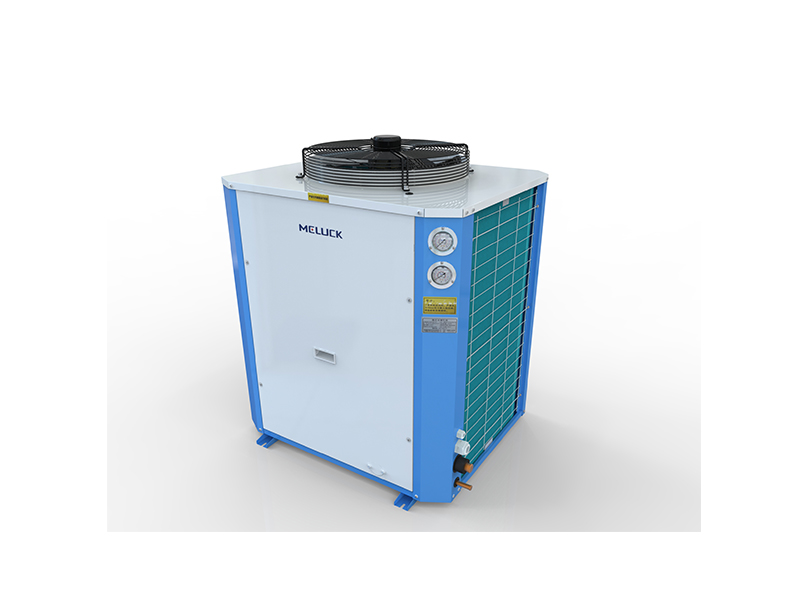
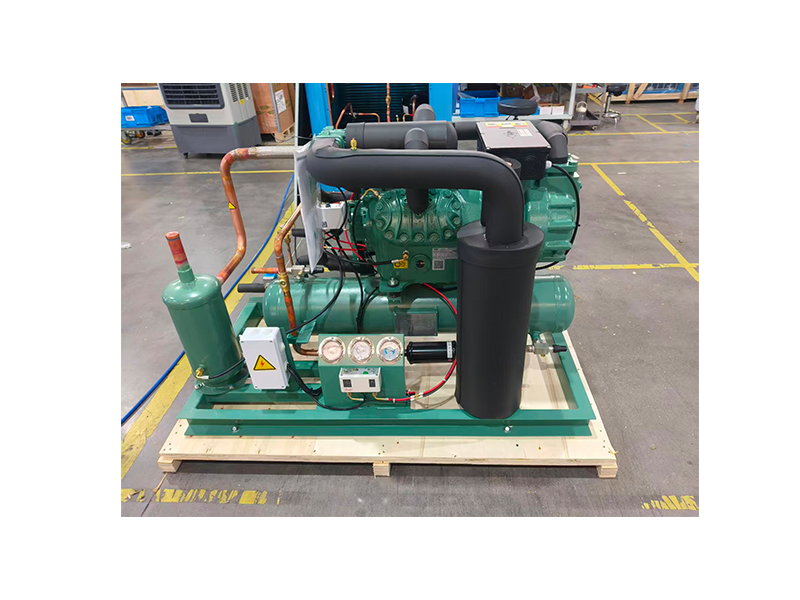
For a single freezer room in the 4 to 34HP band, one low-temperature reciprocating unit with a matched evaporator is usually the simpler installation. Reserve the rack for rooms where the load swings widely or where a stoppage would halt production.
Above that, the choice moves again. A screw compressor unit covering -25 to -40°C makes sense once a single large room needs capacity that would otherwise take several piston machines.
A multi-zone plant often mixes platforms instead of standardizing on one. <Egypt French Fries Cold Storage Project> covers how a Cairo factory split blast freezing, packaging, and frozen storage across Bitzer systems of different sizes.
Service, Spare Parts, and the Real Cost of Downtime
A scroll compressor is welded shut. When one fails, the answer is a replacement compressor and a refrigerant recovery, not a valve job. Semi-hermetic reciprocating compressors were designed around the opposite approach: the cylinder head comes off, valve plates and gaskets are replaceable, and a trained technician can return a worn machine to duty using parts from stock.
Neither design is superior in the abstract. The question is what your maintenance setup can support. If the nearest refrigeration technician is two days away and carries no spares, a repairable compressor is worth little unless the parts sit on your own shelf. If your team already services reciprocating machines, a scroll unit introduces a platform they cannot open.
Four checks belong in the commissioning report for either unit: compressor amps against the nameplate at design conditions, superheat at the evaporator outlet, discharge temperature, and condenser approach. Those four readings tell you more about the installation than any brand comparison, and they give the next technician a baseline.
Noise follows a similar pattern. Smooth torque makes a scroll quieter at the compressor, but at unit level the condenser fans and airflow often dominate the reading. Reciprocating units add discharge pulsation, which mounting and pipe routing can absorb.
Noise complaints tend to arrive after handover rather than during commissioning. <Condensing Unit Noise Reduction for Cold Room Applications> covers noise reduction measures for condensing units in cold room applications.
Hot Climates, 60Hz Power, and Condenser Sizing
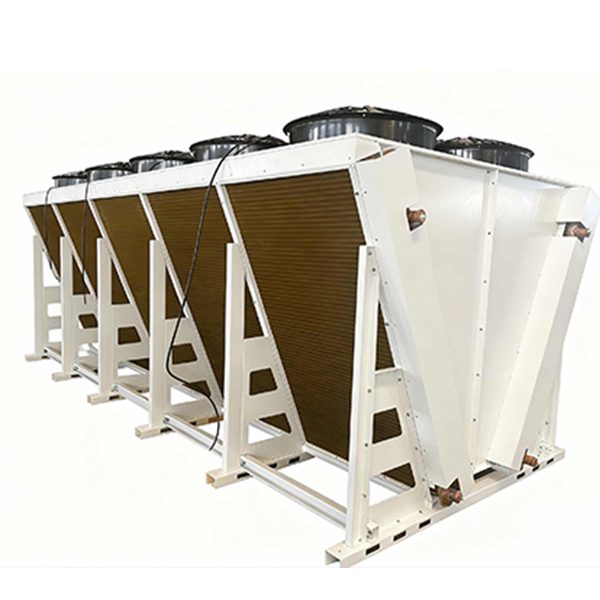
An air cooled condensing unit is selected at an ambient temperature, and the capacity on the datasheet belongs to that ambient. A condenser sized for 32°C loses capacity when it sees 43°C in July, and the compressor runs longer to hold the room. Select on the summer dry bulb at the actual condenser position, not on an annual average, and check that the unit has clear air on the discharge side with no wall or second unit pushing hot air back into the intake.
Electrical supply changes the selection as much as climate does. A motor wound and rated for 50Hz behaves differently on a 60Hz supply: shaft speed rises, mass flow and current change, and the nameplate figures no longer describe the machine. Ask for compressor and fan data at your actual voltage, phase, and frequency. On generator power, add starting current to the conversation, since a scroll starts fully loaded while some reciprocating machines can start unloaded.

Refrigerant choice belongs in the same review. Confirm that the compressor model is approved for the gas you intend to use and that the oil and elastomers match it, particularly where local rules are pushing projects away from high global warming potential blends.
Electrical mismatches are often discovered at commissioning rather than at quotation. <Cold Room Project in Nigeria: 60Hz Equipment for Hot Climate> covers how 60Hz equipment is specified for hot climate sites.
What to Send for an Accurate Condensing Unit Quote
Selection errors start with a missing input, not a wrong brand. Six fields settle most of the ambiguity.
| Field | What to send | Why it changes the selection |
|---|---|---|
| Room temperature and product | Set point and what is stored | Sets the evaporating temperature and the compressor family |
| Room size and panel thickness | Length, width, height, panel thickness | Drives the load and the evaporator selection |
| Design ambient | Summer dry bulb at the condenser position | Sizes the condenser and the fan power |
| Power supply | Voltage, phase, 50 or 60Hz | Determines motor data, contactors, and starting current |
| Piping run | Horizontal length and vertical lift | Affects oil return, refrigerant charge, and capacity correction |
| Refrigerant | The gas you intend to use, plus any local restriction | Sets the compressor envelope and the oil |
With those six on the table, the comparison between a Copeland scroll unit and a Bitzer reciprocating unit becomes a calculation instead of a preference. Without them, every quotation is a guess dressed as a specification.
Match the Unit to the Room Before You Order
Send the room temperature, the product, the room dimensions, the summer ambient, the power supply, and the piping run to meluck@meluckcooling.com or +8617369893087. MELUCK will return a matched selection: compressor platform, horsepower, condenser and evaporator models, and electrical data for your supply. If the site sits at high altitude, runs on a generator, or needs a blast freezer that pulls down fast, say so in the first message, because those three conditions shift the selection more than the brand choice does.
FAQ
Is a Copeland scroll condensing unit suitable for a -25°C freezer room?
Usually it is not the first choice. Low-temperature scroll models with vapor injection can operate in that range, but the high pressure ratio raises discharge temperature and reduces volumetric efficiency, so the application envelope becomes tight. In the Meluck range, scroll units are listed for medium temperature work, while freezer rooms at -18 to -25°C are covered by low-temperature reciprocating models. Check the published evaporating range for the exact compressor with your refrigerant before committing, and do not assume that a low-temperature scroll will match a reciprocating unit at the same nominal horsepower.
How low can a Bitzer reciprocating condensing unit go?
Single-stage low-temperature models cover freezer duty in the -18 to -30°C band, which handles most cold storage rooms for meat, seafood, and ice cream. For blast freezers and IQF lines, two-stage models in the 16HP and 20HP sizes reach down to -50°C evaporating. Below that, screw compressor units take over. The limit is set by the specific compressor model, the refrigerant, and the condensing temperature on the day, so ask for the envelope at your design point rather than a single headline figure.
Which unit is cheaper to run, scroll or reciprocating?
It depends on the room temperature and the load profile more than the compressor type. At chiller temperatures and near full load, a scroll runs efficiently with few losses. At freezer temperatures the pressure ratio punishes a single-stage machine of either type, and a two-stage or parallel arrangement usually wins on running cost. Compare annual energy at your ambient, duty hours, and defrost method, using each quote's stated evaporating and condensing points. A lower horsepower unit that runs longer is not automatically the cheaper one.
Do I need a parallel condensing unit instead of one compressor?
Only when the load or the risk justifies it. A large room with a wide seasonal swing benefits from a three or four compressor rack, because capacity steps down with the load and one failure does not stop the room. A single small chiller or freezer room is simpler to install, easier to commission, and has fewer joints to leak with one unit. Decide on two questions: how far the load moves across the year, and whether a stopped compressor would halt production or merely delay a shipment.
If you're interested, check out these related articles:
Vietnam Cold Room Projects for Seafood and Agriculture
Cold Storage Projects in Ghana for Food and Agriculture
With over 15 years of experience as a MELUCK refrigeration engineer, I specialize in the design of cold storage, chillers, ice makers, and cold chain energy-saving systems, providing technical support to distributors and engineering companies worldwide.

meluck