
Condensing Unit Noise Reduction for Cold Room Applications
Condensing unit noise isn't just a nuisance. In residential neighborhoods it triggers tenant complaints; in commercial cold storage it can violate workplace noise regulations and interfere with sensitive food storage environments. Over fifteen years of designing cold rooms, I've learned that controlling noise starts long before you install sound barriers. It begins with selecting the right compressor type and planning the placement of the outdoor unit. In this guide, I'll walk through the sources of condensing unit noise, practical reduction strategies for new installations and retrofits, and how your choice of compressor directly affects decibel levels. Whether you're installing a walk-in cooler or a cold storage warehouse, these steps help you avoid costly noise issues.
The Impact of Condensing Unit Noise on Residential and Commercial Cold Rooms
Noise from condensing units travels surprisingly far, especially at night when ambient sound drops. For residential areas, local noise regulations often cap sound at between 45 and 55 dB(A) measured at the property line. A standard condensing unit can easily exceed 65 dB(A) at one meter, so without proper attenuation, you're likely to violate those limits.
In commercial cold storage, the problem is different. Warehouse staff may be exposed to continuous hum for entire shifts. Prolonged exposure above 85 dB(A) requires hearing protection under many occupational safety standards. Even at lower levels, constant mechanical drone causes fatigue and reduces productivity. I've visited food processing plants where workers built improvised barriers out of insulation panels just to reduce the noise from Bitzer screw compressor units, not realizing the barriers were restricting airflow and causing the system to overheat.
Noise also signals system distress. A condensing unit that suddenly gets louder often has a failing fan motor or a compressor with loose internal parts. Managing noise is both a compliance and a maintenance issue.
Main Sources of Condensing Unit Noise
Most condensing units produce noise from three primary components: the compressor, the condenser fan, and the unit's casing vibrations.
- Compressor noise: Reciprocating compressors generate tonal noise at multiples of their operating speed, which is more noticeable than the broader sound spectrum of scroll compressors. Hermetic compressors are generally quieter than semi-hermetic ones because their sealed shell acts as a natural dampener. For cold room applications requiring higher horsepower, semi-hermetic Bitzer models are often the only practical choice, and they demand dedicated noise control measures.
- Fan noise: The condenser fan pushes air across the coil. Larger units or multiple fan assemblies can produce significant aerodynamic noise. At low speed, the fan is barely noticeable, but as temperature demand rises and fans ramp up, sound levels increase.
- Vibration-induced noise: Refrigerant piping, mounting brackets, and even the unit's sheet metal casing vibrate in sympathy with the compressor and fan. These vibrations transmit through the building structure, turning a quiet indoor work area into a boom chamber.
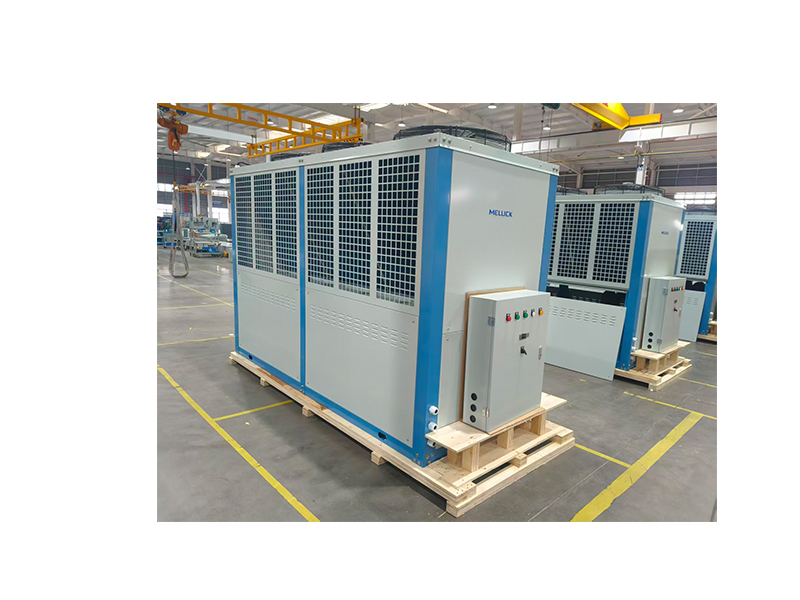
Designing a Low-Noise Condensing Unit Installation from the Start
The most cost-effective noise control happens before you pour the concrete pad. After the unit is installed and running, retrofits become more expensive and less effective.
- Choose the right location: Place the condensing unit on the side of the building furthest from neighbors and working areas. Avoid corners or recessed areas where sound reflects and amplifies. A minimum clearance of 1.5 meters from walls allows proper airflow and reduces the need for high fan speed.
- Use a vibration isolation pad or spring mounts: Set the unit's steel frame on a concrete pad with a rubber isolation mat or spring isolators. The isolator's natural frequency should be below the compressor's dominant vibration frequency to effectively break structure-borne transmission. We've used this on Bitzer 12HP condensing units for small cold rooms with excellent results.
- Install flexible connectors on refrigerant piping: Rigid copper lines transmit vibration directly into the building. Flexible braided stainless steel connectors at the unit's suction and discharge ports decouple the vibrating system from the rest of the structure.
- Consider a sound-absorbing enclosure or barrier wall: Acoustic enclosures lined with mineral wool or foam can cut noise by 10–15 dB(A). Ensure the enclosure does not restrict airflow. We usually design vents with baffles that let air in while trapping sound. For larger systems, a simple block wall with a roof can shield neighbors from line-of-sight noise.
Selecting Low-Noise Condensing Units for Cold Rooms
Not all condensing units are created equal when it comes to noise. When specifying a system for a client who values quiet operation, the compressor type is the first filter.
- Hermetic reciprocating compressors (small capacity, up to about 10 HP) are the quietest option for small walk-in coolers. They're fully sealed, so noise and vibration are well contained.
- Scroll compressors like Copeland scroll units offer smoother, quieter operation than reciprocating semi-hermetics for medium capacities. They produce fewer tonal peaks and a broader, less intrusive sound.
- Semi-hermetic reciprocating compressors (Bitzer 4-series, 6-series) are reliable workhorses but have more moving parts and tend to be louder. When using these, we often recommend investing in a factory-supplied acoustic enclosure or planning for a site-built enclosure from day one. Bitzer offers low-noise versions with enhanced valve plates and optimized oil pumps, which can reduce noise by 3–5 dB(A).
- Screw compressors for large industrial applications are inherently quieter than many reciprocating units at high capacities, though they still require sound treatment.
The following table compares typical sound levels for different condensing unit types.
| Compressor Type | Unit Size | Approx. Sound Pressure Level at 1m (dB(A) | Noise Character |
|---|---|---|---|
| Hermetic Recip (Invotech 2HP) | 2HP | 58 | Low, enclosed |
| Copeland Scroll (8HP) | 8HP | 62 | Broad, smoother |
| Bitzer Semi-hermetic Recip (12HP) | 12HP | 69 | Tonal, distinct |
| Bitzer Semi-hermetic Recip (40HP) | 40HP | 73 | Loud, tonal |
| Bitzer Screw (75HP) | 75HP | 68 | Lower tonal, high frequency |
Note: exact levels vary with installation; the above numbers are from in-house measurements using A-weighted scale.
If your project location has strict noise limits, selecting the appropriate condensing unit from the start saves thousands in later retrofits. Send your site noise requirements to meluck@meluckcooling.com and we'll match a unit that meets your acoustic limits.
Retrofitting Existing Condensing Units with Noise Reduction
If your condensing unit is already making noise and moving it is not an option, several retrofits can help.
Build an acoustic enclosure: A simple metal-clad enclosure lined with 50 mm thick sound-absorbing foam can reduce radiated noise by 8–12 dB(A). Ensure the enclosure has intake and exhaust louvers that are lined with foam. We've built enclosures for Bitzer 25HP units installed in residential hotel cold rooms; post-installation noise levels at the property line dropped from 64 dB(A) to 51 dB(A), well within local limits.
Install a compressor sound blanket: Custom-fit insulated blankets wrap around the compressor body to absorb vibrational noise. They're especially effective on semi-hermetic compressors where a lot of noise radiates from the cylinder heads.
Vibration isolation retrofits: If the unit is bolted directly to a pad without isolation, inserting rubber pads under the mounting feet can immediately cut structure-borne noise by 5–8 dB(A). This is a low-cost first step.
Fan and airflow adjustments: Sometimes changing the fan blade pitch or installing a variable-speed fan controller reduces noise without sacrificing cooling capacity. Lower fan speeds at night can dramatically cut perceived noise level.
Partnering with a Refrigeration Engineering Expert for Noise Control
I've seen too many cold room projects where noise became an afterthought. The condensing unit gets placed where there was leftover space, no acoustic measures are taken, and then the owner spends double retrofitting later. If you're planning a new cold room or upgrading an existing one, especially in noise-sensitive locations like supermarkets, hotels, hospitals, or residential cold storage facilities, it's worth consulting with a supplier who can model the expected sound levels and design the system from the start with acoustic performance in mind.
At MELUCK, we supply Bitzer and Copeland condensing units sized from 2HP to 50HP for cold room applications, and our engineering team regularly designs custom acoustic enclosures and vibration isolation packages. For projects in Latin America, Africa, and the Middle East where local noise regulations vary, we match the unit selection to comply with specific dB(A) limits at the property line.
If your next project involves a noise-sensitive location, send your cold room specifications and location details to meluck@meluckcooling.com or call +8617369893087, and we'll help you spec a quiet, efficient system that meets both local regulations and your operating needs.
Common Questions About Condensing Unit Noise Control
Is a louder condensing unit always less efficient?
Not directly. Some high-efficiency compressors run at higher speeds and may be a few decibels louder, but sound and efficiency are not always correlated. A well-selected compressor matched to the load will run within its design envelope, and noise is often a function of mechanical wear or poor installation rather than inherent efficiency.
Can I put a wooden fence around the condensing unit to block noise?
A solid fence can provide some line-of-sight noise reduction, but wood reflects rather than absorbs sound. An acoustic barrier needs mass and sound-absorbing lining to be effective. A fence alone typically reduces noise by only 3–5 dB(A), while a properly designed enclosure reduces by 10 dB(A) or more.
How much does it cost to retrofit an existing condensing unit for noise control?
A simple vibration isolation kit (rubber pads, flexible connectors) costs under $200 for a small unit. A custom-built acoustic enclosure for a 40HP Bitzer condensing unit can cost $800–$1,500 depending on materials and labor. The investment pays off by avoiding noise complaints, potential fines, and increased energy bills from restricted airflow in DIY attempts.
What is the best low-noise condensing unit for a small supermarket cold room?
For a supermarket walk-in cooler in the 3–7HP range, I recommend a hermetic reciprocating unit like the Invotech condensing unit or a Copeland scroll unit. Both operate around 58–62 dB(A) at 1 meter, which is quite manageable. Pair it with rubber isolation pads and flexible connectors for the quietest setup. If your store is in a mixed-use building with residential units above, opt for a Bitzer semi-hermetic low-noise model with an enclosure from the start.
Do Bitzer condensing units come with factory noise reduction options?
Yes, some Bitzer semi-hermetic compressor models offer low-noise configurations with optimized valve plates and oil pump dampening. For critical applications, we can also supply Bitzer units already installed in modular acoustic enclosures. If your project requires a specific noise limit, share the requirement with your supplier early so we can verify whether the factory option meets it or a custom enclosure is needed. Send your specifications to meluck@meluckcooling.com and we'll confirm the best configuration.
If you're interested, check out these related articles:
Processing Room Solutions for Food Plants - Meluck
Ecuador Multi-Temperature Cold Storage Project - Meluck
With over 15 years of experience as a MELUCK refrigeration engineer, I specialize in the design of cold storage, chillers, ice makers, and cold chain energy-saving systems, providing technical support to distributors and engineering companies worldwide.

meluck