
Copeland Condensing Unit Supplier: How to Verify Original Units
Sourcing an original Copeland condensing unit for a cold storage project is a documentation exercise before it is a price negotiation. The compressor inside the unit carries its own nameplate with a model code, voltage and serial number, and that plate is the thing you verify. The coil, receiver, fan deck and control panel around it can be built by any competent assembler, so the word original tells you very little until it is attached to a specific claim. Most sourcing failures surface at commissioning, when a warranty request or a capacity shortfall exposes a unit that never matched the project duty point.
What Original Copeland Equipment Actually Means
Original sounds like a yes or no answer. In refrigeration procurement it is a scope question, and three different products get described with the same words.
The first is a genuine Copeland compressor fitted into a condensing unit assembled by an independent manufacturer. This is the most common arrangement in the cold storage market. The second is a unit assembled inside Copeland's own OEM programme or by an assembler working to its published unit specifications. The third is a used or rebuilt compressor presented as new stock, which is the case buyers actually worry about and the easiest one to screen out with a nameplate photograph.
The brand name on a condensing unit describes the compressor and little else. It does not describe the coil surface, the receiver volume, the electrical protection or the control sequence. Two units with an identical compressor can behave very differently in the same freezer room once the condenser is sized differently or the fan control is set up differently. That is why a quotation stating only the compressor brand and a horsepower figure leaves the important half of the product undefined.
Rebuilt compressors are a legitimate product when they are labelled and priced as rebuilt. They change the warranty term and the expected service life, and that change should be a decision you make rather than something you discover. A rebuilt unit at 60 percent of new price can be sensible for a standby room; it is a poor choice for the only compressor serving a harvest season.
The practical move is to treat original as a claim that has to be defined in the purchase documents. Which component is covered, whose serial number identifies it, and what document proves it. Once that is written down, the rest of the sourcing process has something to check against.
Why the Duty Point Matters More Than the Horsepower Rating
A 5 HP Copeland condensing unit is a shopping label, not a specification. Capacity is a function of evaporating temperature, condensing temperature, refrigerant and suction superheat, so the same nominal horsepower can describe two units with quite different cooling output at your site.
The mechanism is straightforward. As evaporating temperature falls, suction gas density falls with it, the compressor moves less refrigerant mass per hour, and capacity drops. As condensing temperature rises, the compressor works against a higher pressure ratio, capacity falls again and discharge temperature climbs. A unit rated at a comfortable condensing temperature in a temperate market can be marginal on a site where summer ambient sits well above that figure. The condenser sets the gap between ambient and condensing temperature, so coil size is a capacity decision disguised as a cost decision.
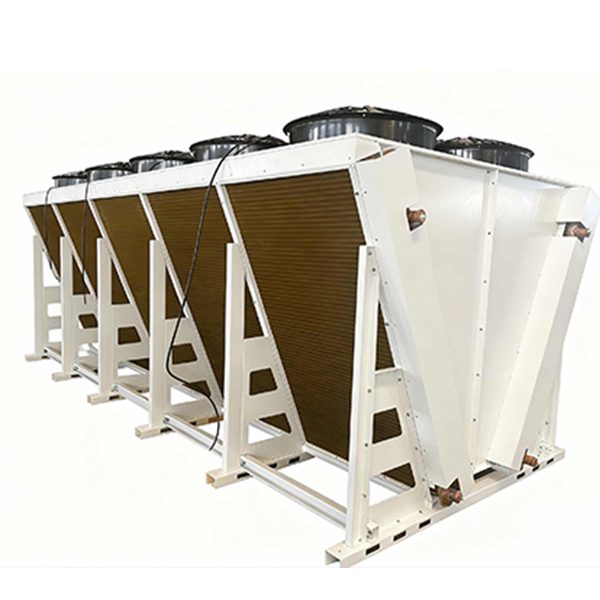
An undersized condenser saves money at purchase and spends it every month in running cost and compressor life. On a hot site the effect compounds, because the compressor runs at a higher condensing temperature for more hours of the year.
Ambient temperature above 45 °C changes the selection more than the room temperature does, because it sets the condensing pressure the compressor works against. <Selecting a Condensing Unit for Tropical Climates> covers how tropical ambient conditions change condensing unit selection.
Electrical frequency is the second half of the duty point. Compressor capacity, motor cooling and the approved voltage range are published per frequency, so a unit selected on 60 Hz data will not deliver the same output on a 50 Hz supply, and the reverse also holds. Where the site supply and the supplier's home market differ, confirm that the capacity table you are reading was generated at your frequency.
Matching the Compressor to Your Room Temperature
Room temperature is the outcome you buy; evaporating temperature is the variable you design. The gap between them, usually called the design temperature difference, is commonly set at 8 to 10 K for chiller rooms and widened for blast freezing, where pull-down speed matters more than efficiency.
| Room application | Room temperature | Typical design evaporating temperature | Compressor duty to specify |
|---|---|---|---|
| Chiller and pre-cooling | 0 to +8 °C | about -8 to -2 °C | Medium temperature refrigeration scroll |
| Processing and packing | +10 to +15 °C | about 0 to +5 °C | Medium temperature refrigeration scroll |
| Freezer storage | -18 to -25 °C | about -30 to -35 °C | Low temperature refrigeration scroll |
| Blast freezing | -30 to -40 °C | about -40 to -50 °C | Low temperature, often two stage or screw |
These figures are starting points for an RFQ, not a selection. The final compressor model has to come from the manufacturer's capacity table at the condensing temperature your site will actually see, with the refrigerant you intend to use.
Medium temperature rooms are the simplest case and the easiest place to overspend. A chiller room holding produce at +4 °C does not need a low temperature compressor running far outside its efficient envelope, and a correctly sized medium temperature unit will generally outlast a larger one that cycles hard.
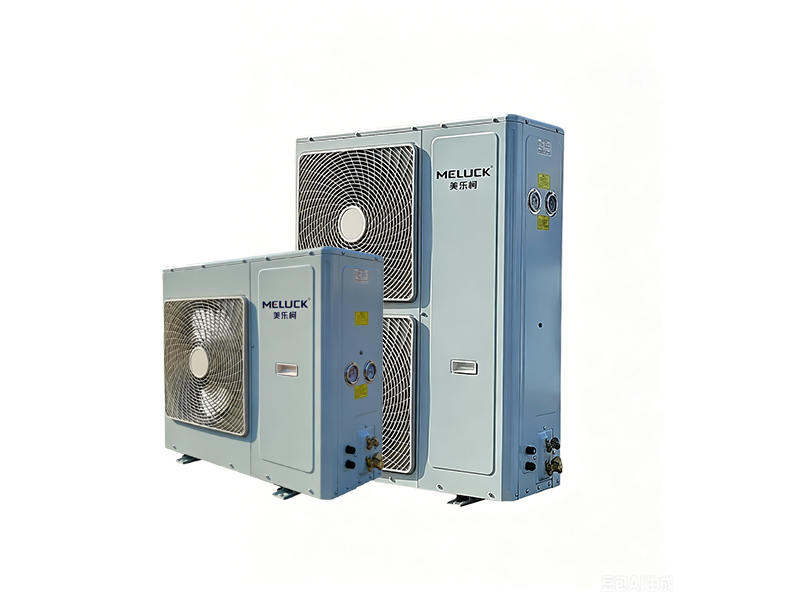
A duty class mismatch is a common route to early compressor failure. Air conditioning scrolls and low temperature refrigeration scrolls are different products. The air conditioning version is built around a high evaporating temperature and relies on a generous refrigerant mass flow to carry heat away from the motor. Run that compressor in a freezer application and the mass flow falls, motor cooling falls with it, and the winding temperature climbs until the protection trips or the scroll set seizes. The nameplate family is the first thing to check and the cheapest thing to get right.
For freezer rooms at -18 to -25 °C, a low temperature scroll with a correctly matched air cooler is the standard configuration, and the defrost method matters as much as the compressor. Electric defrost on a low temperature evaporator adds heat that the compressor has to remove again, so the coil, the defrost control and the compressor capacity have to be designed as one system.
How to Verify a Copeland Compressor Before You Pay
Verification is a sequence, and each step produces a document you can act on later.
- Request a clear photograph of the compressor nameplate showing model code, serial number, voltage and approved refrigerant.
- Compare the model code against the duty class in your specification and against the capacity table at your evaporating and condensing temperatures.
- Require the compressor serial number to appear in writing on the proforma invoice or purchase order, not only in a chat message.
- Ask whether the serial can be checked through an authorised distributor in your region. Availability of that check varies by market, but the question separates suppliers who know their stock from those who do not.
- Identify the unit builder and ask for the unit serial, the wiring diagram and the bill of materials for the coil, receiver, fan motors and controls.
- Collect the test records: pressure test, leak test, electrical test and refrigerant charge weight.
Each document proves something narrow. Treating any one of them as proof of the whole unit is where buyers get caught.
| Record | What it establishes | What it does not establish |
|---|---|---|
| Compressor nameplate photograph with serial | The model, voltage and serial of the compressor actually fitted | That the compressor is new, or that the unit meets your duty point |
| Certificate of origin for the compressor | The country in which the compressor was manufactured | Who assembled the condensing unit, or to what standard |
| ISO 9001 certificate for the assembly factory | That a documented quality system exists at that factory | That your specific unit was tested at your duty point |
| Performance test at a single condition | Capacity at the evaporating and condensing temperatures tested | Capacity at your site ambient and room temperature |
| Distributor warranty registration | The warranty route available through that channel | Cover for installation faults, moisture ingress or the wrong refrigerant |
These records belong to different parties. A compressor certificate does not certify the assembly, and an assembly certificate does not certify the compressor. Keeping the two claims separate in your own files is what makes a warranty discussion possible eighteen months later.
A certification claim is only useful when it names the holder, the scope and the standard behind it.
A certification claim is only useful when it names the holder, the scope and the standard behind it. <Bitzer CRAA Certified Condensing Units: China Market Guide> covers what CRAA certification means for condensing units sold into the Chinese market.
The RFQ Fields That Separate a Supplier From a Reseller
A reseller can quote from a catalogue. A supplier can answer at the duty point. The difference shows in how six fields are handled.
| RFQ field | What to request | Why it matters |
|---|---|---|
| Compressor identity | Model code, serial range and a nameplate photograph | Prevents a rebuilt or different duty compressor being substituted |
| Duty point | Capacity in kW at stated evaporating and condensing temperatures | Nominal horsepower hides the real output at your site |
| Refrigerant | Design refrigerant and charge weight | Capacity and motor cooling differ by refrigerant, so a rating from another gas does not transfer |
| Electrical | Voltage, phase, frequency and control circuit voltage | A unit selected on 60 Hz data will not deliver its rating on a 50 Hz supply |
| Unit scope | Coil, receiver, fan motors, controller brand and wiring diagram | The compressor is one component; the rest decides how long it lasts |
| Documentation and warranty | Test records, certificate of origin, warranty term with exclusions, spare parts list | Decides what you can claim after a failure and how fast you can repair |
The pattern is easy to read in a reply. A supplier who answers the duty point field with a capacity figure and the conditions behind it has done the work. A reseller usually answers with a horsepower figure and a photograph of a similar unit.
Reject this RFQ line: 5 HP Copeland condensing unit, R404A, air cooled.
Replace it with: Copeland low temperature scroll condensing unit, capacity stated in kW at an evaporating temperature of -30 °C and a condensing temperature of +45 °C, refrigerant R404A or an approved alternative confirmed by the compressor manufacturer, 380 V three phase 50 Hz, compressor nameplate photograph and serial number included with the proforma, capacity table attached at the specified duty point.
For larger projects the six fields stay the same and the scope grows. Parallel racks, remote control panels and multiple evaporators add decisions about oil management and control architecture, and those decisions belong in the RFQ rather than in a post-order conversation.
Comparing Supply Channels and Unit Configurations
There are four routes to a Copeland condensing unit, and they differ in what they can prove rather than in what they can promise.
| Channel | What you get | Do not choose it when |
|---|---|---|
| Authorised Copeland distributor | Traceable compressor warranty, genuine spare parts, limited system design support | You need the complete unit matched to a room load |
| Cold room equipment manufacturer building around Copeland compressors | Complete unit with coil, controls, documentation and one warranty route | You only need a replacement compressor for an existing unit |
| General trading company | Price flexibility and access to mixed catalogues | You need unit-level test records and a defined warranty process |
| Local fabricator using a sourced compressor | Fast local service and low freight | The project requires documented capacity at a specific duty point |
Purchase price is the most visible part of the cost and not usually the largest part across the life of the room. Spare parts lead time, refrigerant loss from a leak and lost stock during a breakdown generally outweigh the difference between two quotations, particularly where the room supports a harvest or a shipment schedule.
The purchase price is the smallest part of the number once spares lead time, refrigerant loss and lost stock are counted. <Cold Storage Project ROI: A Practical Financial Evaluation> covers how a cold storage project is evaluated financially over its working life.
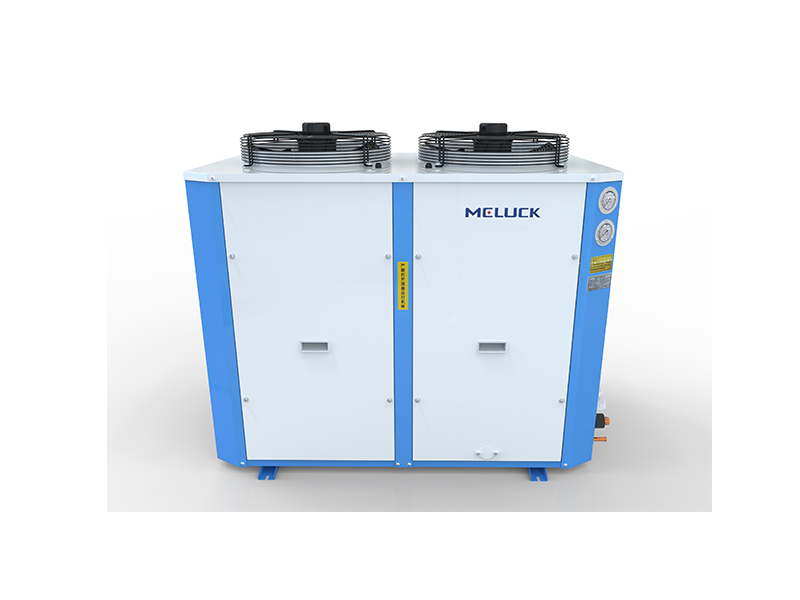
Configuration changes the sourcing question. For a small walk-in room, a packaged monoblock unit removes the split system entirely, along with the field refrigerant work, the interconnecting pipework and the leak paths that come with it. That is a different product from a condensing unit, and it is served by a different set of suppliers.
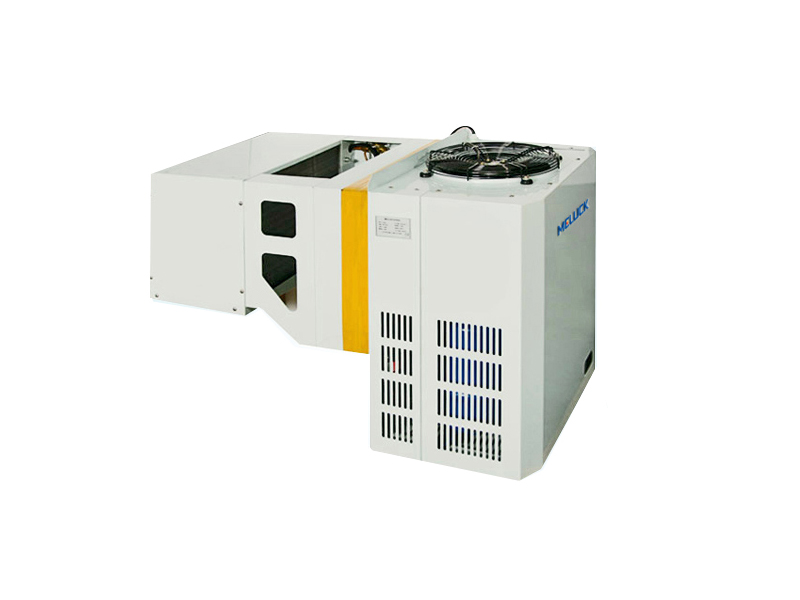
What separates an assembler from a trader is documentation produced before payment. Some assemblers, including Shanghai Meluck Refrigeration Equipment, issue the compressor model, unit serial and capacity table with the quotation, which lets a buyer run the checks above while the order can still be changed.
What to Check on Arrival and at Commissioning
The delivery check protects the warranty; the commissioning check protects the product.
- Match the compressor nameplate against the order: model code, serial number, voltage and refrigerant.
- Check the unit serial and confirm the wiring diagram matches the panel as built.
- Confirm the holding charge pressure at receipt and record it before opening any valve.
- Verify oil type and level against the compressor manufacturer's data for the refrigerant in use.
- Leak test, evacuate and charge to the recorded weight, using the moisture removal procedure the compressor manufacturer specifies.
- Check rotation direction, overload settings and crankcase heater operation before the first start.
- Record baseline readings: suction and discharge pressure, superheat, subcooling, ambient temperature and room temperature at pull-down.
Moisture is a frequent cause of low temperature scroll failures that look like manufacturing defects. A system left open during installation, or evacuated for too short a time, carries that moisture into the oil and the winding insulation, and the failure appears weeks later.
Refrigerant legality belongs on the same checklist. R404A has a high global warming potential and is restricted or taxed in several markets, while R448A and R449A are lower GWP alternatives permitted in many of the markets where R404A is restricted, though they are not interchangeable with it at the same capacity. Confirm what you can legally service at the destination before the unit is built, not after it arrives.
What to Send Before You Request a Quotation
Send the room temperature and the product being stored, the room dimensions or a calculated load, the evaporating and condensing temperatures you are designing to, the refrigerant you can service locally, the supply voltage, phase and frequency, whether you need a condensing unit alone or a complete cold room, and the delivery site and required date.
With those details a unit can be sized at a real duty point instead of a horsepower label, and the compressor model can be confirmed before the order is placed rather than after the crate is opened.
Shanghai Meluck Refrigeration Equipment Co., Ltd.
Email: meluck@meluckcooling.com
Phone and WhatsApp: +8617369893087
FAQ
How do I verify a Copeland compressor is genuine before paying?
Ask for a clear photograph of the compressor nameplate showing model, serial, voltage and approved refrigerant, and require the same serial number to appear on the proforma invoice. Compare the model against the duty class you specified and against the capacity table at your evaporating and condensing temperatures. Where a regional distributor can check serials, ask them to confirm the compressor came through authorised distribution. The photograph and the written serial are what you can act on if the delivered unit does not match the order.
Is a Copeland compressor inside a third party unit still original?
The compressor can be genuine while the condensing unit around it is an independent assembly, and that arrangement is normal in the cold storage market. What matters is that the quotation states which claim it is making: a genuine compressor of a named model, or a unit assembled and tested to a stated standard. Ask for both statements separately, because a document that answers one does not answer the other.
Can a 60 Hz Copeland condensing unit run on a 50 Hz supply?
Not at its nameplate rating. Compressor capacity, motor cooling and the approved voltage range are published per frequency, so a unit selected from 60 Hz data will not deliver the same output at 50 Hz, and the motor may run outside its design conditions. Select using the manufacturer's data at the frequency the site actually has, and confirm the control circuit voltage at the same time.
Which refrigerant should an RFQ specify?
Specify the refrigerant you can legally service at the destination and ask the supplier to confirm the compressor model is approved for it. R404A and the lower global warming potential alternatives R448A and R449A are common in cold storage, but capacity and compressor cooling differ between them, so a rating produced on one gas cannot be assumed to hold on another. Refrigerant rules change, so confirm the local position before the order is placed.
What documentation should arrive with the unit?
At minimum: compressor nameplate details and serial number, unit serial, wiring diagram, refrigerant type and charge weight, pressure and leak test records, certificate of origin where applicable, warranty terms with exclusions, and a spare parts list with recommended stock. Documents are easy to obtain before shipment and difficult to obtain afterwards.
If you're interested, check out these related articles:
Cold Storage for Nuts & Dried Fruits: Prevent Rancidity & Mold
Cold Storage and Flake Ice Systems for Fish Landing Stations
With over 15 years of experience as a MELUCK refrigeration engineer, I specialize in the design of cold storage, chillers, ice makers, and cold chain energy-saving systems, providing technical support to distributors and engineering companies worldwide.

meluck