
Cold Room Projects in Africa: Equipment for Hot Climates
Cold room projects in Africa fail more often from mismatched equipment choices than from weak demand. A system designed for a temperate climate can struggle when ambient air exceeds 40°C, voltage swings are common, and dust or coastal salt deposits accumulate quickly. The practical approach is to select each component from the site's expected extreme conditions rather than from a standard catalog rating. The guidance below covers refrigeration capacity, insulation, power supply, installation clearances, refrigerant choice, and commissioning.
Start With Product, Room Size, and Site Conditions
Define storage temperature, daily product intake, holding time, and door traffic before choosing equipment. A fish processor holding frozen product at -18°C has different requirements from a vegetable packhouse storing produce at 8°C to 10°C. A blast freezer pulling product down to -35°C is different again. FAO estimates that around 14 percent of the world's food is lost between harvest and retail, with cold chain gaps a major contributor in many warm markets [1].
Size the room from the real pallet or crate layout, not only from total tonnage. Leave space for airflow around product, door swing, coil service access, and drainage. A room that stores 50 tons on paper may perform poorly if product blocks evaporator airflow or if the door opens into a hot loading yard with no air curtain.
Size the Refrigeration System for High Ambient Air
Condensing units are often listed at 32°C or 35°C ambient, but many inland African project sites require a design ambient of 43°C to 45°C or higher. When comparing units, request capacity correction at the design ambient, not just nominal capacity. ASHRAE refrigeration guidance treats equipment capacity as a function of operating conditions, so a unit rated at a mild ambient will reject less heat as condensing temperature rises [2].
The same applies to the evaporator. A freezer room in a hot climate needs an evaporator matched to room temperature, humidity, and product moisture load, not a generic unit chosen by horsepower only.

For smaller and medium rooms, semi-hermetic reciprocating or scroll condensing units are common. For large multi-room facilities, screw condensing units or parallel compressor arrangements may provide better unloading and part-load control. The decision should follow the actual load profile, peak ambient, and required redundancy.
Choose Panels and Doors That Control Heat Gain and Humidity
Panel thickness and joint design have a direct effect on running cost. A chiller room may use 100 mm panels, while a freezer room in a high-ambient coastal zone often benefits from 150 mm panels. PIR panels can provide better fire performance where building regulations require it, while PU panels remain a common budget-sensitive option when installed with proper vapor sealing.
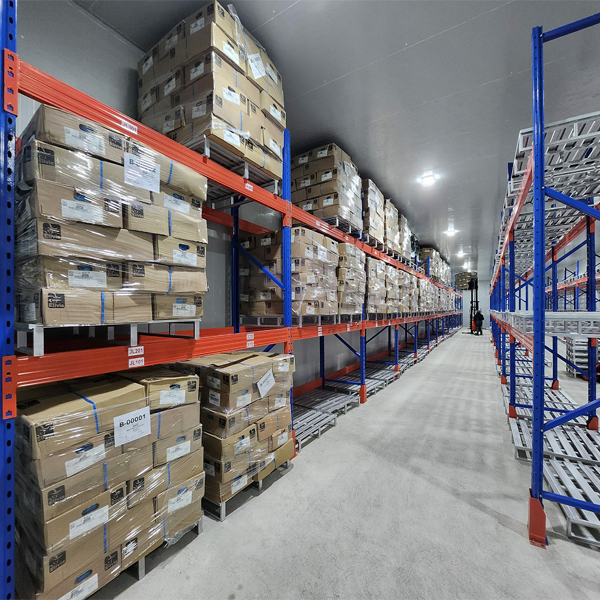
Do not treat insulation as a place to cut cost without checking energy consequences. In hot, humid locations, air leakage through poor panel joints or an unsealed floor edge can produce condensation, ice build-up, and higher electricity demand. For example, a 150 mm PIR panel is often proposed for freezer rooms in high-ambient locations, while 100 mm PIR may be sufficient for many chiller rooms when energy targets are moderate and door traffic is controlled.
Match Electrical Supply and Control Systems to the Local Grid
Confirm voltage, frequency, phase, and available fault current before ordering. Many sites use 230 V or 400 V at 50 Hz, but frequency must be verified because 60 Hz motors rotate at a different speed and can damage compressors or fans if specified incorrectly. Electrical installations should follow IEC 60364 principles and local wiring codes, including protection against overcurrent, earth faults, and phase loss [3].
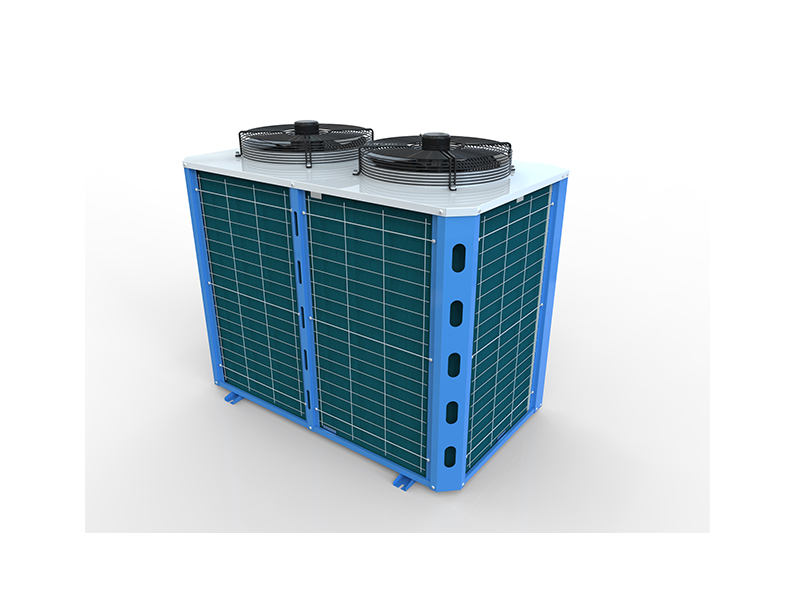
For sites with generator backup or unstable mains, include phase monitoring, voltage protection, and a start-up sequence that does not overload the generator. Compressor starting current, evaporator fan load, and defrost heaters must be included in the electrical schedule. A low-cost control panel cannot compensate for an undersized supply or a motor specified for the wrong voltage.
Site Checkpoint: Send Your Conditions for a Capacity Check
Before finalizing equipment, send room size, product type, target temperature, and incoming power to meluck@meluckcooling.com. The technical team can check condenser derating, compressor selection, and electrical compatibility, then return a site-specific specification instead of a generic package.
Plan Condenser Placement, Dust, and Maintenance Access
Air-cooled condensers reject heat to outdoor air. If hot exhaust recirculates or the coil is dirty, capacity falls and energy use rises. Position condensers away from walls, generators, and other heat sources, and keep the coil clean in dusty or coastal environments.
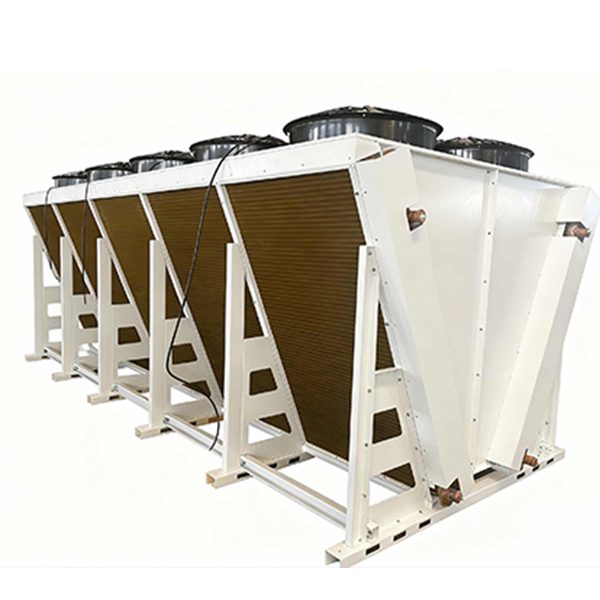
Condenser position is a capacity decision, not only a layout detail. <Condensing Unit Installation Clearance: Key Spacing Rules> covers wall distance, airflow direction, and hot-air recirculation risks for condensing units.
Schedule coil cleaning, check fan blades and guards, and inspect electrical connections as part of the maintenance plan. In coastal areas, coated coils and corrosion-resistant fasteners can extend service life.
Select Refrigerants and Energy-Saving Features
Refrigerant selection should reflect local service capability, spare availability, and regulatory direction. The Kigali Amendment to the Montreal Protocol has set a phasedown path for high-GWP HFCs, so many new projects now evaluate lower-GWP options such as R448A or R449A [4]. The best choice is one that local technicians can service and that fits the condensing unit and evaporator combination.
Energy-saving features matter more in hot climates because the temperature lift is larger. Demand defrost, efficient fans, good door management, and correct panel sealing all reduce annual consumption. The goal is not only to reach temperature, but to hold it with stable operation during the hottest hours.
Source and Commission for Long-Term Support
Choosing equipment is only part of the project. The supplier should provide panel drawings, a matched refrigeration system, wiring guidance, installation supervision, commissioning, and operator training. Food processing rooms must also support cleaning and temperature monitoring under Codex hygiene principles [5].
Sourcing and setup determine whether a well-sized cold room performs as designed. <Cold Room for African Processing Zones: Sourcing and Setup> covers equipment sourcing, local installation readiness, and commissioning steps for African processing zones.
Confirm who provides customs documentation, panel marking, refrigerant charge, spare parts, and after-sales response before signing. A room that cannot be repaired locally will remain down longer during a harvest or export window.
Evaluate Project Costs and Next Steps
Compare initial cost with energy use, product loss, and expected utilization. World Bank analysis shows that food safety failures and spoilage impose substantial productivity and health costs in low- and middle-income economies [6]. The International Institute of Refrigeration identifies expanded refrigeration as a key intervention for reducing perishable losses [7].
Cold room economics depend on utilization, energy cost, and product loss avoided. <Cold Storage Project ROI: A Practical Financial Evaluation> covers payback calculation and the financial variables that matter most.
A properly matched system may cost more at purchase but can recover the difference through lower electricity bills, fewer rejected loads, and longer equipment life.
Get a Site-Specific Equipment Recommendation
Working on a hot-climate project requires more than a price quote. Share the site location, room dimensions, product type, target temperature, and available power. MELUCK technical engineers can prepare a configuration based on high-ambient operation, local voltage, and maintenance access. Contact meluck@meluckcooling.com or call +8617369893087.
Frequently Asked Questions
What temperature should a cold room in Africa be set to?
The set point depends on the product. Chiller rooms for fresh produce often run between 0°C and 10°C, while frozen storage commonly runs at -18°C or lower. Blast freezing may require -30°C to -40°C for rapid pull-down.
Is 60 Hz equipment required in Africa?
Not everywhere. Voltage and frequency vary by country and sometimes by site. Always confirm the local supply, phase, and voltage before ordering motors, compressors, and controls.
Can a cold room run on a generator or solar power?
Yes, but the refrigeration system and generator must be sized together. Starting current, locked rotor current, defrost load, and voltage drop must be included in the electrical design.
How do I protect a cold room in dusty or coastal areas?
Use coated or corrosion-resistant condenser coils, protect electrical enclosures, and schedule regular coil cleaning. Coastal salt air and fine dust both reduce condenser performance if maintenance is neglected.
What is the first step in planning a cold room project in Africa?
Start with product temperature, daily intake, room size, and site power. These inputs drive panel thickness, refrigeration capacity, and electrical design. A site-specific calculation should come before equipment selection.
References
[1] Food and Agriculture Organization of the United Nations. The State of Food and Agriculture 2019: Moving Forward on Food Loss and Waste Reduction. Rome: FAO; 2019.
[2] ASHRAE. ASHRAE Handbook: Refrigeration. Atlanta: ASHRAE; 2018.
[3] International Electrotechnical Commission. IEC 60364-1: Low-Voltage Electrical Installations, Part 1: Fundamental Principles. Geneva: IEC; 2005.
[4] UNEP Ozone Secretariat. The Kigali Amendment to the Montreal Protocol: HFC Phase-Down. Nairobi: UNEP; 2016.
[5] Codex Alimentarius Commission. General Principles of Food Hygiene, CXC 1-1969. Rome: FAO/WHO; 2020.
[6] World Bank. The Safe Food Imperative: Accelerating Progress in Low- and Middle-Income Countries. Washington, DC: World Bank; 2018.
[7] International Institute of Refrigeration. The Role of Refrigeration in Worldwide Nutrition. Paris: IIR; 2020.
If you're interested, check out these related articles:
Cold Room Project in Myanmar for Tomato and Tropical Fruit
Walk-In Cooler Sizing and Installation for Convenience Store
Export Processing Zone Cold Rooms: Customs Bonded Design
With over 15 years of experience as a MELUCK refrigeration engineer, I specialize in the design of cold storage, chillers, ice makers, and cold chain energy-saving systems, providing technical support to distributors and engineering companies worldwide.

meluck