
Cold Room for Agriculture: Pre-Cooling and Storage Design
Field heat is the margin killer in agricultural post-harvest handling. A freshly harvested avocado, tomato, or leafy crop enters the packhouse carrying several degrees of residual warmth that accelerates respiration, water loss, ethylene damage, and microbial decay. Without an engineered pre-cooling step, every hour of delay reduces shelf life and increases the probability of rejection at the export gate. A well-designed cold room for agriculture is therefore not just a storage box. It is a controlled pulldown environment that preserves weight, firmness, color, and marketability from field to buyer [1][2].
Why Pre-Cooling Matters for Agricultural Cold Storage
The Food and Agriculture Organization (FAO) estimates that about 14 percent of the food produced for human consumption is lost between harvest and retail, with horticultural perishables among the most affected categories [1]. In hot and humid supply chains, fruit and vegetable losses can be substantially higher when pre-cooling is delayed or absent [2]. The pattern is consistent across developing export regions: product is harvested at high ambient temperature, held in open shade, transported long distances, and only later placed into storage. By that point, quality has already deteriorated.
The technical problem is field heat. After harvest, crops continue to respire, converting stored sugars into heat, carbon dioxide, and water vapor. Higher pulp temperature raises respiration rate, accelerates moisture loss and ripening, and creates a more favorable environment for decay organisms [3]. Pre-cooling reverses this trend by removing a large share of the initial temperature difference between the product and the target storage condition. The standard engineering benchmark is the 7/8 cooling time, defined as the period required to remove seven-eighths of the initial temperature difference between the product and the cooling medium [4]. For most fresh produce, this should be measured in hours, not days.
From a commercial standpoint, pre-cooling delivers three measurable outcomes. It preserves salable weight by reducing dehydration. It extends shelf life, which gives packers more flexibility on shipment timing. And it produces more consistent arrival quality, which matters most for export buyers. A farm that invests in a properly sized pre-cooling cold room is effectively buying a longer selling window and a stronger negotiating position.
Temperature and Humidity Parameters by Crop Group
Setpoints vary widely by product. The table below summarizes practical holding and pre-cooling parameters for common agricultural product groups based on published post-harvest guidance [3][4][5].
| Product group | Recommended holding range | Target relative humidity | Practical note |
|---|---|---|---|
| Leafy greens and herbs | 0-2°C | 95-100% | Fast pulldown and high RH reduce wilting |
| Avocado, Hass type | 5-7°C long-term; 10°C ±0.5°C short pre-cooling | 90-95% | Peru project held 10°C for pre-export staging |
| Tomato, mature green | 7-12°C | 85-90% | Lower temperatures risk chilling injury in many cultivars |
| Mango | 10-13°C | 90-95% | Chilling injury commonly appears below 10°C |
| Green coffee bean | 15-18°C specialty storage | 60-65% | Moisture stability protects cup quality and prevents mold |
These are holding ranges, not ripening protocols. In practice, the critical parameter is not the final setpoint alone but the speed at which the room can pull a full harvest load down to that setpoint. A room that drifts near the right temperature after 24 hours performs worse than a correctly sized room that reaches the target in under 6 hours [4].
Green coffee is a special case among agricultural goods because moisture control matters as much as temperature. Export buyers penalize mold, fermentation, and moisture instability long before any visible defect appears.
For green coffee exporters, the same cold-room discipline applies to moisture and flavor preservation. <Colombia Cold Room for Coffee: Green Bean Preservation> covers temperature and humidity control for specialty coffee storage.
Pre-Cooling Room Design: Methods, Panels, and Airflow
Different crop types justify different pre-cooling methods. Room cooling is the most common and flexible approach for mixed-crop farms because it uses a conventional chiller room layout and accommodates bins, crates, and palletized loads. Forced-air cooling draws chilled air through stacked cartons or bins, which shortens the 7/8 cooling time for packed product. Hydrocooling circulates chilled water over the crop for very rapid heat removal, and vacuum cooling suits leafy vegetables with a high surface-to-volume ratio. A practical agricultural cold room may start with room cooling and reserve forced-air tunnels for the highest-value crops.

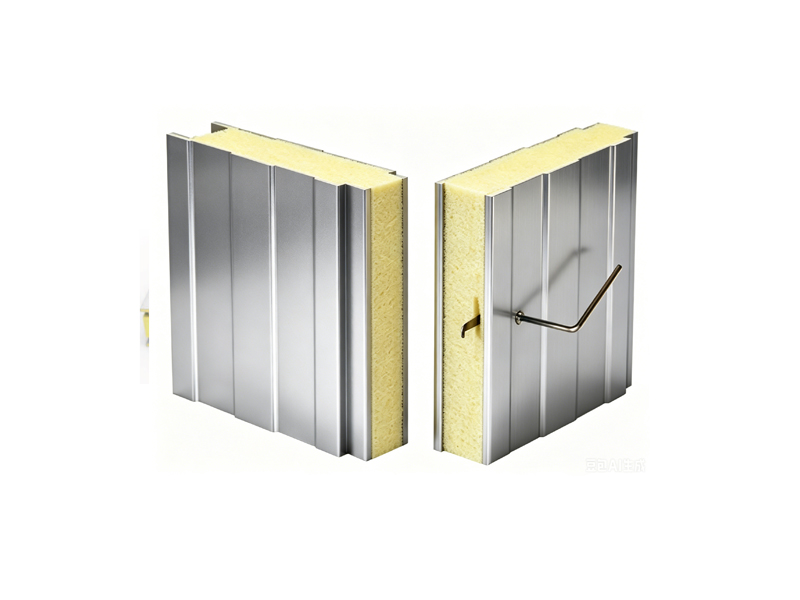
Insulation is the second decisive factor after airflow. High-density PUR cold room panels provide strong thermal performance and fast assembly for agricultural chiller rooms, while PIR cold room panels add improved fire resistance and lower thermal conductivity for long-service installations. For rooms with frequent loading, a manual sliding door reduces cold air loss during truck and pallet movement. A moisture-proof floor and correctly sealed panel joints are equally important in high-humidity storage environments, because condensate and vapor infiltration degrade both insulation and hygiene [6].
Planning a farm cold room is easier when a refrigeration engineer reviews your crop list, harvest volume, and available power before quoting. For technical guidance on equipment matching or a no-obligation design review, contact MELUCK at meluck@meluckcooling.com or +8617369893087. Share your crop type, daily volume, and site location, and an engineer will return a matched equipment recommendation.
Refrigeration Equipment for Agricultural Cold Rooms
Equipment sizing follows the calculated product load rather than a rule of thumb. The main heat loads in an agricultural cold room are field heat from incoming crops, respiration heat from stored produce, transmission through the insulated envelope, door opening losses, and fan motor heat. A competent load calculation sums these contributions to determine compressor capacity, evaporator surface area, and air volume [4].
For a medium-size pre-cooling room holding several tons of fruit, a pair of medium-temperature Bitzer condensing units with ceiling-mounted air coolers is a proven configuration. In a 17 m × 12 m × 3.1 m avocado pre-cooling room in Peru, two Bitzer 20HP condensing units and two ceiling-mounted evaporators held storage at 10°C ±0.5°C. The client reduced rejection and spoilage from approximately 15 percent to below 4 percent after commissioning.

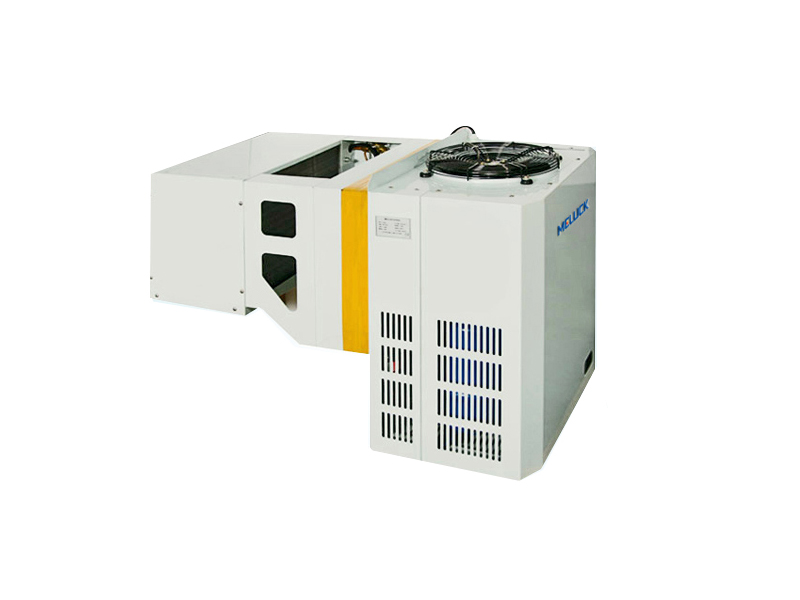
For smaller farms and cooperatives, a monoblock refrigeration unit offers a faster, lower-cost installation because the evaporator and condenser are integrated in one housing and the system requires no separate pipework. The trade-off is capacity. A monoblock solution fits compact storage rooms and gradual daily intake, while larger and faster-pulldown projects justify a split system with a dedicated air cooler evaporator.
Evaporator selection matters as much as compressor selection. For chiller-room duty above freezing, an evaporator matched to the required airflow and unit cooler spacing prevents surface freezing, uneven temperature distribution, and excessive product dehydration. The same logic applies to controls: a digital controller with temperature logging and alarm thresholds gives operators the evidence they need for export audits and loss investigations [6].
Verified Results from Agricultural Cold Room Projects
The strongest case evidence for agricultural pre-cooling comes from active projects in hot climates. In Myanmar, a tomato cold storage room operating at +8°C to +12°C with high-density PU panels, Bitzer refrigeration, and ceiling-mounted air coolers significantly reduced spoilage and extended shelf life for a local agricultural enterprise. The turnkey delivery included site survey, panel production, cold room assembly, equipment installation, commissioning, and operator training.
In Peru, the avocado pre-cooling project reduced rejection and spoilage from approximately 15 percent to below 4 percent, while the stable 10°C ±0.5°C room gave the exporter enough scheduling flexibility to manage container loading windows. These outcomes are consistent with the IIR finding that reliable refrigeration sharply expands market access for perishable produce [7].
Fruit and vegetable cold chain projects in tropical regions face repeated high-ambient and high-humidity design challenges. <Cold Room Projects in Thailand: Seafood and Fruit Cold Chain> covers how equipment selection changes under these conditions.
High ambient temperature changes the equipment margin. A pre-cooling room in East Africa or the Gulf typically needs a larger condenser, more panel thickness, and a compressor selected for the hottest month rather than the annual average. Without that margin, the room falls behind during the exact periods when field heat is highest.
When a farm or processing site sits in a hot East African climate, compressor and panel capacity need different safety margins to keep pull-down times short. <Cold Room Project Kenya: High Ambient Equipment Selection> covers the equipment choices that protect cooling performance.
Discuss Your Agricultural Cold Room Project
To receive a design recommendation from the MELUCK engineering team, prepare the following information:
- Crop types and expected daily harvest volume in kilograms
- Target holding temperature and maximum acceptable 7/8 cooling time
- Site location and highest summer ambient temperature
- Available power supply, including voltage, phase, and frequency
- Required room dimensions or storage capacity in pallets or tons
Send these details to meluck@meluckcooling.com or call +8617369893087 and a refrigeration engineer will respond with a technical consultation, equipment selection, and quotation for your specific project.
Frequently Asked Questions
What temperature should a pre-cooling room run at for fruits and vegetables?
It depends on the crop. Leafy greens need 0-2°C at 95-100 percent relative humidity, avocados hold well at 5-7°C for longer storage, and mature green tomatoes are usually held at 7-12°C to avoid chilling injury [3][4]. Set the room for the most sensitive crop in a mixed operation and segregate products with incompatible setpoints.
How quickly should field heat be removed after harvest?
Pre-cooling should begin within a few hours of harvest, and the 7/8 cooling time should be measured in hours rather than days for most fresh horticultural crops [4]. The practical target depends on the method: forced-air and hydrocooling are faster than room cooling, while room cooling is the most flexible for mixed harvests.
Which agricultural products benefit most from pre-cooling?
High-respiration and high-value perishables benefit most, including leafy greens, berries, stone fruit, avocados, mangoes, cut flowers, and certain tropical vegetables [1][3]. Products with slower respiration and durable skins, such as cured onions or potatoes, still benefit from stable holding conditions but are less time-critical in pulldown.
What insulation is best for an agricultural cold room?
High-density PU or PIR sandwich panels are the standard for agricultural chiller rooms. PIR offers better fire resistance and slightly lower thermal conductivity, while PU is widely used and cost-effective for many projects. Panel thickness, joint sealing, and floor insulation should be matched to the room temperature and local climate.
How do I size a condensing unit for a pre-cooling room?
Calculate the sum of field heat, respiration heat, transmission load, door losses, and fan heat, then select a condensing unit that covers the peak pull-down requirement at the site's maximum ambient temperature [4]. Undersizing lengthens pulldown time and raises the risk of product loss, while gross oversizing wastes energy and increases first cost.
References
[1] FAO, The State of Food and Agriculture 2019: Moving Forward on Food Loss and Waste Reduction, Food and Agriculture Organization of the United Nations, Rome, 2019.
[2] FAO, Global Food Losses and Food Waste: Extent, Causes and Prevention, Food and Agriculture Organization of the United Nations, Rome, 2011.
[3] USDA Agricultural Marketing Service, Storage Conditions for Fruits and Vegetables, U.S. Department of Agriculture, Washington, DC, 2016.
[4] A. A. Kader, Postharvest Technology of Horticultural Crops, 3rd ed., University of California Agriculture and Natural Resources Publication 3311, 2002.
[5] L. Kitinoja and A. A. Kader, Small-Scale Postharvest Handling Practices: A Manual for Horticultural Crops, 5th ed., UC Davis Postharvest Technology Center, 2015.
[6] Codex Alimentarius, General Principles of Food Hygiene, CXC 1-1969, Rev. 2020, FAO/WHO, Rome, 2020.
[7] International Institute of Refrigeration, The Role of Refrigeration in Worldwide Nutrition, IIR Informatory Note, 2020.
If you're interested, check out these related articles:
Shrimp and Fish Cold Storage Solutions in Bangladesh
Cold Room Food Safety Audit: Prep Tips for Inspections
With over 15 years of experience as a MELUCK refrigeration engineer, I specialize in the design of cold storage, chillers, ice makers, and cold chain energy-saving systems, providing technical support to distributors and engineering companies worldwide.

meluck