
Chiller Room for Meat: Temperature Control and Food Safety
Fresh meat has a narrow safe-holding window. A small rise above 4°C accelerates surface bacterial growth and shortens shelf life. Poorly placed cooling equipment can dry exposed meat, reduce yield, and create condensation risks. A properly designed chiller room for meat is not simply a cold box. It is a controlled environment where temperature, humidity, air movement, drainage, and sanitation work together.
Fresh Meat Chiller Room Temperature and Humidity Targets
For fresh meat storage, room temperature should sit between 0°C and 4°C (32°F to 39°F), with the product zone held at 5°C (41°F) or lower as the food safety limit [1]. USDA guidance aligns with refrigeration at 40°F or below for perishable food [2]. Many high-turnover meat rooms set an air temperature closer to 0°C to 2°C when warm carcasses or cutting-room output enters several times per shift.
Relative humidity should normally be maintained between 85% and 90% [3]. Drier air removes surface moisture and lowers saleable weight. Wetter air promotes condensate, slime, bacteria growth, and wet cartons. Temperature should be measured at product level, not only at the thermostat. High load, poor airflow, or a blocked return-air path can create a meaningful difference between evaporator air and the air around the meat.
| Product or room condition | Target air temperature | Target relative humidity | Operational note |
|---|---|---|---|
| Fresh red meat, unwrapped | 0°C to 2°C | 85% to 90% | Keep air movement moderate |
| Vacuum-packed primals | 0°C to 4°C | 80% to 85% | Avoid wet cartons |
| Ground or minced meat | 0°C to 2°C | 85% to 90% | Short holding time |
| Poultry | 0°C to 2°C | 85% to 90% | Segregate from red meat |
Food Safety Requirements for Meat Cold Rooms
Fresh meat operations must treat the chiller room as a critical control point, not a passive storage area. Codex guidance for meat hygiene expects temperature control, stock rotation, cleaning, and protection against contamination to be documented and monitored [4]. In the European Union, Regulation (EC) No 853/2004 requires meat business operators to maintain storage conditions that protect meat from contamination and to control temperature during production and storage [5].
Key controls for a meat chiller room include:
- Keep raw meat below ready-to-eat or cooked items to prevent drip contamination.
- Store poultry, minced meat, and whole cuts in separated racks or dedicated sections.
- Use food-grade, nonabsorbent, cleanable materials for walls, floors, and door surfaces.
- Maintain FIFO/FEFO rotation and never place product directly on the floor.
- Record temperature at the frequency defined in the HACCP plan, with corrective action for every excursion.
If the operation is preparing for a third-party audit, <Cold Room Food Safety Audit: Prep Tips for Inspections> covers the temperature records, layout checks, and corrective action evidence inspectors usually expect.
Chiller Room Design and Equipment Selection
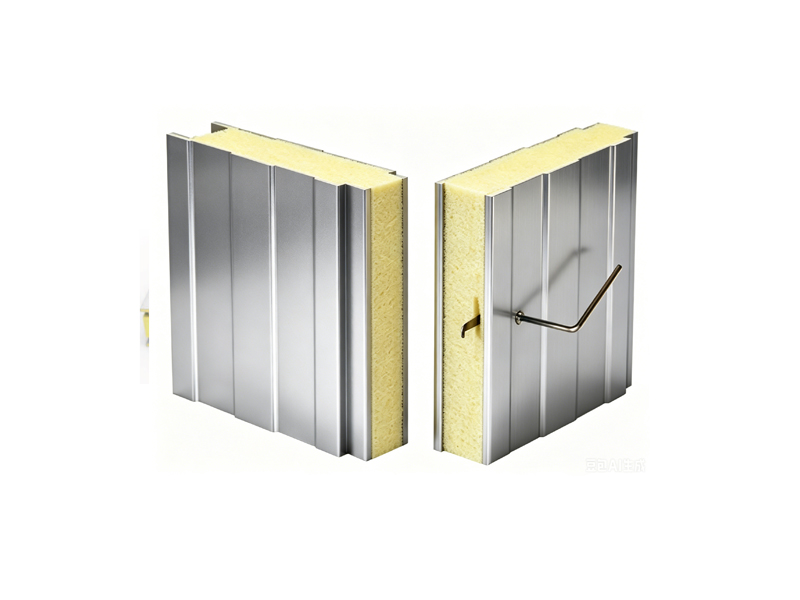
The room envelope should use cleanable insulated panels with sealed joints and food-grade internal surfaces. A chiller room for fresh meat needs enough insulation to prevent surface condensation and heat gain, especially in high-humidity processing areas. Panel joints, corners, and door frames must be sealed so that moisture cannot enter the insulated core.
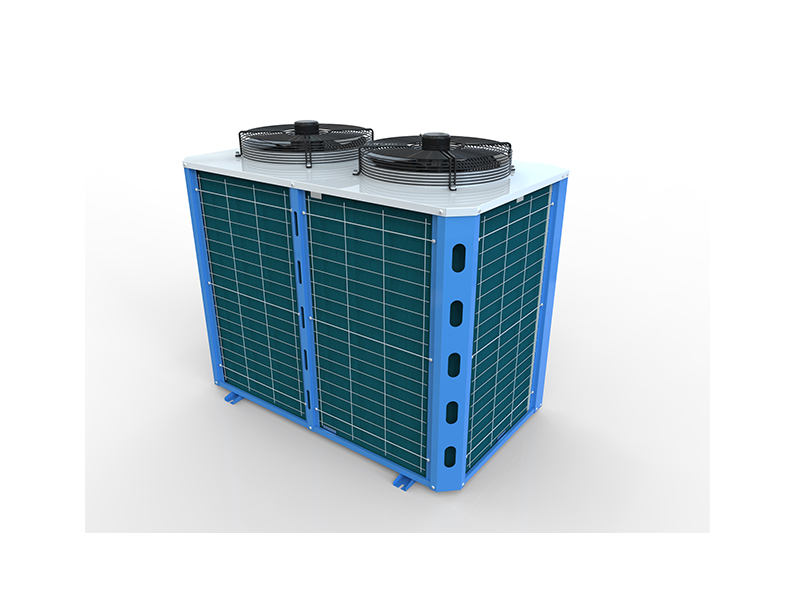
The refrigeration circuit must be sized for peak pull-down load, not just holding load. A condensing unit that is too small will run continuously and lose temperature after loading. An oversized unit can short-cycle, cause humidity swings, and reduce compressor life. Medium-temperature compressor selections are normally correct for meat chiller rooms because the evaporating temperature remains above typical freezer ranges.
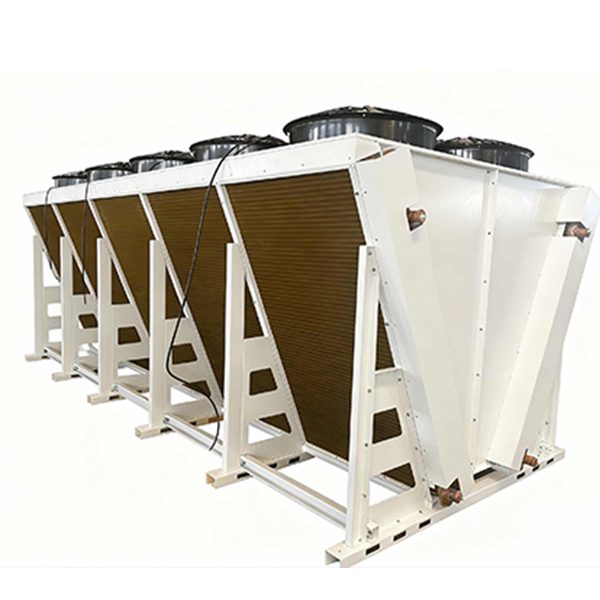
Evaporator placement is just as important as capacity. The air cooler should create a controlled air path without blowing high-velocity air directly onto unwrapped meat. Direct high-velocity air causes surface drying and discoloration. Dead corners allow warm pockets to form. A properly placed air cooler evaporator keeps return air moving across product without excessive surface moisture loss.
Zoning, Airflow, and Monitoring
Meat processing rooms are usually divided into receiving, cutting, packaging, and holding zones. The chiller room should sit at the end of that flow. Entry doors should close quickly and be insulated to the same standard as the panels. Personnel traffic should be limited so that warm, humid outside air does not repeatedly enter the holding space.
Temperature monitoring should include a continuous sensor or data logger positioned in the warmest part of the room. Alarm settings should alert staff before meat reaches unsafe conditions. Manual verification with a calibrated probe provides a cross-check against sensor drift. Defrost controls must remove coil ice without allowing defrost heat to raise room temperature excessively.
If the same footprint includes packaging, cutting, or staging areas, <Cold Room Zoning for Meat Packaging: Condensing Unit Guide> covers how to separate temperature zones without oversizing the refrigeration plant.
Inspection Readiness and Preventive Maintenance
Most meat cold room failures appear first in records, not in visible defects. A complete operating log should show the setpoint, actual temperature, door openings, defrost events, and any corrective action. Sensors should be calibrated on a defined schedule. Drain lines should be cleaned so that condensate does not pool inside the room. Door seals, heater tapes, and panel joints should be inspected for cracks, moisture, and ice formation.
The condensing unit should be checked for coil cleanliness, refrigerant charge, and unusual noise. A dirty condenser raises head pressure and reduces cooling capacity. The evaporator should be checked for frost patterns, fan operation, and blocked drain pans. A simple maintenance routine prevents most temperature excursions that lead to rejected product or failed inspection.
For hot-climate meat operations, <Brazil Cold Room Projects: Meat and Fruit Cold Chain Design> covers the equipment decisions that keep fresh meat rooms stable under high ambient loads.
Next Step: Confirm Your Meat Chiller Room Specification
Every fresh meat chiller room starts with a heat load calculation, but the final specification depends on site conditions: room dimensions, incoming product temperature, daily turnover, ambient climate, and available power. The project team at Shanghai Meluck Refrigeration Equipment Co., Ltd. can verify compressor capacity, evaporator placement, coil type, and panel thickness for the specific meat handling flow.
Send the room size, product inlet temperature, daily throughput, and power supply to meluck@meluckcooling.com or call +8617369893087. The technical review should cover medium-temperature condensing unit selection, defrost control, airflow layout, and insulation design before any purchase commitment.
Frequently Asked Questions
What temperature should a chiller room for fresh meat be set to?
A fresh meat chiller room is normally set between 0°C and 4°C (32°F to 39°F). High-turnover rooms often operate closer to 0°C to 2°C. The product area should stay at or below 5°C (41°F) for time/temperature control for safety.
Is a chiller room the same as a freezer room?
No. A chiller room holds fresh meat above freezing, usually at 0°C to 4°C. A freezer room holds product at -18°C or below. The evaporator design, defrost method, panel thickness, and door seals are different.
What humidity level is best for fresh meat storage?
Relative humidity is normally maintained between 85% and 90%. Drier air increases surface drying and weight loss. Higher humidity can cause condensation, wet packaging, and microbial growth.
How can condensation be prevented in a meat chiller room?
Keep panel seams and door frames sealed, limit warm-air entry, maintain stable temperature, and keep drain lines clear. Do not overload racks in a way that blocks return airflow to the evaporator.
How often should a meat chiller room temperature be checked?
Temperature should be monitored continuously with an alarm system. Manual verification with a calibrated probe should follow the frequency required by the facility HACCP plan, normally at least once per shift.
References
[1] U.S. Food and Drug Administration. Food Code 2022. Section 3-501.16: Time/Temperature Control for Safety Food. https://www.fda.gov/food/fda-food-code/food-code-2022
[2] U.S. Department of Agriculture Food Safety and Inspection Service. Refrigeration and Food Safety. https://www.fsis.usda.gov/food-safety/safe-food-handling-and-preparation/food-safety-basics/refrigeration
[3] Food and Agriculture Organization of the United Nations. Meat Processing Technology for Small- to Medium-Scale Producers. https://www.fao.org/3/ai407e/ai407e.pdf
[4] Codex Alimentarius. CAC/RCP 58-2005: Code of Hygienic Practice for Meat. https://www.fao.org/fao-who-codexalimentarius/codex-texts/codes-of-practice/en/
[5] European Commission. Regulation (EC) No 853/2004 laying down specific hygiene rules for food of animal origin. https://eur-lex.europa.eu/legal-content/EN/TXT/?uri=CELEX%3A02004R0853-20220101
If you're interested, check out these related articles:
Colombia Cold Room for Coffee: Green Bean Preservation
Cold Room for Tuna Loining and Processing at -60°C Deep Freeze
With over 15 years of experience as a MELUCK refrigeration engineer, I specialize in the design of cold storage, chillers, ice makers, and cold chain energy-saving systems, providing technical support to distributors and engineering companies worldwide.

meluck