
Bitzer Condensing Unit Supplier: How to Verify Genuine Parts
A Bitzer condensing unit is original when the compressor inside it can be traced back to Bitzer through documents, not when the frame carries a familiar logo. That distinction creates two separate questions. Can your supplier show where this particular compressor came from, and will the assembled unit hold its duty point at your room temperature and your site ambient? Buyers who check only the first question still receive equipment that fails at commissioning. Buyers who check only the second cannot tell a new compressor from a rebuilt one. Choosing a Bitzer condensing unit supplier comes down to who can answer both questions in writing before the purchase order is signed.
What Counts as an Original Bitzer Condensing Unit
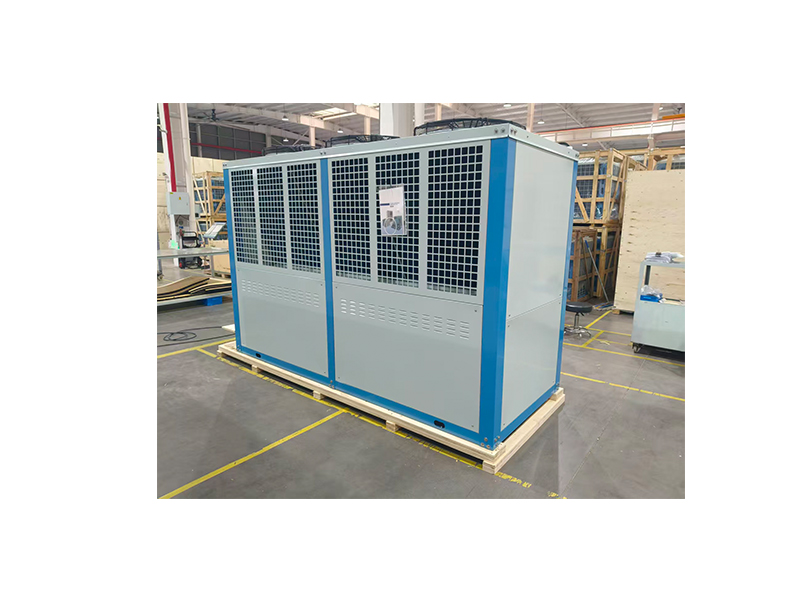
A condensing unit is an assembly. The compressor is Bitzer's product; the air-cooled condenser, receiver, fan motors, electrical panel, pressure switches and controls usually come from other manufacturers. Originality has to be judged component by component rather than by the label on the frame.
The compressor is the part in that list that carries a per-unit factory identity. Each semi-hermetic reciprocating or screw compressor leaves the factory with a nameplate showing its model designation and a serial number, and that pair is where any traceability check starts. Everything downstream of it, including how the unit was piped, which refrigerant and oil were charged, and where the protection setpoints sit, is the assembler's work and carries the assembler's responsibility.
This is why a serious supplier publishes the exact compressor designation instead of a horsepower figure. In our own catalog, the 6HP unit is built around the 4DES-6Y compressor and the 50HP unit around the 6HE-44Y, so a buyer can compare the quotation line with the compressor that is supposed to arrive. A quotation that says only "Bitzer 10HP" leaves the most important field blank.
What a Nameplate and Serial Number Can Prove
Photographs are often used as a substitute for traceability in export deals, so it helps to be precise about what each record establishes. The table separates the claim a document can support from the conclusion buyers usually draw from it.
| Record | What it can support | What it does not establish |
|---|---|---|
| Compressor nameplate photo with serial | The model and serial as presented on that unit | That the compressor was charged and operated inside its envelope |
| Unit nameplate from the assembler | The assembled model, electrical rating and refrigerant | That the compressor inside is new or original |
| Supplier declaration or certificate of origin | The origin stated on that document | That every component in the frame shares that origin |
| Packing list with serial numbers | Which compressors were packed for this order | That those serials were installed in your unit unless matched at packing |
| Spare part invoice with a Bitzer part number | The type of part purchased | The service history of the compressor it was fitted to |
| Third-party inspection report | The checks recorded on the inspection date | Anything about sealed parts opened later or operation after handover |
Read the table as a set of tools with different reach. Photos, markings and packaging support identification: they confirm that the object in front of you is the object described in the paperwork. They do not support technical acceptance, which needs measurements at your duty point. Keeping an identity file and a performance file separate prevents the common mistake of treating a clean nameplate photo as proof that the unit will hold temperature in a hot plant room.
How the Supplier Chain Changes What You Can Verify
Three kinds of suppliers appear in most tenders, and each leaves you with a different set of records.
A compressor distributor sells the Bitzer unit directly. Identity evidence is strongest here because the purchase runs through Bitzer's own channel, and compressor warranty claims are handled by the distributor. The tradeoff is scope: the distributor may not size your condenser, select your evaporator or commission a cold room.
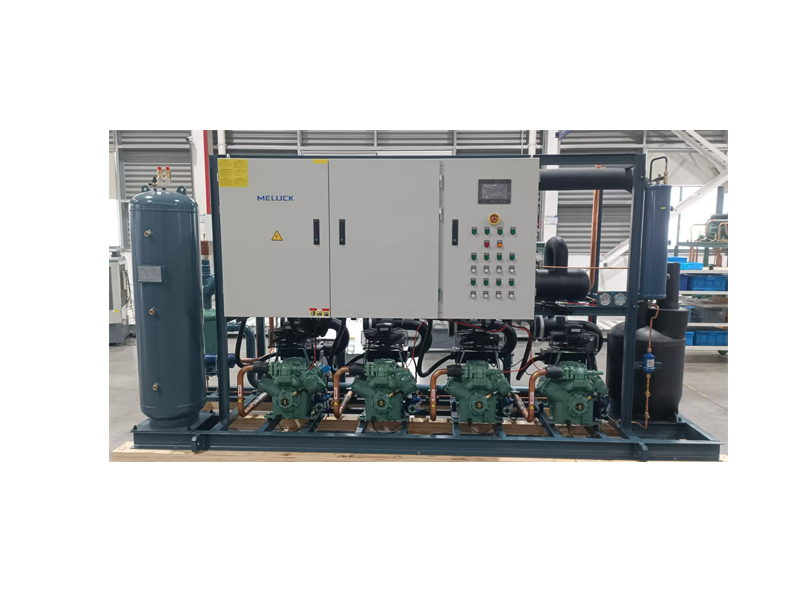
A cold room equipment manufacturer buys genuine compressors, builds the condensing unit and takes responsibility for the whole system. You get one warranty contact and engineering support for the duty point, and you can request compressor purchase records and the serial list. Documentation discipline varies widely between manufacturers, so the request has to be explicit in the purchase order rather than assumed.
A trading company or broker offers the widest price flexibility and the thinnest paper trail. When the only evidence is a photo of a nameplate, you are buying an unverified claim.
Two questions separate these options faster than a price comparison. Who signs the warranty, and who performs the service in your country? If the answer to the second is a factory several thousand kilometers away, freight and downtime belong in your evaluation even when the compressor is genuine.
Most buyers of a condensing unit are not buying a compressor in isolation. The unit sits in a plant that also needs panels, doors, evaporators and ice equipment, and splitting the order across several suppliers multiplies the documents you have to reconcile.
When one order covers panels, doors and refrigeration for a new plant, the sourcing sequence matters as much as the equipment list. <Cold Room for African Processing Zones: Sourcing and Setup> covers how processing-zone projects sequence equipment sourcing and setup.
The Documents to Request Before You Approve a Purchase Order
A purchase order is the point where documentation requests are easiest to enforce. These fields convert the checks above into quotation requirements.
| RFQ field | What to request | Why it matters |
|---|---|---|
| Compressor designation | Full model, frequency suffix and refrigerant version on the quotation line | A horsepower figure hides which compressor and which voltage variant you receive |
| Serial list | Compressor serial numbers confirmed at packing, before shipment | Closes the gap where a genuine compressor is swapped after order confirmation |
| Refrigerant and oil | Refrigerant type, charge mass and oil grade | The wrong oil or charge can void compressor coverage and shorten service life |
| Duty point | Capacity at your evaporating and condensing temperatures | Nominal ratings quoted at other conditions mislead room sizing |
| Electrical data | Voltage, frequency, phase and control circuit voltage | A 60Hz motor on a 50Hz supply runs at reduced speed and capacity |
| Document set | Nameplate photos, pressure and leak test records, warranty terms, spare parts list | Missing items surface at commissioning, when your leverage is gone |
One contrast shows why the wording matters. Reject a quotation line that reads "Bitzer condensing unit, 10HP, good price." Replace it with the compressor designation and frequency suffix, the unit model, capacity at a stated evaporating and condensing temperature, refrigerant and charge mass, electrical configuration, serial numbers at packing, warranty terms and a spare parts list.
What Genuine Parts Do Not Fix
A genuine compressor does not correct a selection error. Capacity tables are published at fixed evaporating and condensing temperatures, and a room designed around a nominal figure loses capacity when the same unit works at a higher condensing temperature on a hot site. The mechanism is straightforward: higher condensing temperature raises the compression ratio, which reduces volumetric efficiency and raises discharge temperature. Protection devices then do their job, and the room simply does not pull down.
High ambient conditions change condensing temperature, capacity and protection settings long before brand choice enters the decision. <Cold Room Project Saudi Arabia: High Ambient Gulf Design> covers how Gulf climate conditions are handled in cold room design.
Temperature level decides the architecture before brand does. A chiller room at 0°C to +8°C and a freezer at -18°C to -25°C can share a similar reciprocating platform, but a blast freezer at -35°C or an ultra-low room needs two-stage compression or a screw unit. Our two-stage 16HP unit is specified for evaporating temperatures down to -50°C, the 20HP two-stage model covers deep freezing duty, and the screw series spans -25°C to -40°C for large capacities. A single-stage compressor pushed below its envelope runs hot, loses capacity and shortens its own life, whatever its nameplate says.
How to Inspect the Unit Before Shipment and at Site
- Match the paperwork before the container is loaded. Compare compressor serials on the packing list with the nameplate photos, and confirm that model, frequency suffix and refrigerant match the purchase order.
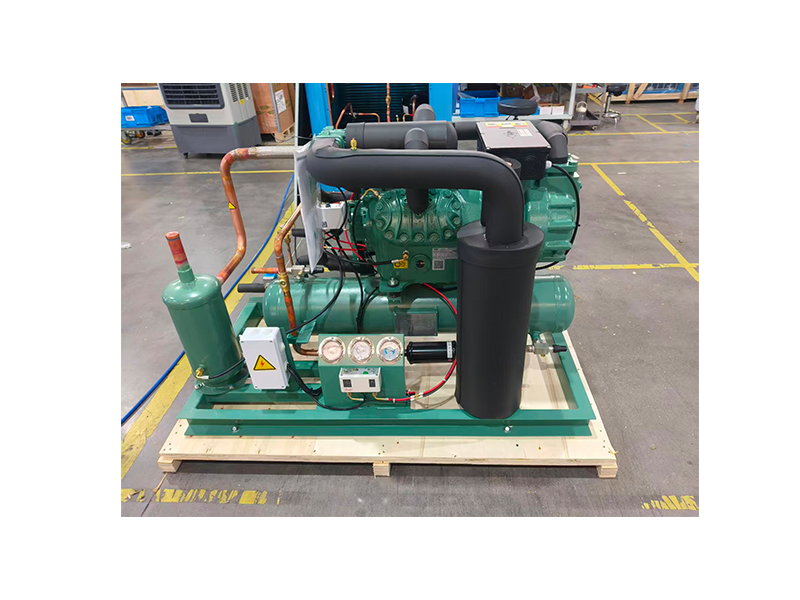
- Look at how the unit was built. Pipe support, insulation quality, panel labelling and protection device settings show whether the assembler works to a standard or improvises.
- Ask for the pressure and leak test record, the oil charge and the refrigerant charge mass. A unit shipped without these gives you no baseline for the first service visit.
- Photograph the serials at packing and again on arrival. A mismatch is far easier to resolve before the unit is lifted onto a roof.
- Check installation conditions before start-up: clearance to walls, airflow across the condenser, structural support and power supply characteristics.
- Record commissioning readings, including suction and discharge pressure, superheat or subcooling, running current against nameplate full load amps, and protection setpoints. These numbers become the reference for every later service call.
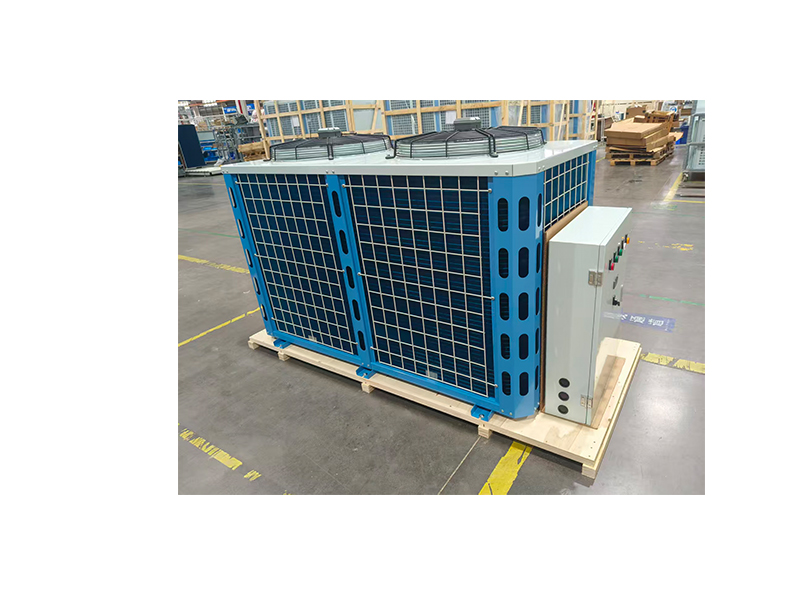
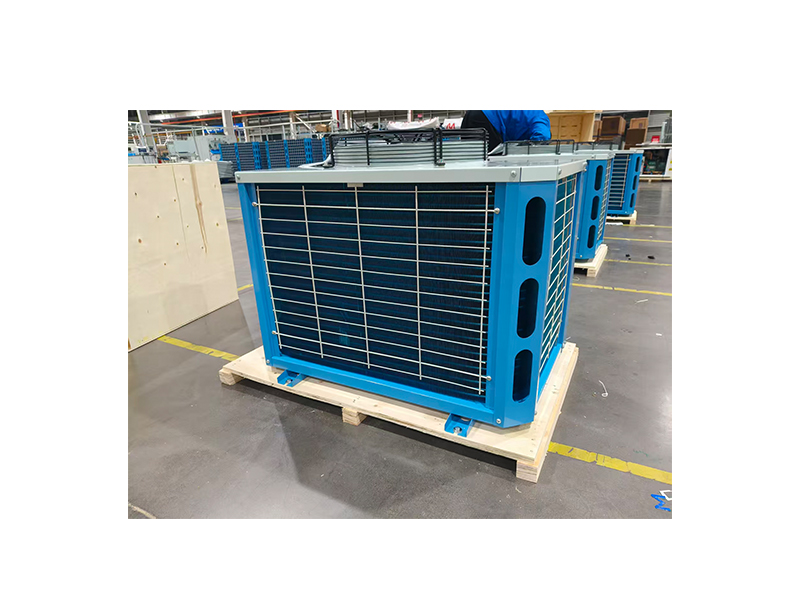
Clearance deserves its own check because it is the most frequent site error and it mimics equipment faults. Restricted airflow raises condensing pressure, which reduces capacity and can trip high-pressure protection on a unit that is working correctly.
Condenser performance is decided by the space around the unit, not by the unit alone. <Condensing Unit Installation Clearance: Key Spacing Rules> covers the spacing rules that keep condensing pressure within design range.
Warranty and Spare Parts Support After Delivery
A warranty clause should name the covered parts, who pays freight, who diagnoses the failure and the expected response time. Compressor coverage usually excludes damage from moisture, wrong refrigerant, incorrect oil charge or operation outside the approved envelope, which is why the cause check matters more than the parts swap. When a compressor fails, the failure often started somewhere else in the circuit, and replacing the compressor without finding that cause repeats the cost.
Ask which spares are held regionally. Valve plates, gasket sets, shaft seals, filter driers, contactors, pressure switches and fan motors are the parts that stop a room for days when they are missing. A lower-priced unit without regional parts stock can cost more across five years than a documented unit with spares on the shelf, and the calculation is simple: downtime days multiplied by the value of product at risk, added to expedited freight.
Keep the identity file and the performance file together for the life of the unit. Serial numbers, nameplate photos, test records and commissioning readings are what a warranty claim, a resale inspection or an insurance review will ask for, and reconstructing them two years later is rarely possible.
Send Your Duty Point and Get a Documented Equipment List
Tell us the room temperature, the product and daily load, the site ambient design condition, the power supply, your refrigerant preference and the compressor designation you expect to see, and we will return a configuration with each component named. A named component list makes two quotations comparable and shows quickly whether a price difference comes from the compressor, the condenser or the paperwork.
MELUCK, meluck@meluckcooling.com, +8617369893087.
FAQ
How can I tell whether a Bitzer compressor is original?
Match the model designation and serial on the compressor nameplate against the documents supplied with the unit, then confirm that the serial belongs to the batch shipped against your order. A photo shows what is printed on the plate, not what is inside the housing. Ask for the packing list with serials and keep it with the commissioning record. If a supplier cannot produce a serial list before shipment, treat that compressor as unidentified until evidence appears.
Is a condensing unit assembled by a third party still genuine?
Yes, when the compressor is genuine and traceable and the assembler stands behind the build. Many units are assembled this way, because compressor manufacturers do not build a complete unit for every room configuration. What changes is responsibility: the assembler handles unit warranty, piping, refrigerant charge and protection settings. Confirm that the quotation names the compressor model and that the warranty covers the assembled unit rather than the compressor alone.
Does a low price usually mean non-original parts?
Not automatically, but a large gap deserves an explanation. Price differences come from compressor source, condenser surface area, control brands, refrigerant charge and documentation. Ask which item changed. A supplier who answers with a specific component list is usually working from a real bill of materials; a supplier who answers with a discount is not. Compare two quotations component by component before judging the total.
What should the warranty cover on a Bitzer condensing unit?
It should name the covered parts, who pays freight, who diagnoses the failure and the response time. Compressor coverage typically excludes damage from moisture, wrong refrigerant, incorrect oil charge or operation outside the approved envelope, so the cause check carries more weight than the parts swap. Ask whether valve plates, gaskets and pressure switches are held locally, and keep commissioning readings so any later claim can be compared against a baseline.
If you're interested, check out these related articles:
IQF Quick Freezer for Berries: Sizing Capacity for Your Line
Cold Room Zoning for Meat Packaging: Condensing Unit Guide
Myanmar Potato Seed Cold Storage Project
With over 15 years of experience as a MELUCK refrigeration engineer, I specialize in the design of cold storage, chillers, ice makers, and cold chain energy-saving systems, providing technical support to distributors and engineering companies worldwide.

meluck