
IQF Quick Freezer for Berries: Sizing Capacity for Your Line
A berry processor buying their first IQF line quickly discovers that "capacity" is not a single number. Nominal ratings on a brochure assume one berry variety, one water content, one freezing time. In practice, a line that handles 300 kg/h of strawberries may run at 220 kg/h for blueberries because their skin structure and sugar content alter heat transfer. I have seen plants where ignoring these variables turned a well-funded project into a bottleneck that limited harvest intake during peak weeks. This article sorts out what capacity actually means for berry IQF, how to estimate the throughput your line needs, and where processors most often mis-size their equipment.
How a Fluidized IQF Freezer Freezes Berries Differently
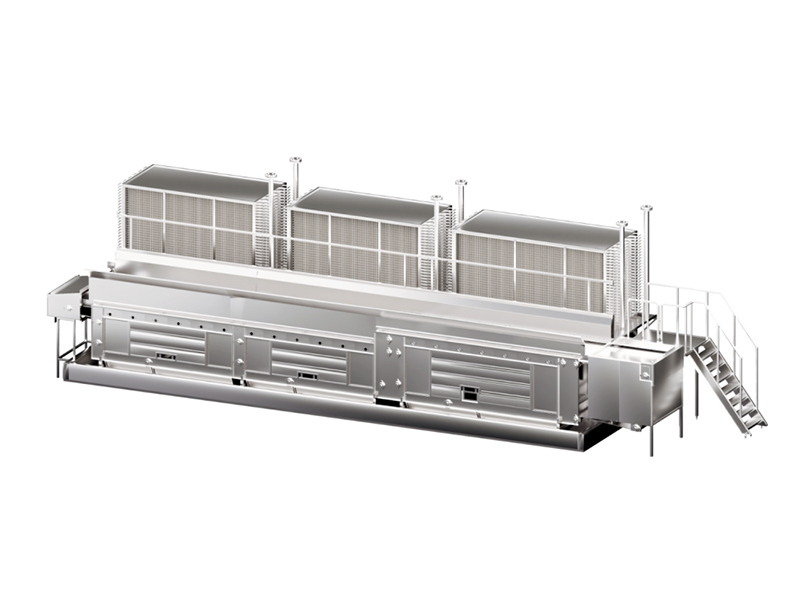
IQF stands for Individual Quick Freezing, and for berries, the machine that matters is the fluidized bed quick freezer. A perforated conveyor carries berries into a freezing tunnel while high-velocity chilled air blows upward through the belt, lifting and suspending the fruit. Each berry freezes on its surface within minutes and passes through the critical ice crystal formation zone fast enough that cell walls stay intact. After thawing, the fruit still holds its shape and juice.
This air suspension is the key difference from static blast freezing or plate freezing. Static methods produce clumps and crushed fruit. Fluidized freezing keeps the berries separate, which matters for downstream packaging and end-user convenience. The product library includes our fluidized quick freezer with a two‑stage conveyor: a pre‑cooling stage followed by a deep‑freezing stage. The first stage brings berry surface temperature down rapidly, the second pulls core temperature below -18°C. Splitting the stages allows each section to run at a different air temperature and velocity, which the evaporator and condensing unit sizing must reflect.
What Actually Determines IQF Freezer Capacity for Berries
Three numbers dominate capacity sizing, but none are constants across berry types.
Berry diameter and bed depth
A machine rated at 300 kg/h is typically rated for a specific product diameter, often 10–15 mm peas or diced carrots. Blueberries average 8–12 mm, strawberries 18–25 mm. Smaller berries pack more densely on the belt, so weight throughput can rise, but air must still lift the heavier bed. Larger strawberries need more lift force and longer residence time, cutting throughput. A processor who runs blueberries in the morning and strawberries in the afternoon on the same line might see 350 kg/h on blueberries and 240 kg/h on strawberries — both "correct" for the same machine.
Inlet temperature and water content
Berries entering at 20°C field temperature need more heat removal than pre‑cooled berries at 5°C. Berry water content ranges from 85% for some blueberries to 92% for strawberries. That 7% difference changes the thermal load. A processor in a hot harvest region who does not pre‑cool will need a bigger condensing unit or longer tunnel to hit target freezing time, or must accept lower throughput.
Freezing time target
A 15‑minute freeze gives a different throughput than a 25‑minute freeze. Shorter times need colder air, which demands a bigger compressor. For a 300 kg/h target, if the design freezing time is 10 minutes, the holding capacity inside the tunnel must be at least 50 kg of product at any moment (300 kg/h ÷ 6 ten‑minute cycles per hour). If the product bed is 150 mm deep and the belt width 1.2 m, you can calculate the tunnel length needed. Most berry lines fall between 8 and 14 meters of active freezing zone for capacities from 200 to 500 kg/h.
These three factors mean that no single "300 kg/h IQF freezer" will deliver 300 kg/h for every berry in every climate. This is not a machine defect — it is the physics of heat transfer.
Estimating Throughput Requirements from Harvest and Packing Flows
Berry processing plants often have a narrow window: berries arrive at the packhouse, get sorted, washed, and must enter the freezer within a few hours before softening begins. The IQF line must handle peak daily intake, not average intake.
A useful method: take the maximum daily harvest the plant expects to receive during the highest two‑week period, divide by the available freezing hours per day (usually 18–20 hours after cleaning and shift change), and multiply by a 1.2 surge factor. For a plant receiving 5 tonnes of strawberries daily during peak, the required hourly throughput is:
| Parameter | Value |
|---|---|
| Peak daily intake | 5,000 kg |
| Available freezing hours | 18 h |
| Base throughput | 278 kg/h |
| Surge factor (1.2) | 333 kg/h |
A 300 kg/h machine would run at slight overload during the surge week; a 350 kg/h unit or a 300 kg/h machine with a second shift would handle it. I typically recommend building the refrigeration system (compressor, condenser) for the surge capacity even if the tunnel is sized for nominal throughput, because the refrigeration package is cheaper to oversize at installation than to upgrade later.
For processors freezing multiple berry types on one line, run this calculation for the crop with the highest daily volume plus the shortest harvest window. The machine that meets the worst case will meet the others.
Meluck IQF Freezer Options for Berry Processing Applications
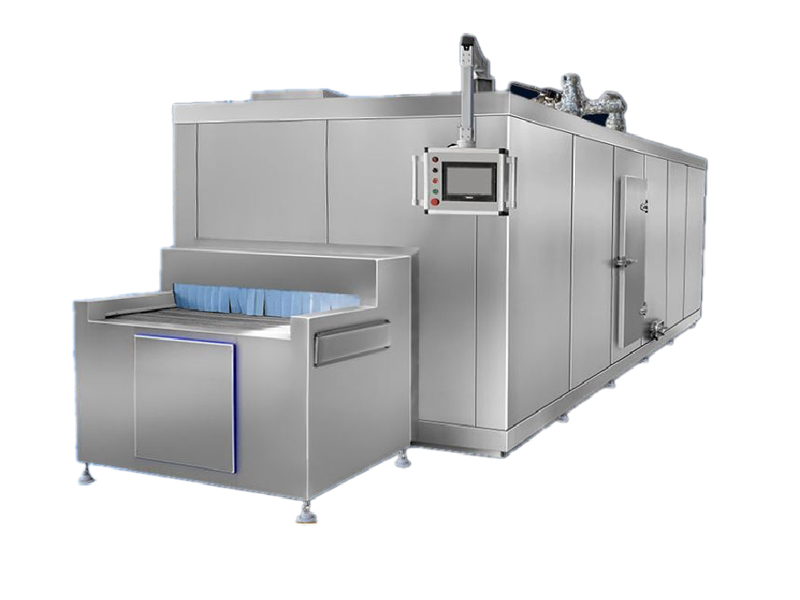
The product range covers two configurations that fit berry lines. The first is the IQF‑300KGS tunnel freezer, rated at 300 kg/h for typical vegetable and small‑fruit applications. It uses a perforated belt with a high‑velocity cold air system. When paired with a properly sized Bitzer condensing unit, it maintains stable evaporating temperatures even under varying loads.
The second configuration is the fluidized quick freezer with a two‑stage conveyor. The first stage uses moderate air velocity to set the berry surface, the second uses higher velocity and colder air to bring core temperature below -18°C. The two‑stage design suits lines where the berry type changes frequently and the processor wants to adjust each stage independently.
In our experience with cold chain projects from Ecuador (seafood and flake ice systems) to Egypt (multi‑zone food processing plants), matching the compressor package exactly to the evaporator load is the step that separates a line that holds temperature on a 40°C day from one that drifts. For a 300 kg/h berry line in a tropical region, a Bitzer 20HP medium‑temperature unit with a properly selected air cooler is a starting point, but the final sizing always depends on the required evaporating temperature, air volume, and conveyor length. Sharing your berry types, daily volume, and site ambient temperature range lets us confirm the specification before you order.
Avoiding the Three Most Frequent Capacity Mistakes
Buying for today's volume without planning for year two
Berry processors often expand acreage or add contract packing. A freezer that works perfectly in the first season becomes the bottleneck in season two. The condensing unit and evaporator may not have room to add capacity. Planning the refrigeration package for 20–30% headroom from day one costs less than replacing it later.
Ignoring belt loading on mixed‑size fruit
When a line runs both small blueberries and large strawberries through the same tunnel, the belt speed and air velocity that work for one may cause the other to clump or blow off the belt. Fluidized bed freezers need adjustable fan speed or variable‑frequency drives on the air circulation fans. Make sure the control system can store multiple product profiles.
Underestimating defrost cycle impact
A fluidized IQF freezer accumulates frost on the evaporator coil during extended runs, especially with high‑moisture fruit. If the defrost cycle takes 15 minutes every 4 hours, that is 1 hour lost per 16‑hour shift, or about 6% of potential throughput. The nominal capacity must account for this. A machine that runs 300 kg/h in theory may average 280 kg/h if defrost is not accounted for in the operating schedule.
Common Questions from Berry Processors About IQF Freezer Capacity
Does a higher capacity rating always mean a longer tunnel?
Not necessarily. The tunnel length depends on product bed depth, belt speed, and freezing time. A wider belt with a shallower product bed can achieve higher throughput in a shorter tunnel because the berries freeze faster in a thin layer. However, a wider belt costs more and needs a larger air handling system, so it is a trade‑off between floor space, capital cost, and capacity.
How do I know if my existing refrigeration plant can support a new IQF line?
Start with the condensing unit's rated capacity at the required evaporating temperature. An IQF tunnel operating at -35°C evaporating needs a compressor that can deliver that capacity at -35°C saturated suction temperature, not just at -10°C. Many standard medium‑temperature units are rated at -10°C, and their capacity at -35°C is roughly half. If the plant already has a large screw compressor or multiple piston compressors in parallel, a heat load calculation will confirm whether there is spare capacity or additional compressors are needed.
What if I want to start at 200 kg/h but plan to reach 400 kg/h later?
Design the tunnel for 400 kg/h product holding capacity and belt width, but install a refrigeration package sized for 200 kg/h with the condenser and piping ready for a second compressor unit later. The tunnel, conveyor, and air cooler are difficult to modify after installation; the compressor is modular. We have seen processors take this approach on their first line and add capacity in year two without production downtime.
Can the same IQF freezer handle both red berries and stone fruit?
It can, but freezing time and belt settings will differ. Strawberries and raspberries have high surface area to volume ratios and freeze quickly. Cherries and peach slices freeze slower and may need denser bed loading or lower air temperature. If the line switches frequently, invest in a control system with programmable product profiles and variable‑speed fans. Without that, the operator must manually adjust belt speed and temperature between runs, which reduces accuracy and throughput.
If your berry line involves multiple fruit types or you are planning for future expansion, it is worth confirming the correct condensing unit and evaporator pairing for your specific throughput target. Send your daily harvest volume and berry varieties to meluck@meluckcooling.com or call +8617369893087, and we will verify the configuration before you commit to equipment.
If you're interested, check out these related articles:
Ecuador Multi-Temperature Cold Storage Project - Meluck
Processing Room Solutions for Food Plants - Meluck
With over 15 years of experience as a MELUCK refrigeration engineer, I specialize in the design of cold storage, chillers, ice makers, and cold chain energy-saving systems, providing technical support to distributors and engineering companies worldwide.

meluck